The simplest reliable method is to use a company’s own XLSX or CSV file. If none is available, import a public HTML table with Excel Power Query or Google Sheets functions. For repeatable or multi-company work, use SEC EDGAR’s filing data, APIs, or XBRL datasets. Whichever route you choose, preserve the source and verify the period, currency, units, signs, and accounting context before using the numbers in a model.
What counts as a financial statement?
A complete download usually means the three primary statements:
- Income statement: revenue, expenses, operating income, pretax income, tax, and net income.
- Balance sheet: cash, receivables, inventory, other assets, debt, liabilities, and equity at a specific date.
- Statement of cash flows: operating, investing, and financing cash movements.
You may also need segment revenue, EBITDA or adjusted EBITDA, EPS, shares outstanding, debt, cash equivalents, working-capital items, and footnote disclosures. Quarterly, annual, and year-to-date figures are not interchangeable, and reported GAAP figures should remain distinct from management’s non-GAAP measures.
Every imported value needs metadata: fiscal period, period-end date, currency, scale (dollars, thousands, or millions), consolidated or segment presentation, annual or quarterly basis, restated or originally reported status, and the accounting concept behind the number. SEC Inline XBRL keeps a filing readable in a browser while embedding machine-readable facts (SEC Inline XBRL).
Recommended Free Tools
#1 Best Overall

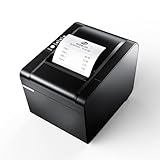
- Auto Cutter and High-Speed Printing: The thermal receipt printer features high efficiency with auto cutter and the fastest printing speed of 300mm/sec. Easy for paper installation, easy maintenance, and excellent structure. Plug and play USB PORT, easy to use. Three Interface ports: USB+ LAN + SERIAL PORT. Does NOT support Wifi or Bluetooth. Compatible with WIN2003/WINXP/WIN7/WIN8/WIN10/LINUX/Mac
- Wall Hanging Design: Kitchen printer with two hanging holes on the bottom support wall mount hanging. Easy to use, save the place. With auto cutter and compatible with several operating systems. Print width: 79.50.5mm; Paper Width: 3 1/8 inch (80mm)
- Wide Compatibility and Reasonable Design: Desktop or wall-mounted type for option, lets you use every space more rationally. The humanized auto-cutter ensures the receipt will not fall to the ground after printing. One-button open cover and large paper warehouse design, easy to use and maintain. Works with MUNBYN 3 1/8 x 203ft thermal paper and Gorilla 3 1/8 x 230 Thermal Paper Receipt Rolls
- Cost-Effective Operation: Supports cash drawer driving, compatible with ESC/POS print commands. The network receipt printer does not need ribbon or ink cartridge, resulting in low operating cost. The printer has the function of overheating protection for long service life. Printing characters with high speed and reliable performance for receipt printing in large shopping malls, supermarkets, retail, hotels, canteens, and restaurants
- Compatibility Notice: The receipt printer is not compatible with Grubhub, Doordash, Square, Chromebook, Uber, or Clover systems. Rongta is a brand dedicated to offering high quality products and good shopping experience for customers
Choose the source before opening a spreadsheet
| Source or format | Best use | Trade-off |
|---|---|---|
| Company XLSX | One company and presentation-ready analysis | Clean, but layouts differ between companies |
| Company CSV | Simple one-off or repeatable import | Portable, but often lacks formatting and context |
| Investor-relations HTML table | Quick access to published results | Pages may contain several tables or change structure |
| SEC EDGAR filing | Primary-source U.S. public-company data | Copying tables can lose units, signs, or alignment |
| SEC JSON/XBRL | Automation, standardization, and many periods | Requires filtering concepts, contexts, dimensions, and units |
| SEC bulk datasets | Large-scale research | Files require joins and technical cleanup |
| Fallback when no structured source exists | Layout and OCR errors require line-by-line checking |
Start at the company’s investor-relations site. Look under Financials, Quarterly Results, Annual Reports, or SEC Filings. Prefer an official spreadsheet when one exists, then compare its period, currency, and units with the filed statements. Keep the downloaded file unchanged as your source copy.
For U.S. filers, EDGAR provides annual reports (10-K), quarterly reports (10-Q), current reports that may include earnings releases (8-K), and forms used by many foreign private issuers such as 20-F and 6-K. Coverage and presentation are not identical for every issuer. See SEC EDGAR access guidance.
Download and import a file into Excel
CSV workflow
- Download the CSV from the company, SEC, or data provider and retain the original file.
- In Excel, select Data > Get Data > From File > From Text/CSV.
- Check the delimiter, encoding, header row, and detected data types.
- Choose Transform Data if title rows, accounting dashes, dates, or numeric text need cleanup.
- Select Load or Close & Load to place the result in a worksheet or data model.
Excel may detect delimiters, headers, and types automatically; inspect those assumptions before loading. Microsoft documents this workflow in its Power Query import guidance.
XLSX workflow
- Open the company workbook directly, or choose Data > Get Data > From File > From Excel Workbook.
- Select the worksheet or named range containing the statements.
- Load it to a new worksheet or query, keeping the original download untouched.
- Record the source URL, filing date, period end, currency, units, and any transformation notes.
HTML-table workflow
- Copy the public URL of the filing or results page.
- Select Data > From Web (or Data > Get Data > From Other Sources > From Web).
- Paste the URL and choose a detected table in the Navigator.
- Preview headers and period columns; the first table is not necessarily the income statement.
- Select Load, then use Data > Refresh or Refresh All when appropriate.
Power Query can transform and refresh web data, but dynamic pages, iframes, authentication, hidden markup, and multiple similar tables can prevent detection. See Microsoft’s web-import instructions and Power Query overview. Connector availability varies by Excel edition and platform; Microsoft documents support for Excel 2016, 2019, 2021, 2024, Microsoft 365, and Excel for the web.
JSON or XML/API workflow
- Obtain a stable endpoint or file URL.
- Choose Data > Get Data and the JSON, XML, or web connector.
- Expand records, lists, and nested fields in Power Query.
- Filter for the correct company, concept, form, period, unit, and filing.
- Load the normalized result and retain the raw query output for auditability.
Power Query supports text/CSV, XML, JSON, web, and other connectors, subject to edition and platform (Excel for the web; supported data sources).
Import financial statements into Google Sheets
Downloaded CSV or XLSX
- Open Sheets and choose File > Import.
- Upload the file.
- Choose a new spreadsheet, a new sheet, or replacement of the current data.
- Confirm separator and conversion settings, then inspect dates, negatives, currency symbols, and blanks.
For a large Excel file, Google recommends File > Import rather than copy-and-paste (Google’s data-ingestion guidance). Formulas, named ranges, macros, Power Query connections, formatting, and some charts may not transfer perfectly.
Rank #2
- 【Fast Printing & Auto Cutter】The pos printer high efficiency with auto cutter and printing speed--250mm/sec. Easy for paper installation, easy maintenance, easy to use.Three Interface ports:USB+ LAN + SERIAL PORT.DO NOT-Wifi-Bluetooth.
- 【Wall Hanging Design】 Kitchen printer with two hanging holes on the bottom support wall mount hanging. Easy to use, save the place. With auto cutter and compatible with several operating systems. Print width:79.5±0.5mm; Paper Width:3 1/8" (80mm).
- 【Wide Compatibility&Reasonable Design】Desktop or wall-mounted type for option, lets you use every space more rationally. The humanized auto-cutter, the receipt will not fall to the ground after printing. One-button open cover and large paper warehouse design, easy to use & maintain. Work with MUNBYN 3 1/8 x 203ft thermal paper,MFLABEL thermal receipt paper.
- 【Most Cost-effective】Support cash drawer driving, compatible ESC/POS print commands.Do not need ribbon/ink cartridge, low operating cost. The printer has the function of overheating protection, long service life. Printing characters with high speed, reliable performance.It is an ideal choice for receipt printing in large shopping malls, supermarkets, retail, hotels, canteens, restaurants, etc.
- 【Buy with Confidence】 Rongta is a brand that is dedicated to offering the highest quality products and good shopping experience for the customer. Warm tips:The receipt printer is not compatible with Ubereats/Grubhub/Doordash/Lightspeed/Postmates/Square/Chromebook/Clover.
Public CSV or TSV URL
Use:
=IMPORTDATA("https://example.com/financials.csv")IMPORTDATA reads CSV or TSV content from a URL (Google documentation). For a local file, use the File > Import workflow instead.
Public HTML table
=IMPORTHTML("https://example.com/financials","table",1)- Open the source page and identify the statement table.
- Start with index
1; increase the index until the desired table appears. - Confirm headers, fiscal periods, and units.
- Copy and paste values to a permanent raw-data tab if a live connection is unnecessary.
Tables and lists are indexed separately, and the index begins at 1 (IMPORTHTML).
The Tool Desk
Outbyte Driver Updater FREEFix the driver behind crashes, sound loss and screen glitchesFind Drivers →Outbyte PC Repair FREEClear out junk files and repair common Windows errorsFree Scan →Structured XML or HTML extraction
=IMPORTXML("https://example.com/data.xml","//desired/xpath")IMPORTXML can read structured XML and HTML, but a complete XBRL filing normally requires knowledge of namespaces, contexts, units, dimensions, and repeated facts. An API transformation or spreadsheet add-on is usually safer for XBRL (Sheets function list; import-function guidance).
Import formulas are refreshable connections, not guaranteed real-time data. Google documents hourly checking for several import functions while the document is open, subject to source availability, permissions, and throttling.
Use SEC data when you need repeatability
Copy a filed statement for a one-off lookup
- Search EDGAR by company, ticker, CIK, or filing type.
- Open the relevant 10-K or 10-Q and locate the consolidated statements.
- Copy the table into Excel or Sheets; use Paste Special > Values if formatting causes problems.
- Store the filing URL and accession number beside the imported data.
This is fast and human-readable, but copying can lose negative signs, indentation, column alignment, units, or footnote markers.
Use Inline XBRL or SEC APIs
The SEC provides company submissions and extracted XBRL data through JSON APIs documented at SEC Developer Resources. A repeatable pipeline should retain columns such as company, CIK, concept, label, value, unit, fiscal year, fiscal period, period end, form, filing date, and accession number. Filter by the exact form, period, frame, unit, filing, and context before loading the result.
Quick wins for a faster PC:
Repair Windows errors before they cause bigger problemsFix Now →Scan for outdated or missing drivers - takes under a minuteDriver Scan →Clear out junk files and repair common Windows errorsFree Scan →Rank #3
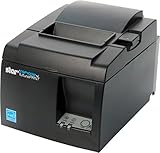
- High-speed printing of 43 receipts per minute (250mm/s) with easy to setup USB connection - just Plug and Print; USB serial number feature means the PC will detect the TSP143IIIU on its Windows platform using any USB port
- Compatible with iOS, Android, and Windows for a simple setup process
- The "Drop-In and Print" clamshell design allows for fast and easy paper loading; patented "De-Curl" function always delivers a flat receipt
- The TSP143IIIU USB model is certified with the following companies: Postmates, Square, Chromebook, and Clover
- The small footprint and embedded power supply saves precious counter space
SEC CIK, ticker, and exchange associations help identify issuers, but the SEC notes that those associations are not guaranteed to be complete or perfectly accurate (EDGAR access guidance).
Use the Financial Statement and Notes Data Sets for bulk work
The SEC’s downloadable datasets contain financial-statement and notes information extracted from XBRL (Data.gov dataset). They are not necessarily one tidy row per company and year. You may need to join facts, statement locations, units, periods, filing identifiers, contexts, dimensions, and notes. Raw XBRL is structured, not automatically a clean three-statement model: companies can use different concepts, extensions, dimensions, and contexts for economically similar items.
Clean and normalize the imported data
- Remove title rows and promote the actual statement headers.
- Unpivot fiscal-period columns when building a normalized table with one fact per row.
- Preserve source units; do not silently convert thousands or millions.
- Convert accounting parentheses to negative numbers only after documenting the rule.
- Keep blanks and em dashes distinct until you know whether they mean zero, not applicable, or not disclosed.
- Separate GAAP figures from adjusted or non-GAAP figures.
- Keep consolidated facts separate from segment or geographic dimensions.
- Retain annual, quarterly, and year-to-date records as different period types.
- Keep raw imported data separate from the cleaned analysis tab.
Validate before using the numbers
- Identity: Confirm legal entity, ticker, CIK, and reporting subsidiary.
- Statement: Confirm that each row belongs to the income statement, balance sheet, or cash-flow statement.
- Period: Check annual versus quarterly, year-to-date versus discrete quarter, and the actual fiscal year-end.
- Units and currency: Match the filing’s scale and reporting currency.
- Signs: Decide whether your model presents expenses and cash outflows as negatives.
- Comparability: Check for amended filings and later restatements.
- XBRL context: Resolve duplicate facts by form, filing date, unit, dimension, and context.
- Rounding: Expect displayed filing totals to be rounded relative to structured values.
- Accounting checks: The balance sheet should balance, and the cash-flow movement should reconcile to the change in cash where applicable.
- Source record: Keep source URL, filing type, filing date, period end, accession number, download date, currency, units, and transformation notes in a Source tab.
Troubleshoot common failures
Sheets says IMPORTDATA or IMPORTHTML has an error
The URL may not serve a public CSV, TSV, or HTML page; it may redirect, require JavaScript or authentication, be blocked, or need permission. Open it directly, use the final public URL, click Allow access when prompted, or download the file and use File > Import. Replace the formula with static values when live updating is unnecessary. Google may throttle excessive requests (import-function limits and refresh guidance; Sheets performance limits).
Power Query cannot see the table
The page may be dynamically rendered, embedded in an iframe, protected by authentication, or may contain several similar tables. Try the company’s CSV/XLSX, an Inline XBRL or API endpoint, or a one-time manual copy. Do not assume the first Navigator result is the correct statement.
Numbers load as text
Currency symbols, parentheses, locale separators, footnote marks, em dashes, and “N/A” commonly cause this. Preserve the raw tab, clean a separate analysis tab, test totals against the source, and never convert every blank or dash to zero automatically.
XBRL returns several values for one line item
This can reflect different periods, forms, filing dates, units, segments, dimensions, amended filings, or restatements. Filter to the statement context, retain accession and filing metadata, and reconcile selected values to the human-readable filing.
Rank #4

- Compatibility Information: Please ensure that our receipt printer is compatible with your device.The Ethernet interface supports Windows, Mac OS, Linux, VirtualCom, Android, RaspberryPi and iOS. But the USB interface could only support Windows, Mac OS, Linux, VirtualCom and Android. Additionally, it does not support Ubereats, Grubhub, Doordash, Postmates, Clover, or Shopify for POS software.
- Fast Printing & Auto Cutter: This high-efficiency thermal receipt printer boasts a maximum printing speed of 260mm/s, ensuring quick and efficient printing without any paper jams. The automatic cutter is designed to handle heavy usage and can last up to 1.5 million cuts. With a one-button open cover and a spacious paper warehouse, this POS printer is easy to use and maintain. Additionally, the receipt printers utilizes direct thermal printing technology, eliminating the need for ribbons or ink.
- USB & Ethernet Interface: The receipt printer has USB and Ethernet interfaces, as well as cash drawer RJ11 ports. However, it does not support Bluetooth or WiFi printing. With a 203 dpi resolution, the Ethernet receipt printer produces high-quality prints that are sharp and clear. To develop custom applications on Ethernet-supported systems like iOS and Android, a software development kit (SDK) is necessary.
- Wall Mount Option: The kitchen printer has a wall mount option with two hanging holes at the bottom, allowing it to easily fit into any space. This USB receipt printer is an excellent choice for various establishments such as restaurants, kitchens, retail stores, grocery stores, clothing stores, supermarkets, cafes, ticket points, food trucks, banks, shopping malls, hotels, canteens, and more.
- Customer Service in the United States: Our team of customer support based in the United States is ready to help you with any problems you may have regarding the integration of the direct thermal printer. Whether you require assistance with setup, connection, compatibility, or any other issues related to the product, please don't hesitate to reach out to us. Additionally, all Volcora products are backed by a limited lifetime warranty, ensuring your peace of mind when making a purchase.
SEC requests are throttled
The SEC asks users to moderate requests and currently states a maximum request rate of 10 requests per second, while reserving the right to limit access (SEC access guidance). Cache downloads, request only needed companies and periods, identify programmatic requests as required, and use bulk datasets for bulk work.
Do not confuse statements with market data
GOOGLEFINANCE supplies current or historical securities information; it is not a complete importer for filed income statements, balance sheets, cash-flow statements, or notes. Google warns that coverage varies by exchange, quotes may be delayed by up to 20 minutes, and historical data cannot be downloaded through the Sheets API or Apps Script (GOOGLEFINANCE documentation).
What’s actually slowing this PC down?
Pick the symptom - the matching free tool is one click away.
Excel’s Stocks data type likewise addresses securities and market information, not a normalized set of reported financial statements (Microsoft Stocks guidance).
When a paid add-on is worth considering
Use free company and SEC sources first. A commercial tool can justify its cost when you repeat extraction across many companies, need frequent refreshes, require standardized historical revisions, or need team permissions and an audit trail. Evaluate coverage, historical depth, refresh frequency, XBRL normalization, Excel versus Sheets support, API access, export formats, quotas, and licensing.
- Microsoft 365 suits Excel users who need Power Query and model refreshes; current pricing depends on plan and should be checked on Microsoft’s site.
- Google Workspace suits collaborative browser-based analysis and simple public-URL imports.
- XBRL US XBRL Filed Data is designed for querying public XBRL filings in Sheets; confirm current coverage and terms.
- Jive Data offers spreadsheet-oriented SEC and financial-data functions; verify subscription, quotas, coverage, and methodology before relying on it.
A vendor can save normalization time, but it does not replace checking important values against the company filing.
Quick Recap
Which method should you use?
- One company, one analysis: Download the company XLSX, or copy the filed table and document its source.
- Repeatable Excel process: Use Power Query from CSV, web, JSON, XML, or an API.
- Simple public URL in Sheets: Use
IMPORTDATAfor CSV/TSV orIMPORTHTMLfor a stable table, then freeze values when appropriate. - Many companies or standardized research: Use SEC APIs or financial-statement datasets, with explicit concept and context filtering.
- No structured source: Extract from the PDF only as a fallback and reconcile every number to the original statement.
Product prices and availability are accurate as of the date/time indicated and are subject to change. Any price and availability information displayed on Amazon at the time of purchase will apply.




