Managed service providers (MSPs) and IT services companies can help organizations turn technology priorities into secure, measurable improvements—not just move help-desk work outside the company. The strongest partners combine day-to-day IT operations with cloud and security expertise, process automation, data and AI governance, and a roadmap tied to business goals. Outsourcing support alone is not digital transformation, and it does not transfer a customer’s legal or business responsibilities.
What an MSP does—and how that differs from other providers
An MSP delivers ongoing IT services for a recurring fee. Depending on the contract, its work may include user support, device and server management, patching, networks, cloud administration, backups, cybersecurity, and technology planning. An IT services company is a broader label that can include MSPs as well as consultants, project teams, systems integrators, and cloud specialists.
A managed security service provider (MSSP) focuses primarily on cybersecurity, such as threat monitoring, detection, vulnerability management, and incident response. Some MSPs provide those capabilities, but an MSP and an MSSP are not automatically interchangeable. A consultant may advise on a defined project without operating the resulting systems; a cloud provider supplies platforms and services, while the customer still needs architecture, configuration, governance, and ongoing operations.
Digital transformation means using technology, data, automation, and redesigned processes to improve how an organization works or serves customers. A cloud migration, new firewall, or AI subscription may support a transformation, but none is transformation by itself. The project needs a business outcome—such as less downtime, faster customer response, more reliable decisions, or safer remote work—and a way to measure it.
The Tool Desk
Outbyte Driver Updater FREEFix the driver behind crashes, sound loss and screen glitchesFind Drivers →Outbyte PC Repair FREERepair Windows errors before they cause bigger problemsFix Now →#1 Best Overall
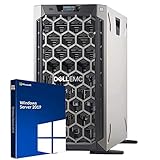
- 3.5 Inch Hot Plug Hard Drive PowerEdge T340 Tower Server Chassis
- Microsoft Windows Server 2019 Standard Operating System
- Processors: Intel Xeon E-2124 Quad-Core 3.3GHz 8MB CPU, Up To 4.3GHz Turbo
- Memory: 32GB (2 x 16GB) DDR4 PC4-21300 2666MHz Unbuffered Memory
- Hard Drive: 8TB (4 x 2TB) 7.2K RPM 6Gb/s SATA 3.5 Inch HDDs in RAID
Why organizations bring in an MSP
Many organizations cannot maintain deep expertise in every area they now need: cloud architecture, identity management, security operations, data integration, AI governance, compliance, automation, and recovery planning. An MSP can supply a broader operating capability and help coordinate internal staff, vendors, and projects. It is most useful when it connects that technical work to business priorities rather than simply closing tickets.
The challenge is not simply a lack of tools. Organizations may have legacy systems, fragmented data, cloud costs they cannot explain, unclear security ownership, or employees working around cumbersome processes. IBM’s 2026 technology-leader research discusses architecture as a factor in how quickly organizations can pursue new initiatives and highlights the difficulty of moving workloads among clouds when portability is limited (IBM Institute for Business Value, 2026). An MSP should help clarify those constraints before recommending a migration or new platform.
Industry surveys also point to a changing mandate. MSP Global’s Spring 2026 report identifies adapting to new technology as a leading strategic concern and cybersecurity as a major business-health priority; its findings describe AI as both an opportunity and a source of concern for providers (MSP Global State of the Industry Report). KPMG’s 2026 managed-services outlook describes buyers seeking strategic AI-enabled value and measurable outcomes rather than purely transactional outsourcing (KPMG Managed Services Outlook 2026). These are industry signals, not guarantees that every organization needs the same service mix.
Services that can support transformation
Infrastructure and cloud operations
An MSP may monitor and maintain servers, endpoints, networks, Wi-Fi, storage, and virtualization, then help plan capacity or replace aging systems. Cloud work can include readiness assessments, workload migration, hybrid architecture, administration of Azure, AWS, or Google Cloud, backup, security configuration, and cost optimization. AWS describes next-generation MSPs as providers that can design, build, migrate, operate, and optimize cloud and digital solutions (AWS).
Recommended Free Tools
Rank #2
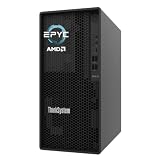
- Powerful AMD EPYC Performance – Powered by AMD EPYC 4244P processor with up to 6 cores, delivering exceptional performance for virtualization, business applications, databases, and growing workloads.
- Memory – Supports DDR5 ECC UDIMM memory for higher bandwidth, improved efficiency, and automatic error correction to help maximize system reliability and reduce data corruption. This build comes with 16GB DDR5 RAM.
- Scalability and Flexibility – Tower servers are designed for easy upgrades and expansion, making them an ideal choice for development teams and growing businesses. They provide a dedicated environment for software development, testing, and deployment. This server is sold without an operating system, allowing you to select and install the OS and software that best fit your specific needs during setup.
- Designed for Small Business and Remote Offices – Quiet tower design with enterprise-grade reliability makes it ideal for file sharing, collaboration, backup, virtualization, and office applications without requiring a dedicated server room.
- Easy to Manage – Features multiple networking options and room for future upgrades, helping protect your investment as your business grows. This server is designed to run 24 hours a day, 7 days a week.
Cloud is not automatically cheaper or safer. Costs can rise through idle capacity, overprovisioning, data transfer, storage, premium services, or poor licensing choices. Security depends on architecture and configuration, identity controls, monitoring, and the division of responsibilities between provider and customer. Ask for a cost baseline and recurring cloud-spending reports, not just a migration estimate.
Workplace and identity modernization
Workplace services may cover Microsoft 365 or Google Workspace, endpoint and mobile-device management, collaboration tools, remote access, and employee onboarding and offboarding. Identity controls—especially appropriate access, multifactor authentication, and prompt removal of access when someone changes roles or leaves—connect these services to security. A modern collaboration suite is useful only if employees can use it effectively and business information is managed appropriately.
Cybersecurity and resilience
Security services can include configuration baselines, multifactor authentication, endpoint detection and response, managed detection and response, email security, vulnerability management, awareness training, security monitoring, incident response, and compliance evidence. The contract should make clear whether “24/7” means automated alerts, staffed monitoring, a help desk, or an incident-response team able to act at any hour.
IBM and Palo Alto Networks reported that surveyed organizations managed an average of 83 security solutions from 29 vendors, and that more than half said security fragmentation limited their ability to deal with threats (IBM and Palo Alto Networks, 2025). Integration or consolidation may simplify operations, but it can also reduce best-of-breed options or concentrate risk. A provider should explain why each tool belongs in the environment, not treat a larger bundle as proof of stronger security.
Rank #3
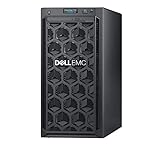
- Dell PowerEdge T140 Mini Tower Server for Small Businesses, Branch Locations, and Home Offices
- Intel Xeon E-2124 Quad-Core 3.3GHz 8MB CPU, Max Turbo Up To 4.3GHz Memory: 32GB DDR4 PC4-21300 2666MHz Unbuffered Memory
- 8TB (4 x 2TB) 7.2K 6Gb/s SATA 3.5" HDDs for High Capacity Storage; PERC S140 6Gb/s RAID Controller
- iDRAC9 Basic; On-Board Dual Port 1Gb LOM
- iDRAC9 Basic; On-Board Dual Port 1Gb LOM
Resilience includes protected backups, defined recovery-point and recovery-time objectives, disaster-recovery planning, and tested restoration. A backup job reporting success is not proof that the organization can restore its critical systems. Require evidence of restoration tests and a plan for decisions, communications, and priorities during an outage.
Data, automation, and AI
AI-related services can range from an acceptable-use policy to data classification, access controls, workflow automation, a service-desk assistant, or an application built on a platform such as Azure AI or AWS Bedrock. These are different kinds of work. Selling licenses does not implement AI in a process, and implementing a pilot does not establish that it is safe or useful to operate at scale.
Before an AI deployment, identify the task and expected result, determine which data the system can access, set rules for sensitive information, test output quality, assign human review where errors matter, and track adoption and cost. Poor data, uncontrolled third-party tools, inaccurate automated decisions, unclear accountability, and employee resistance can undermine a project. Microsoft’s 2025 partner research discusses AI-enabled offers, data governance, compliance, and flexible service models; any revenue or growth figures there concern a commissioned partner-side study, not a universal customer return (Microsoft Security Partner TEI Studies).
Strategic IT leadership
Virtual CIO or CTO services can provide technology roadmaps, budget planning, vendor coordination, risk registers, project prioritization, and reporting for leaders who do not have that capacity in-house. The value is not a meeting cadence or a stack of documents; it is better decisions about what to do, what to defer, and what risks the organization is willing to accept.
Rank #4

- MODEL P74439-005: Compact and affordable HPE ProLiant MicroServer Gen11 powered by Intel Pentium Gold G7400 3.7GHz processor, ideal for file sharing, NAS, and basic business workloads
- READY OUT OF THE BOX: Includes 16GB DDR5 UDIMM memory (expandable to 128GB), one 1TB SATA 6G Business Critical HDD, embedded Intel VROC SATA, dedicated iLO-M.2 port kit, 180w external power adapter and 1/1/1 warranty for dependable plug-and-play server operation
- WHISPER-QUIET & SPACE-SAVING: Ultra-compact mini tower design fits easily in small office spaces; supports wall, flat, or vertical placement for deployment flexibility
- INTEGRATED REMOTE MANAGEMENT: Comes with HPE iLO 6 and embedded TPM 2.0 for secure, license-free remote server administration through shared port access
- EXPANDABLE DESIGN: Two PCIe slots (including PCIe 5.0) and four LFF-NHP drive bays provide robust options for storage and component scalability. Features new MR408i-p controller support for enhanced storage performance
How to run an MSP-supported transformation
- Start with business discovery. Identify critical processes, customer or employee bottlenecks, unacceptable downtime, sensitive data, manual work, expected growth, internal capabilities, and urgent risks. Name the business owner for each desired outcome.
- Establish the current state. Review the network and cloud architecture, hardware and software inventory, identities and access, backup and recovery, security configuration, data flows, licenses, vendors, technical debt, regulatory needs, user experience, and recurring support issues.
- Prioritize initiatives. Compare business impact, risk reduction, time to value, cost, complexity, dependencies, change burden, and reversibility. Identity cleanup and tested recovery may be urgent foundations; a cloud migration or legacy replacement needs a business case; an AI use case is best treated as a controlled pilot until its value and risks are understood.
- Agree on a target architecture and roadmap. Document the intended design, milestones, costs and assumptions, accountable owners, dependencies, data requirements, security controls, success measures, and rollback or recovery approach. Distinguish recurring service from project work.
- Implement in stages. Pilot with a controlled group, document configuration, test functionality and security, train users, then expand in waves. Monitor failures and adoption against a baseline rather than treating go-live as the finish line.
- Review and optimize. Track security alerts, patch status, cloud spend, backup-test results, recurring tickets, license use, automation effectiveness, AI use, and the business measures the project was meant to improve. Adjust the roadmap as conditions change.
Choose a delivery model that fits your team
| Provider or team | Best suited to | Typical limitation |
|---|---|---|
| Internal IT | Daily alignment, institutional knowledge, and direct ownership | May lack scale or specialist capacity |
| MSP | Ongoing IT operations and broad support, sometimes including strategy | Can create dependency or impose standardized approaches |
| MSSP | Security monitoring, detection, and response | May not lead wider IT transformation |
| Consultant | Defined assessment, strategy, or project | May have little role in operating the result |
| Cloud provider | Infrastructure and platform services | Does not remove the customer’s need for architecture, operations, and governance |
| Systems integrator | Large or complex implementations across systems | Can require heavier delivery processes and cost |
These models can overlap. A company with an experienced internal team may use co-managed IT for after-hours coverage, security operations, cloud expertise, or project capacity instead of outsourcing everything. The right arrangement depends on skills already in place, risk, scale, and how much control the organization needs to retain.
Independent reader supportYour contribution helps us test, update, and keep practical guides available for everyone.Evaluate an MSP before signing
Test strategic and technical fit
- Ask how the provider links recommendations to your business goals, and request examples relevant to your industry and systems.
- Check experience in cloud, identity, endpoints, backup and recovery, security response, data, and AI only where those capabilities match your needs.
- For regulated or specialized environments, verify relevant expertise—for example, healthcare safeguards, payment-card controls, government-contract requirements, financial oversight, or operational technology.
- Ask who will provide strategic advice, how often the roadmap is reviewed, and whether projects are included or separately billed.
Check security and accountability
Request evidence of the provider’s own multifactor authentication, privileged-access controls, staff screening and role-based access, security policies, incident-notification process, data-processing terms, subcontractor arrangements, and customer data segregation. Independent audits or certifications such as SOC 2 or ISO/IEC 27001 can support due diligence, but do not prove that every contracted service is covered or that the provider fits your environment.
Clarify the customer’s responsibilities in writing. An MSP can operate controls and help assemble evidence, but the customer may still own regulatory decisions, breach reporting, records retention, employee policies, risk acceptance, and business-continuity decisions. Outsourcing work does not by itself make an organization compliant.
Read the service and commercial terms
Determine whether the arrangement is fully managed or co-managed; what support hours mean; the response and resolution targets; escalation and on-site coverage; after-hours monitoring; project fees; contract term; and termination assistance. Ask who owns administrative accounts, cloud subscriptions, configurations, documentation, DNS, backups, security tools, and vendor relationships—and how those assets can be exported or transferred.
Free tools Windows power users keep installed
One-click scans. No signup required.
Best Value

- Powerful 9th Gen Processor - The Dell OptiPlex 7070 desktop computer driven by the Intel 8 Core 9th generation i7-9700 processor upto 4.70 Ghz for efficient multitasking.
- Microsoft Windows 11 Pro - This Dell small form factor desktop is Pre-installed with the Windows 11 Professional operating system,Microsoft has re-imagined how the PC should work for you and with you. This Windows 11 desktop computer is redefining productivity.
- Multitask Smoothly - The Dell OptiPlex is equipped with a blazing fast New 1TB M.2 NVMe SSD to store important files and applications, support faster Boot speed and faster storage rates.
- High Performance Office Desktop- The business desktop computer is a solid workstation that is suitable for both home and business computing. The roomy desktop tower case allows for future expansion making it a great fit for an office PC.
- Rich Ports - This Dell OptiPlex Computer with 5 x USB 3.1 ports,4 x USB 2.0 ports, 2 x display ports,which support for two displays. Also wireless keyboard & mouse.
Pricing may be per user, device, or endpoint; a flat monthly bundle; a tiered package; a retainer; project-based; or tied to cloud consumption. Compare scope, not just the headline. Confirm whether licensing, backup storage, security monitoring, hardware, cloud usage, onboarding, third-party applications, after-hours work, incident response, and compliance assistance are included. “Unlimited” generally applies only within defined boundaries, so have exclusions written down.
Provider size alone is not a quality measure. A larger firm may offer geographic coverage and formal processes; a smaller one may offer direct senior access, flexibility, or stronger fit with a particular industry. Assess the actual team, references, coverage, and exit arrangements.
Measure operational performance and business value separately
Operational measures show whether the service is being delivered. Business measures show whether the investment is helping the organization. Agree on baselines and owners before work begins, then report both kinds of results.
| Operational measures | Business measures |
|---|---|
| Availability, ticket response, patch compliance, backup restoration tests, security detection and response times, vulnerability age | Time saved, downtime reduced or avoided, faster employee onboarding, lower operating cost, improved customer satisfaction, faster delivery of products or services |
IBM’s Institute for Business Value reports that highly automated organizations in its study experienced a 28% reduction in IT costs, 36% fewer cybersecurity incidents, 10% revenue growth tied directly to automation investments, and 90% ROI attributed to enterprise-level digital transformation (IBM, Automate IT for Competitive Value). Those are findings from IBM research, not a forecast or guaranteed result for a particular MSP customer. A useful evaluation should use the organization’s own baseline, scope, time horizon, and costs.
Quick wins for a faster PC:
Scan for outdated or missing drivers - takes under a minuteDriver Scan →Clear out junk files and repair common Windows errorsFree Scan →Fix the driver behind crashes, sound loss and screen glitchesFind Drivers →Quick Recap
Common mistakes that weaken transformation
- Choosing on price alone: A low monthly fee may omit projects, security response, backup, or cloud management the business assumed was included.
- Buying tools before defining the problem: Consolidation can help, but requirements and operational dependencies should come first.
- Migrating to cloud without a business case: Migration changes cost and responsibility; it does not guarantee savings, better security, or a better process.
- Calling backup a recovery plan: Without successful restoration tests and assigned decision-makers, recovery remains unproven.
- Deploying AI without governance: A use case needs data rules, access controls, evaluation, cost monitoring, human oversight, and an adoption plan.
- Measuring activity instead of outcomes: Ticket counts or projects completed do not show whether downtime, risk, or customer delays improved.
- Leaving ownership and exit unclear: A customer needs access to its accounts, documentation, configurations, and data, plus practical transition support.
Product prices and availability are accurate as of the date/time indicated and are subject to change. Any price and availability information displayed on Amazon at the time of purchase will apply.




