Free tools Windows power users keep installed
One-click scans. No signup required.
Marketers use landing pages to give a specific audience a focused next step that matches the campaign that brought them there. A page can help generate leads, sell a product, book appointments, or register attendees—but it creates business value only when the offer, audience, traffic, follow-up, and measurement work together.
What a landing page is—and what it is not
In conversion marketing, a landing page is a page designed around a particular campaign objective. A visitor might reach it from an ad, email, search result, social post, QR code, partner referral, or sales message. It can live on a company’s main website or on a campaign-specific URL; it does not have to be a separate website.
Analytics tools may also call the first page in a visitor’s session a “landing page.” That session-entry definition is broader: it does not mean the page was intentionally built to convert campaign traffic.
| Page type | Main purpose |
|---|---|
| Homepage | Introduce the company and direct visitors to a range of destinations. |
| Product or service page | Explain an offering in depth and support several possible actions. |
| Campaign landing page | Help a defined audience complete one campaign’s primary goal. |
| Pricing page | Help visitors compare costs, plans, or terms. |
| Checkout page | Complete a purchase. |
| Lead-capture page | Exchange an offer—such as a consultation or download—for contact details. |
| Thank-you page | Confirm a completed action and explain what happens next. |
A landing page is not automatically better than a relevant product page. Use a dedicated page when the campaign’s audience, offer, or message needs a more focused destination than the existing site provides. Nor must every landing page remove all navigation: fewer competing links may focus attention, but selected navigation can support trust, accessibility, and research for complex or high-consideration decisions.
#1 Best Overall
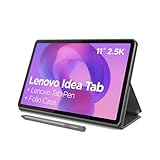
- POWER YOUR STUDY, FUEL YOUR PLAY – Discover smarter learning with the Lenovo Idea Tab. Stay campus-ready with all-day battery life, AI-powered apps to enhance your work, and sharp graphics for tv marathons with friends.
- SMOOTH, POWERFUL, IMMERSIVE – The MediaTek Dimensity 6300 processor is more powerful than ever, with the AI-enhanced multitasking you need to stay ahead.
- CIRCLE IT, SEARCH IT – Use your Lenovo Tab Pen or fingertip to circle items for instant search results or to translate other languages without switching apps. Circle to Search with Google ensures answers are only a circle away.
- SHARP VIEW, CLEAR SOUND – Experience sharp visuals and immersive sound for study sessions and streaming breaks. With 72% NTSC and quad Dolby Atmos-tuned speakers you can enjoy your study breaks with vivid videos and crystal-clear sound.
- LEVEL UP YOUR STUDY – Write, organize, sketch, and calculate with four learning apps built to match your flow. Lenovo AI Note, Squid, Nebo, and MyScript Calculator help you stay clear, focused, and ready for every study session.
Why marketers use landing pages
A campaign click represents interest, not a completed business outcome. A dedicated destination can connect the promise that earned the click to a clear explanation and next action. Marketers use landing pages to:
- Turn paid-search or social-ad clicks into purchases, registrations, or inquiries.
- Promote webinars, events, demos, trials, consultations, downloads, and waitlists.
- Tailor proof and examples to an industry, use case, geography, or funnel stage.
- Test a new offer or positioning without restructuring the main website.
- Associate a campaign and offer with visits and subsequent conversions.
- Support retargeting and nurture based on what someone showed interest in.
Google describes an ad’s final URL as the page a visitor reaches after clicking. Its guidance recommends aligning keywords, ad copy, landing-page content, and the call to action, and its Google Ads interface includes a Landing pages report for page-level evaluation: Google’s landing-page guidance and the Landing pages report.
Choose the page type and primary goal
Start by naming the one action that represents success for this campaign. A page may include secondary links or helpful choices, but one action should be visually primary and the content should make its purpose clear.
Lead-generation pages
Use these when a visitor should provide information to receive something or start a conversation. Common offers include a checklist, webinar registration, newsletter, consultation, quote, demo, assessment, or waitlist. Ask only for details that are needed to deliver the offer, route the request, or qualify the lead at that stage.
Quick wins for a faster PC:
Clear out junk files and repair common Windows errorsFree Scan →Scan for outdated or missing drivers - takes under a minuteDriver Scan →Repair Windows errors before they cause bigger problemsFix Now →Click-through pages
Use these to explain value and reduce uncertainty before sending the visitor to a product page, checkout, app store, booking system, calculator, or partner destination. The page should prepare the visitor for the next step, not add an unnecessary detour or reproduce the entire transaction.
Direct-sales pages
When the page asks for a purchase or subscription, state the offer and price clearly. Explain benefits, limitations, delivery or implementation, and relevant refund or cancellation terms. Provide proof and address likely objections before the purchase action.
Event pages
For a webinar, workshop, conference, launch, or local event, show the date and time zone, format, agenda, speaker credentials, attendance benefit, registration terms, and what happens after signup.
Rank #2

- POWER FOR ALL YOU DO: Galaxy Tab A11+ gives your family the optimal performance they need for all their day-to-day activities. Power through tasks, relax with a movie or jump into a game — the upgraded chipset⁴ keeps everything responsive
- CHARGES UP FAST. LASTS FOR HOURS: Galaxy Tab A11+ keeps your family going with a long-lasting battery that’s perfect for browsing, streaming and play. When you finally need a boost, fast charging gets you back to 100% quickly.⁵
- MEMORY AND STORAGE THAT KEEP UP: With up to 8GB of memory and 256GB⁶ of storage, Galaxy Tab A11+ gives your family the space and speed to multitask seamlessly and handle large files.
- BIG SCREEN. FAMILY-SIZED FUN: A bright, engaging 11" screen¹ with a refresh rate up to 90Hz delivers natural, fluid motion, making it easy for every family member to stream, play and do what they love.
- SURROUND YOURSELF WITH RICH AUDIO SOUND: Whether you're watching a movie or listening to your favorite playlist, immerse yourself in a cinema-like audio experience with quad speakers powered by Dolby Atmos on Galaxy Tab A11+
Software and app campaigns
Be precise about whether the next step is a free trial, freemium account, product demo, app download, or sales-assisted evaluation. These are different commitments, and using the right label helps visitors make an informed choice.
Local-service pages
Contractors, healthcare practices, law firms, financial professionals, education providers, and other local services may need pages tailored to a location or service. Give each page genuinely useful local information; changing only the city name across a large batch of pages does not provide meaningful differentiation. Check applicable industry and jurisdiction requirements for privacy, advertising, disclosures, and accessibility.
Plan the campaign before designing the page
A polished template cannot make an irrelevant or unclear offer compelling. Before writing or building, record the decisions that connect the campaign to a business outcome:
- Audience: Who is this for, and what problem or task are they trying to address?
- Traffic source and intent: What ad, search query, email, referral, or other message brought them here?
- Funnel stage: Is the visitor exploring, comparing, or ready to act?
- Offer and eligibility: What exactly does the visitor receive, and what limitations apply?
- Conversion: What action should they take, and what information is necessary to complete it?
- Objection and proof: What could make them hesitate, and what credible evidence addresses that concern?
- Follow-up owner: Who delivers the asset, contacts the lead, or handles the booking?
- Success measure: Which qualified action, sale, or revenue outcome—not merely click—will determine whether the campaign is working?
Make the call to action specific. “Book a 20-minute consultation,” “Download the 2026 planning checklist,” and “Start a 14-day trial” tell a visitor more than “Learn more” or “Submit.” Use only terms that accurately describe the commitment and offer.
Match the page to the campaign promise
Visitors should recognize that they have arrived at the destination promised by the message that brought them. Match the search intent to the headline, the ad or email offer to the page content, the creative to the page imagery, and the CTA to the action the visitor will actually take. Audience-specific pages can use relevant examples and proof, provided the differences are real.
For instance, a search ad offering a free product tour should lead to a page where the tour and its signup are immediately apparent—not a general homepage that makes the visitor hunt for it. Google recommends close alignment among keywords, ads, page content, and calls to action; see Google’s guidance on landing-page experience.
Create separate pages or variants when search intent, industry, audience maturity, geography, use case, or offer materially changes what a visitor needs to know. Avoid multiplying near-identical pages without a distinct audience or measurement reason: each version adds content, quality assurance, tracking, and maintenance work.
Rank #3
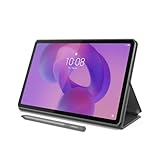
- POWER YOUR STUDY, FUEL YOUR PLAY – Discover smarter learning with the Lenovo Idea Tab. Stay campus-ready with all-day battery life, AI-powered apps to enhance your work, and sharp graphics for tv marathons with friends.
- SMOOTH, POWERFUL, IMMERSIVE – The MediaTek Dimensity 6300 processor is more powerful than ever, with the AI-enhanced multitasking you need to stay ahead.
- CIRCLE IT, SEARCH IT – Use your Lenovo Tab Pen or fingertip to circle items for instant search results or to translate other languages without switching apps. Circle to Search with Google ensures answers are only a circle away.
- SHARP VIEW, CLEAR SOUND – Experience sharp visuals and immersive sound for study sessions and streaming breaks. With 72% NTSC and quad Dolby Atmos-tuned speakers you can enjoy your study breaks with vivid videos and crystal-clear sound.
- LEVEL UP YOUR STUDY – Write, organize, sketch, and calculate with four learning apps built to match your flow. Lenovo AI Note, Squid, Nebo, and MyScript Calculator help you stay clear, focused, and ready for every study session.
Build a page that answers the visitor’s questions
The first screen should make the offer and next step understandable without forcing a long search. It does not need to contain every argument or piece of proof. A useful page structure is:
- Context: Identify the audience, category, or campaign.
- Specific headline: State the outcome or offer in language the visitor can understand.
- Supporting explanation: Say who the offer is for, what it includes, and any important qualification.
- Primary action: Place a clear CTA or form where it is easy to find.
- Relevant visual: Show the product, process, deliverable, speaker, or result accurately.
- Benefits and process: Explain what changes for the visitor and what happens next.
- Proof: Use relevant testimonials, case studies, demonstrations, ratings, certifications, or other support.
- Objection handling: Address material concerns such as price, time, compatibility, security, eligibility, cancellation, or implementation.
- Supporting details: Add specifications, agenda, terms, or FAQs where the decision calls for them.
- Next step: Repeat the primary action after the visitor has received the information needed to decide.
Short pages can suit familiar, low-risk offers. Expensive, complex, unfamiliar, or high-risk decisions often need more explanation. Page length is not the goal: each section should answer a real question or objection. Avoid vague promises such as “Unlock powerful growth”; explain what the offer actually helps the visitor do.
The Tool Desk
Outbyte PC Repair FREERepair Windows errors before they cause bigger problemsFix Now →Outbyte Driver Updater FREEScan for outdated or missing drivers - takes under a minuteDriver Scan →Use evidence that can be substantiated. Give customer testimonials names and roles only with permission; include timeframe and context for case-study results; show genuine product screens or demonstrations; and disclose meaningful pricing, delivery, and cancellation terms. Do not invent customer outcomes, imply that stock photography depicts real customers, manufacture scarcity, or use unverified superlatives. AI can help draft or organize copy, but claims and customer examples still need human verification and any required compliance review.
Design forms and the post-conversion path
A form is an exchange: the visitor gives information in return for an asset, service, or next step. The right length depends on offer value and funnel stage. A top-of-funnel download may need only an email address; a quote request may reasonably ask for details required to scope and route the work.
For example, a demo request might ask for work email, company, role, and an optional field about the visitor’s goal. A low-commitment guide download might ask only for email. These are starting points, not fixed rules. A shorter form can produce more submissions but fewer qualified leads; additional fields can improve routing while reducing completion. Judge the trade-off by qualified outcomes and downstream value, not submissions alone.
- Use appropriate input types and autofill support; label fields clearly for assistive technology and keyboard users.
- Mark required and optional fields, explain why sensitive or consequential information is requested, and show a relevant privacy explanation.
- Provide useful inline validation and error messages without erasing information already entered.
- Test phone and email validation, spam prevention, duplicate handling, consent capture where required, and CRM routing.
- For multi-step forms, make the steps and progress clear and check that the extra interaction is justified.
After submission, display a confirmation state or thank-you page. Deliver the promised asset where appropriate, set expectations for response time, and route the record to the right team or workflow with its source, campaign, offer, and consent data. Test the complete flow, including notifications and duplicate handling. A suitable next step can be offered, but it should not compete with or obscure the action just completed.
Crashes, No Sound, or Screen Glitches?
Random freezes, missing sound and display glitches usually trace back to one bad driver. Find and replace yours safely.Free scan · under a minuteWindows Errors? Fix Them Before They Spread
Repair common Windows errors and clear accumulated junk for a smoother, more stable PC - no reinstall needed.Free scan · no reinstallMake the experience mobile-ready, fast, accessible, and trustworthy
Test the actual conversion path on phones, not just a desktop browser resized to a narrow window. Check the headline, form, buttons, payment or booking flow, phone links, calendar actions, and any app handoff. Buttons should be easy to tap; intrusive popups and cumbersome inputs can make a small screen harder to use.
Rank #4

- A VIBRANT, SLIMMER BUILD FOR SHARPER MINDS – Engage in AI-powered smart learning on the stylish Lenovo Idea Tab Plus. The svelte tablet packs a powerful punch with quad speakers, sharp graphics, and all-day battery life.
- CARRY LIGHT, FEEL BRIGHT – Weighing just over a pound, the Idea Tab Plus is light enough to carry from morning to night and thin enough to easily slip between your notebooks. The Luna Grey color is soft, fresh, and designed to feel just right anywhere.
- CIRCLE TO SEARCH – Stay focused and use your Lenovo Tab Pen or fingertip to circle items for instant search results or to translate other languages without switching apps. Circle to Search is powered by Google.
- LET YOUR LEARNING CLICK – Write, organize, sketch, and calculate with four learning apps built to match your flow. Lenovo Notepad, Squid, Nebo, and MyScript Calculator help you stay clear, focused, and ready for every study session.
- MORE TO SEE, MORE TO ENJOY – The 12.1″ 2.5K display delivers rich color and sharp detail. With TÜV Rheinland Low Blue Light and up to 800 nits brightness, the display keeps every frame clear in any light.
- Keep the offer and primary action easy to find early on the page.
- Compress images and remove unnecessary scripts; check the page after adding chat, consent-management, and analytics tools.
- Test form completion on a mobile connection and check relevant browsers and orientations.
- Use semantic labels, keyboard navigation, readable contrast, and screen-reader checks.
- Provide contact details and relevant pricing, privacy, security, or cancellation information to support the decision.
- Monitor real-user performance as well as lab measurements.
Google recommends mobile-friendly pages and quick loading. Its Google Ads help content cites a retail observation in which a one-second delay on mobile can affect mobile conversions by up to 20%; that is a Google-cited retail finding, not a universal forecast for every industry or page. Source: Google Ads: About the Landing pages report.
Minimize distractions when that helps visitors, but do not confuse minimalism with withholding material information. For a high-consideration purchase, trust and evaluation links may matter more than removing every exit from the page.
Independent reader supportYour contribution helps us test, update, and keep practical guides available for everyone.Connect traffic, tracking, and business outcomes
Use consistent campaign parameters to distinguish traffic sources and creative. For example:
https://example.com/demo&utm_medium=paid_social&utm_campaign=q3_demo&utm_content=video_aThis example shows a naming pattern, not a universal taxonomy. Agree on conventions so teams use the same source, medium, campaign, and content values. UTMs alone may not be sufficient when an ad platform supplies click identifiers or a visitor crosses domains. Preserve relevant parameters through redirects, forms, and booking systems where lawful and technically appropriate. Google explains that tracking templates hold tracking information separately from the final URL and can use URL parameters to track clicks: Google Ads tracking templates and URL options.
Before launch, decide which events are useful for diagnosis and which count as the actual conversion. Depending on the campaign, track page views, CTA clicks, form starts and errors, submissions, calls, bookings, checkout starts, purchases, trial activations, qualified leads, opportunities, and revenue. A button click is not a booked meeting, and a form submission is not necessarily a qualified lead.
| Measurement layer | Question to answer |
|---|---|
| Acquisition | Which source, campaign, keyword, or creative brought the visitor? |
| Engagement | Did the visitor interact, read, or start the form? |
| Conversion | Did the intended action happen? |
| Quality | Was the lead eligible, reachable, and relevant? |
| Revenue | Did the action become pipeline or a sale? |
| Efficiency | What did the qualified outcome cost? |
Choose metrics that reflect the goal: qualified-lead rate and cost per qualified lead for lead generation; revenue per visitor and contribution margin for ecommerce; trial activation and paid conversion for software; attendance rate for events; and answered calls, booked appointments, and show rate for local services.
For a simple example, suppose a campaign receives 100 eligible visitors and 10 form submissions; two of those submissions are qualified. The submission rate is 10%, but the qualified-lead rate is 2%. If campaign spend is $400, cost per submission is $40 and cost per qualified lead is $200. The second figure may be more useful for judging a sales campaign than the form rate alone.
Do these 3 things before closing this tab:
1Clear out junk files and repair common Windows errors2Scan for outdated or missing drivers - takes under a minute3Repair Windows errors before they cause bigger problemsBest Value

- Do what you love, uninterrupted — 25% faster performance than the previous generation and is ideal for seamless streaming, reading, and gaming.
- High-def entertainment — A 10.1" 1080p Full HD display brings brilliant color to all your shows and games. Binge watch longer with 13-hour battery, 3 or 4 GB RAM, 32 or 64 GB of storage, and up to 1 TB expandable storage with micro-SD card (sold separately).
- Thin, light, durable — Tap into entertainment from anywhere with a lightweight, durable design and strengthened glass made from aluminosilicate glass. As measured in a tumble test, Fire HD 10 is 2.7 times as durable as the Samsung Galaxy Tab A8 (2022).
- Stay up to speed — Use the 5 MP front-facing camera to Zoom with family and friends, or create content for social apps like Instagram and TikTok.
- Ready when inspiration strikes — With 4,096 levels of pressure sensitivity, the Made for Amazon Stylus Pen (sold separately) offers a natural writing experience that responds to your handwriting. Use it to write, sketch in apps like OneNote, and more.
Conversion rate = conversions ÷ eligible visitors × 100
Cost per conversion = campaign spend ÷ conversions
Cost per qualified lead = campaign spend ÷ qualified leads
Lead-to-opportunity rate = opportunities ÷ leads × 100
Revenue per visitor = attributable revenue ÷ eligible visitors
Define the denominator and attribution window clearly. Bots, duplicate visits, internal traffic, accidental clicks, consent choices, browser controls, ad blockers, and cross-domain gaps can all affect observed counts. For business-to-business campaigns and offline sales, reconnect leads, calls, appointments, and closed outcomes to campaign records where the systems and applicable rules allow.
Improve the page through deliberate testing
Testing can help identify which version works better for a particular audience and traffic mix. It is not automatically worthwhile for a low-volume page, and a result on one campaign does not establish a universal design rule. Unbounce likewise describes best practices as starting points to test against customer behavior: Unbounce’s landing-page best-practices guide.
Start with one testable hypothesis, one primary success metric, and a defined audience and traffic source. Record the variants, dates, changes, and decision rule. Change a meaningful variable—such as offer, headline, form length, proof placement, pricing presentation, or mobile layout—without making unrelated simultaneous changes that make the result hard to interpret.
Do not call a winner based on a tiny sample, a short-lived traffic spike, uneven traffic quality, a promotion that overlapped the test, or a button-click lift that failed to improve qualified outcomes. Compare relevant segments such as device, source, geography, new versus returning visitors, and funnel stage when there is enough data to do so. At low volume, fix obvious usability, tracking, or offer problems before attempting complex statistical experiments.
What’s actually slowing this PC down?
Pick the symptom - the matching free tool is one click away.
Know when a separate landing page is the wrong tool
A focused page is worth considering when an audience has a distinct need, the campaign has a clear offer, and a dedicated route can make the next action easier to understand. Use the existing product or service page instead when it already answers the campaign’s questions well.
A separate campaign page may add little value when visitors need a complex catalog, broad company research, account access, detailed configuration, or a full checkout experience. It may also be the wrong investment if it duplicates an excellent destination, traffic is too limited to support many variants, or the offer is not compelling. For organic search, prioritize useful, substantive content and internal links rather than producing thin near-duplicate pages for every keyword or location.
Choose a build approach that fits the bottleneck
Start with the system the team already has if it can support campaign-specific pages, reliable tracking, acceptable performance, and a reasonable publishing pace. A dedicated builder may make sense when marketers need faster production, page variants, or testing without waiting on engineering. Custom development can provide greater control over integrations, accessibility, performance, and brand experience, but may add implementation and maintenance work. A CRM-centered platform is useful when lead management and lifecycle workflows—not page creation alone—are the main challenge.
Compare total cost and operational fit, not just the monthly headline price. Check page, visitor, domain, workspace, seat, and conversion limits; whether testing is included at the needed tier; overage rules; CRM and email integrations; data export; analytics; custom-code options; consent capabilities; accessibility and performance control; and migration or cancellation implications. Do not purchase a heatmap or analytics tool unless the team can act on its data and connect it to meaningful outcomes.
Recommended Free Tools
For context, official vendor pages observed around August 16–18, 2026 showed Unbounce monthly plans of $29, $99, $149, and $249, with A/B testing listed from the $149 Experiment tier and visitor limits varying by plan. Leadpages displayed a publishing product beginning at $10 per month and promotional first-month prices for some CRO plans; the page stated that traffic was unlimited and A/B testing began with Grow. These are dated signals, not enduring prices or a recommendation. Verify current plans, limits, promotional terms, and feature gates directly before buying: Unbounce pricing and Leadpages pricing.
For teams already using HubSpot, landing-page capability, branding removal, and campaign association depend on subscription requirements. HubSpot’s knowledge base says removing HubSpot branding requires Content Hub Starter, Professional, or Enterprise, while campaign association has additional Marketing Hub requirements. Check the current details at HubSpot’s page creation and customization documentation and HubSpot Content Hub pricing.
Quick Recap
Launch checklist
- Define one primary conversion and the business outcome behind it.
- Identify the audience, source, intent, offer, limitations, and qualification needs.
- Make the page headline, content, visual, and CTA match the campaign promise.
- Build the page, form or transaction flow, confirmation state, and next-step message.
- Connect analytics, ad tracking, CRM or email routing, and any relevant consent handling.
- Set consistent campaign parameters and test that attribution survives redirects and form or booking handoffs.
- Test desktop and mobile paths, browsers, keyboard navigation, form errors, notifications, duplicate handling, and screen-reader basics.
- Submit test leads or complete test transactions and confirm that delivery, routing, and reporting work end to end.
- Check pricing, eligibility, privacy, terms, and applicable industry requirements for accuracy.
- Launch with a documented baseline; review qualified outcomes and revenue, then define the first test hypothesis.
- Recheck tracking and the visitor experience after material changes to the offer, ads, pricing, traffic mix, or page.
Product prices and availability are accurate as of the date/time indicated and are subject to change. Any price and availability information displayed on Amazon at the time of purchase will apply.




