Free tools Windows power users keep installed
One-click scans. No signup required.
Blockchain is not replacing enterprise resource planning, warehouse or logistics systems. Its more defensible role is as a shared, tamper-evident record for companies that must exchange information but do not want one participant to control the complete history.
That distinction matters economically. A synchronized record can reduce repeated reconciliation, speed recalls, support auditable sustainability claims and automate tightly defined approvals. It cannot make a supplier declaration true, repair poor identifiers or persuade competitors to share data. The value appears when several independent organizations repeatedly need the same trusted history and the cost of disputes, fraud, delay or compliance is material.
The hidden cost is proving what happened
A supply chain may look linear—supplier, manufacturer, distributor, retailer—but its information is usually fragmented. Each organization maintains a separate database and exchanges events through spreadsheets, email, EDI, portals or APIs. The same shipment, inspection or ownership transfer may be entered several times, then reconciled when records disagree.
That creates costs that are easy to overlook: staff time spent matching records, delayed investigations, broad recalls, disputed invoices, counterfeit exposure, compliance work and working capital tied up while nobody can verify an event. Blockchain addresses this coordination problem rather than the physical movement of goods.
Recommended Free Tools
#1 Best Overall

- Apple Find My Integration: Built-in tracker works seamlessly with Apple's Find My network (iOS only) to help you locate your keys, luggage, backpack, and other belongings using your iPhone or iPad
- Sound Alert Feature: Activate a loud sound alert through the Find My app to quickly locate your items when they're nearby, making it easy to find misplaced keys or bags in your home or office
- Global Tracking Network: Leverage Apple's vast Find My network of millions of devices worldwide to help locate your items even when they're far away, providing peace of mind for your valuables
- Convenient Carabiner Design: Features a durable carabiner clip and swivel keyring attachment that easily secures to keys, bags, luggage, and backpacks for versatile everyday carry
- Compact and Portable: Sleek black keychain design with Bluetooth connectivity that's lightweight and unobtrusive, perfect for attaching to your essential items without adding bulk
What a supply-chain blockchain actually adds
A permissioned distributed ledger lets authorized organizations write to a shared transaction history. Participants retain controlled access rather than publishing commercially sensitive information to everyone. The record is designed to be tamper-evident: changing a past event would be detectable, even though the underlying assertion may still be wrong.
| Capability | Operational effect | Potential economic value |
|---|---|---|
| Shared ledger | One jointly visible event history | Less reconciliation and fewer disputes |
| Tamper-evident records | Past changes are easier to detect | Lower audit and verification effort |
| Product-level identity | Items, lots or serialized packages can be followed | Faster recalls and counterfeit investigation |
| Smart contracts | Rules can trigger approvals or payments | Lower transaction-processing costs where conditions are objective |
| Permissioned access | Selected data is shared with approved parties | More practical inter-company collaboration |
| Tokenized assets or certificates | Ownership, quantity or attributes are represented digitally | More consistent chain-of-custody accounting |
| Event timestamps | When and where an event occurred is recorded | Stronger compliance and provenance evidence |
These are potential mechanisms, not guaranteed savings. Comparable, production-scale return-on-investment evidence remains limited, and a technically successful pilot does not prove that an industry-wide network will be cheaper.
How the data lifecycle works
1. Identify the physical world
Products, cases, pallets, locations, legal entities, shipments, lots and serialized packages need durable identifiers. GS1 describes identification, EPCIS event exchange and the Core Business Vocabulary as foundational to interoperable supply-chain networks: GS1 blockchain and supply-chain standards.
2. Capture events
Events can include creation, packing, aggregation, shipment, receipt, transformation, inspection, certification, temperature excursion, ownership transfer, recall, disposal and recycling. EPCIS and CBV provide a shared way to describe what happened, when, where, why and how.
3. Authorize participants
A production network needs identity management, certificate authorities, onboarding rules, role-based permissions, data-sharing agreements and procedures for disputes and software changes. Governance is part of the product, not an administrative afterthought.
4. Separate on-chain and off-chain information
- On-chain: ledger entries, proofs or hashes that establish a durable history.
- Off-chain: large documents, sensor streams, personal information and commercially sensitive records stored in controlled systems.
- Hash: a cryptographic fingerprint that can reveal whether a referenced file changed.
- Oracle or physical-digital bridge: a mechanism that brings an external event, such as a temperature reading, into the ledger.
Keeping personal or voluminous data off-chain can support privacy, correction and retention requirements. A hash proves that a referenced file has changed; it does not prove that the file was accurate in the first place.
5. Query the record and act
Dashboards and APIs can verify provenance, identify affected batches, confirm receipt, trigger exception workflows, release a payment or produce a compliance report. The ledger is therefore one layer in an operating architecture that also includes ERP, warehouse, transport, regulatory and sensor systems.
Where the economics is most credible
Pharmaceutical traceability
The United States Drug Supply Chain Security Act (DSCSA), enacted in 2013, aims to identify and trace certain prescription drugs through the U.S. supply chain, prevent harmful products from entering commerce and enable rapid removal when necessary. FDA describes enhanced requirements for interoperable electronic tracing at the package level and recommends EPCIS for secure electronic exchange: FDA DSCSA overview and FDA product-tracing FAQ.
In an FDA interoperability pilot, manufacturer, distributor and dispenser organizations used IBM Blockchain and Hyperledger Fabric, GS1 EPCIS events, APIs and a multi-node design: FDA pilot report. The commercial logic is faster investigation of suspect products, more targeted recalls, less manual exchange of transaction histories and better diversion detection.
DSCSA does not mandate blockchain. It mandates interoperable tracing and verification. Blockchain is one possible implementation of that requirement.
Rank #2

- Easy Find & Family Sharing with Apple Find My: Quickly pair the FineTrack tag with your iPhone or iPad in just one tap. Using the pre-installed Find My app, add the Air Tracker tag to the Items tab to instantly locate and track your keys, wallet, and other valuables. With iOS 17 or later, you can also share your tracker’s location with family members, so everyone can help keep items safe. (Note: Compatible with iOS devices only, not for Android.)
- Smart Tracking Made Easy: Whether Bluetooth Air Tracker Tag is nearby or far away, locate it easily with the Find My app. When within Bluetooth range, play a sound to quickly find the item tracker tag; when out of range, the Apple Find My network uses its vast ecosystem of Apple devices to provide the item finder’s latest location. Enjoy global tracking with Apple’s Find My network without any subscription fees.
- Lost Item Alerts & Lost Mode: When your Air Tracker Tag moves out of range, the Apple Find My app sends an instant lost alert with the last known location. If your item is confirmed lost, you can activate Lost Mode and leave your contact information so nearby Apple devices can remotely access it and help locate your tracker, making recovery quick and easy.
- 2-Year Battery Life & Child-Safe Certified: The UGREEN 4-pack Bluetooth tracker tags feature a replaceable battery that lasts up to 2 years, outperforming standard 1-year trackers. You can check the tracker’s battery anytime in the app and replace it when needed, keeping your valuables always protected. Item finder tags are also UL4200A certified, preventing children from accidentally swallowing the battery.
- Your Privacy, Fully Protected: Certified by Apple MFi, this Bluetooth Air Tracker Tag uses end-to-end encryption to keep your location data private and secure. All communications are anonymous and encrypted, and no location data is stored on the device. Even if your item is lost, your information remains protected and cannot be accessed without your permission — not by Apple, the manufacturer, or any third party.
Food and agriculture
A shared record can connect a farm or fishing location with a processor, lot, cold-chain event, distributor, retailer and consumer-facing information. Faster provenance checks can narrow a recall, reduce waste caused by uncertainty and help resolve disputes among growers, processors and retailers. GS1 identifies food traceability, authentication, recalls and consumer information among its case-study areas: GS1 case studies.
The ledger does not prove that food is safe or that a lot came from the claimed farm. That depends on inspections, sampling, calibrated sensors, secure identifiers, physical controls and honest reporting.
Ethical sourcing and sustainability
Minerals, timber, cocoa, coffee, palm oil, recycled materials and renewable feedstocks require chain-of-custody accounting. SAP markets Green Token as a blockchain and tokenization system for certified and conventional materials, mass-balance accounting, open APIs, ISCC PLUS and EUDR-related workflows: SAP Green Token and SAP Green Token documentation. IBM describes Product Carbon Ledger as a platform for renewable-material traceability, chain of custody, mass-balance controls and sustainability reporting: IBM Product Carbon Ledger.
Accounting methods must not be conflated:
- Segregated accounting: certified material remains physically separate.
- Mass balance: certified and conventional material may be commingled while certified attributes are tracked through controlled accounting.
- Book-and-claim: an environmental attribute can be separated from the physical product.
A more auditable ledger does not make mass balance equivalent to physical segregation.
Digital Product Passports
The European Union’s Digital Product Passport (DPP) framework is based on the Ecodesign for Sustainable Products Regulation, Regulation (EU) 2024/1781. The Commission’s current timeline says the DPP registry became operational on July 20, 2026, and that obligations for specified electric-vehicle, light-means-of-transport and industrial batteries begin on February 18, 2027: European Commission Digital Product Passport.
A passport may use cloud databases, verifiable credentials, QR codes, RFID, NFC, APIs, registries or a distributed ledger. The regulation concerns structured information and access across the value chain; it does not make blockchain mandatory.
Windows Errors? Fix Them Before They Spread
Repair common Windows errors and clear accumulated junk for a smoother, more stable PC - no reinstall needed.Free scan · no reinstallOutdated Drivers Are Slowing You Down
One free scan finds every outdated or missing driver and matches the right update for your exact hardware.Free scan · exact hardware matchManufacturing
Component pedigrees, calibration records, maintenance histories, inspections, warranties, recalls and counterfeit-part investigations are candidates for a shared record. NIST evaluates blockchain alongside digital passports, IoT and alternative ledger designs, including a material ledger built with a graph database: NIST manufacturing traceability report, NIST IR 8419 and full report PDF.
Cross-border trade and finance
Invoices, bills of lading, certificates of origin, inspection certificates, customs declarations, insurance events and delivery confirmations could be linked. A smart contract might release funds after defined conditions are met. It cannot independently verify that a shipment is physically correct unless trusted external data enters the system. Legal recognition, jurisdiction, privacy, sanctions screening, customs integration and incompatible standards remain separate problems.
Blockchain versus a conventional database
A well-designed shared database is often the better answer. NIST’s work is useful precisely because it treats blockchain as one option among related technologies.
| Prefer a conventional database when | Consider a permissioned ledger when |
|---|---|
| One enterprise owns the workflow | Several independent organizations write to the same record |
| Participants already trust the system operator | No participant is accepted as the neutral authority |
| High throughput and low cost dominate | Historical tamper evidence and provenance are central |
| Records require frequent editing or deletion | Conflicting incentives make unilateral control unacceptable |
| The issue is internal inventory or process design | Smart-contract rules can replace repeated manual verification |
| There are too few participants to justify consortium governance | A repeatable, high-value multi-party data-sharing problem exists |
Other viable tools include EPCIS event-sharing platforms, EDI and API networks, graph databases, digital signatures, verifiable credentials, RFID, QR and NFC, IoT systems, secure data spaces, ERP improvements and supply-chain control towers.
The Tool Desk
Outbyte PC Repair FREEClear out junk files and repair common Windows errorsFree Scan →Outbyte Driver Updater FREEScan for outdated or missing drivers - takes under a minuteDriver Scan →Rank #3
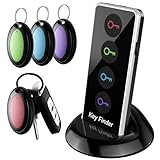
- 【PRESS AND BEEP SAVES THE APP】 Simply press the coded button of the remote tracker, and the corresponding receiver will beep and flash all at once, helping you to find the item easily you attach it to. Phone with the car key finder App dies every now and then while button cells of Jegoteer Locator tags last for 6-10 months on daily use basis.
- 【CLASSIC VERSION WITH FLASHLIGHT】 A proven model for the past decade, the key finder that makes noise comes with 4 oval smart finder tags, which are slim and light, at 1.9” x 1.2” x 0.3" and 0.17oz (5g). The built-in LED light serves as a helpful standby flashlight for a rainy day.
- 【LOUD BEEPER, 131FT REMOTE DISTANCE】 With as loud as 85dB beeping volume, even people with poor hearing are able to locate the lost items easily. RF wave of the stick on remote finder can penetrate through walls, floors, cushions, etc., helping you track down items as far as 131 ft away (tested in open area). The distance being well able to cover whole area of your apartment, it's very helpful as a lost key finder, or tracker for wallets, phones, glasses and hiding pets.
- 【INDOOR & OUTDOOR USE】With the portable size and light weight, the item finder is suitable for both indoor and outdoor use, like when you want to call back the pet from the yard or find your luggage in travel. With 4 stickers and 4 key rings included, you can stick the fob to the TV remote control, glasses & earpods case, or attach it to keychain, backpack, pets, kids, canes, etc. For mobile phone, a protective cover and lanyard is needed. For wallet, just cast the fob inside.
- 【HANDY AND CONSIDERATE】Set the find my keys device on top of the table or other places where you remember easily. Installing and replacing receiver button cells can easily be done with the help of a coin. 2 AAA batteries are needed for the transmitter.
What blockchain cannot fix
Immutable does not mean true
A fraudulent certificate, inaccurate sensor reading or false supplier declaration can be preserved indefinitely. Reliable deployment requires supplier audits, physical inspections, device identity, sensor calibration, digital signatures and exception handling.
Decentralized does not mean governance-free
The consortium must decide who may join and write, who pays, which fields each party sees, how disputes are resolved, how software is upgraded, what happens when a member leaves and how compromised credentials are revoked. Liability for incorrect data must be explicit.
Interoperability is not automatic
A ledger does not automatically connect to ERP, warehouse-management, transport-management, customs, retail, IoT or government systems. Common identifiers and event definitions—especially GS1 EPCIS and CBV—are as important as the ledger.
Privacy and legal deletion need design
Prices, volumes, suppliers, routes and capacity may be commercially sensitive. Permissioned access, selective disclosure, encryption, private channels and off-chain storage may be necessary. Where correction or deletion is required, use revocation records, replaceable references, cryptographic erasure and retention policies rather than promising absolute immutability.
Do these 3 things before closing this tab:
1Scan for outdated or missing drivers - takes under a minute2Repair Windows errors before they cause bigger problems3Fix the driver behind crashes, sound loss and screen glitchesEnergy, scale and physical identity remain constraints
Energy use depends on architecture. A permissioned proof-of-authority network is not equivalent to a large public proof-of-work chain. A 2026 study of an Ethereum proof-of-authority supply-chain testbed concluded that computational and energy requirements remain relevant as network size and transaction volume increase: Cleaner Logistics and Supply Chain study.
Identifiers can be detached from goods through relabeling, theft, counterfeit substitution, aggregation, splitting, transformation, duplication or compromised sensors. The data model must represent those events rather than treating every item as static.
A practical decision framework
- Quantify the problem: measure reconciliation labor, dispute duration, recall exposure, counterfeit losses, compliance deadlines and waste before choosing technology.
- Map participants: list every organization that must write or verify an event and test whether each will participate.
- Standardize identity and events: adopt product, location, entity and shipment identifiers and agree on EPCIS/CBV semantics.
- Design governance: define onboarding, permissions, liability, dispute handling, upgrades, key recovery and exit or data portability.
- Choose the simplest architecture that works: compare an internal database, EPCIS network, enterprise traceability platform, permissioned ledger and public chain.
- Test the physical-digital bridge: validate labels, scanning, sensor provenance, transformations, aggregation and exception handling.
- Pilot an expensive, repeatable workflow: select a recall, regulated trace, sustainability accounting or dispute process where a measurable baseline exists.
- Measure production economics: include integration, partner onboarding, hardware, legal work, governance, training, support, storage and security—not just transaction fees.
Commercial options and realistic price signals
Published prices are plan signals, not total implementation budgets. Vendor pages describe capabilities, while integration, data governance, onboarding, hardware, legal work and support can dominate cost.
| Option | Positioning | Published signal or limitation |
|---|---|---|
| IBM Sterling B2B Integration SaaS | Managed B2B integration, standards-based exchange and track-and-trace | Essentials begins at $2,800 for 12 months on the pricing page observed August 16, 2026; higher editions are quote-oriented |
| IBM Product Carbon Ledger | Renewable-material traceability, chain of custody and mass balance | No public list price stated in the reviewed official material |
| SAP Green Token | SAP-centric tokenization and mass-balance accounting | SAP directs buyers to a registration or demo request rather than publishing a list price |
| Microsoft Azure Confidential Ledger | Custom tamper-evident ledger infrastructure | Calculator and quote-based pricing varies by agreement, region and usage |
| TraceLink MINT | Life-sciences interoperability and trading-partner connectivity | $600, $1,200 or $4,800 annually per MINT Link for the listed transaction-type tiers; plan limitations apply |
IBM Sterling and TraceLink are primarily integration networks, not generic public blockchains. Azure Confidential Ledger supplies infrastructure, so the buyer must build event models, partner processes and user workflows. SAP Green Token and IBM Product Carbon Ledger target sustainability and process-industry use cases. None removes the need for standards, governance or trustworthy source data.
The economic test
Blockchain is most defensible when several independent parties need a common history, no single party should control it, the data-sharing problem repeats, and the cost of disputes, recalls, fraud or compliance is significant. It is usually inferior when one organization owns the process, existing ERP or API improvements solve the issue, records must be routinely deleted, or participants will not share data.
The Bottom Line
Blockchain’s durable supply-chain role is selective infrastructure for shared trust, provenance and compliance—not a wholesale replacement for databases, ERP systems or logistics platforms. The winning projects start with identifiers, event standards, reliable physical data and consortium governance, then use a ledger only where those foundations create measurable economic value.
Quick Recap
Product prices and availability are accurate as of the date/time indicated and are subject to change. Any price and availability information displayed on Amazon at the time of purchase will apply.




