Recommended Free Tools
High-tech does not automatically mean high performance. In 2026, durable algorithmic-trading advantages usually come from an integrated system: point-in-time data, realistic cost modeling, robust validation, adaptive execution, hard risk limits, resilient infrastructure, and continuous monitoring. Machine learning, GPUs, alternative data, low-latency networks, and cloud platforms can improve specific parts of that system, but none removes regime change, market impact, slippage, overfitting, operational failure, or regulatory obligations.
The practical rule is simple: match each technology to a measurable market problem. A GPU can accelerate model training without improving order placement; colocation can matter to a market maker while adding little value to a daily factor strategy. “Staying ahead” means preserving research validity and implementation quality, not guaranteeing returns.
Algorithmic trading is broader than high-frequency trading
Algorithmic trading means using programmed rules or models to generate, size, route, or manage orders. High-frequency trading (HFT) is only one subset, characterized by very short holding periods, high message and order rates, and infrastructure designed around extremely fast reaction times. A strategy that trades hourly or daily is still algorithmic and may gain more from better data, portfolio construction, and controls than from shaving microseconds.
U.S. equities are fragmented across exchanges, alternative trading systems, broker-dealer platforms, order types, connectivity options, and market-information products. That structure makes data quality, routing, and execution engineering part of the strategy itself, as the SEC’s report to Congress on algorithmic trading explains.
What’s actually slowing this PC down?
Pick the symptom - the matching free tool is one click away.
#1 Best Overall

- 【49-Inch Super Ultrawide Immersion】The 32:9 curved display combines a 5120×1440 DQHD resolution with an expansive panoramic view. See more of supported racing, simulation, FPS, and strategy games while enjoying the workspace of two 27-inch QHD screens without a center bezel.
- 【Smooth 165Hz Gaming Performance】A 165Hz refresh rate and 1ms response time deliver smoother motion for fast-paced gameplay. Adaptive Sync support helps reduce screen tearing and stuttering on compatible systems, making the monitor well suited for racing, action, FPS, and simulation games.
- 【Vivid Color and Deeper Contrast】The VA panel, 127% sRGB color gamut, HDR400 support, and 400-nit brightness deliver vivid colors, deep contrast, and clearer details in darker scenes. Built for immersive gaming, video editing, photo work, streaming, and content creation.
- 【Replace a Dual-Monitor Setup】The 49-inch DQHD screen provides the workspace of two QHD monitors without a distracting center bezel. PIP and PBP modes display content from multiple sources, supporting trading, spreadsheets, video meetings, streaming, editing, and multitasking.
- 【Flexible Connections and Setup】HDMI 2.0 and DisplayPort 1.4 connect compatible gaming PCs, laptops, consoles, and workstations. The adjustable stand and VESA 100×100 support flexible placement. Use DisplayPort 1.4 with compatible hardware for the maximum supported resolution and refresh rate.
The modern technology stack
Data layer
A credible system may combine bars with tick, trade, quote, and order-book data. It also needs point-in-time fundamentals, delisted securities, corporate-action history, exchange calendars, time zones, instrument symbology, and accurately timestamped news or alternative data. Charting data is not automatically suitable for microstructure research: serious simulations can require quote updates, trade corrections, auction data, depth, and venue-specific timestamps.
- Check that every feature was available at the simulated decision time.
- Include historical constituents and delisted instruments to avoid survivorship bias.
- Apply splits, dividends, symbol changes, and contract rolls consistently.
- Record first dissemination time for news instead of a later revised timestamp.
- Confirm licensing, redistribution rights, retention rules, and geographic restrictions.
Research and modeling layer
Python is common for research and orchestration; C++, Rust, Java, or optimized Python components may be appropriate for production and latency-sensitive paths. Use vectorized numerical libraries, version control, reproducible environments, experiment tracking, data lineage, and separate research, simulation, paper-trading, and production environments.
Model choices include regularized linear regression, logistic regression, tree and gradient-boosting models, random forests, convolutional or recurrent networks, transformers for text or sequences, Bayesian models, ensembles, and reinforcement-learning agents. Simpler models often provide better calibration, interpretability, and debugging. A review of deep reinforcement learning in quantitative trading found that reported research improvements did not necessarily become strong live profitability; model sophistication is not evidence of robustness (review of deep reinforcement learning in quantitative algorithmic trading).
Execution layer
Production execution can use broker Web, FIX, or desktop APIs; WebSocket and REST feeds; or native exchange protocols. The system must handle order types, partial fills, rejects, requotes, cancel/replace requests, rate limits, heartbeats, reconnects, clock synchronization, and duplicate-order prevention. Interactive Brokers documents Web, FIX, and TWS APIs, with TWS language support including Python, C++, C#, Java, ActiveX, RTD, and DDE (Interactive Brokers API solutions).
Risk, controls, and monitoring
Controls belong in the live gateway, not only in a research notebook. Set maximum order size, notional and position limits, leverage and margin limits, price collars, fat-finger checks, message-rate limits, daily loss limits, liquidity and volatility limits, stale-data detection, model-confidence thresholds, emergency flattening, manual overrides, and immutable audit logs. FINRA identifies algorithm development, testing, validation, trading-system controls, supervision, and compliance as core control areas (FINRA Regulatory Notice 15-09).
Monitor feature distributions, prediction calibration, hit rate, turnover, fill rate, slippage, realized spread, concentration, drawdown, latency, errors, data gaps, model version, and strategy-level P&L attribution. Define automatic disable conditions before the strategy is funded.
Which advanced strategies benefit from technology?
| Strategy | Useful technology | Best use case | Primary failure mode |
|---|---|---|---|
| Statistical arbitrage | Machine learning, fast data, covariance estimation, optimization | Cross-sectional relationships among related instruments | Correlation breakdown, crowded unwinds, and costs erasing small returns |
| Momentum and trend following | Multi-asset scanning, regime models, volatility targeting | Persistent directional behavior across assets or horizons | Whipsaws, delayed signals, turnover, and tax drag |
| Mean reversion | Order-book analysis, nonlinear state detection, dynamic half-life estimates | Temporary dislocations and spread deviations | The estimated mean moves, liquidity gaps, or short squeezes |
| Market making | Low-latency feeds, queue estimates, inventory optimization, cross-venue hedging | Continuous liquidity provision | Adverse selection, inventory accumulation, outages, and fee changes |
| Event-driven | NLP, document parsing, low-latency news ingestion, event databases | Earnings, macro releases, mergers, and regulatory events | Timestamp ambiguity, revised headlines, or incorrect interpretation |
| Execution algorithms | Impact models, smart routing, fill prediction, adaptive scheduling | Reducing the cost of large orders | Slippage, incomplete fills, and changing liquidity |
| Reinforcement learning | Sequential policy optimization and simulation | Execution, inventory control, and dynamic order placement | Simulator mismatch, nonstationarity, and misspecified rewards |
Statistical arbitrage
These systems trade estimated relationships among securities, sectors, futures, currencies, or other linked instruments. Technology helps generate features, rank opportunities, estimate covariance, and optimize portfolios in real time. Stress can break historical correlations, and multiple testing can create apparently strong but false discoveries.
Momentum and trend following
Automation makes it practical to scan many assets, target volatility, classify regimes, and adjust position size. The trade-off is exposure to whipsaw markets, delayed reversals, turnover, and the possibility that a long historical trend was an unusually favorable episode.
Mean reversion
Microstructure and nonlinear models can distinguish a temporary move from a structural repricing. No model guarantees that the “mean” remains fixed: a cheap asset can become cheaper, and stops may be difficult to execute during a disorderly market.
Market making
Market makers continuously update quotes while controlling inventory and adverse-selection risk. Queue-position estimates, toxic-flow detection, specialized hardware, and cross-venue hedging can help, but sudden volatility, exchange outages, capital requirements, and fee or rebate changes can overwhelm the edge.
Rank #2

- Immersive 49inch Ultra-Wide Curved Monitor: The 49-inch curved gaming monitor with 1500R curvature and 32:9 ultra-wide ratio expands your field of view for maximum immersion. The DQHD 5120×1440 resolution delivers crystal-clear detail, making it ideal for gaming, multitasking, and cinematic experiences
- 144Hz/165Hz Refresh Rate with AMD FreeSync: Enjoy ultra-smooth gameplay with a fast 144Hz/165Hz refresh rate. AMD FreeSync technology eliminates screen tearing and stutter, ensuring responsive performance for esports, competitive gaming, video streaming, and everyday PC use
- 120% sRGB Wide Color: With 120% sRGB color coverage, 330cd/m² brightness, and a 3000:1 contrast ratio, this ultra-wide monitor delivers accurate, vibrant colors for graphic design, video editing, and content creation. Eye-care features like low blue light and flicker-free technology reduce strain during long sessions
- Flexible Setup with Adjustable Stand & Ports: The height-adjustable stand allows tilt and lift adjustments for ergonomic comfort. Equipped with HDMI 2.1 & DP 1.4, this monitor supports advanced PCs and laptops. Wall mount compatibility offers a clean, space-saving setup—perfect for gaming rooms, home offices, or studios. 1 x 3.5MM Audio Jack, you can directly connect your such as laptops, Tablets, Gaming consoles, and Speakers. No built-in speakers
- Assurances: We provide high-quality computer monitors and premium services. If you have any questions, you are welcome to contact us at any time. We are here to serve you and solve all your problems
Event-driven trading
NLP can classify filings, earnings calls, central-bank communications, analyst research, and news. The hard part is knowing when information was actually available and whether a headline was revised or misunderstood. A sustainable latency advantage is expensive and difficult to maintain.
Execution algorithms
VWAP, TWAP, participation-rate, implementation-shortfall, arrival-price, liquidity-seeking, and adaptive-routing algorithms break large orders into smaller decisions. This is among the most defensible uses of advanced technology because the objective is measurable: reduce implementation shortfall, spread cost, market impact, and execution variance.
The Tool Desk
Outbyte PC Repair FREERepair Windows errors before they cause bigger problemsFix Now →Outbyte Driver Updater FREEScan for outdated or missing drivers - takes under a minuteDriver Scan →Machine learning, deep learning, and reinforcement learning
Machine learning
Supervised models can forecast returns, volatility, liquidity, fills, or regime probabilities; classifiers can filter trades; ranking models can select among opportunities. Their advantages are nonlinear relationships and large feature sets. Their costs are easier overfitting, weaker explainability, data drift, and greater infrastructure needs.
Use machine learning for a defined subproblem—such as volatility forecasting or order-fill prediction—when it improves a net-of-cost metric against a simple baseline. Do not assume it should make every portfolio and execution decision.
Deep learning
Neural networks are most defensible when data is high-dimensional, sequential or spatial structure is meaningful, datasets are large, and incremental accuracy has economic value after costs. Classical models are often preferable with small samples, weak signals, infrequent trading, or a strong need for interpretability and operational simplicity.
Reinforcement learning
Reinforcement learning can optimize execution schedules, inventory, market-making quotes, or rebalancing policies. Exploration with live capital is dangerous, simulators omit market impact and participant reactions, and historical data may not represent future regimes. Treat it as a specialized research tool, not a universal replacement for rules or supervised learning.
Execution is where paper profits disappear
A mid-price backtest is not an investable result. Net performance must account for commissions, bid-ask spread, slippage, market impact, borrow, funding, exchange and regulatory fees, data costs, latency, partial fills, rejects, and cancel/replace behavior. A high classification accuracy can still produce negative P&L if the signal is too small, late, or expensive to trade.
Paper trading also has limits: it cannot fully reproduce queue position, market impact, borrow availability, or every rejection. Use historical order-book or quote replay where possible, then compare simulated and live fill distributions.
A repeatable research-to-production process
- Define the economic hypothesis. State the inefficiency, why it might persist, who is on the other side, expected holding period, eligible instruments, and what would invalidate it. Start with the market problem, not an AI model.
- Build point-in-time data. Verify feature availability, corporate actions, delisted assets, historical constituents, first news dissemination time, and whether any values were revised later.
- Set a simple baseline. Compare with buy-and-hold, equal weight, a moving-average rule, simple momentum, ordinary least squares or logistic regression, and a naive execution schedule.
- Model realistic costs. Include all trading, financing, data, latency, fill, and rejection costs. Report net results and sensitivity to wider spreads or worse fills.
- Use time-aware validation. Prefer walk-forward, expanding-window, or rolling-window tests. Use purged cross-validation and embargo periods when labels overlap, and reserve an untouched final period. Randomly shuffling time-series observations can leak future information.
- Stress the strategy. Test wider spreads, delayed signals, missing or stale data, feed interruptions, gaps, volatility spikes, correlation breaks, lower liquidity, parameter perturbations, delayed execution, rejects, halts, and exchange closures.
- Paper trade, then scale gradually. Progress from historical backtest to event-driven simulation, market-data replay, paper trading, a tiny live allocation, controlled scale-up, and continuous post-trade review.
- Monitor drift in production. Track calibration, fills, slippage, concentration, drawdown, latency, errors, data gaps, model versions, and P&L attribution. Disable the strategy automatically when predefined safety conditions are breached.
Common failure modes
Backtest overfitting and look-ahead bias
Warning signs include testing many variants and reporting only the winner, optimizing too many parameters, using short windows, and seeing performance concentrated in one episode. Look-ahead examples include revised fundamentals, today’s index constituents in historical tests, end-of-day data applied before the session ended, final rather than first news timestamps, and normalization statistics calculated over the full sample.
Survivorship and market-impact blindness
Testing only securities that still exist generally improves apparent results. Likewise, a strategy that buys at the mid-price may fail once its own orders consume liquidity or move the market.
PC Slower Than It Used to Be?
A free scan shows the junk files, broken settings and background clutter dragging Windows down - then fixes them in one click.Free scan · Windows 10 & 11Crashes, No Sound, or Screen Glitches?
Random freezes, missing sound and display glitches usually trace back to one bad driver. Find and replace yours safely.Free scan · under a minuteRank #3
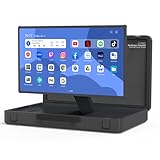
- [Unique box design and 27-inch adjustable smart screen]: PackGo's unique box design allows you to carry your entertainment device with you. This portable device is perfect for outdoor picnics, parties or travel adventures, providing a stylish and convenient way to entertain, allowing you to enjoy a high-quality experience on the go. The screen supports 90° adjustment, which allows for flexible viewing angles in any environment (Movies or TikTok)
- [High-performance PackGo smart screen]: Equipped with RK3588 CPU, 8GB RAM, and 128GB ROM storage, enjoy sharp visuals with a 1920x1080 resolution screen, whether it is movies, games, or TikTok, The screen supports 90° adjustment for flexible viewing angles in any environment. Open the case and start enjoying your favorite content. It can ensure a seamless and fluid user experience
- [Enhanced Android operating system]: Experience the seamless performance of PackGo's customized Android system. 8GB RAM and 128GB ROM powered by the RK3588 CPU ensure smooth, lag-free operation. Access thousands of apps through the Google Play Store. Download your favorite movies, games, and music. You will have a great tailgate party with your family or friends
- [Long-lasting battery life]: PackGo is equipped with a 6800 mAh battery, allowing you to enjoy hours of entertainment. Whether you are watching movies, playing games, listening to music or browsing social media, you can enjoy up to 3 hours of continuous use without frequent charging. It can also be used as a mobile power bank to charge your mobile devices such as mobile phones and tablets
- [Multi-mode entertainment]: PackGo adapts to your entertainment needs through various modes: Speaker mode: Enjoy high-quality audio and can play music on your mobile device as a Bluetooth speaker. Game mode: Connect your Switch or PS5 via HDMI cable to enjoy smooth games on the big screen. TV mode: Watch movies and shows. Screen mirroring mode: Mirror your mobile phone or PC screen for conferencing or streaming. White noise mode: Create ambient sounds such as rain, waves or campfire. These features make PackGo a versatile and essential companion for all your entertainment and productivity needs
Regime and operational change
Interest rates, regulation, fee schedules, participant behavior, technology, volatility, liquidity, and corporate-action conventions can all change relationships. Operational incidents include duplicate orders after reconnects, stale feeds, clock drift, wrong symbol mappings, contract-roll errors, unhandled halts, runaway cancel loops, deployment mismatches, misconfigured leverage, and exhausted API limits.
AI-specific risks
Generative or vendor models can hallucinate news interpretations, change without notice, expose proprietary data, produce nondeterministic outputs, or fail to provide reproducible decisions. CFTC guidance warns that insufficient control over AI design, execution, data, and risk management can increase instability risks (CFTC Responsible AI in Financial Markets).
Independent reader supportYour contribution helps us test, update, and keep practical guides available for everyone.Regulatory obligations depend on jurisdiction and activity
In the United States, SEC Rule 15c3-5 requires firms with market access to establish, document, maintain, and regularly review risk controls and supervisory procedures. FINRA has identified failures involving order accuracy, excessive messaging, wash sales, short-sale marking and locate requirements, and inadequate controls (FINRA Regulatory Notice 15-06). FINRA also highlights explainability, model risk, data governance, and obligations involving Rules 2010, 5210, and 6140, plus SEC market-access, Regulation NMS, Regulation SHO, and Regulation ATS requirements (FINRA AI challenges).
The SEC’s amended Rule 605 framework adds finer execution-time measurement, realized spreads at multiple intervals, odd-lot and fractional-share coverage, and expanded reporting by certain broker-dealers; its compliance date was extended to August 1, 2026 (SEC Disclosure of Order Execution Information).
In the European Union, ESMA’s supervisory briefing published February 26, 2026 focuses on pre-trade controls, governance, testing, outsourcing, and AI considerations under MiFID II (ESMA briefing). The FCA’s 2025 review of principal-trading firms likewise treated algorithmic-control frameworks under MiFID technical standards as an ongoing supervisory focus (FCA review). Obligations vary with country, instrument, activity, and regulated status; obtain jurisdiction-specific advice.
Choosing infrastructure and providers
Buy the component that removes your actual bottleneck—data integrity, reproducible research, execution access, compute, or monitoring—not the product with the most impressive AI branding.
| Use case | Reasonable starting point | Watch-outs |
|---|---|---|
| Beginner research | Managed platform with low-cost data and backtesting | Check data scope, live-trading limits, and whether results include costs |
| Intermediate developer | Self-hosted Python stack plus a documented broker API | You own deployment, monitoring, security, and recovery |
| Data-intensive research | Programmatic tick or order-book vendor | Licensing, exchange entitlements, storage, and usage charges |
| Multi-asset live trading | Established broker with documented Web, FIX, or desktop APIs | Commissions, margin, market-data fees, rate limits, and jurisdiction |
| Low-latency professional trading | Direct feeds, colocation, FIX or native protocols, dedicated risk gateways | Fixed infrastructure and data costs can exceed the expected edge |
Examples of provider fit
QuantConnect offers a free plan advertising multiple asset classes, community support, and unlimited backtesting, alongside paid researcher, team, trading-firm, and institution tiers. Its cloud research, optimization, LEAN-CLI, live trading, Interactive Brokers integration, and alternative-data add-ons suit an integrated research-to-live workflow. Pricing and tier details can change, so verify them before subscribing; it is not designed as unrestricted exchange-colocated HFT infrastructure.
Interactive Brokers provides Web, FIX, and TWS APIs for broad brokerage access. Commissions, market-data fees, margin, instrument availability, and API behavior vary by asset class and jurisdiction; there is no universal “free” or “low-cost” promise.
Quick wins for a faster PC:
Repair Windows errors before they cause bigger problemsFix Now →Fix the driver behind crashes, sound loss and screen glitchesFind Drivers →Databento describes usage-based historical and live data with Python, C++, and Rust libraries, equities, futures, options, corporate actions, security master, PCAPs, and dedicated connectivity. Its pricing page advertises $125 in historical-data credits for new users, expiring six months after signup with one set per team. Exchange licensing and consumption costs still matter.
A self-hosted stack can combine Python, pandas, NumPy, scikit-learn, PyTorch or JAX, PostgreSQL or Parquet, Docker, Git, an experiment tracker, broker APIs, and local or cloud compute. Enterprise teams may add colocation, premium feeds, FPGA hardware, dedicated risk gateways, surveillance, MLOps, and alternative-data subscriptions. These are not necessary purchases for most retail traders.
Avoid unregistered auto-trading services promising consistent or risk-free returns, opaque data provenance, gross-only backtests, or unexplained routing and fees. FINRA has warned about such services and their use of AI marketing (FINRA warning on unregistered auto-trading services).
Quick Recap
What staying ahead actually requires
- Reproducible research with versioned data, code, parameters, and model artifacts.
- Net-of-cost evaluation and sensitivity analysis rather than headline gross returns.
- Technology chosen for a specific bottleneck, with a measurable acceptance metric.
- Resilient execution, explicit recovery procedures, kill switches, and complete audit trails.
- Monitoring that detects drift, deteriorating fills, data failures, and concentration before losses compound.
- Willingness to retire a strategy when its economic hypothesis, capacity, or execution assumptions no longer hold.
Product prices and availability are accurate as of the date/time indicated and are subject to change. Any price and availability information displayed on Amazon at the time of purchase will apply.




