Quick wins for a faster PC:
Scan for outdated or missing drivers - takes under a minuteDriver Scan →Repair Windows errors before they cause bigger problemsFix Now →Thailand is not replacing farmers with robots. It is building a more connected agricultural system in which drones, sensors, satellite imagery, artificial intelligence, digital records and shared services help farmers manage labor shortages, climate shocks, costly inputs and demanding export markets. Some tools are already operating; others remain pilots or research platforms. The most credible path for smallholders is usually access through cooperatives and agricultural-service providers rather than ownership of every device.
Why Thai agriculture needs a technology transition
Thailand’s farms face several pressures at once: an aging rural workforce, labor shortages and higher wages, droughts, floods and heat, water stress, soil degradation, volatile fertilizer prices and stricter expectations about chemical use and product origin. Farmers must also raise income without simply expanding cultivated land.

The World Bank links Thailand’s aging population, slow productivity growth, limitations in digital data use and exposure to extreme weather. Its green-and-resilient Thailand analysis estimates modeled agricultural production losses of approximately US$2.9 billion to US$5.4 billion under the conditions studied; this is a scenario-based risk range, not a guaranteed forecast (World Bank, Thailand Systematic Country Diagnostic 2024; World Bank, Towards a Green and Resilient Thailand).
Technology can improve decisions, but it cannot by itself solve land access, debt, water allocation or commodity prices. Its value depends on whether the resulting savings, stability or market access exceed the cost of equipment, data, training and maintenance.
Crashes, No Sound, or Screen Glitches?
Random freezes, missing sound and display glitches usually trace back to one bad driver. Find and replace yours safely.Free scan · under a minutePC Slower Than It Used to Be?
A free scan shows the junk files, broken settings and background clutter dragging Windows down - then fixes them in one click.Free scan · Windows 10 & 11#1 Best Overall
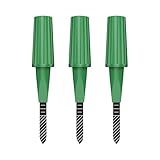
- Zigbee Hub Required: Compatible with standard Zigbee 3.0, such as Echo (4th Gen), Echo Plus (1st Gen and 2nd Gen), Echo Studio, Eero 6, Eero Pro 6, Home Assistant (ZHA & Z2M), Hubitat and SmartThings Aeotec, Homey, Homey Bridge, Homey Pro. A Zigbee hub is required. Gen2 is optimized for stronger and more stable wireless performance, helping ensure consistent data transmission
- Stable Monitoring, Smart Irrigation: Designed to deliver more consistent soil moisture readings, helping reduce data fluctuations and improve confidence when deciding when to water your plants. It widely adapts to various soil environments, guaranteeing your plants always receive the right amount of water
- Capacitive Monitoring: Unlike traditional probes, capacitive sensors are less affected by soil salinity and pH, offering greater durability and a longer lifespan in various soil types. Suitable for various gardening places including farms, greenhouses, nurseries, gardens, and potted plants
- Enhanced Antenna for Stable Coverage: Featuring a reinforced antenna design for more stable signals, this sensor dramatically extends your signal range. Even when the sensor is placed in the living room, on the balcony, or in a garden corner, it maintains a reliable connection with your Zigbee gateway. This ensures stable data transmission in complex home environments, making indoor smart gardening more worry-free
- Remote Monitoring and Automation: Receive real-time alerts on your smartphone, allowing you to take action anytime, anywhere, ensuring your plants get the right care. Integrated with smart home systems, these sensors enable automated watering schedules, so you can manage and control your garden's irrigation remotely, saving both time and effort
The technology stack now emerging
Drones for mapping and application
Agricultural drones are used to survey fields, map crop conditions, identify stressed or damaged areas, spray crop-protection products and apply fertilizer. They can work on wet or difficult terrain and reduce workers’ exposure to chemicals. Their usefulness depends on flight planning, weather, calibration, battery capacity, formulation and operator training. A drone reduces some labor; it does not remove the need for agronomic judgment or regulatory compliance.
Thailand’s government reported results from a 22-rai demonstration of Kor Khor 22 glutinous rice in Nakhon Phanom: seed use fell 52%, fertilizer use 25% and labor cost 41%. Those figures describe one demonstration plot, not a national average or guaranteed return (Thailand.go.th). The same policy effort expanded drone learning and training centers in 2026, indicating that operator skills and local support matter as much as hardware.
IoT sensors and smart irrigation
In a basic smart-irrigation system, sensors measure soil moisture, temperature, humidity or related conditions; a controller compares readings with thresholds; pumps or valves respond; and a phone or cloud interface displays the result. Sensors only help when they are correctly placed, calibrated and maintained. A connectivity outage, empty reservoir or faulty probe can still produce a bad decision.
HandySense, developed through cooperation involving the Department of Agricultural Extension and NECTEC, is a Thai example designed to monitor growing conditions and control irrigation. Earlier official material described a prototype with four sensors and three functions and reported installations at 77 sites at that time; that historical figure should not be read as a current national total (Ministry of Agriculture and Cooperatives). The Department of Agricultural Extension has promoted trained local providers to install and maintain smart-irrigation systems, addressing the support problem that often determines whether a pilot survives (Department of Agricultural Extension).
Satellites and AI as an integrated layer
Satellite imagery offers broad spatial coverage, while field sensors provide local, frequent measurements. Artificial-intelligence models can classify risks, detect patterns and prioritize inspections. The combination is more useful than an isolated dashboard because it connects observation with an action.
In January 2026, NSTDA and NECTEC announced AgriNEXT, an AI-oriented ecosystem intended to integrate satellite and IoT data into actionable intelligence, with traceability functions relevant to export quality and sustainability certification (NSTDA). The announcement establishes a platform initiative, not nationwide adoption. Users should ask which crops and regions are covered, how models are validated, how often imagery is updated, how false alarms are handled, whether recommendations work in Thai and low-bandwidth settings, and who controls farm data.
Precision fertilizer and soil management
Precision fertilization means characterizing soil and matching nutrient applications to crop and field requirements rather than applying one formula uniformly. Thailand’s 2026 “Tailor-made Fertiliser for Thai Farmers” initiative planned fertilizer-mixing units and smart platforms at 30 pilot cooperatives in Udon Thani, Chai Nat and Chiang Rai (Thailand.go.th).
Precision does not mean organic or chemical-free. Environmental results still depend on formulation, timing, runoff, soil conditions and actual farmer practice. The relevant test is whether soil testing, logistics and equipment cost less than the input savings and improved crop performance.
Digital records and traceability
Digital farm records can document origin, inputs, harvest timing, processing, food-safety compliance and environmental or sustainability standards. The Department of Agricultural Extension and Chia Tai have discussed agricultural big-data platforms, IoT management, drones, precision production and traceability, including digital services in Thailand’s Digital Catalog (Department of Agricultural Extension).
Traceability therefore serves two purposes: it can improve farm management and help exporters prove how food was produced. It can also impose administrative work, smartphone requirements and data-entry costs if buyers or programs do not provide a clear commercial benefit.
From rice fields to fisheries and livestock
Thailand’s innovation agenda extends beyond field crops. Applications include aquaculture monitoring, IoT-controlled farm environments, animal-health alerts, fisheries management and post-harvest quality checks. The National Research Council of Thailand published a 2025 procurement notice for research and development of an IoT-based Thai fairy-shrimp farming prototype. That is evidence of publicly supported research, not proof of broad commercial deployment (National Research Council of Thailand).
A 2025 FAO forum in Bangkok highlighted AI, satellite data, mobile advisory tools, drone-enabled rice farming, digital traceability, AI-supported fisheries management and non-intrusive spectroscopy for detecting meat spoilage. The forum demonstrates regional priorities; it does not establish that every listed application is already operating throughout Thailand (FAO).
Do these 3 things before closing this tab:
1Repair Windows errors before they cause bigger problems2Scan for outdated or missing drivers - takes under a minute3Clear out junk files and repair common Windows errorsWhy shared services may beat ownership
Small or fragmented plots often cannot justify buying a drone, tractor, sensor network or specialized software. Capital costs, batteries, repairs, training and long break-even periods can overwhelm seasonal returns. Thailand’s Department of Agricultural Extension has promoted online registration of agricultural-service providers for this reason (Department of Agricultural Extension).
Possible models include:
- drone-spraying and mapping contractors;
- custom machinery hiring and cooperative-owned equipment;
- local IoT installation and maintenance;
- shared soil testing and fertilizer mixing;
- satellite-mapping or farm-management subscriptions;
- collective cold-chain and post-harvest monitoring.
Outsourcing converts a large purchase into a seasonal or per-operation fee, but introduces new risks: providers may be oversubscribed at peak times, quality may vary, minimum order sizes may exclude remote farms, and contracts must clarify data ownership and liability when a service fails.
Rank #3

- 【2 Measurement Methods】For manual measurement, simply press the button to obtain a reading within seconds. For automatic measurement, the moisture meter automatically checks soil moisture every 3 minutes. You can remote monitor remotely via the RAINPOINT Home app, but you must connect a compatible WiFi hub (HWG023/HWG040), sold separately
- 【Build an Automatic Watering System】By pairing with the Wi-Fi hub, the moisture meter for plants can work together with the HTV145/HTV245 timer (sold separately) to create an automatic watering system. You can automatically adjust the watering schedule based on soil moisture data to ensure your plants thrive and remain healthy and green all year round
- 【±5% Accuracy Tolerance】Equipped with advanced sensors, this soil moisture meter provides accurate and reliable readings, allowing you to determine whether the soil deep within your flowerpot or garden is dry, moist, or wet; whereas your eyes and fingers can only judge the moisture of the soil surface. Maintaining appropriate soil moisture is essential for healthy plant growth
- 【Waterproof & Corrosion-Resistant】IP54 waterproof rating and enhanced corrosion resistance protect against rainy season damage, extending plant moisture meter’s lifespan compared to traditional products. Suitable for both indoor and outdoor use, the plant moisture meter houseplants is an essential choice for plant care. Whether placed in a damp orchard, a dry seedbed, or a delicate flowerpot, the soil moisture meter for outdoor plants accurately records every change in soil moisture
- 【RAINPOINT APP】The low/high humidity alert feature allows you to customize appropriate thresholds for different plants. You'll receive a notification when your plant needs watering or when the soil is too wet, ensuring optimal growing conditions and preventing both overwatering and underwatering.
What can go wrong
Efficiency is not the same as income
A technology can increase yield or reduce fertilizer while leaving net income unchanged if prices fall or service charges rise. Evaluate yield, input cost, gross revenue and net income separately.
Bad data creates precise errors
Poorly calibrated sensors, cloud-obscured imagery and models trained on different crops or regions can produce confident but incorrect recommendations. Farmers need manual override, understandable alerts and a way to challenge an output.
Free tools Windows power users keep installed
One-click scans. No signup required.
Infrastructure remains uneven
Remote farms may face weak mobile coverage, unstable electricity or limited cloud access. Practical systems should store data locally, synchronize later and continue basic operation manually.
Automation changes labor
Drones reduce some manual tasks but create demand for operators, technicians, data specialists and agronomic advisers. A successful transition must make those roles accessible to rural workers rather than simply shifting value to outside platforms.
Pilots may not scale
Demonstration plots can receive subsidies, expert supervision and unusually favorable conditions. Multi-season results, independent measurement, maintenance costs and repeat use after funding ends are stronger evidence than a launch announcement.
A practical test for any agricultural innovation
- Define the problem. Is the priority labor, water, fertilizer, disease, documentation or market access?
- Measure the full cost. Include installation, training, connectivity, batteries, repairs, replacement and service fees.
- Check agronomic fit. Ask whether the system has been validated for the farm’s crop, soil, variety, weather and plot size.
- Compare ownership with service access. A cooperative or contractor may offer a lower-risk route than individual purchase.
- Demand operational support. Confirm Thai-language help, local technicians, repair time, offline capability and data export.
- Track outcomes over seasons. Record net income, water and input use, yield stability, resilience and farmer retention—not just a single pilot percentage.
- Set governance terms. Clarify who owns farm and geospatial data, how it may be reused, how recommendations are explained and who is liable for errors.
What Thailand’s agricultural future is likely to look like
The evidence supports a transition, not a completed nationwide smart-farming revolution. Drones, HandySense-style irrigation, precision fertilizer programs, traceability systems and integrated platforms show real institutional activity. Their scale and durability remain uneven.
What’s actually slowing this PC down?
Pick the symptom - the matching free tool is one click away.
The likely winning model is a service-based network: farmers access equipment, analytics and advice through cooperatives, contractors, public programs and agribusiness partnerships, with human support available when data or automation fails. Technology will matter most when it lowers a specific cost, protects production against a specific risk or opens a specific market—and when ordinary farmers can use it without carrying the entire cost of ownership.
Quick Recap
Product prices and availability are accurate as of the date/time indicated and are subject to change. Any price and availability information displayed on Amazon at the time of purchase will apply.




