Do these 3 things before closing this tab:
1Repair Windows errors before they cause bigger problems2Fix the driver behind crashes, sound loss and screen glitches3Clear out junk files and repair common Windows errorsPrinting’s environmental impact is shaped by the whole job—not just the press or the ink. Digital production can prevent setup waste and overproduction; efficient curing can cut energy use; lower-emission inks can reduce solvent releases; and recycled or recyclable materials can improve resource use. None is automatically the best choice for every run. The strongest approach matches the process, materials, energy, finishing and end-of-life to the job, then measures the result.
What makes a printing process genuinely greener?
There is no single “green printing” metric. A useful comparison considers the full job lifecycle: materials, production, delivery and recovery. A change that improves one category can worsen another—for example, a water-based ink may reduce solvent emissions but need more drying energy, while a durable coating may protect a product yet hinder fiber recycling.
- Materials: paper or other substrate, recycled or responsibly sourced content, ink, coatings, adhesives and finishing materials.
- Production: electricity, fuel for dryers, water, VOCs and hazardous air pollutants, setup waste, spoilage and reruns.
- Use and delivery: product durability, packaging, transport distance and the risk of unsold or obsolete inventory.
- End-of-life: whether the complete item can be reused, recycled, deinked or composted in the intended local system.
The U.S. EPA identifies VOCs and hazardous air pollutants associated with inks, coatings, adhesives and printing processes as important air-emissions concerns. Reducing emissions at source through lower-emission formulations is one option; capturing and treating emissions is another. The relevant controls vary by process. EPA’s printing and publishing emissions overview describes the issue and control approaches.
For buyers, a meaningful comparison needs a common basis: same quantity, image coverage, substrate, finishing, delivery distance and waste assumptions. It should also make clear whether the figure is per sheet, impression, square meter, package or complete job.
The Tool Desk
Outbyte PC Repair FREEClear out junk files and repair common Windows errorsFree Scan →Outbyte Driver Updater FREEFix the driver behind crashes, sound loss and screen glitchesFind Drivers →#1 Best Overall

- Innovative Cartridge-Free Printing ― High-capacity ink tanks mean no more tiny, expensive ink cartridges; Epson’s exclusive EcoFit ink bottles make filling easy and worry-free
- Impressive Print Quality ― Unique Micro Piezo Heat-Free Technology produces sharp text – plus impressive color photos and graphics – on virtually any paper type
- Zero Cartridge Waste – By using an EcoTank printer, you can help reduce the amount of cartridge waste ending up in landfills
- Built-in Scanner & Copier ― High-resolution flatbed scanner and a color display for easy document copying and navigation
Digital printing: less setup and overproduction when the run fits
Digital printing avoids conventional plate-making and can reduce make-ready waste. Its variable-data capability supports personalization and frequent design changes, while on-demand production can limit inventory and obsolete stock. These benefits are especially relevant when each version has a short run or demand is uncertain.
- Good candidates: short and medium runs, personalized direct mail, books printed to order, localized packaging, and labels with many stock-keeping units.
- Potential savings: fewer plates, less setup waste, less overproduction and, where production can be localized, possibly less transport.
- Check before comparing: equipment energy per finished unit, primers or specialty coatings, substrate compatibility, finishing losses and the length of the run.
Digital is not automatically lower-impact for a long, stable run. A sound comparison with offset or flexography must use the same job and include setup, spoilage, drying or curing, finishing and delivery. HP says its digital process can reduce traditional wastage of 5–10% to nearly zero in some applications; that is a manufacturer claim for particular contexts, not an industry-wide result. HP also cites a comparison in which digital printing uses about 52% less energy than flexographic printing and reduces CO₂ emissions by about 26%. Those figures should not be generalized without the comparison’s application and system boundaries. See HP’s sustainable printing information.
Efficient curing and reduced-water printing
LED-UV curing
LED-UV systems cure ink with ultraviolet light and can reduce curing energy relative to conventional UV equipment. They can also avoid mercury in the lamp and ozone associated with some conventional UV systems, and may reduce warm-up and standby demands. Koenig & Bauer reports that its VariDry LED UV dryer uses up to 30% less energy than conventional UV dryers; this is a manufacturer figure for a particular equipment comparison, so verify the press configuration and operating conditions. Its 2024 non-financial report also discusses LED equipment and energy management.
Actual job savings depend on press speed, lamp power, operating hours, substrate, electricity supply and downstream finishing. LED-UV requires compatible hardware and chemistry; the curing method itself does not make a package recyclable. For a gradual equipment transition, Flint Group describes dual-cure inks intended to work with conventional UV or UV-LED systems. Suitability still depends on the press, substrate and application. Flint Group’s product announcement describes that approach.
What’s actually slowing this PC down?
Pick the symptom - the matching free tool is one click away.
Waterless offset
Waterless offset removes fountain solution from the printing process. It can reduce water use and avoid fountain-solution management, but it does not eliminate all pressroom chemicals or waste. Specialized plates, blankets and inks, temperature control and operator experience can be required; it is not a universal replacement for ordinary offset or a fit for every substrate and run.
Koenig & Bauer has reported production testing combining LED curing with its Cortina waterless offset press. That is vendor case evidence, not a lifecycle result applicable to every pressroom. Its announcement on waterless offset and LED curing describes the development.
Rank #2
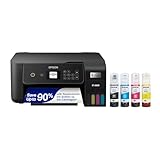
- INNOVATIVE CARTRIDGE-FREE PRINTING — No more dealing with lots of tiny ink cartridges; With this wireless document and photo printer each ink bottle set is equivalent to about 90 individual cartridges²
- LESS FREQUENT INK REPLACEMENT — Replacement ink bottles don't have to be changed nearly as often as ink cartridges¹; When you choose this combination printer, scanner and copier you can print up to 4,500 pages black/7,500 color³
- COLOR PRINTING — Up to 2 years of ink in the box4 (and with every replacement ink set) for fewer out-of-ink frustrations
- ZERO CARTRIDGE WASTE — By using an Epson EcoTank printer you can help reduce the amount of cartridge waste ending up in landfills
- HOME PRINTER DESIGNED FOR RELIABILITY — The Epson EcoTank ET-2800 All-in-One Supertank Color Printer creates vivid, detailed prints and documents thanks to Micro Piezo Heat-Free Technology; Fire off 10 ISO pages per minute1 to easily finish large jobs
Choosing inks and coatings by what they actually do
Ink labels describe different properties, not interchangeable guarantees. A formulation can address emissions, renewable feedstock, food-contact migration or recycling compatibility; one attribute does not establish the others.
| Type | Potential benefit | What it does not establish |
|---|---|---|
| Water-based | Can reduce solvent emissions in suitable applications. | Lower total energy or universal suitability; drying may need more heat, and adhesion or substrate treatment may be challenging. |
| Low-VOC | Reduces volatile organic compound emissions relative to a defined alternative. | Low carbon, low toxicity across all endpoints, or recyclability. |
| Bio-based or bio-renewable | Replaces some fossil-derived feedstock. | Biodegradability, compostability or lower lifecycle impact without information about the ingredient, sourcing and processing. |
| Vegetable-oil-based | May reduce petroleum-derived content in a formulation. | Compostability or compatibility with a recycling stream. |
| UV or LED-UV cured | Can cure quickly and may reduce drying bottlenecks or energy in a suitable setup. | Recyclability, food-contact compliance or lower total job energy. |
| Low-migration | Designed to limit migration into food or other sensitive products. | A complete environmental claim; verify regulatory and application-specific compliance. |
| Deinkable or washable | Can support ink removal in a specified recycling process. | Recovery of the whole package; substrate, adhesive, coating and recycling equipment also matter. |
| Compostable | May allow organic recovery under specified conditions. | That the complete product is certified for the relevant environment or accepted by local facilities. |
EPA notes that some water-based inks do not produce emissions, while also describing limits to waterborne inks across processes and applications. A printer should weigh emissions against dryer energy and confirm performance on the intended substrate. EPA’s industry overview provides the emissions context.
Claims about renewable content need the same precision. Sun Chemical announced a folding-carton UV ink with 25–30% bio-renewable content on July 29, 2025; that percentage applies to the named product, not to all inks or necessarily to the full finished package. The announcement is at SunCure Advance ECO. Sun Chemical’s 2025 sustainability report describes other product-specific renewable-content and washable or deinkable technologies. Flint Group likewise lists water-based, bio-renewable, UV-LED and deinking technologies in its sustainability portfolio. These are supplier-reported offerings; availability, composition and suitability vary by product and region.
Designing for recovery: ink is only one part of the package
Deinkable inks matter where printed paper or packaging is intended for fiber recovery, and washable inks can matter in some plastic recycling streams. Koenig & Bauer says its RotaJET platform has been certified by the International Association of the Deinking Industry and describes a polymer ink intended to balance water resistance with deinking performance. That certification or design claim does not certify every printed construction. See Koenig & Bauer’s customer-responsibility information.
Sun Chemical reports washable and deinkable inks for applications involving recycled PET and HDPE. The result depends on the exact substrate, label, adhesive and wash process, as well as the capabilities of the relevant recycler. A “recyclable ink” claim is not enough: laminates, foil, heavy coverage, metallic effects, barrier coatings, dark pigments, incompatible labels and food contamination can change whether a package is accepted or recovered. Local collection and sorting rules matter too.
Finishing choices therefore belong in the design conversation, not as an afterthought. A barrier coating may be needed for product protection, but its compatibility with the target recycling stream should be tested alongside the ink, adhesive, substrate and label. For packaging, ask the converter and intended recycler to assess the complete construction and the region where it will be discarded.
Rank #3

- THE LAST PRINTER YOU'LL EVER NEED – Set it up once and print with confidence; no complicated maintenance, just easy, reliable printing you can count on
- FULLY LOADED WITH SAVINGS – Best for low-cost, high-volume printing—up to 3 years of HP Ink included; get up to 6,000 color or black pages right out of the box
- KEY FEATURES – Print, copy and scan, plus borderless prints, mobile and wireless printing
- MESS-FREE REFILL – Replenish ink with HP's easy-access, mess-free refill system; simply plug the ink bottles into this cartridge-free ink tank and let them drain—no squeezing, no spilling
- BEST PRINT QUALITY, PERIOD – Sharper text, richer colors, only with HP Smart Tank
Paper, alternative fibers and material efficiency
Recycled paper, recovered fiber, lightweight boards, responsibly sourced virgin fiber and agricultural-residue materials can all be relevant choices. The better option depends on the product’s performance and the mills and recovery systems available. Recycled grades may differ in brightness, opacity, surface, stiffness, moisture and runnability; a mismatch with press settings can increase spoilage. Lightweighting reduces material per item but may demand more careful handling or affect durability.
EPA recommends considering postconsumer recycled content, manufacturing energy, recyclability, chlorine processing and ink chemistry when evaluating paper. Its guidance is U.S.-oriented: Identifying Greener Paper. U.S. federal purchasers can also consult the Comprehensive Procurement Guideline program and its paper and paper-products guidelines, which cover relevant categories including paper, packaging and toner cartridges.
Keep material claims distinct. “Recycled” describes content; “recyclable” describes potential recovery under specified conditions; “responsibly sourced” concerns sourcing; and “carbon-neutral” describes a carbon-accounting claim that may include offsets. None alone establishes that a finished printed item is better across all impact categories. Fiber-based packaging is not automatically preferable if it needs a difficult-to-recover barrier, and alternative fibers need evidence about land use, processing, transport and end-of-life.
Automation prevents waste before it becomes scrap
Closed-loop color control, inline inspection, registration checks, job analytics and predictive maintenance can prevent defects, color drift and reruns. In high-volume production, avoiding a failed run may save more material than a small change in ink formulation. Accurate forecasting and workflow integration can also reduce avoidable inventory, press downtime and service travel.
Ricoh describes production-print automation, analytics, faster-drying inks and color management as ways to reduce paper, ink or toner, energy and avoidable reruns. Flint Group also emphasizes digital color management and right-first-time production. These are supplier descriptions of capabilities, so request job-level evidence rather than assume a particular saving. See Ricoh’s production-printing sustainability information and Flint Group’s sustainability overview.
Independent reader supportYour contribution helps us test, update, and keep practical guides available for everyone.Energy measurement and circular equipment
Equipment labels and sustainability claims are more useful when a plant tracks its own baseline. Measure electricity at press or line level where feasible, along with dryer fuel, idle and standby demand, water, waste by job, ink and coating consumption, and reruns. Normalize results to a finished unit or job and record substrate, run length, finishing and electricity mix. For broader reporting, distinguish direct fuel and process emissions, purchased-energy emissions and relevant supply-chain emissions rather than combining them into an unexplained carbon number.
Rank #4

- INNOVATIVE CARTRIDGE-FREE PRINTING — No more dealing with tiny, expensive ink cartridges; With this wireless printer each ink bottle set is equivalent to about 80 individual cartridges²
- LESS FREQUENT INK REPLACEMENT — Replacement ink bottles don't have to be changed nearly as often as ink cartridges¹; Color printer lets you print up to 4,500 black and white pages and 7,200 color³
- PRINT FOR LONGER — Up to 2 years of ink in the box⁴ (and with every replacement ink set) for fewer out-of-ink frustrations; This home printer keeps printing longer
- HIGH CAPACITY INK TANKS – Printer, scanner and copier utilizes Epson’s exclusive EcoFit ink bottles, making the refill process easy and worry-free
- ZERO CARTRIDGE WASTE — By using an Epson EcoTank printer you can help reduce the amount of cartridge waste ending up in landfills; Cartridge-free printer utilizes ink bottles for more convenience and less waste
ENERGY STAR provides energy-management resources for printing operations, including plant benchmarking information; its described printing tool may require industry testing or participation. See ENERGY STAR’s printing focus. For office and imaging equipment, the U.S. Department of Energy points buyers to ENERGY STAR and FEMP efficiency guidance for printers, scanners, multifunction devices and related equipment. Duplex printing can reduce paper use where double-sided documents are appropriate. See DOE’s efficient imaging-equipment guidance. Equipment efficiency does not measure paper sourcing, ink chemistry or end-of-life.
Circularity also includes keeping equipment and consumables useful longer: repairable or modular machines, remanufactured equipment, parts reuse, refurbishment and take-back programs. HP describes press recovery and reuse or recycling of supplies and service parts in its industrial printing sustainability information. Xerox describes deinkable emulsion-aggregation toner and its Green World Alliance cartridge take-back program in a 2024 sustainability report excerpt; eligibility and arrangements vary by product and geography. A supplier should specify which equipment, parts or cartridges its program accepts and what happens to them.
Free tools Windows power users keep installed
One-click scans. No signup required.
Which process fits which printing job?
| Job or process | Where the opportunity is strongest | What to validate |
|---|---|---|
| Office and transactional documents | Efficient imaging equipment, duplex defaults where suitable, and recycled paper procurement. | Equipment efficiency, document requirements, paper performance and local recovery. |
| Short-run commercial work, books to order and variable-data mail | Digital printing can reduce plate and setup needs and limit inventory or obsolete versions. | Run length, energy per finished unit, primers, substrate, finishing and delivery. |
| Long, stable commercial runs | Optimized offset or flexographic production may avoid the per-unit disadvantages of digital at scale. | Actual setup waste, press efficiency, ink and drying needs, and comparable job data. |
| Paper packaging and folding cartons | Recycled or responsibly sourced board, efficient curing, and ink or coating systems compatible with fiber recovery. | Barrier, adhesive, coverage, migration requirements and intended mill acceptance. |
| Labels and flexible packaging | Water-based or UV-LED formulations, deinkable or washable systems, and mono-material design where viable. | Substrate and press compatibility, adhesive and label removal, food-contact needs, and local recycling infrastructure. |
| Waterless offset applications | Reduced fountain-solution use in a suitable offset workflow. | Specialized consumables, temperature control, training, substrate and run-length fit. |
This is a screening guide, not a universal ranking. The best result depends on the specific machine, job and recovery system.
Questions to ask a printer or supplier
- What exact impact is being claimed, and what is the comparison baseline?
- Is the result measured per sheet, impression, area, package or complete job? What quantity, image coverage, substrate and finishing were included?
- Does the energy figure include drying, curing, standby, finishing and the electricity mix? Is natural-gas use counted?
- How much make-ready, trim, spoilage and rerun waste is included, and can the supplier provide job-specific data?
- For paper, what is the recycled content and sourcing basis? Will the grade run reliably on the intended equipment?
- For inks and coatings, does “low-VOC,” “bio-based,” “low-migration” or “deinkable” refer to a named formulation and test? What exactly was tested?
- Can the complete construction—including substrate, ink, adhesive, barrier and label—be recovered in the intended local system?
- If a carbon-neutral figure is advertised, what emissions boundary and calculation method were used, what reductions occurred before offsets, and which offset standard and assumptions apply?
- Is the equipment or consumables program available in the buyer’s geography, and what are its repair, service, return and recovery terms?
Treat offsets as compensation claims, not as reductions in pressroom energy, waste or emissions. A carbon-neutral label does not mean zero emissions, and it says nothing by itself about water, toxicology or recyclability.
How to prioritize changes
- Measure the current job. Establish energy, material use, waste, emissions and recovery for a defined quantity and finished product.
- Prevent avoidable production. Improve forecasting, color control, inspection and setup so fewer sheets or packages are spoiled or rerun.
- Match process to volume and variation. Compare digital and conventional options using the same job boundaries rather than assuming one process is always better.
- Specify materials and finishing together. Select paper, ink, coating, adhesive and barrier based on performance and the intended recovery route.
- Verify the claim and local fit. Request product-specific documentation, test conditions, regional availability and evidence that the finished item is accepted by the relevant collection or recycling system.
Green printing is therefore a design and operating discipline, not a press purchase or ink label. The strongest improvements combine waste prevention, efficient energy use, appropriate materials and verified end-of-life recovery, with the chosen process matched to the real job.
Quick Recap
Product prices and availability are accurate as of the date/time indicated and are subject to change. Any price and availability information displayed on Amazon at the time of purchase will apply.
Quick wins for a faster PC:
Repair Windows errors before they cause bigger problemsFix Now →Fix the driver behind crashes, sound loss and screen glitchesFind Drivers →Clear out junk files and repair common Windows errorsFree Scan →



