Do these 3 things before closing this tab:
1Clear out junk files and repair common Windows errors2Fix the driver behind crashes, sound loss and screen glitches3Repair Windows errors before they cause bigger problemsAlphabet’s oft-cited $75 billion figure was its initial estimate for 2025 capital spending, not a permanent AI fund. The company later lifted that 2025 expectation to about $85 billion and projected $175 billion–$185 billion of 2026 capital expenditures in its fourth-quarter 2025 outlook. A June 2026 investor presentation gave a slightly higher $180 billion–$190 billion range. The spending covers broad technical infrastructure—servers, accelerators, data centers and networking—for Google’s own products and Google Cloud customers, rather than AI chips alone.
What the original $75 billion covered
Alphabet discussed approximately $75 billion of 2025 capital expenditures in early February 2025. Its annual-report description covers technical infrastructure supporting Google’s businesses, including servers, data centers and networking. That capacity serves Gemini and other internal research, Google Cloud workloads, Search, advertising, Workspace, YouTube and consumer products. The company did not designate every dollar as an AI-only allocation. Alphabet’s 2024 annual report provides the original forecast.
How the numbers changed
| When | Figure | What it represented |
|---|---|---|
| February 2025 | About $75 billion | Initial 2025 Alphabet capital-expenditure expectation. |
| July 2025 | About $85 billion | Raised 2025 expectation, citing Cloud demand, servers and faster data-center construction. Alphabet Q2 2025 earnings materials |
| February 2026 | $175 billion–$185 billion | Alphabet’s Q4 2025 outlook for 2026 capital expenditure. Q4 2025 earnings materials |
| June 2026 | $180 billion–$190 billion | Range cited in a later investor presentation; it should not be silently treated as identical to the Q4 outlook. June 2026 investor presentation |
That chronology matters: describing Google in 2026 as merely “reaffirming $75 billion” leaves out the subsequent increases.
Why Google keeps expanding
Internal model development
Google DeepMind and other research teams need large training and inference clusters. Gemini features also create continuing inference demand after a model is trained.
#1 Best Overall
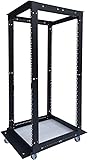
- This 32U open frame server rack features a robust steel frame with an impressive 440 lb weight capacity, ideal for hosting heavy servers, networking equipment, and AV gear. The Open Frame relay is 32U - W21" x H62" X D (24" - 38")
- Perfect for Data Centers & Home Offices: Whether you're outfitting a large-scale data center, upgrading your home server setup, or organizing your networking gear, this versatile rack is a reliable solution for all your equipment storage needs. Optimized Ventilation: The open frame design enhances airflow around your equipment, reducing the risk of overheating and ensuring better performance and longevity of your gear.
- Adjustable & Customizable: The rack features adjustable mounting rails to easily fit various types of server and network hardware. Great for rack-mounted servers, cabling, and other networking components. Easy Assembly: Quick and simple tool-free assembly, so you can get your rack set up and running without hassle. Ideal for IT professionals, network administrators, and hobbyists.
- Rackmount Design: Compatible with most standard 19-inch rackmount servers, network switches, routers, and other IT equipment. Flexible to accommodate 18U, 22U, 27U, 32U, 42U and custom configurations.
- Perfect for Data Centers & Home Offices: Whether you're outfitting a large-scale data center, upgrading your home server setup, or organizing your networking gear, this versatile rack is a reliable solution for all your equipment storage needs. Optimized Ventilation: The open frame design enhances airflow around your equipment, reducing the risk of overheating and ensuring better performance and longevity of your gear.
Cloud customers
Vertex AI and related services turn accelerators into a commercial platform. Google said Google Cloud revenue grew 28% year over year to $12.3 billion in the first quarter of 2025, a demand signal but not a guarantee of future utilization. Q1 2025 earnings release
Consumer and advertising products
AI is being integrated into Search, Workspace, Android, YouTube and other products. Alphabet’s thesis is that better answers and more capable tools can support subscriptions, engagement and advertiser returns.
Control of the stack
Custom silicon, software and networking can reduce dependence on outside accelerator supply and let Google tune economics across its own services. The company describes the plan as a full-stack strategy, not simply a data-center land grab. Google Cloud Next 2025 keynote
Rank #2

- Durable: Wall Mount Rack made from heavy duty cold rolled steel, 60lbs(27kg) weight capacity; Electrostatic powder coat preventing rust and corrosion
- Space-saving: Horizontal or vertical installation; Small footprint without giving up the storage capacity of devices
- Optimized Airflow: Wall Mount Network Rack with four-sided vents to enhance air circulation and prolong the life of equipment
- Considerate Design: Different screw hole combinations enable positions of rack rails to be adjusted according to demands; Bottom passable holes of Wall Mount Rack allow cables to pass freely
- Widely Applicable: EIA/ECA-310-E complaint; Fit 19in racks and cabinets to hold non-rack mountable devices; Multi-scene application like studio, home office, data center and so on
What is distinctive about Google’s infrastructure
TPUs and Ironwood
Google introduced Ironwood as its seventh-generation TPU at Cloud Next 2025. Google’s AI Hypercomputer materials say Ironwood provides five times the peak compute capacity and six times the high-bandwidth-memory capacity of the prior generation. Those are Google’s published comparisons, not an independent price or performance test. AI Hypercomputer updates
What’s actually slowing this PC down?
Pick the symptom - the matching free tool is one click away.
AI Hypercomputer and networking
AI Hypercomputer combines accelerators with scheduling, software optimization, storage and networking. Google also emphasizes its private global network for distributed workloads. Customers still need to benchmark their own models: TPU and NVIDIA GPU environments are not automatically interchangeable.
More than hosted Cloud capacity
Google continues to offer TPUs alongside NVIDIA GPU instances and has said it plans to provide TPUs directly to selected enterprises for deployment in their own data centers. That could broaden Google’s silicon business, but it also shifts power, cooling, operations and lifecycle responsibilities toward the customer. Q1 2026 earnings commentary
Rank #3
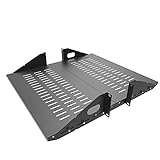
- Compatible with all 19” racks and cabinets to hold various IT, network and other equipment.
- Dimensions: W 19" x D 10" x H 2U per shelf ; 2 Shelves as set
- This Vented Center Weighted Mounting Rack Shelf fits the mounting posts in different deepth from 75 mm to 125mm.
- Max Weight Capacity: 110 Pounds; Center weighted.
- Slotted Venting to Improve Air flow and Help Prevent Overheating of Your Equipment
What “divergent strategies” really means
| Provider or model | Broad posture | Buyer implication |
|---|---|---|
| Vertically integrated chips, models, network, Cloud and consumer distribution. | Potential integration and efficiency, with more dependence on Google-specific tooling and TPU compatibility. | |
| Microsoft | Large Azure AI capacity tied to enterprise distribution and model partnerships; reporting has described selectivity or delays in some projects. | Broad ecosystem reach, while regional timing and partner concentration remain relevant. |
| AWS | Broad infrastructure platform with multiple accelerators and model choices. | Flexibility, but potentially more architecture and integration decisions. |
| Oracle | Rapid OCI AI expansion, often centered on high-performance and dedicated capacity. | Potential fit for Oracle-heavy or specialized workloads; check regional breadth and services. |
| Meta | Primarily internal-scale infrastructure supporting consumer products and open-model goals. | Important demand signal, but not a conventional public-cloud replacement. |
| Specialist GPU clouds | Concentrated accelerator capacity and AI-focused services. | Could improve access to scarce hardware, with greater provider-financing and durability risk. |
The Google–Microsoft contrast comes partly from secondary reporting, not a standardized disclosure showing that one company is expanding while the other is retreating. Network World’s April 10, 2025 report should therefore be read as reported market divergence, not a definitive industry ranking.
Could the industry overbuild?
Yes, as a scenario rather than an established conclusion. Demand could undershoot plans if model efficiency improves, enterprises delay production, inference moves to smaller models, or private deployments replace public-cloud usage. Power, permits and transmission can also leave capacity in the wrong geography, while fast hardware cycles create depreciation risk.
The Tool Desk
Outbyte PC Repair FREEClear out junk files and repair common Windows errorsFree Scan →Outbyte Driver Updater FREEFix the driver behind crashes, sound loss and screen glitchesFind Drivers →At the same time, agentic applications may generate continuous inference, training remains compute-intensive, and companies may reserve redundant capacity while supply is tight. Strong demand and overbuilding can coexist across different accelerator generations, regions and workload types.
Rank #4

- Space-Saving Design: Measures 19.0"H x 21.7"W x 17.7"D with a 14.2" max mounting depth, our 9U rack fits tight spaces while holding full 19" gear—ideal as a server cabinet or wall mount network cabinet for home offices and small server rooms
- Full Security: Both the lockable glass door and side panels protect your hardware from theft or tampering. This 9U wall mount rack gives you peace of mind in public or shared environments, ensuring your equipment rack stays safe and secure
- Active Cooling: The built-in cooling fan prevents overheating, keeping your wall mount server rack running reliably. Perfect for active networks, this 9U network rack extends the life of switches, routers, and PDUs by maintaining consistent airflow
- Heavy-Duty Build: Cold-rolled steel construction supports up to 110 lbs of 19" IT and A/V devices. Whether you need a wall mount server cabinet for shallow servers or a wall mount network rack for patch panels, this delivers years of reliable use
- Easy Installation: Pre-marked mounting holes and top/bottom cable ports make setup fast. Adjustable rails and numbered U positions allow precise rack mounting of your gear. This turns any wall into a tidy, professional server room in minutes
Why a CapEx forecast is not usable capacity
- Announcement: spending is authorized or forecast.
- Procurement: equipment is ordered and financed.
- Construction: buildings, power and cooling are completed.
- Installation: accelerators are connected, tested and scheduled.
- Availability: capacity is offered in the customer’s required region, quota and commercial plan.
Google has itself described tight demand and timing constraints. A larger budget therefore does not promise an immediately available GPU, TPU, lower price, data-residency match or favorable contract.
Independent reader supportYour contribution helps us test, update, and keep practical guides available for everyone.How enterprise buyers should respond
- Verify accelerator availability, quota and reservation terms in the exact region.
- Measure total cost per useful output, including storage, networking, support, power and egress—not only hourly instance rates.
- Benchmark training and inference separately; a chip that suits one may not suit the other.
- Check framework, CUDA, TPU and open-model compatibility before committing to a platform-specific design.
- Require data-residency, security, service-level and capacity commitments in writing.
- Model exit costs, transfer charges and the effort to reproduce deployments elsewhere.
- Reserve production capacity after a pilot instead of assuming a successful experiment can scale automatically.
- Use a mix of public cloud, colocation, private infrastructure, managed APIs or specialist providers when workload stability and concentration risk justify it.
Multicloud can reduce dependence on one supplier, but duplicated tooling, staff, data movement and governance can make it more expensive and complex. Portability is valuable only when the workload and operating model justify the cost of preserving it.
What the expansion means for Google’s business
Google is trying to convert infrastructure into several revenue streams at once: Cloud consumption, model and agent services, Workspace subscriptions, advertising improvements and consumer products. In its Q4 2025 communication, Google said nearly 75% of Google Cloud customers had used its vertically optimized AI products; it also said slightly more than half of 2026 machine-learning compute investment was expected to support Cloud. Alphabet’s Q4 2025 commentary
Best Value

- MULTIPLE DEVICE COMPATIBILITY: This 3 prong AC power cord with NEMA 5-15P to C19 connector is ideal for servers, UPS, PDUs, and monitors. It delivers stable power for high-performance equipment.
- OPTIMAL POWER CONNECTION: This 15ft heavy-duty 5-15P to C19 replacement power cord 3 prong offers flexibility for device setup. It ensures a secure power connection without limited reach.
- HIGH-QUALITY CONNECTOR: This 3 prong power cable with IEC60320-C19 male connector that plugs into an IEC60320-C20 connector, ensuring a stable connection for PDUs, surge protectors, and more.
- INSTANT POWER SUPPLY: This 14AWG power cord delivers stable, immediate power to servers, UPS, PDUs, and monitors. Ideal for high-demand setups needing reliable, uninterrupted performance.
- ROBUST POWER CORD: This 15ft IEC power cord supports 15A/125V. It provides durable, reliable power and a secure connection for office and industrial equipment with C19 to NEMA 5-15P connectors.
Those statements show strategic intent, not proof that every cluster will earn an attractive return. Utilization, depreciation, electricity, model economics and customer pricing will determine whether the investment becomes durable profit or expensive excess capacity.
Bottom line
Google’s original $75 billion 2025 AI-infrastructure announcement was the opening step in a much larger buildout: about $85 billion for 2025, then a 2026 outlook measured in the $175 billion–$185 billion range, with a later presentation at $180 billion–$190 billion. The differentiator is Google’s attempt to integrate custom TPUs, software, networking, models and distribution. For buyers, however, provider ambition is not a capacity guarantee. Choose infrastructure by verified regional availability, workload economics, portability, governance and contract risk—not by the largest headline CapEx number.
Quick Recap
Product prices and availability are accurate as of the date/time indicated and are subject to change. Any price and availability information displayed on Amazon at the time of purchase will apply.




