Google’s Pixel business reached fourth place in U.S. smartphone shipments in the second quarter of 2025, according to Canalys data reported by Android Central. Apple, Samsung, and Motorola ranked ahead of Google. The important qualification is that this was a quarterly shipment ranking—not proof that Pixel has the fourth-largest installed base, sales share, or number of active users in America.
What the fourth-place ranking actually measures
“Market share” can describe several different measurements. In this case, the evidence points to U.S. smartphone shipment share: phones sent through carrier and retail channels during a quarter. Shipments indicate manufacturer momentum and distribution, but they are not identical to phones consumers activated or purchased at the point of sale.

- Shipment share: useful for tracking quarterly channel activity, launches, and inventory movement.
- Sales or sell-through share: measures purchases by end users; the available evidence does not provide a detailed primary sales dataset for this claim.
- Installed-base share: measures phones still in use. No cited source establishes Pixel as fourth by installed base in the United States.
- Web-usage share: StatCounter measures vendor share of mobile web traffic, not shipments. Its U.S. data has placed Google around 4%–5%, but that is a different dataset (StatCounter).
Market-share tables may identify the vendor as Google even though Pixel is the consumer-facing smartphone brand. It is therefore more precise to describe this as Google’s Pixel business ranking fourth by U.S. vendor shipment share.
The numbers show a milestone, not a new market order
Counterpoint’s quarterly U.S. table provides a useful check on the scale and durability of the result. It lists Google at approximately 4% of shipments in Q1 2025, 5% in Q2, 2% in Q3, 3% in Q4, and 3% in Q1 2026 (Counterpoint).
#1 Best Overall

- Attention-grabbing design meets the latest evolution of the Google Pixel Camera on the new Google Pixel 11 Pro XL; Gemini Intelligence helps manage details so you can live in the moment[1]; and the phone is available in two sizes
- Unlocked Android phone gives you the flexibility to change carriers and choose your own data plan: Works with Google Fi, Verizon, T-Mobile, AT&T, and other major carriers[2]
- Stay informed without looking at your screen: When your phone is face down, Pixel HiLight gently alerts you with subtle glowing lights when your favorite contacts are calling or you’re talking with Gemini; exclusive to Google Pixel 11 Pro phones
- Magic Capture catches the moment as you live it: With just one tap, Pixel 11 Pro captures video and photos, and automatically edits, crops, and unblurs a curated collection, ready to share – and you get the memory of how it felt to be in the moment
- Two new cameras for more brilliant photos: A larger telephoto sensor captures 30% more light for clear, beautiful photos and videos, even in the dark[3]; Pixel’s longest zoom ever helps you capture details from impressive distances[4]
| Period | Google U.S. shipment share | What it indicates |
|---|---|---|
| Q1 2025 | Approximately 4% | Pre-milestone baseline in Counterpoint’s table |
| Q2 2025 | Approximately 5% | Quarter associated with the reported fourth-place ranking |
| Q3 2025 | Approximately 2% | Sharp reversal after the Q2 peak |
| Q4 2025 | Approximately 3% | Partial recovery, still below Q2 |
| Q1 2026 | Approximately 3% | Google remained a small but visible U.S. vendor |
Canalys and Counterpoint are separate datasets; shipment timing, channel coverage, vendor definitions, rounding, and later revisions can produce different percentages. Even so, the later Counterpoint figures support a cautious conclusion: Google demonstrated that it could reach the U.S. top four, but had not made that position consistently normal.
Why Pixel likely gained ground
A broader Pixel 9 lineup
Counterpoint’s regional commentary links Google’s U.S. performance with the expansion from two Pixel 8 models to four Pixel 9 models: Pixel 9, Pixel 9 Pro, Pixel 9 Pro XL, and Pixel 9 Pro Fold (Counterpoint’s analysis). More sizes, prices, and form factors give carriers more ways to merchandise Pixel, although the available data does not assign the ranking to one specific model.
Carrier distribution and promotions
Pixel’s U.S. availability through major carriers, trade-in offers, and launch promotions can move a large number of devices into the channel quickly. Such activity can raise a quarter’s shipment share without proving that the same pace will continue after promotions end.
Rank #2

- Google Pixel 10a is a durable, everyday phone with more[1]; snap brilliant photography on a simple, powerful camera, get 30+ hours out of a full charge[2], and do more with helpful AI like Gemini[3]
- Unlocked Android phone gives you the flexibility to change carriers and choose your own data plan; it works with Google Fi, Verizon, T-Mobile, AT&T, and other major carriers
- Pixel 10a is sleek and durable, with a super smooth finish, scratch-resistant Corning Gorilla Glass 7i display, and IP68 water and dust protection[4]
- The Actua display with 3,000-nit peak brightness shows up clear as day, even in direct sunlight[5]
- Plan, create, and get more done with help from Gemini, your built-in AI assistant[3]; have it screen spam calls while you focus[6]; chat with Gemini to brainstorm your meal plan[7], or bring your ideas to life with Nano Banana[8]
Camera and AI differentiation
Google positions Pixel around computational photography and software-based AI features. That gives Android buyers an alternative to Samsung’s hardware breadth and may help Google compete in the U.S. premium-phone segment. It is a plausible contributor, not a measured single cause of the Q2 ranking.
What’s actually slowing this PC down?
Pick the symptom - the matching free tool is one click away.
Google versus Motorola: why fourth place can still mean a wide gap
Motorola is the most relevant comparison because it occupied the place immediately above Google. Counterpoint has put Motorola at about 9% in an earlier U.S. quarter and roughly 10%–12% across the 2025 quarters shown in its regional table (Counterpoint overview; quarterly table).
- Motorola: strong value and prepaid positioning, broad carrier distribution, and a larger low-cost funnel.
- Pixel: stronger flagship camera and AI identity, longer-term software appeal, and a more distinctive premium Android proposition.
A fourth-place rank is ordinal. It does not mean Google overtook Motorola or came close to matching Motorola’s share.
Rank #3

- Google Pixel 10 Pro is the ultimate Pixel experience, featuring advanced AI with Gemini, unbelievable camera quality, impeccable design in two sizes, and the next-gen Google Tensor G5 chip[1]
- Unlocked Android phone gives you the flexibility to change carriers and choose your own data plan[2]; it works - Google Fi, Verizon, T-Mobile, AT&T, and other major carriers
- Get a head start on syncing your data before it even arrives: After you purchase your new Pixel, look for an email that explains how to transfer your photos, videos, passwords, and more in just a few quick steps[11]
- Pixel’s pro camera system makes everything look amazing, even in low light; capture more of the scene with advanced Google AI models, and bring out incredible details with 100x Pro Res Zoom, stunning 50 MP images, and super steady videos in 8K[10]
- Pixel 10 Pro is built with durable aluminum and Corning Gorilla Glass Victus 2 for scratch and drop resistance; the 6.3-inch Super Actua display with 3,300-nit peak brightness is easy on the eyes, even in direct sunlight[3,13,18]
Apple and Samsung remain far ahead
Apple’s U.S. shipment share is much larger than Google’s in recent Counterpoint quarters, and Apple also benefits from a large installed base, financing options, retail reach, and ecosystem ties. Samsung remains Google’s principal premium Android rival, with broader hardware coverage, accessories, service infrastructure, and a much larger installed base.
Google therefore challenged the lower edge of the leading Android group rather than breaking an Apple-Samsung duopoly. OnePlus was only about 1%–3% in the Counterpoint table, while Xiaomi, Oppo, Vivo, and Honor have comparatively limited U.S. carrier and retail presence; their global scale should not be treated as equivalent U.S. competition.
Why the United States matters disproportionately to Pixel
Google is a minor global smartphone vendor but has a stronger U.S. foothold. A GSMA analysis estimates roughly 1% global share versus approximately 4% in the United States (GSMA). Carrier-led purchasing, a large premium-phone market, and limited U.S. availability for several Chinese brands create conditions in which Pixel can matter more than its global ranking suggests.
Independent reader supportYour contribution helps us test, update, and keep practical guides available for everyone.What would make the gain durable?
Google would need to turn launch visibility into repeat demand across several upgrade cycles. The practical tests are:
- maintaining carrier placement after introductory promotions;
- offering a credible ladder from A-series value phones to flagships and foldables;
- keeping trade-in values and financing competitive;
- improving modem, battery, thermal, and hardware reliability;
- matching Samsung’s retail, repair, and service reach; and
- retaining buyers rather than relying on one-quarter discounts.
The subsequent 2%–3% readings show why this remains an open test. Quarterly shipments can be affected by product launches, inventory timing, and promotions, while Apple and Samsung have much larger installed bases and Motorola has deeper value-channel distribution.
What this means if you are deciding whether to buy a Pixel
The ranking is evidence of stronger competition, not a recommendation by itself. A larger Pixel presence may eventually improve accessory availability, carrier offers, repair options, and Google’s incentive to support the platform. It does not establish that Pixel is the best-selling Android brand, has a large installed base, or offers Apple- or Samsung-level hardware scale.
Free tools Windows power users keep installed
One-click scans. No signup required.
Best Value
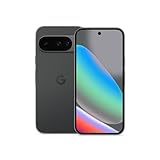
- Google Pixel 10 is the everyday phone unlike anything else; it has Google Tensor G5, Pixel’s most powerful chip, an incredible camera, and advanced AI - Gemini built in[1]
- Unlocked Android phone gives you the flexibility to change carriers and choose your own data plan[2]; it works with Google Fi, Verizon, T-Mobile, AT&T, and other major carriers
- Unlocked Android phone gives you the flexibility to change carriers and choose your own data plan[2]; it works - Google Fi, Verizon, T-Mobile, AT&T, and other major carriers
- The upgraded triple rear camera system has a new 5x telephoto lens - up to 20x Super Res Zoom for stunning detail from far away; Night Sight takes crisp, clear photos in low-light settings; and Camera Coach helps you snap your best pics[3]
- Pixel 10 is designed - scratch-resistant Corning Gorilla Glass Victus 2 and has an IP68 rating for water and dust protection[21]; plus, the Actua display - 3,000-nit peak brightness is easy on the eyes, even in direct sunlight[4]
Check current models, unlocked and carrier pricing, and trade-in terms at the Google Store. Trade-in values depend on model, condition, timing, and promotion. Buyers considering Google Fi should check current plan prices, taxes, data terms, and partner coverage at Google Fi. Protection costs and deductibles vary by device and policy; review Preferred Care before treating coverage as part of the phone’s ownership cost.
Pixel may be a good fit for buyers prioritizing Google’s camera processing, AI features, and clean Android experience. Samsung may suit shoppers wanting the broadest Android range and service network; Motorola often fits prepaid and value buyers; iPhone remains the natural choice for households tied to Apple services and devices.
Methodology in one sentence
The fourth-place claim refers to Google in U.S. smartphone shipments for Q2 2025, as reported from Canalys data; Counterpoint’s separate quarterly series shows an approximately 5% Q2 share followed by 2%–3% readings, while StatCounter’s 4%–5% figures measure web usage rather than shipments.
Quick Recap
Product prices and availability are accurate as of the date/time indicated and are subject to change. Any price and availability information displayed on Amazon at the time of purchase will apply.
Quick wins for a faster PC:
Clear out junk files and repair common Windows errorsFree Scan →Scan for outdated or missing drivers - takes under a minuteDriver Scan →



