What’s actually slowing this PC down?
Pick the symptom - the matching free tool is one click away.
Global data centers are entering a genuine, supply-constrained infrastructure expansion, but “supercycle” remains a forecast rather than an established economic fact. JLL projects global capacity could increase from about 103 gigawatts (GW) in 2025 to 200 GW by 2030, with up to $3 trillion of spending across real estate, debt, power, construction, networking, GPUs and other tenant equipment. That is a broad investment theme—not one uniform trade. The best opportunities will depend on firm electricity, creditworthy tenants, adaptable facilities and disciplined financing.
For investors, the key distinction is between contracted digital infrastructure and speculative exposure to AI demand. A leased data-center building, a GPU-cloud operator, a utility building transmission and a semiconductor supplier all benefit differently—and carry different risks.
What “investment supercycle” means in data centers
In practical terms, an infrastructure supercycle is a multiyear period of unusually high capital spending across several linked industries. In data centers, the buildout extends well beyond warehouses filled with servers. It includes:
- Land, buildings, substations and backup generation
- Transmission, distribution, transformers and switchgear
- Cooling, including liquid-cooling systems for dense AI racks
- Servers, GPUs, networking and storage
- Fiber, subsea connectivity, construction and engineering
- Debt, private credit, project finance and lease-backed structures
JLL calls this an infrastructure investment supercycle because physical capacity and tenant technology spending are expanding together. The term should not be read as a guarantee that every developer, listed company or AI-compute provider will earn attractive returns.
Free tools Windows power users keep installed
One-click scans. No signup required.
#1 Best Overall

- Save valuable floor space: 6U wall mount server cabinet Dimensions: 13.78" H x21.65" W x17.72" D.Maximum mounting depth is 14.2"
- Keep critical network equipment secure: glass door and side panels are lockable to prevent unauthorized access. Front door can be installed on either side of the front of the cabinet to satisfy your door swing orientation preference
- Easy equipment configuration: Fully adjustable mounting rails and numbered U positions, with square holes for easy equipment mounting with top and bottom punch-out panels for easy cable access
- Durability: Made of high quality cold rolled steel holds up to 110lb (50kg) (Easy Assembly Required)
- PCI & HIPPA and EIA/ECA-310-E compliant
The scale: large numbers that describe different investments
JLL’s estimates combine capacity, property value and tenant equipment. They should not be treated as one investable pool: a transmission line, a data-center shell and a GPU fleet have different owners, useful lives and risks.
| Measure | Current or forecast figure | What it means |
|---|---|---|
| Global capacity | About 103 GW in 2025 to 200 GW by 2030 | JLL forecast for global data-center capacity |
| New capacity | Roughly 97–100 GW through 2030 | Approximate increase implied by the forecast |
| Real-estate value creation | About $1.2 trillion | JLL estimate for data-center property value |
| New debt financing | Approximately $870 billion | JLL estimate; debt is financing, not an asset class with identical returns |
| Tenant IT fit-out | $1 trillion–$2 trillion | GPUs, servers, networking and related equipment paid for by tenants |
| Total potential expenditure | Up to $3 trillion | Combined categories, not a single market capitalization or fundable project |
JLL’s figures are forecasts and estimates, not observed future capacity or guaranteed spending. Announced megawatts can represent ultimate campus plans rather than power that can be delivered to operating IT load.
Why AI is changing the physical asset
JLL estimates AI represented about 25% of workloads in 2025 and could reach 50% by 2030. Those percentages depend on how workloads are defined, but the direction matters: AI clusters require far more concentrated power and cooling than conventional enterprise computing.
JLL estimates AI-training facilities can require roughly 10 times the power density of traditional data centers and may command lease-rate premiums of about 60%. These are JLL estimates for relevant facilities, not universal prices. Training concentrates accelerators in large campuses; inference is expected to become the dominant AI workload around 2027, potentially distributing capacity closer to users and across more regions.
AI does not remove the underlying non-AI demand base. Cloud migration, enterprise software, streaming, storage, cybersecurity and ordinary internet traffic continue to require capacity. JLL’s 2025 outlook cautioned that even optimistic AI-adoption scenarios could leave AI below half of total data-center demand in 2030.
Design risk rises with rack density
Higher-density processors affect electrical distribution, busways, floor loading, rack layout, redundancy and cooling. JLL has noted that the design basis can change while a facility is still being built. A building optimized for one accelerator generation may open with inferior economics or require expensive retrofits if the next generation has different power and cooling requirements.
Separate the market’s layers before investing
Owners and developers
They control land, buildings, substations, generators, cooling, security and connectivity. Revenue generally comes from leases, capacity reservations, power-related charges and managed services. Contracted rent can provide visibility, but development costs, interest rates and tenant concentration still determine returns.
Rank #2

- Universal 19” Rack Mount Compatibility – Perfect for pro audio, video, IT, and network gear. Compatible with mixers, routers, patch panels, servers, power amps, and more.
- Heavy-Duty Load Capacity – Built to support up to 550 lbs. Ideal for studio gear, DJ setups, server equipment, and AV components that demand serious stability.
- Robust Steel Frame & Design – Made with 1.5mm thick steel and weighs 36 lbs for maximum durability, reduced vibration, and long-term reliability in any setting.
- Mobile & Secure – Preinstalled with 3” industrial-grade caster wheels (lockable), making it easy to move and position your rack exactly where you need it.
- All-In-One Setup Kit Included – Comes with 34 rack screws (5mm & 6mm), a 1U blank spacer, and an assembly tool—ready for fast installation out of the box.
Hyperscalers
Amazon, Microsoft, Google, Oracle and similar companies may build facilities, lease colocation space, reserve capacity and purchase GPUs. Their capital expenditure can grow faster than near-term revenue, making cash-flow discipline and return on invested capital important.
Neoclouds and GPU clouds
Specialist providers rent accelerated computing capacity, often using financed GPU clusters. Their risks include customer concentration, uncertain utilization, refinancing needs and rapid hardware obsolescence. A long contract is not equivalent to investment-grade credit.
Utilities and equipment suppliers
Utilities may gain electricity demand and rate-base investment but face interconnection delays, reliability obligations, affordability concerns and counterparty risk. Manufacturers of transformers, generators, switchgear, cooling systems, networking equipment and modular facilities can benefit from backlogs, but their exposure may be cyclical or concentrated among a few hyperscalers.
Power is the gating factor
The decisive site-selection question is increasingly not whether land is available, but when firm power can be delivered at an acceptable price. JLL identifies grid constraints, long interconnection timelines and shortages of large powered sites as major barriers. Data Center Knowledge reports that primary-market grid connections can take more than four years, encouraging “power-opportunistic” locations, on-site generation and “bring your own power” structures.
Underwrite the entire power path:
- Executed interconnection agreement and firm energization date
- Available MW rather than ultimate planned MW
- Substation, transmission and transformer availability
- Generation mix, fuel supply, storage and reserve obligations
- Utility tariff and who pays for network upgrades
- Cooling-water availability and discharge requirements
- Permits for generators, emissions and noise
A renewable-energy contract may reduce emissions exposure without providing 24/7 firm power. On-site gas generation can accelerate deployment but adds fuel, maintenance, emissions, permitting and stranded-asset risk. Nuclear and small modular reactor proposals are longer-term options; JLL’s 2025 outlook did not expect commercial U.S. SMR deployment before 2030 at the earliest.
Do these 3 things before closing this tab:
1Scan for outdated or missing drivers - takes under a minute2Repair Windows errors before they cause bigger problems3Fix the driver behind crashes, sound loss and screen glitchesWhere capital is flowing globally
Americas
The Americas are expected to remain the largest and fastest-growing region, with the United States representing about 90% of Americas capacity. Scarce power supports pricing, while construction, permitting and grid-upgrade risks remain high.
Asia-Pacific
JLL projects APAC capacity rising from about 32 GW to 57 GW. Colocation is a major driver, but markets differ widely in land, domestic-cloud rules, power availability, connectivity and regulation.
Rank #3

- ADJUSTABLE DEPTH: 4- Post 22U 19" server rack enclosure with 4 vertical rails and adjustable mounting depth 5.7" to 33.0" (14,4cm to 83,8cm); IT rack is compatible with various servers / switches / data / video / AV and other IT networking equipment
- EASY SHIPPING AND ASSEMBLY: Enclosed 22U data rack cabinet ships compact flat-packed to avoid damage and facilitate installation; Include wheels & levelling feet to offer more stability; Home server rack cabinet is only 46.6in (118,3cm) in height
- DESIGN AND VENTILATION: Half height server rack cabinet has lockable and removable door and side panels with vented top allowing airflow; 4 Post 19" rack with 1764lb (800kg) weight capacity (stationary); Computer cabinet rack is EIA/ECA-310-E Compliant
- HARDWARE INCLUDED: Rolling home network rack includes rack mounting and equipment mounting hardware, such as 20 M6 cage nuts / screws, PVC cup washers; Front/rear doors and side panels Keys, 2x allen keys; Rack assembly hardware; Casters and leveling feet
- THE IT PRO'S CHOICE: Designed and built for IT Professionals, this 22U IT Server Cabinet is backed for life, including free lifetime 24/5 multi-lingual technical assistance
Europe, the Middle East and Africa
London, Frankfurt and Paris remain important European hubs. Middle Eastern markets are pursuing digital-transformation and AI strategies. Europe’s constraints include grid modernization, permitting, sustainability requirements and electricity affordability—not simply a shortage of buildings.
Compare regions using delivered power, time to energization, fiber, permitting, tax treatment, political stability, water, renewable access, local contractors, tenant demand, currency and financing conditions. Announced megawatts alone are a poor ranking system.
Quick wins for a faster PC:
Clear out junk files and repair common Windows errorsFree Scan →Fix the driver behind crashes, sound loss and screen glitchesFind Drivers →Repair Windows errors before they cause bigger problemsFix Now →Occupancy is strong—but it does not eliminate bubble risk
JLL reports 97% global occupancy at the end of 2025 and says 77% of capacity under construction was already committed to tenants. Lease rates are forecast to rise about 5% annually through 2030, with roughly 7% annual growth in the Americas. These figures support strong operating-property fundamentals, not a blanket verdict on AI valuations or every proposed project.
Distinguish among:
- Operating assets with contracted tenants
- Projects under construction with signed commitments
- Speculative sites with land and an announcement
- GPU businesses whose revenue depends on utilization
- Public equities that may already price in years of growth
A project can be preleased and still be uneconomic if construction and power costs rose after the lease was signed. A long lease also does not remove risk when the tenant is highly leveraged or dependent on volatile GPU demand.
Financing is becoming more complex
The capital stack now includes investment-grade hyperscaler bonds, data-center REIT debt, project finance, equipment loans, private credit, infrastructure funds, securitizations, lease-backed structures and developer-institutional joint ventures. Morgan Stanley describes a shift from conventional investment-grade corporate bonds toward project-finance-style and high-yield structures, including syndicated and asset-based financing for GPUs.
Before committing capital, ask:
- Is the tenant investment grade, and is there a parent guarantee?
- Is the lease take-or-pay, and are reservations legally binding?
- Is power contractually secured with a credible delivery date?
- Who bears construction overruns and delay costs?
- Do debt maturities match lease terms and stabilization?
- What is the residual value of the GPU fleet?
- Can the facility serve conventional workloads if AI demand weakens?
How the cycle could break
AI monetization disappoints
If applications generate less revenue than expected, hyperscalers may slow capital expenditure even while long-term digital demand continues.
Outdated Drivers Are Slowing You Down
One free scan finds every outdated or missing driver and matches the right update for your exact hardware.Free scan · exact hardware matchWindows Errors? Fix Them Before They Spread
Repair common Windows errors and clear accumulated junk for a smoother, more stable PC - no reinstall needed.Free scan · no reinstallCapital intensity outruns returns
Full occupancy does not guarantee attractive returns when construction, financing, power and fit-out costs rise faster than rent.
Rank #4
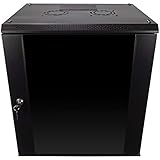
- DURABLE BUILD: Constructed from high-quality Cold Rolled Steel, the NavePoint Consumer Series 12U network cabinet boasts a sturdy, welded frame. Fitting EIA standard 19” networking equipment, this server cabinet confidently supports up to 110 lbs, providing a resilient base for your vital IT gear and equipment
- CONVENIENT DESIGN: This 12U cabinet features a reinforced, heat-treated, tempered glass front door with a security lock. Perfect for applications requiring both security and accessibility, its compact design of 17.72"L x 21.65"W x 24.42"H offers a practical solution for space-constrained settings.
- EASY & CUSTOMIZABLE EQUIPMENT SET UP - The 12U IT cabinet, with removable side panels and security locks, offers customization at its finest. Whether it's for an efficient device or cable management, this data cabinet ensures secure, adaptable configurations that suit your networking server requirements
- ENHANCED VENTILATION & SECURITY - Built-in fans and flow-through ventilation work to prevent overheating, ensuring optimal operation of your equipment. The reinforced, lockable tempered glass front door not only boosts security but also facilitates easy monitoring of installed equipment.
- SAFETY & COMPLIANCE - All NavePoint products are built to industry standards.
Accelerators become obsolete
GPUs can lose economic value faster than buildings, creating asset-liability mismatches for GPU-backed loans and neocloud operators.
Power or construction is late
A technically complete facility cannot earn revenue at full load if transmission, substations, transformers or commissioning are delayed. JLL says more than half of 2025 projects experienced delays of at least three months; equipment lead times averaged about 33 weeks globally in the account of its findings reported by Data Center Knowledge.
Regulators and communities resist
Water use, electricity pricing, tax incentives, noise, emissions, land use and consumer cross-subsidies can delay or reshape projects.
Technology reduces required capacity
More efficient chips, model compression, edge computing or changes in cloud architecture could reduce capacity needed per unit of AI output.
A practical underwriting checklist
Data-center real estate
- Verify an executed interconnection agreement, energization date and upgrade-cost allocation.
- Review tenant credit, lease duration, take-or-pay terms and concentration.
- Test fiber, latency, labor, tax, permitting, water and energy availability.
- Require liquid-cooling readiness and flexibility across rack densities.
- Stress-test floating rates, refinancing and the development-to-stabilization gap.
Utilities and power infrastructure
- Separate contracted generation from merchant exposure.
- Assess rate-base treatment, regulatory approval and customer affordability.
- Review fuel, reserve-margin, transmission-ownership and counterparty risks.
Equipment suppliers
- Assess backlog quality, pricing power and manufacturing capacity.
- Measure dependence on a small number of hyperscalers.
- Determine whether demand is recurring replacement demand or a one-time buildout.
- Check working-capital needs as lead times and orders expand.
Ways investors and users can obtain exposure
| Objective | Relevant category | Examples and caveats |
|---|---|---|
| Own operating digital infrastructure | Data-center operators and REITs | Equinix, Digital Realty and Iron Mountain; valuation, interest rates, capex and tenant concentration matter. Equinix facilities, investor page, Digital Realty facilities, investor page, Iron Mountain facilities, investor page. |
| Buy computing capacity | Public cloud or GPU cloud | AWS, Azure, Google Cloud and CoreWeave publish pricing, but region, quota, utilization, storage, networking and commitments change the final bill. AWS pricing, Azure pricing, Google Cloud GPU pricing, CoreWeave pricing. |
| Build or expand facilities | Power and cooling vendors | Vertiv, Schneider Electric and Eaton serve engineered, quote-based procurement rather than self-service buyers. Vertiv solutions, Schneider Electric solutions, Eaton data-center solutions. |
Enterprise colocation has no reliable universal retail price: market, power commitment, density, term and fit-out determine the quote. Cloud list prices are more transparent but can be misleading without egress, storage, support and utilization costs.
A balanced conclusion for personal investors
The data-center supercycle is credible as a physical-infrastructure trend: demand is rising, powered space is scarce, and multiple industries must invest simultaneously. But the attractive asset is not automatically the asset with the most announced megawatts or the strongest AI narrative.
For analysis—not individualized investment advice—prioritize delivered power, tenant quality, construction discipline, adaptable cooling, manageable leverage and realistic AI economics. Those tests separate contracted infrastructure exposure from speculative land, fragile GPU finance and projects that may never become revenue-producing facilities.
Recommended Free Tools
Quick Recap
Product prices and availability are accurate as of the date/time indicated and are subject to change. Any price and availability information displayed on Amazon at the time of purchase will apply.




