Quick wins for a faster PC:
Clear out junk files and repair common Windows errorsFree Scan →Scan for outdated or missing drivers - takes under a minuteDriver Scan →Repair Windows errors before they cause bigger problemsFix Now →The Galaxy S8 and Galaxy S8+ were outstanding Android flagships when they launched in 2017. In 2026, they are interesting only as very inexpensive used phones: aged batteries, obsolete software, screen wear and carrier compatibility now matter more than their once-premium specifications.
Galaxy S8 and S8+ at a glance
| Specification | Galaxy S8 | Galaxy S8+ |
|---|---|---|
| Display | 5.8-inch dual-edge Super AMOLED, 2960 × 1440, about 571 ppi | 6.2-inch dual-edge Super AMOLED, 2960 × 1440, about 529 ppi |
| Battery | 3,000mAh | 3,500mAh |
| Dimensions and weight | 148.9 × 68.1 × 8.0mm; 155g | 159.5 × 73.4 × 8.1mm; 173g |
| Processor and memory | Qualcomm Snapdragon 835 in U.S. models; 4GB RAM; 64GB storage; microSD expansion up to 256GB at launch | |
| Cameras | 12MP Dual Pixel rear camera, f/1.7, OIS; 8MP autofocus front camera; 4K video at 30fps | |
| Other hardware | USB Type-C, wireless and wired fast charging, NFC, Bluetooth 5.0, 3.5mm headphone jack, Samsung DeX support | |
| Launch software | Android 7.0 Nougat | |
| U.S. unlocked launch price | $724.99 | $824.99 |
Samsung’s specifications and launch announcement document the hardware, dimensions, weights and original prices: S8 specifications, S8+ specifications and U.S. unlocked announcement.

What made the Galaxy S8 special in 2017?
Samsung replaced the physical home button with on-screen navigation and pushed the bezels to the edges, creating its “Infinity Display” design. The glass front and rear, metal frame and curved dual-edge panel looked more futuristic than most rivals, while the phone remained relatively compact for its screen size. The S8 followed the Galaxy S7 and S7 Edge as Samsung’s mainstream flagship pair.
Both phones retained features that later disappeared from many premium models: expandable storage, wireless charging and a 3.5mm headphone jack. The trade-off was a slippery body and a rear fingerprint sensor positioned beside the camera. On the S8+ especially, reaching the reader could be awkward and touching the lens instead was easy. The original hands-on review praised the regular S8’s ergonomics while criticizing this placement and the larger model’s reach: Droid Life’s April 27, 2017 review.
#1 Best Overall
Display: still the strongest reason to consider one
Both displays use AMOLED, so blacks are genuinely deep and contrast is excellent. Quad HD+ resolution keeps text and images sharp, and the 18.5:9 shape made a large screen possible without making the S8 as wide as older phones. Curved edges add visual impact but can reflect light and register accidental touches. Early apps and video sometimes left black bars or stretched content because the aspect ratio was new.
On a used example, inspect the panel rather than assuming it remains pristine. Display a white, gray, red, green and blue image at high brightness and look for status-bar, keyboard or navigation-button burn-in, uneven brightness and scratches along the curved edges.
Performance then and now
Launch experience
The Snapdragon 835, 4GB of RAM and fast UFS storage made both models feel quick in 2017. The original reviewer reported consistent operation without major gaming lag, freezes or random reboots. That is a period assessment, not a guarantee of current performance.
What to expect in 2026
Calls, messaging, music and light browsing may still be comfortable on a healthy unit. Modern games, heavy camera processing and extensive multitasking are less forgiving, and 4GB of RAM is restrictive by current flagship standards. App support can change independently of the hardware, so a phone that feels responsive may still fail to run an app you need.
The Tool Desk
Outbyte PC Repair FREEClear out junk files and repair common Windows errorsFree Scan →Outbyte Driver Updater FREEFix the driver behind crashes, sound loss and screen glitchesFind Drivers →Camera quality
The 12MP Dual Pixel rear camera has an f/1.7 aperture, optical stabilization and fast phase-detection autofocus. In 2017 it produced strong daylight images, convincing color and dependable focus, with a broad set of shooting modes. The 8MP autofocus selfie camera was also competitive, and 4K recording at 30fps was supported.
Rank #2

- Tested for battery health and guaranteed to have a minimum battery capacity of 80%.
- Successfully passed a full diagnostic test which ensures like-new functionality and removal of any prior-user personal information.
- Inspected and guaranteed to have minimal cosmetic damage, which is not noticeable when the device is held at arm's length.
- The device does not come with headphones or a SIM card. It does include a charger and charging cable that may be generic.
- Fully Unlocked: Fully unlocked and compatible with any carrier of choice (e.g. AT&T, T-Mobile, Sprint, Verizon, US-Cellular, Cricket, Metro, etc.), both domestically and internationally.
This was an excellent but evolutionary camera rather than a major leap over the Galaxy S7. The launch review noted occasional overexposure and Samsung’s warmer rendering, while newer phones later gained substantial computational-photography advantages. Test autofocus, stabilization, flash, front-camera output and a short 4K clip before buying a used unit; damaged stabilization or a soft-focus lens can erase the camera’s value.
Battery and charging
The S8 has a 3,000mAh battery and the S8+ a 3,500mAh unit. In the original review, the S8 typically reached bedtime with 10–20% remaining and about three to four hours of screen-on time; the S8+ generally had 30–40% remaining with similar screen-on time. Those were one reviewer’s observations during the launch period, not laboratory results: Droid Life review.
In 2026, battery condition dominates the nominal capacity difference. Charge cycles, heat, replacement quality, brightness, signal strength and background apps can produce radically different results. Ask whether the battery was replaced and watch for overheating, rapid drain, unexpected shutdowns or swelling. USB Type-C wired charging and wireless charging remain useful, but a worn port or third-party battery can make either unreliable.
Software, Bixby and support
The phones shipped with Android 7.0 Nougat. Samsung’s interface was substantially more mature than older TouchWiz versions, but the launch review still found awkward folders, inconsistent app-drawer gestures and other small irritations. Bixby was incomplete at launch, and the reviewer preferred Google Assistant for practical voice commands: contemporary review.
Samsung’s current pages are legacy support pages that still present Android 7.0-era specifications and manuals rather than a current retail product: U.S. Cellular S8 support. Final update history differs by carrier and region, so record the exact model, Android version and security-patch date in Settings. Do not assume current security updates, modern Android features or universal app compatibility. That makes the S8 a poor choice for banking, work accounts or any use requiring a current security baseline.
Rank #3
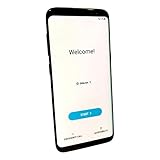
- Infinity Display: a bezel less, full frontal, edge to edge screen. Default resolution is Full HD+ and can be changed to Quad HD+ (WQHD+) in Settings
- Camera resolution Front: 8 MP AF, Rear: 12 MP OIS AF
- Memory: Internal Memory 64 GB, RAM 4GB. Earjack : 3.5 millimeter Stereo
- Battery, talk time is up to 30 hours, video play time is up to 17 hours
- Dust and Water resistant Water resistant and dustproof based on IP68 Rating, which tests submersion up to 1.5 meter for up to 30 minutes. Not shockproof
Which model is better?
Choose the Galaxy S8 for ergonomics
- One-handed use and lower weight matter.
- A 5.8-inch screen is sufficient.
- You want the same core processor and camera platform in a smaller body.
- You accept average endurance or carry a power bank.
Choose the Galaxy S8+ for screen and endurance
- Video, reading, navigation or gaming benefits from 6.2 inches.
- The larger battery is valuable.
- You can manage a taller, wider and heavier phone.
- You accept the more awkward fingerprint-reader reach.
If condition and price are comparable, the S8 is the easier daily-handling choice and the S8+ the better media phone. If one has a healthier battery, cleaner display and verified network support, that condition advantage matters more than the model name.
Should you buy a Galaxy S8 or S8+ in 2026?
Usually, no—not as a general-purpose flagship replacement. Either can make sense as a very cheap backup, music phone or inexpensive handset for someone who specifically wants a headphone jack, microSD card, wireless charging and a high-quality OLED screen. The purchase is sensible only when the price is far below a newer supported phone and the buyer accepts uncertain software longevity.
Recommended Free Tools
Do not use the 2017 unlocked prices of $724.99 and $824.99 as current values. Samsung’s March 2026 MSRP file lists newer alternatives such as the Galaxy A17 5G at about $169.99, A26 5G at $299.99, A36 5G at $399.99 and A56 5G at $499.99, plus S24 FE and S25 FE configurations from $649.99; these are MSRP-file signals, not verified live checkout prices: Samsung March 2026 MSRP file. Newer phones generally offer current software, fresher batteries and better network longevity, though some omit the S8’s jack, microSD slot or wireless charging.
Buy neither when
- You need current security updates or reliable support for banking and work.
- You require 5G or cannot verify LTE, VoLTE and emergency-calling compatibility.
- You need dependable all-day battery life.
- The used price approaches a newer entry-level or midrange phone.
Used-buying checklist
- Identify the exact model. Carrier and regional variants have different bands and update histories.
- Confirm network support. Ask the carrier to verify LTE bands, VoLTE and activation policy; “unlocked” is not universal compatibility.
- Check battery behavior. Look for replacement evidence, heat, swelling, rapid drain and shutdowns.
- Inspect the OLED. Test white, gray, red, green and blue screens for burn-in and uneven brightness.
- Test charging and data. Confirm the USB-C plug fits securely and that data transfer works.
- Test biometrics and cameras. Check fingerprint recognition, face or iris features, autofocus, OIS, flash, selfie camera and 4K recording.
- Inspect physical condition. Look for cracked back glass, curved-edge scratches and signs of repair.
- Treat water resistance as uncertain. IP68 was an original rating, not a guarantee after years of aging or a prior repair.
- Clear ownership locks. The seller must remove Google and Samsung accounts and complete a factory reset.
- Check the IMEI. Confirm it is not lost, stolen, financed or blocked.
- Record software details. Note Android version and security-patch date before paying.
- Compare total value. Include return coverage, warranty and any battery replacement in the price.
Final verdict
As a launch review, “you can’t go wrong” was broadly fair: the Galaxy S8 and S8+ combined excellent AMOLED displays, premium design, capable cameras, expandable storage, wireless charging and strong 2017 performance. The Galaxy S8 is the better ergonomic pick; the S8+ is the better large-screen and endurance pick.
That verdict is not timeless. In 2026, battery age, software support, screen wear and carrier compatibility determine whether either phone is a bargain or a false economy. Buy one only at a genuinely low price, after inspection, and with clear acceptance that a newer budget phone is usually the safer long-term purchase.
Quick Recap
Product prices and availability are accurate as of the date/time indicated and are subject to change. Any price and availability information displayed on Amazon at the time of purchase will apply.
What’s actually slowing this PC down?
Pick the symptom - the matching free tool is one click away.




