An idea becomes a sustainable offering through a sequence of evidence-building decisions—not a single leap from prototype to sales. You must establish that the problem is real, make a solution work, adapt it for a defined customer and use, create a route to buyers, and then expand production without destroying the economics.
A useful U.S. advanced-manufacturing framework separates technology concept, validation, development of a commercial-product prototype, commercialization, and production scale-up. It is a conceptual map rather than a universal checklist: software, services, and physical goods will require different tests and operating systems.


What changes as an idea moves toward market?
Each stage answers a different question. A working demonstration answers whether the technology can function. Validation asks whether the proposed use and problem matter to a real audience. A commercial-product prototype must suit an intended customer, not merely impress its creator. Commercialization puts the offering in front of buyers and creates a way to deliver it. Scale-up must make that delivery economically sustainable, sometimes through alternative versions of the core product for different customers.
The National Strategic Plan for Advanced Manufacturing distinguishes a commercially viable product from economically viable production scale. That distinction prevents a common mistake: treating a convincing prototype as proof of demand or as evidence that a production system is ready to operate at volume.
#1 Best Overall

- 57 clear-to-use design methods
- Case studies of process in action
- Practice worksheets
The five transitions from maker to market
| Stage | Primary question | Evidence to seek | Uncertainty that remains | Decision before advancing |
|---|---|---|---|---|
| Technology concept | Can the underlying idea work? | A defined technical approach and a demonstrable function | Whether the problem is important, specific and worth solving | Identify a real use case and the people who experience it |
| Validation | Does the proposed solution address that use case? | Feedback and observed behavior from intended users or buyers | Whether users will choose, pay for or adopt the offering | Refine the problem, customer and solution before polishing the build |
| Commercial-product prototype | Can the solution work as a product for a defined customer? | A prototype designed around requirements, usability, safety and the intended context | Whether the team can sell, support and deliver it repeatedly | Specify the offer, route to market and responsibilities for delivery |
| Commercialization | Can the offering enter a market? | A buyer-access plan, pricing logic, sales process and delivery capability | Repeatability of demand and the cost of acquiring and serving customers | Use actual operating results to decide what must change before expansion |
| Production scale-up | Can output grow economically while meeting customer needs? | Repeatable processes, dependable suppliers or partners, quality controls and sustainable unit economics | How costs, quality and product variants behave at higher volume | Expand capacity only when the operating model can support it |
1. Start with a technology concept
Define what is novel and what it is supposed to accomplish. A concept description should name the user, the situation and the outcome, not just the mechanism. At this point, money is best treated as an experiment budget: spend enough to test the critical technical assumption, but avoid building a full product around an untested problem.
2. Validate the problem and proposed use
Validation is the bridge between “it can work” and “someone needs this.” Talk to the people who encounter the problem, observe their current workaround and test whether your proposed outcome matters in practice. Keep technical enthusiasm separate from evidence of demand. Positive reactions are not the same as a purchase decision, and a prototype demonstration is not a sales forecast.
Rank #2
3. Develop a commercial-product prototype
Development turns a validated concept into a product specification. For a physical product, that can include materials, tolerances, safety and serviceability; for software or a service, it can include reliability, onboarding, privacy, support and integrations. The prototype should represent the customer’s intended use closely enough to expose failures that a laboratory or workshop demonstration would hide.
4. Commercialize the offering
Commercialization is the point at which the offering enters the market. Decide who is allowed to buy, how they find you, what they receive, how payment works and who handles installation, support, returns or updates. A technically strong product can still fail if the route to buyers is unclear or delivery consumes more time and cash than the price supports.
Windows Errors? Fix Them Before They Spread
Repair common Windows errors and clear accumulated junk for a smoother, more stable PC - no reinstall needed.Free scan · no reinstallOutdated Drivers Are Slowing You Down
One free scan finds every outdated or missing driver and matches the right update for your exact hardware.Free scan · exact hardware match5. Scale production economically
Scale-up is not simply making more units. It requires repeatable work, dependable inputs, quality checks, capacity planning and a cost structure that remains viable as volume changes. The advanced-manufacturing framework also notes that scale-up may include alternative versions of a core product for different customers. Variants can expand the market, but they also add design, inventory, training and support complexity.
How to decide whether you are ready for the next stage
The framework does not prescribe universal numerical thresholds. A medical device, a subscription application and a craft product face different regulations, buying cycles, failure costs and production constraints. Use stage-specific evidence instead of declaring readiness because a calendar date or a funding round has arrived.
Rank #4
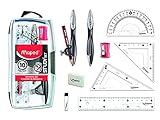
- PRECISE GEOMETRIC DRAWINGS - Equipped with 2 metal compasses and a 4" protractor, this set is designed for accuracy and precision in advanced geometry.
- ECONOMICAL NAVIGATIONAL AID - This affordable set includes essential tools for students, making geometric learning accessible without compromising quality.
- COMPACT & DURABLE - The shatter-proof carrying case and sturdy metal compasses ensure this geometry kit withstands the rigors of daily student use.
- QUALITY MATERIALS - Maped's commitment to excellence is evident in the high-grade materials used for this geometry set, ensuring lasting performance.
- ALL-INCLUSIVE DRAWING TOOLS - Complete with triangles, ruler, protractor, and compass, this set has everything needed for complex geometric tasks.
- Problem evidence: You can describe the customer and use case precisely, including the consequence of doing nothing.
- Solution evidence: The product performs the intended job under conditions that resemble real use.
- Customer evidence: Intended buyers can explain why they would choose the offering and what would prevent adoption.
- Delivery evidence: You know how the customer receives the product and who provides support after the sale.
- Economic evidence: You understand major costs and how changes in volume, variants or service requirements affect them.
- Operational evidence: Quality and output depend on a process that another trained person or partner can repeat, rather than on one maker’s improvisation.
If one of these areas is still conjecture, the next investment should test that uncertainty rather than merely make the prototype more polished.
Independent reader supportYour contribution helps us test, update, and keep practical guides available for everyone.What U.S. innovation statistics do—and do not—tell you
Recent U.S. surveys show that innovation is common but not guaranteed to succeed. The National Center for Science and Engineering Statistics and the U.S. Census Bureau reported that 22.9% of U.S. employer companies reported product or business-process innovation during 2020–22, while 9.8% reported product innovation. The survey covers U.S. for-profit companies with at least one employee and a three-year reporting period; these percentages are incidence measures, not success rates for inventions, startups or launches.
The Tool Desk
Outbyte Driver Updater FREEFix the driver behind crashes, sound loss and screen glitchesFind Drivers →Outbyte PC Repair FREERepair Windows errors before they cause bigger problemsFix Now →Best Value

- GAME FEEDER KIT - Upgrade your favorite deer feeder with the Wildgame Innovations Trophy Hunter Digital Feeder Kit; This Power Control Unit will allow you to easily attract and pattern game, as well as enhance the hunting experience season by season
- CUSTOM SETTINGS - With the Trophy Hunter 6V Digital Feeder Kit you can select between 6 daily feed times and adjust the feeding duration from 1 to 30 seconds; This hunting feeder kit ensures a 360-degree distribution of feed up to 30 feet
- HIGH PERFORMANCE - The Wildgame Innovations game feeder PCU has a sliding door and a pressure-activated locking door latch; A high-torque motor with adjustable (low/medium/high) speed control provides efficient management of the feeder operation
- INTUITIVE DISPLAY - The user-friendly digital timer is equipped with easy-to-use silicone rubber buttons and a large LCD screen for easy viewing; In addition, a battery charge icon on the screen shows the hunter the charge level in real time
- RELIABLE CONSTRUCTION - Weather-resistant, powder-coated, galvanized steel case and galvanized steel spinner plate ensure years of operation; The Trophy Hunter Programmable Feeder Kit is supplied with a 2-inch drop funnel for easy installation
Industry differences are substantial. The National Science Board and NCSES reported that, in 2022, 54% of software publishers and 46% of navigational, measuring, electromedical and control-instrument manufacturers reported introducing a new product or service in the prior three years, compared with 23% across all industries. These are reported introduction rates, not measures of profitability or commercial success, and they should not be generalized to solo makers, every startup or other countries.
Managing money while the product is still uncertain
Cash discipline should follow the evidence sequence. Separate spending that tests a critical assumption from spending that improves appearance or adds optional features. Keep a written record of prototype, compliance, tooling, inventory, distribution and support commitments so a low price does not hide an unsustainable cost.
Before committing to a larger batch or a permanent facility, map the consequences of slower sales, supplier delays, rework and customer support. A contract manufacturer or product-engineering service may be useful when the needed capability is specialized, but compare the partner’s fit, quality controls, lead times, ownership of designs and minimum commitments with the cost of building that capability yourself. Terms and availability vary, so verify them directly.
From local making to wider markets
The strategy behind the framework captured the ambition in Secretary of Commerce John Bryson’s 2011 phrase, “build it here, sell it everywhere.” The slogan expresses a goal of domestic production paired with broad sales; it is not a technical definition of innovation and does not promise that every product can be manufactured domestically or sold globally. Geography, regulation, shipping, service requirements and customer concentration still shape the sensible route to market.
Do these 3 things before closing this tab:
1Scan for outdated or missing drivers - takes under a minute2Clear out junk files and repair common Windows errors3Fix the driver behind crashes, sound loss and screen glitchesQuick Recap
A practical decision loop
- Name the next uncertainty. Choose the question whose answer would most change your product, customer or spending plan.
- Run the smallest credible test. Match the test to the risk: technical demonstration, user trial, paid order, delivery exercise or repeatable production run.
- Record evidence and costs. Distinguish observed behavior and actual commitments from opinions, projections and one-off heroic effort.
- Revise the offer or process. Change the design, customer segment, channel or production method when the evidence requires it.
- Advance only when the next stage is supportable. A commercial-product prototype can justify commercialization without justifying full scale-up; each transition needs its own proof.
Product prices and availability are accurate as of the date/time indicated and are subject to change. Any price and availability information displayed on Amazon at the time of purchase will apply.




