Flamingo launched OpenFrame on October 28, 2025, pitching it as a lower-lock-in way for managed service providers (MSPs) to combine remote monitoring and management (RMM), remote access, mobile-device management, security monitoring, patching, ticketing, and AI-assisted operations. The platform is a credible early-stage consolidation effort, not yet a proven replacement for every mature MSP suite. Its open-source scope, production safeguards, pricing, integrations, and total cost of ownership still require validation before a full migration.
Flamingo is the company; OpenFrame is its commercial and self-hostable platform. A separate initiative, OpenMSP, launched on July 1, 2025, to map open-source alternatives and provide community and margin-planning resources.
What Flamingo announced
The launch announcement described Miami-based Flamingo as a startup founded by Michael Assraf and announced $2.2 million in pre-seed funding led by Focal VC and Array VC. Flamingo framed OpenFrame as an answer to MSP tool sprawl, per-device licensing, labor-intensive ticket queues, and vendor lock-in. The company also promoted a $380 billion MSP market, 8–12% typical net margins, software costs of roughly 25–35% of revenue, and labor costs of another 25–35%. Those figures are company-supplied framing, not independently audited industry benchmarks. Read the launch announcement.
The same release said more than 1,000 MSPs were on a waitlist and more than 150 early adopters were testing the product in Slack. A waitlist, an early-access participant, a paying customer, and an endpoint under management are different measures, so those numbers should not be treated as proof of commercial traction.
#1 Best Overall

- SonicWall TZ270W Appliance Only - No Service Subscription (02-SSC-2823) - Combines enterprise-grade firewalling with integrated 802.11ac Wave 2 Wi-Fi to deliver secure wired and wireless connectivity in one compact device for small offices and clinics.
- Blocks zero-day threats and ransomware with Capture ATP sandboxing enhanced by RTDMI, plus IPS and anti-malware scanning for layered protection.
- Eliminates the need for separate access points in smaller spaces thanks to built-in high-speed wireless that is simple to deploy and manage.
- Supports VPN, SD-WAN, and TLS 1.3 decryption to secure hybrid cloud access and remote workers while maintaining usability and performance.
- Delivers gigabit performance with up to 750,000 concurrent connections to handle growth in users, devices, and SaaS applications.
What OpenFrame is supposed to do
Flamingo’s current product pages describe OpenFrame Gen1 as an all-in-one MSP operations platform. Its stated scope includes:
- Remote monitoring and management.
- Remote access.
- Mobile-device management.
- Monitoring and alerting.
- Automation and scripting.
- Patch and package management.
- Security monitoring or SIEM-related workflows.
- Ticketing and service operations.
- AI copilots for intake and backend operations.
The original launch specifically listed RMM, remote access, MDM, and integrated SIEM, with free beta access through February 2026. By August 2026, the homepage presents Gen1 and a 14-day free trial, so the original beta terms should not be assumed to remain available. OpenFrame product details and current homepage.
The component stack matters
OpenFrame does not mean Flamingo created every underlying tool. Flamingo’s materials reference or incorporate open-source projects including TacticalRMM for RMM and automation, MeshCentral for remote access, Fleet or FleetDM for device management, Netdata for monitoring, and Chocolatey and Homebrew for package workflows. Wazuh is discussed in Flamingo’s open-source security comparisons. The value Flamingo is adding is the control plane, integrations, deployment options, and AI workflow layer—not ownership of those projects.
| Capability | Referenced foundation | What a buyer should verify |
|---|---|---|
| RMM and automation | TacticalRMM | Flamingo’s modifications, hardening, support, and upgrade process |
| Remote access | MeshCentral | Whether access is self-hosted, proxied, or dependent on Flamingo services |
| Device management | Fleet/FleetDM | Operating-system coverage and feature parity |
| Monitoring | Netdata or an integrated monitoring layer | Alerting, retention, scaling, and included dashboards |
| Security monitoring | Security integrations and SIEM workflows | Whether this is a complete SIEM or an event and correlation layer |
How the Fae and Mingo agents differ
Fae: intake and client interaction
Flamingo positions Fae as the client-facing or intake-oriented agent. The product page says Fae can accept natural-language requests, create tickets, gather logs and screenshots, collect system information, provide status updates, and escalate to Mingo or a human technician. Flamingo’s OpenFrame page.
Quick wins for a faster PC:
Fix the driver behind crashes, sound loss and screen glitchesFind Drivers →Clear out junk files and repair common Windows errorsFree Scan →Rank #2
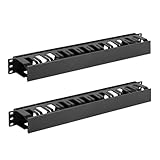
- Space-saving: This server rack cable management is made of plastic, lightweight,easy to assemble and disassemble,can save space and manage cables
- Muti-access: Rack mount cable management has 12 slots and 2 back accesses to organize and distinguish countless cables separately
- User-friendly Design: Removable Top Cover makes this 1u cable management easy to add or remove bundled cables
- Easy to use:This rack mount cable management is easy to install,with instructions or videos for reference;Accessories including 12-24 Cage nut and Screw×8,10-32 Screw×8,you can choose according to the actual installation
- Widely Applicable: Rack cable management is suitable for 19in wide AV/IT/Data/Audio racks and server cabinets in home office, studio and other workplaces
Mingo: backend operations
Mingo is presented as the operations agent for script generation, endpoint actions, suspicious-process monitoring, threat-oriented workflows, routine maintenance, patching, and remediation. The launch material says sensitive operations require technician approval. Launch details.
That approval boundary is more important than the marketing label “autonomous.” Before production use, an MSP should confirm whether permissions can be limited by tenant, customer, device group, or technician; whether tool calls are immutably logged; whether actions support dry runs and rollback; and which model providers process customer data. High-risk actions should never run broadly without staged deployment and explicit approval.
How open source is OpenFrame?
Flamingo says its solutions are built on open-source foundations, that users should control their data, and that OpenFrame can be self-hosted without license fees. Its trust page says code will be open source. Flamingo trust commitments.
Those statements do not, by themselves, prove that every production component is open today. A buyer needs the exact repositories, license files, container images, Helm charts, infrastructure templates, dependency inventory, release notes, security advisories, and data-processing terms. It is also necessary to establish whether proprietary AI-agent code, hosted AI, commercial support, updates, or security fixes are required for a functional deployment.
Rank #3
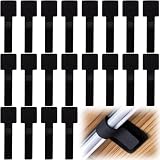
- What You Will Get: 20pcs of self adhesive hook and loop cable ties in black color, Each cable organizer is 1.13 x 3.55 in/2.88 x 9 cm, suitable to meet your various cable management on or under desk needs
- Strong Adhesive Backing: Designed with strong adhesive backing, they cord holders are easy to use. They can be firmly adhered and keep the cable tidy for a long time, which increases its reliability
- Reliable Quality: Made of premium nylon material, these cable straps have excellent insulation and wear resistant, which can support for a long time
- Reusable and Adjustable: You can adjust the adhesive appliance cord organizer according to your different cable management needs. Reusable and practical, help you to organize the messy cables and keep them neat and orderly
- Wide Application: These self-adhesive hook and loop cable ties for organizing cords suitable for home, office, computer room, kitchen, studio, game competition, workshop and so on
The practical distinction is:
- Open-source foundations: third-party projects with their own licenses and communities.
- An open-source product: the relevant OpenFrame source is available under stated licenses.
- A self-hostable service: an MSP can operate the complete production system without Flamingo-controlled dependencies.
- A managed service: Flamingo operates the platform in exchange for a recurring fee and support relationship.
Deployment choices and their real costs
Flamingo describes self-hosted, managed, and hybrid models in its v0.7.8 update. Deployment and API overview.
| Model | Advantages | Costs and risks |
|---|---|---|
| Self-hosted | Control over data and infrastructure; potentially no platform license fee | Compute, storage, backups, certificates, upgrades, monitoring, security response, and skilled staff |
| Managed | Faster rollout and less infrastructure work | Recurring cost, provider dependency, and possible data or service-residency constraints |
| Hybrid | Sensitive services can remain on premises while selected services are managed externally | More integration, identity, networking, and incident-ownership complexity |
“Free self-hosted” is therefore not zero-cost. An MSP assumes uptime, disaster recovery, secrets management, vulnerability remediation, capacity planning, and upgrade testing. A small firm without infrastructure expertise may be better served by a managed option, although that weakens the argument for eliminating vendor dependence.
Pricing is not yet clear
Flamingo’s public material contains conflicting signals. One comparison article says OpenFrame costs approximately $1 per device per month, while another describes an all-in model of roughly $2–$3 per endpoint per month. The current homepage advertises a 14-day free trial and no contract but does not expose a complete public price table in the material available for this article. $1 pricing reference; $2–$3 pricing reference.
Do not budget from either figure without a dated quote. Confirm the minimum device count, AI limits, log and storage charges, support tier, cancellation terms, self-hosted commercial support, and whether every module is included.
Crashes, No Sound, or Screen Glitches?
Random freezes, missing sound and display glitches usually trace back to one bad driver. Find and replace yours safely.Free scan · under a minutePC Slower Than It Used to Be?
A free scan shows the junk files, broken settings and background clutter dragging Windows down - then fixes them in one click.Free scan · Windows 10 & 11Rank #4

- Compact and Efficient Design: The FortiGate 40F is designed for small to mid-sized businesses and enterprise branch offices, featuring a compact, fanless desktop form factor that ensures quiet operation and minimizes space usage.
- Robust Connectivity Options: Equipped with 5 GE RJ45 ports, including 1 WAN port and 4 internal ports, this model provides essential connectivity and flexibility for various network configurations in a small-scale environment.
- High-Performance Security: Offers up to 1 Gbps IPS throughput and 600 Mbps threat protection throughput, using Fortinet’s purpose-built security processor technology to deliver industry-leading performance and protection for SSL encrypted traffic.
- Advanced Threat Protection: Integrated with Fortinet’s AI-powered FortiGuard Labs, the FortiGate 40F offers comprehensive cybersecurity, identifying and mitigating both known and unknown threats to maintain robust security across your network.
- Simplified Management and Deployment: Features a user-friendly management console that provides comprehensive network automation and visibility, coupled with Zero Touch Integration with Fortinet’s Security Fabric for easy deployment.
Can OpenFrame really raise MSP margins?
Flamingo’s founder has said OpenFrame could help MSPs move from 8–12% net margins to 50–60% EBITDA margins. That is a projection, not a demonstrated customer outcome. A credible model must include cloud infrastructure, storage and retention, migration, integration work, training, human review of AI actions, security operations, insurance, compliance, support, and any products OpenFrame does not replace—such as EDR, backup, billing, documentation, or advanced compliance tooling.
License savings can be real, but they may be exchanged for engineering labor and operational responsibility. The only reliable test is a controlled pilot that measures total cost per endpoint, technician hours, ticket automation, false positives, outage impact, and support effort against the incumbent stack.
OpenFrame’s maturity timeline
OpenFrame was an alpha product before the current Gen1 presentation:
- October 13, 2025: Alpha version 0.0.2 included managed cloud deployment, a unified dashboard and API, endpoint visibility, remote access, read-only Fae, basic chat ticketing, Google SSO, and TacticalRMM integration. Alpha release.
- October 28, 2025: Flamingo launched from stealth with self-hosting, managed services, AI agents, and the beta feature set.
- April 2, 2026: Flamingo described v0.7.8, a unified API, modular services, and self-hosted, managed, and hybrid deployment.
- August 2026: The site markets OpenFrame Gen1 and a 14-day trial.
This is meaningful development, but it remains a young platform compared with established MSP suites. The homepage’s claim that OpenFrame is trusted by 285 businesses and MSPs is company-reported and does not explain how many are paying, in production, or managing endpoints at scale. Flamingo homepage.
Do these 3 things before closing this tab:
1Repair Windows errors before they cause bigger problems2Fix the driver behind crashes, sound loss and screen glitches3Clear out junk files and repair common Windows errorsOpenFrame compared with alternatives
| Option | Best fit | Main trade-off versus OpenFrame |
|---|---|---|
| ConnectWise | MSPs needing a mature ecosystem and broad integrations | Commercial platform and less self-hosting emphasis |
| Kaseya or Datto | Providers seeking established RMM, PSA, backup, and security portfolios | Vendor dependence and commercial licensing |
| NinjaOne | Endpoint management, patching, RMM, and mature support | Less open-source-oriented and generally commercial-only |
| Atera or Syncro | Smaller MSPs wanting integrated PSA/RMM workflows | Per-technician commercial models and limited self-hosting |
| TacticalRMM | Technical teams wanting direct RMM control | Narrower scope; additional PSA, MDM, security, and billing tools are needed |
| Wazuh, MeshCentral, Netdata, or Fleet | Teams assembling a modular security, remote-access, monitoring, or fleet stack | More control, but more integration and operational ownership |
Who should pilot OpenFrame?
Potentially good candidates
- Small and mid-sized MSPs with strong technical staff.
- Providers frustrated by tool sprawl and willing to run a reversible pilot.
- Organizations that value self-hosting, data control, and customization.
- Early adopters able to tolerate roadmap and integration risk.
Potentially poor candidates
- MSPs that require mature integrations and enterprise support immediately.
- Organizations without staff to operate open-source infrastructure.
- Regulated customers needing independently verified certifications, contractual controls, or specific data residency.
- Providers that cannot tolerate migration risk or a young product’s changing architecture.
A safer evaluation plan
- Inventory every current tool: RMM, PSA, remote access, MDM, SIEM, EDR, backup, billing, documentation, identity, and compliance reporting.
- Request a written feature and operating-system matrix, including Windows, macOS, Linux, iOS, Android, servers, network devices, virtual machines, and cloud workloads.
- Pilot one internal customer or low-risk device group while incumbent agents remain available for rollback.
- Require tenant isolation, least-privilege roles, approval gates, action logs, dry-run mode, rollback, retention controls, and an emergency disablement procedure.
- Measure total cost, technician time, ticket deflection, false positives, patch success, outage recovery, and support response rather than relying on marketing percentages.
- Review licenses, dependency security, update commitments, support terms, incident disclosure, data export, and disaster-recovery responsibilities before expanding.
The Bottom Line
Bottom line: OpenFrame is a credible and interesting attempt to combine open-source MSP infrastructure with agentic automation. It may suit technically capable providers seeking consolidation and lower lock-in, but its pricing, complete open-source scope, production maturity, and independent security evidence are not yet established well enough to justify replacing an entire MSP stack at once. A limited, reversible pilot is the financially and operationally sensible next step.
Quick Recap
Product prices and availability are accurate as of the date/time indicated and are subject to change. Any price and availability information displayed on Amazon at the time of purchase will apply.




