Recommended Free Tools
Ajit Pai became president and CEO of CTIA, the principal U.S. wireless-industry trade association, on April 1, 2025. CTIA still identified him in that role in an April 15, 2026 statement. His move did not make him personally “anti-cable”; it put him at the center of a policy fight in which national wireless carriers want more exclusive, high-power licensed spectrum while cable companies and their allies want to preserve shared access to the Citizens Broadband Radio Service (CBRS).
Why Pai’s new job matters
Pai served as an FCC commissioner beginning in 2012 and was designated chairman by President Donald Trump in 2017. After leaving the commission following the first Trump administration, he joined Searchlight Capital Partners in 2021. He then took over CTIA on April 1, 2025, succeeding as the trade group’s president and CEO.
Calling him a “wireless lobbyist” is shorthand. Pai is formally a trade-association chief, not an independent lobbyist. CTIA says it represents wireless carriers, device manufacturers, suppliers, applications companies and other participants in the mobile ecosystem, and advocates before government on their behalf. See CTIA’s appointment announcement and Pai’s biography.
The apparent reversal is strategic. As FCC chairman, Pai backed policies that could benefit both wireless and cable companies. As CTIA chief, he is pressing for a larger pipeline of exclusive licensed spectrum for mobile carriers. That position conflicts with cable companies’ effort to use shared spectrum to build more independent wireless capacity.
Free tools Windows power users keep installed
One-click scans. No signup required.
#1 Best Overall

- ⚠️ CABLE INTERNET ONLY - NOT COMPATIBLE WITH: Fiber (Verizon FiOS, AT&T), DSL, Satellite, or Fixed Wireless. ONLY works with cable providers like Xfinity, Spectrum, Cox. Verify your internet type BEFORE purchase.
- 🚫 NO WiFi INCLUDED - ROUTER REQUIRED: This is a modem ONLY. You MUST buy a separate WiFi router to get wireless internet. Without a router, only ONE device can connect via Ethernet cable. This does NOT replace your current WiFi router.
- 🔌 CABLE INTERNET REQUIRED: Works EXCLUSIVELY with cable internet service (DOCSIS) from providers like Xfinity, Spectrum, or Cox. Will NOT work with fiber (Verizon FiOS, AT&T), DSL, satellite, or fixed wireless internet. Contact your ISP to confirm compatibility BEFORE purchasing.
- 🚀 MULTI-GIG PERFORMANCE: Supports internet plans up to 2.5 Gbps with 2.5 Gbps Ethernet port. Designed for plans 1 Gbps and faster from certified providers: Xfinity (up to 2.33 Gbps), Spectrum (1 Gbps), Cox (2 Gbps). Verify your plan speed and provider compatibility.
- 💡 SETUP REQUIREMENTS: You need: (1) Cable internet service, (2) Separate WiFi router with 2.5 Gbps port for full speeds, (3) ISP activation. This modem cannot create WiFi networks or connect multiple devices without additional equipment.
The dispute in plain English
The fight is over who gets protected access to valuable airwaves, at what power level and under what license. CTIA, AT&T and other national carriers favor large, contiguous blocks that one licensee can use at high power across broad areas. Comcast, Charter, Cox, small wireless internet providers, private-network operators and public-interest groups are defending CBRS as a coordinated, shared-access platform.
That makes “enemy of cable companies” an attention-grabbing headline frame rather than a literal description of Pai’s personal views. The more accurate description is that he now represents wireless carriers in a spectrum-allocation fight against cable’s shared-spectrum strategy.
What CBRS is and why its rules matter
CBRS occupies 3.55–3.70 GHz, commonly called the 3.5 GHz band. It was designed to protect incumbent federal users, including Department of Defense operations, while opening the band to commercial and private deployments under a tiered system. CTIA describes the framework in its CBRS comments.
The three access tiers
- Incumbent Access: protected federal users have priority, and commercial systems must avoid harmful interference.
- Priority Access Licenses (PALs): auctioned licenses provide more protection than general access, but are still subject to the CBRS framework.
- General Authorized Access (GAA): lower-priority users operate on channels made available by the spectrum-access system.
CBRS is therefore not “free spectrum.” Users face power limits, coordination requirements and interference-protection rules. Nor is it a cable asset: cable companies own neither the band nor an exclusive right to it.
Do these 3 things before closing this tab:
1Fix the driver behind crashes, sound loss and screen glitches2Repair Windows errors before they cause bigger problems3Scan for outdated or missing drivers - takes under a minuteWhy cable companies care
Traditional cable mobile offerings have relied heavily on wholesale access from Verizon or another national mobile network. CBRS gives cable operators and other local providers another option: deploy localized networks, offload traffic, support fixed wireless or build capacity in places where a national carrier’s network is expensive.
Rank #2
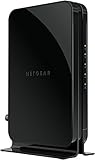
- Save monthly rental fees: Model CM500 replaces your cable modem, saving you up to $168/yr in equipment rental fees.
- Speeds by carrier plans: Xfinity (up to 200Mbps), Cox (up to 150Mbps).
- Works with any wifi router: Connect any WiFi router, separate unit, to this modem's Ethernet port to support all your wireless devices.
- Ethernet connections: 1 Gigabit Ethernet port connects to your computer or separate WiFi router.
- Modem technology: Engineered with 16x4 channel bonding and DOCSIS 3.0.
If CBRS were converted into high-power, exclusive-use spectrum for nationwide carriers, cable companies could lose an important way to reduce that wholesale dependence. The consequence would extend beyond Comcast, Charter and Cox. Rural wireless ISPs, factories, ports, airports, schools, libraries and other private-network users also rely on the shared-access model.
AT&T’s proposed change
AT&T proposed moving CBRS into another portion of the 3 GHz range and auctioning the existing frequencies for high-power licensed mobile use. Its argument is that CBRS sits between two important licensed 5G blocks—3.45–3.55 GHz and 3.7–3.98 GHz—and could create a larger contiguous commercial-mobile resource.
Wireless advocates say the band is underused relative to its potential and that a nationwide license would support more efficient 5G deployment. Opponents say the proposal would take a shared resource developed for smaller and localized users and hand it to national carriers. The issue is thus a change in access rights and business models, not simply “taking a frequency away.”
What CTIA and Pai are asking for
At CTIA’s May 2025 5G Summit, Pai called for at least 600 MHz of additional mid-band spectrum. CTIA later broadened its policy agenda to an 800 MHz pipeline and supported additional full-power licensed use in bands including 2.7 GHz and upper C-band spectrum. Those are CTIA positions, not neutral government findings; see its 2025 summit statement, spectrum-memorandum response and upper C-band statement.
CTIA frames the request around rapidly increasing mobile data, artificial-intelligence traffic, 5G home broadband, economic competitiveness and national security. Its own survey reported 132 trillion megabytes of U.S. wireless data use in 2024; the methodology and category definitions are industry-reported, not a government capacity determination. CTIA’s AI argument appears in this policy statement.
Rank #3

- Mid/high-split DOCSIS 3.1 cable modem delivers up to 2Gbps of download speeds and 1Gbps of upload speeds
- Unlock faster cable internet speeds, such as Xfinity’s 900Mbps download speeds and 100Mbps upload speeds. Works with all major US internet providers. Not compatible with Xfinity Voice plans
- Faster download speeds powers your digital lifestyle with enhanced speed, capacity, efficiency, and response times
- 10x faster upload speeds for seamless multi-family gaming, video conferencing and uploading even the largest files—simultaneously. Plus provides easy remote access to your home security cameras and files on your NAS
- For the ultimate in performance, link a NETGEAR WiFi 6E or WiFi 7 router or Orbi system to the CM2500 cable modem
Pai has also argued that auctioning 600 MHz could raise as much as $200 billion. That is his estimate, not an established forecast. Auction proceeds would depend on the amount released, license terms, bidder demand, market conditions, incumbent relocation and transition costs. For context, the 3.7–3.98 GHz C-band auction produced more than $81 billion in winning bids, while the 2020 PAL auction produced nearly $4.6 billion from 228 bidders. Winning bids are not the same as net federal revenue.
Why the shortage question is unresolved
Both sides can cite real data while measuring different things. CTIA points to demand growth on commercial mobile networks and argues that more licensed mid-band capacity is urgent. Spectrum for the Future and other opponents say carriers may still have spectrum that has not been fully deployed, and that forecasts can understate the amount of traffic carried by Wi-Fi. CTIA responds that its studies measure demand on licensed commercial networks, so Wi-Fi is not an equivalent substitute.
A useful spectrum analysis asks several separate questions:
- How much spectrum exists in aggregate?
- How much is available where congestion occurs?
- Is it contiguous enough for modern equipment?
- Can it be used at the power level needed for the service?
- Do existing phones, radios and network equipment support it?
- Is it available to a particular carrier or to new competitors?
- Is capacity sufficient at peak demand, rather than on average?
Those distinctions explain why a carrier can report unused capacity in one market while still seeking additional spectrum for another location, service or band configuration.
The coalition defending shared access
Comcast, Charter and Cox joined Spectrum for the Future, a coalition that opposes changes making CBRS less available to lower-power and shared users. The group also includes NCTA, small wireless ISPs, public-interest organizations, schools-and-libraries advocates and private-network interests.
Rank #4

- ⚠️ CABLE INTERNET ONLY - This modem works ONLY with cable internet providers (Xfinity, Spectrum, Cox). NOT compatible with fiber internet services including AT&T Fiber, Verizon Fios, Frontier Fiber, Google Fiber, or CenturyLink Fiber. Check with your ISP to confirm you have cable (coaxial) service before purchasing.
- 📞 DATA ONLY - NO PHONE SERVICE - This modem does NOT support telephone or voice service of any kind. If your internet plan includes phone service or you need VoIP calling, you must purchase a separate voice-capable modem or VoIP adapter. This device handles internet data only.”
- 🚀 MULTI-GIG PERFORMANCE: Supports internet plans up to 2.5 Gbps with 2.5 Gbps Ethernet port. Designed for plans 1 Gbps and faster from certified CABLE providers: Xfinity (up to 2 Gbps), Spectrum (1 Gbps), Cox (2 Gbps). NOT compatible with fiber internet services. Verify your plan speed and provider compatibility.
- 🔌 MODEM ONLY - NO WIFI INCLUDED - This device is a cable modem with ONE Ethernet port only. It does NOT provide WiFi or wireless connectivity. You MUST connect your own separate WiFi router to this modem to create a wireless network. This is not an all-in-one gateway or combo unit.
- ⚡ DOCSIS 3.1 TECHNOLOGY: Latest cable standard with 32x8 channel bonding for reliable multi-gig speeds. Backward compatible with DOCSIS 3.0 networks. Eliminates monthly modem rental fees (typically $14-20/month). For CABLE internet only - verify compatibility with your cable provider.
The coalition’s main arguments
- Shared access can create competitors that nationwide exclusive licenses may exclude.
- CBRS supports rural fixed wireless and localized industrial, educational and public-sector networks.
- High-power mobile use could crowd out lower-power deployments.
- Changing the treatment of existing PAL rights could invite legal challenges.
- Large auction estimates may omit military or intelligence relocation costs.
The coalition has criticized Pai’s $200 billion figure as implausible, noting that it approaches the roughly $233 billion it characterizes as the proceeds from all previous U.S. spectrum auctions combined. That comparison is an advocacy rebuttal, not an independent valuation of a future auction.
What’s actually slowing this PC down?
Pick the symptom - the matching free tool is one click away.
Why Pai’s FCC record is part of the story
During Pai’s chairmanship, the FCC changed the geographic size of 3.5 GHz PALs from census tracts to counties after a CTIA request. Critics argued that larger license areas made it harder for small operators to compete. The 2020 PAL auction nevertheless attracted 228 bidders and generated nearly $4.6 billion in winning bids; major winners included Verizon, Dish Network, Charter, Comcast and Cox.
That history creates a policy tension. Cable companies benefited from participating in the PAL system and from some of Pai’s broader agenda, yet they now oppose the wireless industry’s preferred next step for the same general band. The relevant question is not whether Pai once helped cable or now dislikes it; it is whether the access model he supports favors national carriers over local and shared users.
Independent reader supportYour contribution helps us test, update, and keep practical guides available for everyone.What the policy trade-off means
| Model | Potential benefits | Potential costs |
|---|---|---|
| Exclusive, high-power licensed spectrum | Predictable interference conditions; simpler nationwide planning; stronger incentives for large-scale carrier investment | High license costs can favor large carriers; local experimentation may be harder; spectrum can remain underused in some places |
| Shared CBRS access | Lower entry barriers; localized deployments; private networks; more opportunities for small ISPs and other competitors | More complex coordination; variable availability; power limits; less straightforward nationwide planning |
Neither model automatically produces lower consumer prices. Prices and service quality also depend on market concentration, backhaul, device compatibility, network investment and whether a new entrant can reach enough customers to compete.
What has happened since the 2025 appointment
CTIA continued advocating for additional licensed spectrum through 2026. An April 15, 2026 CTIA statement on 2.7 GHz still listed Pai as president and CEO, confirming that the “now” framing remains accurate at least through that date. See the statement.
Quick wins for a faster PC:
Clear out junk files and repair common Windows errorsFree Scan →Fix the driver behind crashes, sound loss and screen glitchesFind Drivers →Repair Windows errors before they cause bigger problemsFix Now →Best Value

- Multi‑Gig speed for today & tomorrow: DOCSIS 3.1 performance supports cable internet plans up to 2 Gbps, delivering ultra‑fast streaming, gaming, and downloads.
- Save on rental fees: Own your modem and avoid monthly equipment charges—check with your cable provider for plan compatibility.
- Compact, modern design: Space‑saving footprint with discrete LED indicators for power, upstream/downstream, and online status.
- Easy setup: Connect cable, power on, and activate with your cable provider. Then connect a Wi‑Fi router to the Ethernet port for home Wi-Fi coverage.
- Modem only: This cable modem requires a separate Wi-Fi router or mesh system for home Wi-Fi network.
The available record establishes the competing positions but does not by itself establish a final legislative or FCC outcome for every CBRS or 600 MHz proposal. The status of any later rulemaking, auction authorization, litigation or spectrum-pipeline legislation should be checked against current FCC, congressional and court records before publication.
What this means for broadband competition
The central stakes are institutional. National carriers want spectrum that supports wide-area, high-power networks and predictable investment. Cable companies want shared access that can help them offload traffic and become less dependent on wholesale mobile partners. Small ISPs and private-network users want a framework that does not require buying a nationwide license.
Shared-spectrum advocates are not necessarily endorsing cable companies on every regulatory issue, and cable’s opposition to a CBRS conversion is not opposition to competition. It is opposition to a particular allocation model that could remove one of cable’s tools for competing in mobile broadband.
The Bottom Line
Pai is not literally an enemy of cable businesses. He is the chief executive of CTIA, representing wireless carriers in a fight over whether CBRS remains a shared-access platform or becomes more exclusive, high-power mobile spectrum. That choice will shape who can build wireless networks—and how much room remains for cable, rural providers, private networks and other smaller users to compete.
Crashes, No Sound, or Screen Glitches?
Random freezes, missing sound and display glitches usually trace back to one bad driver. Find and replace yours safely.Free scan · under a minuteWindows Errors? Fix Them Before They Spread
Repair common Windows errors and clear accumulated junk for a smoother, more stable PC - no reinstall needed.Free scan · no reinstallQuick Recap
Product prices and availability are accurate as of the date/time indicated and are subject to change. Any price and availability information displayed on Amazon at the time of purchase will apply.




