Recommended Free Tools
Choose an employee attendance app by matching it to how your people work and how you run payroll—not by picking a universal “best” product. A fixed-site shop may need a shared kiosk and shift scheduling; a field crew may need worksite controls and job costing; a remote team may need only simple timecards, approvals, and PTO. Before buying, confirm what each feature actually does, calculate the full monthly cost, and test the system against a complete payroll cycle.
What employee attendance apps track
Attendance software records whether and when employees are present. Depending on the product, it may also handle clock-in and clock-out, breaks, lateness, absences, overtime, worksite or job assignment, timecard corrections, approvals, and exports to payroll.
Related functions are not interchangeable:
- Attendance records presence and related events.
- Time tracking calculates hours worked, sometimes by project or task.
- Scheduling defines expected shifts and can compare them with actual punches.
- Payroll timekeeping prepares approved hours for payroll, through a native system, integration, connector, or export.
- Productivity monitoring may record screenshots, applications, websites, idle time, or device activity. That is a different and more intrusive purpose than attendance.
A product may include several of these capabilities, but a long feature list does not guarantee that the specific workflow you need is included in the plan you would buy.
Which type of app fits your workforce?
| Workforce | Prioritize | Be cautious about |
|---|---|---|
| Single-site restaurant or shop | Shared kiosk, shift scheduling, breaks, PTO, payroll workflow | Continuous GPS or desktop monitoring that does not solve a real attendance need |
| Multiple retail or service locations | Location-aware clocking, manager permissions, multi-site schedules and reporting | A plan or setup designed for one location only |
| Construction or field service | Job and worksite allocation, GPS rules, offline punch handling, mileage or job costing if needed | Office-only timesheets that cannot handle changing sites |
| Remote or hybrid team | Simple timecards, approvals, PTO, and clear rules for any location collection | Surveillance features when payroll hours are the actual requirement |
| Staffing agency or seasonal operation | Fast onboarding, worker reassignment, multiple client sites, flexible exports | Rigid employee and location structures |
| Large or regulated employer | Payroll/HRIS integration, audit records, configurable permissions, support and scale assurances | Assuming a small-business tool meets enterprise or legal requirements without verification |
Shift-based businesses often benefit from connecting schedules with attendance so managers can spot missed or late punches. Businesses that bill labor to clients need job or project allocation. Teams that work at a fixed location may be better served by a kiosk or physical clock than by requiring every employee to use a personal phone.
What’s actually slowing this PC down?
Pick the symptom - the matching free tool is one click away.
#1 Best Overall
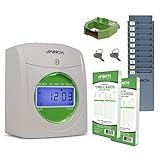
- Complete Solution - Includes HN3000 AutoAlign time clock, 100 time cards, rack, ribbon, and keys for instant tracking.
- Precise Punching - AutoAlign technology ensures accurate alignment for error-free payroll records.
- Robust Warranty - Two-year warranty with unlimited customer support (Monday–Friday) guarantees reliable performance.
- Simple Setup - Plug-and-play design with clear instructions enables tracking in minutes.
- Clear Printing - High-quality uPunch ribbons deliver legible, consistent punch punches.
Shortlist products by use case, not by a single ranking
These are starting points based on the vendors’ stated positioning and the limited current pricing details available here, not independently tested performance rankings. Feature availability and plan terms can change; confirm the current plan and workflow with the vendor before committing.
| Product | Potential fit | Known pricing or buying signal | Check before choosing |
|---|---|---|---|
| OnTheClock | Small businesses seeking timekeeping, scheduling, PTO, GPS/geofencing options, and payroll connections | U.S. pricing observed Aug. 18, 2026: $4 per employee per month plus a $5 monthly base fee; payroll add-on listed at $6 per employee plus a $40 monthly base fee. A 30-day trial and a one-time $250 payroll migration/onboarding fee are listed; terms are subject to change. | Whether a desired payroll connection is direct and included, and whether GPS only records or actually restricts punches |
| QuickBooks Time | Businesses already using QuickBooks Online that want time data in that ecosystem | Time Premium displayed at $20 monthly plus $8 per user; a $10 monthly price for three months was also displayed as a promotion. QuickBooks Online is required. | Long-term price after promotion, required plan, and whether payroll and accounting steps match your process |
| Deputy | Shift-based organizations needing scheduling and workforce-management features | Current pricing not established here | Current plan price and whether timekeeping is bundled with scheduling |
| Connecteam | Deskless and frontline teams also needing communication, tasks, or coordination | Current pricing and plan limits not established here | Whether the broader platform is worth the added administration for your attendance needs |
| Homebase | Small, shift-based businesses such as restaurants and retail shops | Current pricing and location limits not established here | Multi-location needs and the cost of the complete timekeeping and scheduling workflow |
| Jibble | Buyers seeking a free-start attendance tool with mobile clocking and location or identity controls | Current free-tier limits and paid pricing not established here | Whether the free tier includes the controls, integrations, and headcount you need |
| Buddy Punch | Small teams focused on punch controls and reducing buddy-punch opportunities | A July 2026 secondary comparison listed $4.99 per user monthly billed annually plus a $19 base fee; this is a shortlist signal, not a current quote. | Current official pricing, add-ons, and total cost at your headcount |
| Workyard | Construction and field-service businesses needing job-based time records | Current pricing and offline behavior not established here | Offline punch workflow, location behavior, and job-costing requirements |
| ClockShark | Contractors and field crews needing mobile time and job allocation | Current pricing not established here | Current plan availability, integrations, and field workflow details |
| When I Work | Shift-heavy businesses prioritizing scheduling, availability, and shift changes | Current pricing not established here | Whether attendance is included or sold separately from scheduling |
| Clockify | Project-oriented teams where reporting hours matters more than strict attendance enforcement | Current free-tier limits and attendance features not established here | Kiosk, payroll rules, geofencing, and identity controls if you need them |
A 2026 TechRepublic comparison and a Homebase comparison group products by use case, but rankings are editorial judgments rather than proof of performance for your business. A category label such as “GPS” or “payroll integration” is not enough to establish exactly how a feature works.
Check the clock-in and attendance workflow
Clock-in methods and identity checks
Common options include mobile apps, web browsers, desktop apps, shared tablets, dedicated clocks, employee numbers or PINs, QR codes, photo confirmation, and biometric methods. A shared tablet can be efficient at a fixed site, while mobile clocking suits staff who move between locations. Ask whether the method is included in the plan and what happens if a device, camera, network, or employee credential fails.
QuickBooks Time describes a kiosk workflow using a tablet or computer, four-digit PINs, optional photo confirmation, breaks, job switching, and timesheet submission. See its kiosk information for the vendor’s current details.
Free tools Windows power users keep installed
One-click scans. No signup required.
Exceptions, edits, and approvals
For reliable records, look for missed-punch alerts, employee correction requests, manager approvals, overtime warnings, break tracking, timecard submission, and an edit history. A correction should preserve the original value, identify the change, and show who made it and why. Silent overwriting makes disputes and payroll review harder.
Ask whether the app supports your actual rules for rounding, split shifts, overnight shifts, multiple pay rates, and paid or unpaid breaks. The software should support the employer’s policy; it should not silently decide questions such as whether travel time is compensable or whether a break was actually taken.
Understand what GPS and geofencing really do
GPS can mean a location is attached to a punch, or that the app blocks or flags a punch outside an approved worksite. Those are different controls. Ask whether location is captured at clock-in, clock-out, periodically, or continuously; whether a geofence enforces a boundary or only raises an alert; which managers can view location records; and how long those records are retained.
Rank #2

- 𝗣𝗥𝗘𝗖𝗜𝗦𝗘 𝗔𝗧𝗧𝗘𝗡𝗗𝗔𝗡𝗖𝗘 𝗧𝗥𝗔𝗖𝗞𝗜𝗡𝗚: Our Punch Card Attendance Machine comes with a large 4" LED screen for clear visibility. Track your employees' start times, break times, lunch periods, and weekly work hours with precision, up to 6 entries per day. Each card holds 15 days of records per side, just flip for continuous tracking. Supports Dual-color printing, black for normal attendance, red for late or early departure, and a built-in speaker provide clear alerts, ensuring seamless and efficient workforce track & time management.
- 𝗙𝗨𝗟𝗟 𝗨.𝗦. 𝗧𝗜𝗠𝗘 𝗭𝗢𝗡𝗘 𝗖𝗢𝗩𝗘𝗥𝗔𝗚𝗘: This attendance machine supports 6 major U.S. time zones: Eastern, Central, Mountain, Pacific, Alaska, and Hawaii. Employees across different regions can be tracked accurately without confusion. Perfect for offices with multi-location teams.
- 𝗔𝗨𝗧𝗢𝗠𝗔𝗧𝗜𝗖 𝗗𝗔𝗬𝗟𝗜𝗚𝗛𝗧 𝗦𝗔𝗩𝗜𝗡𝗚 𝗔𝗗𝗝𝗨𝗦𝗧𝗠𝗘𝗡𝗧: The employee time clock automatically switches between Daylight Saving Time and Standard Time. It handles spring forward and fall back changes seamlessly. This ensures precise timekeeping year-round without manual adjustments.
- 𝗔𝗣𝗣 𝗦𝗨𝗣𝗣𝗢𝗥𝗧𝗘𝗗: This attendance machine comes with an easy-to-operate app for smarter management. The app also allows you to change between 6 major U.S. time zones, set Working Time, set Password, Print Format, Setup Paper, DST Setting, Music Time Setting, and other necessary attributes. NOTE: To calculate total workdays, late entries, leaves, and salary summaries, you need to do it manually from the punch card.
- 𝗛𝗜𝗚𝗛-𝗤𝗨𝗔𝗟𝗜𝗧𝗬 𝗕𝗨𝗜𝗟𝗗 & 𝗟𝗢𝗡𝗚𝗘𝗩𝗜𝗧𝗬: Made of durable ABS material, this compact punch card time recorder withstands daily use. Equipped with a premium-grade print head rated for millions of strikes, it ensures long-lasting, reliable printing with a smooth, fade-resistant surface. Ideal for offices, shops, and small businesses.
Location data is not perfect proof of presence or work. Indoor positioning can be poor, signal quality varies, and a geofence may reject a legitimate punch near its edge. A punch location does not establish that someone remained at the site. Continuous tracking has greater privacy and battery implications than a location check limited to a clock event. A GPS failure or denied permission should have a documented fallback, such as kiosk clocking or a manager-approved correction with an audit note.
Quick wins for a faster PC:
Fix the driver behind crashes, sound loss and screen glitchesFind Drivers →Clear out junk files and repair common Windows errorsFree Scan →For field crews, test geofence boundaries at the real worksite rather than relying only on a map. For large facilities, sites with weak signals, or employees moving between jobs, make sure the rules allow legitimate exceptions without losing an audit trail.
Test payroll integration before you buy
“Payroll integration” can refer to a native payroll product, a direct connection, a third-party connector, or a formatted CSV export. These differ in setup, automation, correction handling, and the amount of re-entry required. Confirm whether each needed payroll provider and integration is available in your edition and whether separate fees apply.
QuickBooks’ official pricing page lists a QuickBooks Online account as a requirement for Time Premium. OnTheClock lists connections or exports involving providers including QuickBooks, Gusto, ADP, Paychex, Paychex Flex, Sage, Ceridian, Paylocity, and CSV/PDF; verify the specific integration type and plan conditions on its pricing page.
Use a trial or pilot to follow one complete timecard through payroll, including:
The Tool Desk
Outbyte Driver Updater FREEFix the driver behind crashes, sound loss and screen glitchesFind Drivers →Outbyte PC Repair FREEClear out junk files and repair common Windows errorsFree Scan →- Employee setup and pay rates
- Overtime, split and overnight shifts, and time zones
- Paid and unpaid breaks, PTO, and holidays
- Multiple jobs, locations, or rates
- A missed punch, correction, and approval
- Export or synchronization, then reconciliation against the original timecard
Find out whether an export can be amended after submission and how to handle corrections once payroll processing has begun. A polished interface cannot compensate for payroll rules that do not match your configuration.
Calculate the full cost, not just the per-user price
For a first-pass estimate, use: monthly base fees + active users × per-user fee + required add-ons + hardware or service costs. Then account for annual-billing requirements, minimum charges, setup or migration, premium support, taxes, and the effect of any introductory promotion ending.
Rank #3

- VERSATILE 2-IN-1 SOLUTION: Includes uPunch CR1000 Digital Time Clock and Date Stamp, 50 time cards, one ribbon & 2 keys - perfect for small business time and document management.
- ACCURATE DIGITAL TIMEKEEPING: Eliminate manual errors in employee time tracking with this precise digital clock in machine for employees, easily monitoring arrival, break, lunch, and departure times.
- ADVANCED DATE STAMPING: Simplify document organization with built-in date stamp functionality, featuring preset messages and 3-way printing for efficient proof of receipt and processing.
- USER-FRIENDLY DESIGN: Strategically placed window in the cover allows for easy loading of time cards and documents, enhancing efficiency in daily operations.
- RELIABLE SUPPORT: Enjoy peace of mind with uPunch's commitment to quality, including warranty protection and dedicated customer support for all your time clock needs.
For OnTheClock, the U.S. figures listed on Aug. 18, 2026 imply a base estimate of $25 per month for five employees, $45 for ten, and $205 for fifty for the time-tracking, scheduling, and PTO plan, before taxes, optional costs, or other terms. These calculations apply $5 plus $4 per employee and are subject to change. Adding the listed payroll add-on would add $70, $100, or $340 respectively, using its $40 base plus $6 per employee; the listed one-time $250 payroll migration/onboarding fee is separate. Check the current vendor page before relying on these figures.
QuickBooks Time Premium’s displayed regular price of $20 monthly plus $8 per user would calculate to $60 for five users, $100 for ten, and $420 for fifty, before taxes and any other charges; the displayed $10 monthly price was promotional for three months, not the ongoing base price. A QuickBooks Online account is required, so include the cost and plan requirements of the broader setup when comparing options. Confirm current terms on the official pricing page.
For products without verified current pricing here, request a quote or use the live vendor page and calculate the same headcounts. A lower per-user headline can cost more once scheduling, payroll, location controls, hardware, or implementation are added.
Independent reader supportYour contribution helps us test, update, and keep practical guides available for everyone.Decide whether you need attendance or monitoring
Attendance software generally records work-related events: start and end times, breaks, absences, schedule adherence, and sometimes worksite or job. Productivity-monitoring tools may capture screenshots, app or website use, keyboard or mouse activity, idle time, or continuous location. Those features are not necessary just because employees work remotely or in the field.
Collect only information tied to a defined business need. Before enabling location or biometric controls, establish what is collected, when collection occurs, who can access it, how employees are informed, how long it is retained, and how a worker can dispute a record. Legal requirements vary by jurisdiction, employment context, and data type; GPS or biometrics should not be treated as automatically lawful everywhere. Photo capture is also distinct from facial recognition or fingerprint verification.
Plan for failure cases before rollout
- Missed punches: Make sure employees can request corrections, managers can approve them, and the original and revised times remain visible with an explanation.
- Offline work: Verify whether punches can be made offline, what timestamp and location data are stored, whether the app syncs automatically, and how delayed or duplicate records appear to managers. Do not infer offline support from the existence of an iOS or Android app. The importance of offline behavior for field work is also discussed in this field time-tracking overview.
- GPS denial or poor signal: Provide an alternate authorized method and a reviewed exception process rather than making location permission the only route to documenting legitimate work.
- Kiosk disruption: Consider device loss or damage, browser logout, updates, Wi-Fi failure, forgotten PINs, queues, and photo or biometric failure. Confirm accessibility for workers who cannot use the chosen method.
- Payroll mismatch: Test overtime, breaks, overnight shifts, multiple rates, holidays, PTO, rounding, and time-zone changes before relying on an export.
- Employee turnover and cancellation: Check how to deactivate staff, preserve historical records, remove former workers from location access, export audit logs, and retrieve records after ending service.
Choose an app, kiosk, or another system
An app is not the only answer. A physical punch clock can suit a fixed workplace with a shared device; a tablet kiosk offers centralized clocking but depends on the tablet and network. Timekeeping within a payroll suite can reduce transfer steps, while an HRIS module may better connect attendance with employee records and PTO. Project trackers are often better for billable hours than attendance enforcement; scheduling platforms suit shift planning; field-service systems suit dispatch and job allocation. Paper and spreadsheets have low software cost but leave more manual entry, reconciliation, and dispute handling to the business.
Implement with a full-pay-period pilot
- Map the existing attendance, approval, and payroll process, including exceptions.
- Choose the smallest feature set that solves the problem; add scheduling, GPS, or monitoring only for a defined need.
- Configure employees, locations, schedules, breaks, pay rules, overtime, and permissions.
- Decide whether location is recorded, enforced, or limited to punch events, and establish exceptions.
- Test employee setup, missed punches, corrections, kiosk or device failure, and offline behavior if relevant.
- Run the new app alongside the current process for one complete pay period.
- Reconcile approved hours and payroll output, investigate discrepancies, and adjust rules before switching fully.
- Train employees and managers; publish the attendance, correction, location, and data-retention policies.
- Review exceptions and employee feedback after the first live payroll run.
Common buying mistakes
- Buying a full scheduling platform when only a time clock is needed—or buying a bare clock when schedules and shift swaps are essential.
- Choosing software before confirming the payroll provider, integration type, and correction workflow.
- Assuming GPS means geofencing enforcement or that a punch location proves a full shift at a worksite.
- Assuming a mobile app will work offline without testing punch capture and synchronization.
- Comparing promotional prices or per-user rates without base fees, modules, hardware, and headcount.
- Using surveillance features when a less intrusive attendance record would meet the need.
- Skipping edge-case payroll tests or failing to preserve timecard edit history.
A practical final decision framework
Answer these questions in order: Where do employees work? How many sites do they use? Do you need a kiosk, mobile clock, or both? Is location merely useful to review, or must the app enforce a boundary? Is offline punching essential? Which payroll system must receive approved hours? Do you need scheduling, PTO, or job costing? Which anti-buddy-punching controls are acceptable to employees? What is the total budget at your actual headcount? What location or identity data will you collect, and for how long?
Shortlist two or three products that match those answers, verify current plan details with the vendors, and compare them using the same sample pay period. For broader category comparisons, see Capterra’s attendance-tracking category; treat directory listings as a way to discover options, not as a substitute for testing payroll and field workflows.
Quick Recap
Product prices and availability are accurate as of the date/time indicated and are subject to change. Any price and availability information displayed on Amazon at the time of purchase will apply.




