Electroflow Technologies says it could eventually make lithium-iron-phosphate (LFP) cathode material in the United States for less than $2,500 per metric ton, versus an approximately $4,000-per-ton Chinese benchmark cited in reporting. That would be about 38% less at those figures, close to the company’s “at least 40%” framing. But the lower cost is a future target, not a verified commercial result: Electroflow has described an early demonstration and plans for larger-scale trials, not a production plant selling LFP at that price.
What Electroflow’s 40% claim covers
The claim is about the cost of producing a metric ton of LFP cathode material—not a complete battery, battery cell, lithium metal, or untreated brine. LFP is lithium iron phosphate, a cathode chemistry used in some electric vehicles and stationary energy-storage systems. Electroflow says customers seeking a different cathode chemistry could instead buy lithium carbonate from its process.
The distinction matters to consumers and investors: even if the cathode powder became cheaper, that would not translate directly into a 40% reduction in the price of a battery or an EV. Cathode material is only one part of a battery’s cost, and the company has not established a downstream battery-price reduction.
Why a U.S. LFP supplier could matter
Electroflow’s CEO told TechCrunch that about 99% of LFP material is made in China. A domestic source could give U.S. battery makers another supply option and reduce reliance on Chinese refining and cathode-material production. That is relevant to lower-cost EVs and grid storage, where LFP’s cost and durability can be attractive.
Free tools Windows power users keep installed
One-click scans. No signup required.
#1 Best Overall
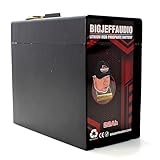
- Powerful Performance: With a remarkable max power rating of 6000 watts, this lithium battery will effortlessly handle the most demanding car audio systems.
- Enhanced Energy Storage: The battery boasts a total energy capacity of 293 Watt hours, guaranteeing long-lasting power for extended listening sessions.
- Efficient 22 Amp Hour Rating: Designed to last, this lithium battery features a robust 22 Amp Hour rating for reliable performance.
- Supports up to 14.7 volts: Provides stable power output for your car audio setup.
- Built-in Cell Balancing: This battery includes built-in cell balancing for improved battery life.
LFP avoids nickel and cobalt, but typically has lower energy density than nickel-rich cathodes. That trade-off can suit stationary storage and some vehicles where cost, durability, and supply availability matter more than maximizing range or minimizing pack size. It does not make LFP the best choice for every vehicle or storage application.
How the brine-to-LFP process is supposed to work
Electroflow describes a three-step route, compared with an approximately 10-step conventional route depicted on its website. At a high level, the process is:
- Capture lithium from brine. Electrochemical cells use anodes to capture lithium ions from salty water, including dilute brines the company says may be difficult to process economically with conventional methods.
- Release lithium into carbonate solution. Reversing the electrical operation releases the captured ions into water containing carbonate, producing lithium carbonate.
- Make LFP powder. The lithium carbonate is reacted with phosphate, iron, and other reagents to produce LFP cathode material.
The brine is therefore a feedstock, not a complete recipe for battery powder: the process still requires additional materials and conversion steps. The company’s “three steps” description is its account of the process architecture; fewer steps alone do not establish lower total cost, high recovery, battery-grade quality, or simpler permitting.
Electroflow says it is targeting geothermal and oil-and-gas produced-water brines. The company’s website also claims its technology could unlock 75% of the lithium stored in U.S. brines and says North American brines contain enough lithium for more than 300 million EVs. Those are company resource-potential claims, not proof that the lithium is economically recoverable, permitted, or convertible into qualified material.
Rank #2
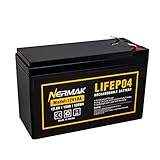
- 【Superior Performance】: Lithium iron phosphate battery has high energy density, Long cycle life, Good safety performance, No memory effect, etc. NERMAK LiFePO4 battery has built-in BMS protection to prevent overcharge, Over-discharge, Over-current and short circuit, and very low self-discharge rate. (Not motorcycle starter battery)
- 【Long Cycle Times】: Lithium batteries 2000 + cycles no problem while the traditional lead-acid batteries only 200-300 cycles, More safety and environmentally friendly than lead-acid batteries.
- 【Widely Uses】: Widely uses in most areas such as: Emergency Lighting (LED strip etc), 12V router, RV/outdoor camping, kids ride on toy car, power wheels, fish finders, small UPS(Less than 200W),backup power, Ham Radio, Home Alarm, Cellular remote camera, Solar/Wind power and more...
- 【Expansion and Recharge】Can be connected in series or parallel, in series, Up to 4 identical batteries can be connected,Quick charge by 6A , and heavy-duty output discharge up to 10A continuous and 2C Pulse.
- 【Warm Note】: 1* 12 Volt Replacement lithium ion battery,12 months warranty, If you have any question for our product, Contact us: click the "Ask a question" on our storefront or in "YOUR ORDER" options click the "contact seller" (please use LiFePo4 special charger, with fully automatic SLA charger may not be fully charged)
What the cost comparison actually says
| Figure | What it refers to | How to read it |
|---|---|---|
| About $4,000 per metric ton | Approximate Chinese LFP reference cited by TechCrunch | The report does not provide a detailed accounting or establish whether this is a comparable delivered price or production cost. |
| About $5,000 per metric ton | Electroflow’s stated first-generation system target | At this target, V1 would cost more than the cited Chinese benchmark. |
| Below $2,500 per metric ton | Electroflow’s future scaled-system target | This is a projection, not a demonstrated production cost. |
| “At least 40% less” | Company’s characterization of the future target against Chinese producers | $2,500 is 37.5% below $4,000; exactly 40% below $4,000 would be $2,400. “Below $2,500” can support an approximate 40% claim, not a precise 40.00% result. |
There is also a comparison problem: the reported Chinese figure is described as a price, while Electroflow’s figure is a projected production cost. The public figures do not establish that they use the same boundaries, assumptions, or date. A fair comparison would need to disclose whether each includes brine acquisition and pretreatment, electricity, reagents, labor, maintenance, membrane replacement, waste handling, capital depreciation, financing, shipping, tariffs, and quality control. It should also clarify whether the estimate covers finished LFP powder or only lithium carbonate.
Until a comparable, independently reviewable cost breakdown is available, the 40% figure is best treated as a company estimate. It is not an established saving that a battery maker—or vehicle buyer—can bank on today.
What has been demonstrated—and what has not
Electroflow says it demonstrated its technology using salty brine taken from a geothermal-site pipe in California. The NSF awarded the company a $305,000 Phase I Small Business Innovation Research grant in 2025 for work on membrane stability and lithium extraction from low-concentration brine. The grant supports research; it is not evidence that commercial production economics have been achieved.
The company announced a $10 million seed round on October 1, 2025, co-led by Union Square Ventures and Voyager Ventures, with participation from Fifty Years and Harpoon Ventures. A Wall Street Journal report said the funding was intended to support a meaningful demonstration scale. That report also described a nonbinding agreement with a Japanese company, which is not the same as a binding supply contract or commercial sale. Earlier funding included a reported $2.8 million pre-seed round.
The Tool Desk
Outbyte Driver Updater FREEFix the driver behind crashes, sound loss and screen glitchesFind Drivers →Outbyte PC Repair FREEClear out junk files and repair common Windows errorsFree Scan →Rank #3

- Smart APP Monitoring: GOKWH 12V 100Ah group24 battery features Bluetooth 5.0 and a smart app for real-time monitoring of SOC, voltage, and temperature. Remotely control charge/discharge and receive instant fault alerts. Smarter control for easier, more convenient battery management
- Advanced Protection: This LiFePO4 group24 battery features 20+ intelligent BMS safeguards for maximum safety and stability. Built-in low-temperature protection stops charging below 0°F (-18°C) and discharging below -4°F (-20°C). Wherever your RV travels, GOKWH delivers reliable, worry-free power
- Expandable Power: GOKWH 12V 100Ah group24 LiFePO4 battery supports up to 4S4P configuration, expanding to 51.2V 400Ah with massive 20,480Wh energy. Easily DIY your ideal capacity for off-grid adventures or dependable home backup power
- The Perfect Lead-Acid Replacement: Upgrade from bulky, heavy batteries to GOKWH group24 LiFePO4—lighter, more compact, longer-lasting, and safer. With superior stability and advanced features, it delivers reliable performance every time. The durable ABS casing resists splashes, dust, and corrosion, ensuring a dependable and surprisingly powerful experience wherever you use it
- What You Get? GOKWH 12V 100Ah group24 LiFePO4 Battery*1, M8 Terminal Bolts*2. Scan the QR code on the battery to get the product manual and download APP. Most importantly, you’ll have the full support of the GOKWH professional team—our customer service experts are always ready to assist you with any questions
TechCrunch reported a planned full-size system designed to fit inside a 20-foot shipping container and produce about 100 metric tons of LFP per year. These are reported design goals, not measured output from a commissioned commercial unit.
Public reporting and company materials do not verify sustained operation over thousands of hours, commercial throughput, lithium recovery, impurity rejection, battery-grade powder quality, cell performance, continuous-operation energy and water use, independently audited operating costs, or a commissioned commercial plant. Nor do they establish binding customer contracts. A powder sample or successful brine demonstration would be an important step, but it would not answer all of those questions.
The scale-up tests that matter
For an industrial process, the difficult question is not only whether lithium can be separated in a test. It is whether the system can do it continuously, reliably, and at a cost customers will pay. Brines differ in lithium concentration and in impurities such as magnesium, calcium, boron, sulfate, and silica. Those differences can affect pretreatment needs, membrane fouling, recovery, and equipment life.
- Durability and uptime: How quickly do membranes foul, how often must membranes or electrodes be replaced, and what are actual maintenance intervals?
- Recovery and throughput: Does lithium recovery remain commercially useful at low concentrations, and what volume of brine is required for a given amount of product?
- Brine flexibility: Can the system handle more than one source chemistry, or does each site require substantial custom pretreatment?
- Cost completeness: Does the estimate include capital equipment, electricity, reagents, labor, waste disposal, and financing—not just selected operating inputs?
- Product qualification: Can the resulting LFP meet battery makers’ specifications consistently and perform in full cells? Material qualification is more demanding than producing powder.
- Site readiness: Is suitable brine available alongside power, water, waste-handling infrastructure, and required permits?
- Manufacturing scale: Can Electroflow build cell stacks consistently and achieve its proposed output per container in operating conditions?
Battery customers may need to qualify material before committing to significant purchases. A nonbinding expression of interest is weaker commercial evidence than a paid qualification program, a binding offtake agreement, or repeat orders.
Rank #4
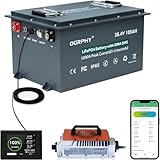
- Born for 36V Golf Cart: Special designed for 36v golf cart industry, OGRPHY 36v lithium golf cart battery is compatible with golf cart controllers of all major brands on the market. Built in premium grade A prismatic LiFePO4 cells(UL certified), this 36v battery has better durability & safety. Over 4kWh capacity equals 6pcs 12V 100AH lead acid batteries. Max output 7.68kW continuous power & peak 38.4kW power (50% more powerful than standard lithium batteries) to conquer hills/rough terrain effortlessly.
- Industry-Leading 200A BMS & Multiple Protection: The 200A BMS built in this LiFePO4 battery is of the top on the market. Beyond the standard protection features(over charge/discharge, over current, high/low temperatures, and short circuiting protection), it can handle a peak current up to 1000A(38.4kWh) for 3-5s (600A for 30s, 300A for 32s, 200A forever till the last drop of power). This golf cart battery need no maintance with this BMS.
- 30-50 Miles Range for 3KW Golf Motor: The electric capacity of OGRHY 36V 105AH LiFePO4 battery is 4.03kWh. OGRPHY 36V 105AH lithium battery was able to run a golf cart with 3kw motor for 30-50 miles under tests. Say goodbye to range anxiety, OGRPHY 36V 105AH golf cart battery will bring you back after the full eighteen holes.
- 4000+ deep cycles & 80% DOD: OGRPHY 36V 105Ah LiFePO4 battery provides more than 4000 deep cycles compared to traditional lead-acid batteries only about 300-600 cycles, which extends the battery lifespan more than 10 times. 4000+ deep cycles using life and 80% depth of discharge are also better than many LiFePO4 battery of other brands. Please read the product manual carefully before you use OGRPHY 36V lithium battery.
- Upgraded Smaller Size & Easy Installation: As the first manufacturer to introduce lithium battery for golf cart in this market, OGRPHY has accumulated substantial experience and advice from our customers. Thus we have optimized the battery structure and launched a next-generation golf cart battery that leads the market. Its more compact size enables compatibility with a wider range of golf cart models. The new size model is: 15.7L x 11.6W x 8.66H inch.
Environmental potential comes with site-specific questions
Electroflow frames its approach as “brines over mines” and emphasizes lower water and hazardous-chemical use than conventional routes. Processing brine could make use of an existing resource and may avoid some impacts associated with opening a new mine. But “no new mines” does not mean “no environmental impact,” and a claim about recycling water in one process step does not establish the water intensity of the complete facility.
Brine extraction and processing can affect groundwater chemistry and create disposal streams. Electricity’s climate impact depends on the site’s power supply, while membrane and electrode replacement, reagent transport, and concentrated waste handling also have material and environmental costs. A credible comparison needs site-specific measurements across the whole process, not a general label such as “cleaner.”
Competition and the commercial hurdle
Electroflow would enter a market with established Chinese producers and a developing set of non-Chinese suppliers. Samsung SDI, for example, announced a multiyear agreement with South Korea’s L&F for LFP cathode material intended for North American energy-storage-system production. That shows the opportunity is not an empty market; Electroflow would need to compete on delivered cost, consistency, supply reliability, and qualification as well as geography.
There are also trade-offs within Electroflow’s approach. Dilute brines may broaden the range of potential feedstocks, but lower lithium concentration can mean more liquid to process. A shorter process route may reduce equipment or material losses, but electrochemical systems bring questions about membrane durability and fouling. Containerized units could be located near brine sources, yet the reported target of about 100 tons annually per unit would require multiple units to reach larger supply volumes.
Best Value

- 【Optimized for LiFePO4 Batteries】 Tailored specifically for 12V LiFePO4 batteries, this charger enhances battery performance and significantly extends battery life with over 90% charging efficiency.
- 【High-Speed Charging】 Delivers a 14.6V output and 10A current, charging a 12V 50Ah LiFePO4 battery to 50% in just 2.5 hours—twice as fast as standard 5A chargers.
- 【LED Indicator & Robust Construction】 Equipped with an LED indicator for easy monitoring of the charging process, and housed in a durable casing with a cooling fan that doubles as an overheat protection heat sink.
- 【Simple Operation & Excellent Support】 Features alligator clips for effortless connection between battery components and terminals, ideal for LiFePO4 battery packs. We offer professional technical support and quick customer service, with responses within 24 hours.
- 【Important Notice】 Designed exclusively for 12V (12.8V) LiFePO4 batteries. Not compatible with lead-acid batteries. Ensure the power is disconnected before connecting or disconnecting the charger to the battery. Match the charger’s positive and negative terminals correctly with the battery (Red for Positive +, Black for Negative -).
Possible setbacks include membrane life or recovery falling short of the model, brine impurities raising costs, Chinese prices declining, a powder failing cell qualification, or permitting and site integration taking longer than expected. These are scale-up risks to test, not evidence that the process has failed.
What would make the cost claim more convincing?
For investors, battery buyers, and policymakers evaluating the promise, the most informative next evidence would be sustained operating data and transparent unit economics. In particular, look for independently reviewable figures on uptime, throughput, recovery, impurity handling, membrane replacement, electricity and reagent use, and capital cost, ideally across more than one brine source. Evidence that customers have qualified the material in cells and entered binding supply agreements would address a different but equally important hurdle.
Funding and an early brine demonstration show that Electroflow has resources to pursue scale-up; they do not settle these performance and cost questions. The company’s long-term target becomes meaningful only if a working system can produce qualified LFP consistently, at an all-in cost comparable to the benchmark it is challenging.
Quick Recap
Product prices and availability are accurate as of the date/time indicated and are subject to change. Any price and availability information displayed on Amazon at the time of purchase will apply.




