The temporary Department of Government Efficiency organization ended on July 4, 2026, but DOGE did not disappear from government. Its staff moved into agency jobs, senior policy posts, contractors, startups and venture firms; agency DOGE teams and software projects continued; and the savings figures remain contested. The legal entity is gone, while its personnel network and effects remain visible.
What ended on July 4, 2026?
Executive Order 14158, signed by President Donald Trump on January 20, 2025, renamed the United States Digital Service as the United States DOGE Service (USDS), required every agency to create a DOGE team of at least four employees and established a temporary DOGE organization. The order assigned USDS a government-wide software-modernization mission covering interoperability, data integrity and responsible data synchronization.

The order states that “The U.S. DOGE Service Temporary Organization shall terminate on July 4, 2026.” That provision ended the temporary organization, not every DOGE-branded team, employee assignment or policy change. WIRED described the result this way: “Musk’s DOGE may no longer exist as it did a year ago, but its impact continues to ripple across the government.”
Where former DOGE operatives landed
Public reporting shows a wide range of destinations. Some remained in federal service, while others moved into government contracting, defense manufacturing, venture capital or technology startups. The table distinguishes a person’s reported role from what has not been independently established.
#1 Best Overall

- EAL5+ CERTIFIED SECURE ELEMENT + FINGERPRINT PROTECTION — Your private keys stay encrypted offline on a certified EAL5+ chip, the same security tier used in EMV bank cards. Built by DCENT, securing crypto since 2018. Fingerprint authentication adds a second layer no PIN-only wallet can match.
- 10,000+ ASSETS NATIVE ON 100+ BLOCKCHAINS — Hold Bitcoin, Ethereum, XRP, Solana, Cardano, popular stablecoins (USDT, USDC), and NFTs in one wallet. No third-party apps, no fragmented setup — every supported asset works straight out of the box.
- TAP-TO-SIGN MOBILE EXPERIENCE — Pair your wallet with the DCENT mobile app over Bluetooth. Manage tokens, review transactions, and access in-app swap features directly from your phone — no cables, no desktop required.
- WEB3 & dAPP ACCESS VIA METAMASK — Connect to MetaMask and other browser extension wallets to manage NFTs, claim airdrops, and access dApps. A large screen and intuitive 4-button interface keep every transaction clearly visible before you sign.
- SEAMLESS FIRMWARE UPDATES & 30-DAY MONEY-BACK GUARANTEE — Apply security updates without resetting your wallet or migrating funds. Backed by Amazon's 30-day money-back guarantee — your purchase is risk-free.
| Person | Reported current role | Policy reach | Relationship to Musk’s network | Verification |
|---|---|---|---|---|
| Edward “Big Balls” Coristine | Engineering lead at the National Design Studio after assignments including the Social Security Administration | Federal design and technology operations | No direct relationship stated in the cited reporting | Named WIRED reporting |
| Gavin Kliger | Chief data officer at the Department of Defense; involved in negotiations with Anthropic | Defense data systems and artificial-intelligence procurement | No direct relationship stated | Named WIRED reporting |
| Jeremy Lewin | State Department undersecretary for foreign assistance, humanitarian affairs and religious freedom, appointed July 2025 | Foreign assistance and humanitarian policy | No direct relationship stated | Appointment and WIRED reporting |
| Amanda Scales | OPM contractor helping recruitment; reported to retain a partner role at Arsenal Pulse | Federal workforce and recruiting | Worked at xAI, a Musk-founded company | Named WIRED reporting |
| Nate Cavanaugh and Justin Fox | Working on Special, a crypto-focused artificial-intelligence startup | Private-sector crypto and AI | No direct relationship stated | Named WIRED reporting |
| Bridget Youngs | Founder of Terminus Industrials, manufacturing large power transformers for data centers | Industrial capacity and data-center infrastructure | No direct relationship stated | Named WIRED reporting |
| John Solly | Chief technology officer for Leidos’s health-IT division, joined October 2025 | Government health technology and contracting | No direct relationship stated | Named WIRED reporting; data-handling allegations were disputed by Solly and Leidos |
| Ashley Boizelle | Senior counsel to the president who joined defense-and-space manufacturer Hadrian | Legal and defense manufacturing | No direct relationship stated | Named WIRED reporting |
| Adam Ramada and Brooks Morgan | Founders of Austin venture firm Banner VC | Venture capital and technology investment | No direct relationship stated | Named WIRED reporting |
| Tarak Makecha | Leads national-security technology investments at Valor Equity Partners | Defense, intelligence and national-security technology finance | No direct relationship stated | Named WIRED reporting |
| Aram Moghaddassi, Luke Farritor, Ethan Shaotran and Marko Elez | Post-DOGE destinations were unclear in WIRED’s April 2026 account | Not established | Not established | Unresolved in named reporting |
These moves matter because they spread DOGE’s methods and contacts beyond one temporary office. A former staffer in a data, procurement or workforce role can carry institutional knowledge into another agency or into a company that sells to the government. That is influence, but it is not proof that any individual still speaks for DOGE or the White House.
How many people were actually part of DOGE?
The Government Accountability Office (GAO) identified 206 people who held Executive Office of the President positions connected to DOGE between January 20, 2025, and January 31, 2026. Of those, 165 held positions in USDS. GAO also identified White House Office and other EOP personnel who assisted DOGE initiatives.
Rank #2
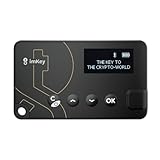
- Top-Tier Security Chip, Bank-Grade Asset Protection: Equipped with an industry-leading Infineon CC EAL 6+ certified security chip, also certified by EMVCo, this chip is widely used in bank payment and identity verification systems. Your private keys are generated and stored entirely offline within the chip, ensuring they never touch the internet. This physically blocks remote hacker attacks and eliminates the risk of private key leakage, building an impregnable first line of defense for your digital assets.
- What You See Is What You Sign, Hardware Button Protection: Every transaction requires manual confirmation via physical buttons on the imKey Pro's clear display. The device intuitively shows key transaction details like the amount and address, ensuring the data hasn't been tampered with during transmission—truly achieving "What You See Is What You Sign." It also features secure PIN code protection and a self-destruct mechanism after multiple incorrect attempts (the private key is wiped after 5 consecutive wrong entries), effectively preventing brute-force attacks even if the device is lost.
- Comprehensive Multi-Chain Asset Support, Access the Web3 Ecosystem: Fully supports major mainnets and Layer 2 networks, including Bitcoin (BTC), Ethereum (ETH), LTC, ATOM, FIL, TRX and more. By adding custom RPCs, you can easily access all EVM-compatible chains like BSC, Polygon, and Avalanche. Furthermore, imKey Pro perfectly supports Layer 2 solutions such as zkSync and Arbitrum, as well as the display and storage of NFTs, meeting all your diverse on-chain needs.
- Cold & Hot Wallet Separation, A Seamless Experience: Utilizing Bluetooth 4.1 wireless technology, it pairs seamlessly with the imToken App on your mobile phone or browser extension wallets on your PC without needing any cables. It combines the ultimate security of a cold wallet (offline private key storage) with the convenience of a hot wallet (online interaction). When a transaction is needed, you sign it offline with your imKey, and the app broadcasts it to the chain. This guarantees asset security without sacrificing the fluidity of use.
- Extremely Thin and Light, A Portable Digital Vault: The device is smaller than a credit card, measuring just 2.3mm thick and weighing approximately 17g. Crafted with a zinc alloy body and a PC panel, it offers a premium feel and is extremely portable. The built-in 33mAh lithium-polymer battery provides a battery life of up to approximately four weeks on a single charge. The package includes the hardware wallet, a USB cable, and mnemonic cards, making it ready to use right out of the box—a secure and reliable gateway to the crypto world.
That count is not a complete census. GAO warned that it may exclude agency-only DOGE personnel, and 10 agencies had not supplied requested records by July 23, 2026. The number therefore describes documented EOP personnel, not the full government-wide network.
What the available compliance records show
For 64 personnel, nine agencies provided ethics, records-management or financial-disclosure information. In those records, 49 people completed ethics training, 18 completed records-management training and 38 filed financial disclosures. GAO could not determine totals for agencies and EOP components that did not respond, so these figures should not be treated as government-wide completion rates.
Rank #3

- SECURE - The SecuX hardware wallet has a complete suite of security features in place, from protected production chain, to tamper resistant packaging, right down to its military grade, CC EAL 5+ certified secure element for keeping your assets safe and unassailable - Rugged aluminum case ensures years of protection
- COMPATIBLE - Connect via USB or Bluetooth to your Windows, Mac or Linux computer(through Chrome browser), iOS devices (iPhone, iPad), and Android devices (Android 8.1 or later) with dedicated SecuX mobile app - Supports Bitcoin, Ethereum, XRP, Ripple, Litecoin, Bitcoin Cash, Digibyte, Dash, Binance, Dogecoin, GRS, Stellar Lumens, and over 1,000 ERC-20 tokens
- CONVENIENT - Simple, streamlined interface ensures you can use it easily, avoid mistakes and keep your assets safe - Simple firmware update process is more streamlined than the competitors to ensure smooth updates, maximizing security and usability - USB-C equipped for easy charging and connection to laptops, etc.
- TOUCH SCREEN - The SecuX hardware wallet is easy to interact with thanks to its 2.8” full color touch screen including on-screen keyboard - On-screen verification of addresses gives you protection from malware that may attempt to redirect your funds
- BLUETOOTH - Connect to your phone or other Bluetooth devices to send and receive coins and tokens - Your keys never leave your device, and Bluetooth is only used for sending signed transactions to the blockchain
What DOGE teams were still doing inside agencies
DOGE’s continuing footprint was operational as well as political. The executive order’s software-modernization goals put USDS and agency teams near data architecture, system interoperability and information handling.
GAO found that four agencies—the Consumer Financial Protection Bureau, Department of Education, National Oceanic and Atmospheric Administration and Securities and Exchange Commission—reported DOGE teams with access to more than 23 systems. The review did not establish that every access was improper; it did establish that the public record is incomplete about how controls were applied.
Rank #4

- THE WALLET FOR EVERYONE: Ballet wallets are 100% offline. Storing your cryptocurrency assets in offline cold storage prevents unauthorized electronic access to the funds on your REAL Series wallets. Your funds cannot be electronically hacked.
- NO SETUP: REAL Series wallets come ready to use out of the box. Just scan a QR code to store your cryptocurrency and you’re all done!
- NO MAINTENANCE: REAL Series wallets are physical wallets which, unlike electronic hardware wallets, don’t need to be maintained or electronically updated.
- BALLET CRYPTO: The Ballet Crypto app allows you to easily view and manage your assets in real-time.
NOAA, the Small Business Administration and the Department of Veterans Affairs did not answer GAO requests about controls. Without those responses, Congress and the public lack assurance that all DOGE personnel followed each agency’s information-security rules. For systems containing benefits, tax, health or financial information, the unresolved control questions are more consequential than the DOGE label itself.
Independent reader supportYour contribution helps us test, update, and keep practical guides available for everyone.Did DOGE really save the money it claimed?
DOGE’s website presented two headline measures: a claimed 20.5% reduction in current-year non-defense obligations compared with 2024 and a repeated claim of $170 billion in taxpayer savings. Those are Department of Government Efficiency claims, not audited results.
Outdated Drivers Are Slowing You Down
One free scan finds every outdated or missing driver and matches the right update for your exact hardware.Free scan · exact hardware matchPC Slower Than It Used to Be?
A free scan shows the junk files, broken settings and background clutter dragging Windows down - then fixes them in one click.Free scan · Windows 10 & 11| Figure | Who reported it | What it means | Important qualification |
|---|---|---|---|
| $170 billion | DOGE website, 2025-era claim | Reported taxpayer savings | No independent audit in the cited record establishes the full amount |
| 20.5% | DOGE website | Claimed decline in current-year non-defense obligations versus 2024 | It is a year-over-year obligation comparison, not a verified cash saving or reduction in total federal spending |
| $110 billion | GAO, July 7, 2026 | Value of savings listed on DOGE’s Wall of Receipts that GAO found incorrect or lacking supporting evidence | It concerns the quality of the listed claims, not a finding that the government lost exactly $110 billion |
| 108 of 264 leases | GAO, July 7, 2026 | Leases marked terminated on the Wall of Receipts that were already being phased out before DOGE existed | The timing weakens the claim that DOGE caused every reported lease saving |
The two large dollar figures answer different questions. The $170 billion number is DOGE’s presentation of savings; the $110 billion figure is GAO’s estimate of entries that were incorrect or unsupported. Neither number, by itself, is a complete audited statement of federal cash flow. Contracts, grants and leases can show obligations, planned reductions or avoided costs without immediately lowering outlays in the Treasury’s accounts.
What this means for taxpayers and household budgets
Federal efficiency claims can affect taxes, benefits and the quality of public services, but a headline number is not enough to predict a household’s finances. A credible savings claim should identify the underlying contract, grant or lease; distinguish obligations from outlays; show when the saving occurs; and document that the reduction was caused by the action being credited.
A practical checklist for evaluating future DOGE figures
- Define the metric: Ask whether the figure is an obligation, an outlay, an estimated future cost or a canceled authorization.
- Check the baseline: Confirm the comparison year, agency and program, and whether a reduction was already scheduled.
- Look for documentation: A contract number, lease record, grant notice or agency accounting entry is more useful than a dashboard total.
- Separate gross and net: Include termination costs, replacement contracts, legal expenses and any new spending needed to deliver the same service.
- Check independent review: GAO, inspectors general and agency financial statements can test whether a claimed saving is supported.
The bottom line on DOGE’s afterlife
DOGE is legally over as a temporary organization, but it is not absent. Documented personnel moved into influential government and private-sector roles, agency teams retained access to sensitive systems, and the software-modernization agenda outlasted the original office. The personnel count is incomplete, security compliance remains partly undocumented, and the largest savings claims have not been validated as presented. Treat DOGE as a continuing network and policy legacy—not as a defunct label and not as a proven $170 billion windfall.
Quick Recap
Product prices and availability are accurate as of the date/time indicated and are subject to change. Any price and availability information displayed on Amazon at the time of purchase will apply.
Quick wins for a faster PC:
Fix the driver behind crashes, sound loss and screen glitchesFind Drivers →Clear out junk files and repair common Windows errorsFree Scan →Scan for outdated or missing drivers - takes under a minuteDriver Scan →



