Apple did not apply a uniform iPhone 17 price increase. The standard iPhone 17 launched in the U.S. at $799—the same headline price as the iPhone 16—but with 256GB instead of 128GB. The iPhone 17 Pro started at $1,099, up from the iPhone 16 Pro’s reported $999 starting price, while also doubling entry storage to 256GB. Apple disclosed substantial tariff costs but never said the Pro’s $100 increase was a tariff surcharge.
What Apple was reportedly considering before launch
Before the September 19, 2025 launch, Reuters reported that Apple was considering higher iPhone prices to offset tariff-related cost pressure, citing reporting from The Wall Street Journal. The report described internal deliberation, not a final Apple price list or a promise to pass a specific tariff amount to buyers. It also did not establish that every dollar of a future increase would equal tariff expense. Reuters video report
Apple’s documented tariff exposure
Apple gave investors two dated estimates for tariff-related costs:
- May 1, 2025: approximately $900 million for the June quarter, assuming the tariff policies and rates then in effect remained unchanged. Apple Q2 FY2025 earnings-call transcript
- July 31, 2025: approximately $1.1 billion for the September quarter. TechCrunch
Those were forward-looking, company-wide estimates—not an iPhone-only bill and not a per-handset charge. Apple could respond through margins, supplier negotiations, sourcing changes, storage tiers, product mix, or consumer prices. Dividing $1.1 billion by iPhone shipments would therefore produce a misleading “tariff cost per iPhone.”
#1 Best Overall

- This phone is unlocked and compatible with any carrier of choice on GSM and CDMA networks (e.g. AT&T, T-Mobile, Sprint, Verizon, US Cellular, Cricket, Metro, Tracfone, Mint Mobile, etc.).
- Please check with your carrier to verify compatibility.
- When you receive the phone, insert a SIM card from a compatible carrier. Then, turn it on, connect to Wi-Fi, and follow the on screen prompts to activate service.
- The device does not come with headphones or a SIM card. It does include a generic (Mfi certified) charger and charging cable.
- Tested for battery health and guaranteed to have a minimum battery capacity of 80%.
What the iPhone 17 lineup actually cost in the U.S.
Apple’s launch announcements establish the following starting prices and storage configurations:
| Model | Previous comparison | iPhone 17 launch price | Entry storage | What changed |
|---|---|---|---|---|
| iPhone 17 | iPhone 16: $799 | $799 | 256GB | Headline price stayed flat; storage doubled from 128GB. |
| iPhone 17 Pro | iPhone 16 Pro: $999 | $1,099 | 256GB | $100 nominal increase, with twice the prior Pro’s starting storage. |
| iPhone 17 Pro Max | Direct like-for-like prior comparison not established here | $1,199 | 256GB | Storage options extend to 2TB. |
Sources: Apple’s iPhone 17 announcement and Apple’s Pro announcement. The earlier Pro price comparison was reported by Reuters.
Why the Pro increase is not a simple $100 surcharge
The iPhone 17 Pro’s starting price rose by $100, but the entry configuration changed from 128GB on the iPhone 16 Pro to 256GB on the iPhone 17 Pro. New hardware and feature changes also affect the comparison. The defensible statement is that the Pro’s entry MSRP increased $100 while Apple supplied a higher storage baseline—not that an otherwise identical phone simply became $100 more expensive.
Rank #2
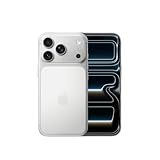
- This phone is unlocked and compatible with any carrier of choice on GSM and CDMA networks (e.g. AT&T, T-Mobile, Sprint, Verizon, US Cellular, Cricket, Metro, Tracfone, Mint Mobile, etc.).
- Please check with your carrier to verify compatibility.
- When you receive the phone, insert a SIM card from a compatible carrier. Then, turn it on, connect to Wi-Fi, and follow the on screen prompts to activate service.
- The device does not come with headphones or a SIM card. It does include a generic (Mfi certified) charger and charging cable.
The standard iPhone 17 demonstrates the opposite approach: Apple held the $799 entry price and increased storage. That means Apple did not impose a uniform tariff-style increase across the lineup.
Do these 3 things before closing this tab:
1Scan for outdated or missing drivers - takes under a minute2Repair Windows errors before they cause bigger problems3Fix the driver behind crashes, sound loss and screen glitchesDid tariffs cause the higher Pro price?
The public record cannot isolate tariffs as the precise cause. Apple disclosed major tariff costs, and those costs were part of the pricing environment. The Pro price rose at the same launch, but Apple did not state that tariffs accounted for $100—or any specified portion—of the increase.
It would overstate the evidence to say Apple passed its full tariff bill to customers, that every iPhone 17 cost more because of tariffs, or that the $1,099 price was entirely a tariff surcharge. Storage, cameras, processors, displays, manufacturing economics, margins and product positioning can all affect an MSRP.
Rank #3

- This phone is unlocked and compatible with any carrier of choice on GSM and CDMA networks (e.g. AT&T, T-Mobile, Sprint, Verizon, US Cellular, Cricket, Metro, Tracfone, Mint Mobile, etc.).
- Please check with your carrier to verify compatibility.
- When you receive the phone, insert a SIM card from a compatible carrier. Then, turn it on, connect to Wi-Fi, and follow the on screen prompts to activate service.
- The device does not come with headphones or a SIM card. It does include a generic (Mfi certified) charger and charging cable.
- Tested for battery health and guaranteed to have a minimum battery capacity of 80%.
How Apple’s supply chain changed the exposure
Apple said most iPhones sold in the U.S. during the June 2025 quarter would have India as their country of origin. Counterpoint data reported by Reuters put India’s share of U.S.-sold iPhones at 71% between April and June 2025, up from 31% a year earlier. Reuters report via Investing.com
That shift reduced dependence on China-origin final assembly, where Apple said most of its tariff exposure then came from China-related IEEPA tariffs, including a 20% tariff on applicable China-origin imports. Moving assembly does not make an iPhone tariff-free: components, manufacturing inputs, freight, customs treatment and India’s own changing trade policies still matter. Country of origin for the finished phone is not the origin of every part.
Free tools Windows power users keep installed
One-click scans. No signup required.
Current U.S. alternatives and how to compare them
Apple’s U.S. store listed these starting prices when checked: iPhone 17e at $599, iPhone 16 at $699, iPhone 17 at $799, iPhone Air at $999 and Pro models from $1,099. Availability and prices can change; check Apple’s current lineup before buying.
Rank #4

- This phone is unlocked and compatible with any carrier of choice on GSM and CDMA networks (e.g. AT&T, T-Mobile, Sprint, Verizon, US Cellular, Cricket, Metro, Tracfone, Mint Mobile, etc.).
- Please check with your carrier to verify compatibility.
- When you receive the phone, insert a SIM card from a compatible carrier. Then, turn it on, connect to Wi-Fi, and follow the on screen prompts to activate service.
- The device does not come with headphones or a SIM card. It does include a generic (Mfi certified) charger and charging cable.
- Tested for battery health and guaranteed to have a minimum battery capacity of 80%.
Choose a discounted older model
An iPhone 16 from $699 can lower the upfront cost if you do not need the newest generation or the iPhone 17’s 256GB base storage. Compare storage, camera features and expected time you will keep the phone—not just model names.
Choose the standard iPhone 17
At $799 with 256GB, it is the clearest value choice for buyers who want the current generation without Pro pricing or Pro camera hardware. Apple’s iPhone 17 purchase page
Choose the Pro or Pro Max
The $1,099 Pro and $1,199 Pro Max make sense when their camera, performance, display, battery or storage capabilities matter enough to justify the premium. Compare 256GB against 256GB before judging the price difference.
Quick wins for a faster PC:
Fix the driver behind crashes, sound loss and screen glitchesFind Drivers →Repair Windows errors before they cause bigger problemsFix Now →Best Value

- This phone is unlocked and compatible with any carrier of choice on GSM and CDMA networks (e.g. AT&T, T-Mobile, Sprint, Verizon, US Cellular, Cricket, Metro, Tracfone, Mint Mobile, etc.).
- Please check with your carrier to verify compatibility.
- When you receive the phone, insert a SIM card from a compatible carrier. Then, turn it on, connect to Wi-Fi, and follow the on screen prompts to activate service.
- The device does not come with headphones or a SIM card. It does include a generic (Mfi certified) charger and charging cable.
Use Apple Trade In
Apple’s iPhone 17 purchase page displayed up to $695 for eligible iPhone 13-or-newer devices, but the actual credit depends on model and condition. Check the live valuation at Apple Trade In; a damaged or older phone may be worth less than a private sale.
Compare carrier credits carefully
Apple advertised up to $1,100 in carrier credits for eligible trade-ins. These are generally installment-bill credits subject to a carrier, plan, trade-in and time requirements—not an unconditional reduction in Apple’s cash price. Review the total payments and what happens if you switch carriers. See Apple’s carrier-offers page.
Independent reader supportYour contribution helps us test, update, and keep practical guides available for everyone.How to avoid misleading price comparisons
- Normalize storage: 256GB-to-256GB is more meaningful than comparing model names.
- Separate MSRP from effective cost after trade-in credits, taxes, activation fees and financing.
- Do not apply one tariff percentage to the phone’s retail price without knowing customs value, classification and origin.
- Remember that Apple’s tariff estimates were quarterly, policy-sensitive and broader than the iPhone business.
The Bottom Line
The pre-launch prediction was directionally right about tariff pressure but wrong if read as a blanket increase. Apple kept the standard iPhone 17 at $799 with twice the entry storage and raised the Pro’s starting price to $1,099 with the same storage upgrade. Tariffs were a documented cost problem and a plausible pricing factor, but Apple did not publicly attribute a specific retail increase entirely to tariffs.
Quick Recap
Product prices and availability are accurate as of the date/time indicated and are subject to change. Any price and availability information displayed on Amazon at the time of purchase will apply.




