Short answer: OpenAI and Jony Ive are developing a family of consumer AI devices, but the first product is not confirmed to be a phone, earbuds, glasses, pin, or pendant. A court declaration said the discussed prototype was neither in-ear nor wearable. OpenAI has abandoned the “io” name, has not disclosed final specifications or price, and reportedly does not expect customer shipments before the end of February 2027.
1. This is a broader hardware strategy, not a confirmed “OpenAI phone”
OpenAI publicly announced its collaboration with Jony Ive, LoveFrom and Ive’s hardware company, io Products, on May 21, 2025. The companies said they had already been working together for roughly two years. OpenAI’s announcement is available at OpenAI’s official collaboration page.
Ive founded io with Scott Cannon, Evans Hankey and Tang Tan. io Products, Inc. merged into OpenAI on July 9, 2025, while Ive and LoveFrom remained independent and continued to provide design leadership. The transaction was reported as approximately $6.5 billion in OpenAI stock by The Washington Post.
At OpenAI’s 2025 developer conference, Sam Altman and Ive described the work as a family of devices. That wording matters: there may be several products, and nothing confirms that the first one will replace a smartphone or operate as a standalone phone.
The Tool Desk
Outbyte PC Repair FREEClear out junk files and repair common Windows errorsFree Scan →Outbyte Driver Updater FREEScan for outdated or missing drivers - takes under a minuteDriver Scan →#1 Best Overall

- [AI Smart Speaker] You can use tozo pm1 speaker to AI Chat by connect with TOZO APP, you can literally Talk to it like a real person, rather than just typing and reading on a screen. It’s perfect for hands-free assistance, learning, and entertainment.
- [Intelligent Meeting Assistant] Recording + real-time transcription: one-click recording, stopping as you go, AI real-time conversion of voice messages into text recordings, and automatically analyzing the recording/text content, intelligently refining the key points, action items, and conclusions, and also translating into multiple languages with one click.
- [Excellent Sound Quality] Experience studio-grade clarity with our precision-engineered 28mm dynamic driver. Delivering 30% louder output and deeper bass resonance, it captures every nuance—from crisp highs to rich mid-ranges, ensuring vibrant, distortion-free sound whether you’re streaming music, or voice call.
- [Up to 20H Playtime] Bluetooth speaker has a built-in robust rechargeable battery. Up to 20 hours playtime, ensuring continuous, uninterrupted playback, whether you use the speaker for lectures, work conversations, or listening to music while running outdoors, etc.
- [Unleash Your Hands] Clip-On Convenience make it secure the rugged built-in clip to jackets, backpacks, or belts, room-filling music or take calls hands-free, perfect for hiking, cycling, or busy workdays.
- Confirmed: OpenAI and Ive are building consumer hardware.
- Not confirmed: A phone, phone replacement, glasses, earbuds or a particular accessory.
- Still unknown: Whether the products share an operating system, require a phone, or will be sold directly by OpenAI.
2. The first disclosed prototype is neither earbuds nor a wearable
The clearest form-factor evidence comes from litigation involving the “io” trademark. In a court declaration, io co-founder and hardware chief Tang Tan said the prototype referenced in the launch video was neither an in-ear device nor a wearable. The declaration also indicated that the design was not final and was at least a year away from being advertised or sold when the filing was made in June 2025. TechCrunch reported the filing.
The same court-related reporting said OpenAI and io bought at least 30 headphone sets, met with iyO executives and examined iyO’s in-ear technology. That proves the team researched audio hardware; it does not prove that earbuds are the product.
Later reporting characterized the leading concept as a small, potentially screenless device that could sit on a desk or accompany a phone and laptop. That remains reporting rather than an official specification. A viral image or alleged advertisement is not stronger evidence: WIRED reported that an alleged silver-headphone advertisement was unrelated to OpenAI.
Rank #2

- Your favorite music and content – Play music, audiobooks, and podcasts from Amazon Music, Apple Music, Spotify and others or via Bluetooth throughout your home.
- Alexa is happy to help – Ask Alexa for weather updates and to set hands-free timers, get answers to your questions and even hear jokes. Need a few extra minutes in the morning? Just tap your Echo Dot to snooze your alarm.
- Keep your home comfortable – Control compatible smart home devices with your voice and routines triggered by built-in motion or indoor temperature sensors. Create routines to automatically turn on lights when you walk into a room, or start a fan if the inside temperature goes above your comfort zone.
- Do more with device pairing – Fill your home with music using compatible Echo devices in different rooms, or create a home theatre system with Fire TV.
- Say goodbye to drop-offs and buffering - With eero Built-in, Echo Dot doubles as a mesh wifi extender, adding up to 1,000 sq. ft. of wifi coverage to your existing eero network.
3. The design goal is to reduce dependence on screens
OpenAI and Ive have framed the project as a different way to interact with computers. Their announcement argues that conventional products and interfaces were designed before computers could see, reason and understand context. Altman has said people should not need to pull out a laptop for every interaction. The company’s announcement is at openai.com/sam-and-jony.
Outdated Drivers Are Slowing You Down
One free scan finds every outdated or missing driver and matches the right update for your exact hardware.Free scan · exact hardware matchWindows Errors? Fix Them Before They Spread
Repair common Windows errors and clear accumulated junk for a smoother, more stable PC - no reinstall needed.Free scan · no reinstallWIRED’s reporting described a possible screenless direction, potentially using cameras and microphones to understand surroundings. OpenAI has not confirmed that the final product will be screenless, so treat it as a design direction rather than a promised feature.
What a screenless product could improve
- Natural voice access without opening an app.
- Context from cameras, microphones or other sensors.
- A dedicated microphone and speaker system tuned for AI conversations.
- Faster access to OpenAI services than a general-purpose phone interface.
What it could make harder
- Reviewing and correcting long answers without a display.
- Confirming purchases or other consequential actions.
- Using it discreetly in public.
- Operating when cloud connectivity is slow or unavailable.
Ive has described a goal beyond productivity: devices that could make people happier, more fulfilled, peaceful and less disconnected. His team reportedly generated 15 to 20 compelling product ideas while exploring the possibilities. Those ambitions are design philosophy, not evidence that a final product will achieve them.
Rank #3
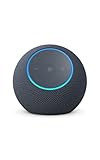
- Meet Echo Dot Max: Experience rich room-filling sound that automatically adapts to your space and fine-tunes playback. Features a built-in smart home hub and Omnisense technology for highly personalized experiences.
- Music to your ears: With nearly 3x the bass versus Echo Dot (2022 release), it fits beautifully in any space, delivering your personal sound stage with deep bass and enhanced clarity. Listen to streaming services, such as Amazon Music, Apple Music, Spotify, and SiriusXM. Encore!
- Do more with device pairing: Connect compatible Echo smart speakers and smart displays in different rooms, or pair with a second Echo Dot Max to enjoy even richer sound. Pair your Echo Dot Max with compatible Fire TV devices to create a home theater system that brings scenes to life.
- Simple smart home control: Set routines, pair and control lights, locks, and thousands of smart home devices that work with Alexa without needing a separate smart home hub. With Omnisense technology, you can activate routines via temperature or presence detection.
- Say goodbye to drop-offs and buffering - With eero Built-in, Echo Dot Max doubles as a mesh wifi extender, adding up to 1,000 sq. ft. of wifi coverage to your existing eero network.
4. The name and schedule changed
The project was initially associated with io, but OpenAI has said it will not use “io,” “IYO” or related capitalization for its AI hardware products after the trademark dispute with iyO. The replacement name had not been disclosed in the coverage available as of August 18, 2026. WIRED documented the branding change.
The timetable also has two different milestones:
| Milestone | What was reported | How to interpret it |
|---|---|---|
| May 2025 | OpenAI said more information would come in 2026. | A broad information target, not a sales date. |
| January 19, 2026 | Executive Chris Lehane said OpenAI was on track to unveil its first device in the second half of 2026. | An unveiling or reveal target. Axios reported the statement. |
| February 2026 filing, reported later | The first device would not ship before the end of February 2027. | A reported shipping floor, not a guaranteed general-availability date. WIRED reported the filing. |
A 2026 reveal and customer shipments after February 2027 are compatible. Consumers should distinguish an announcement, a preorder, developer access, general availability and actual delivery.
5. The real question is whether dedicated hardware beats a phone
A purpose-built device could make OpenAI’s models easier to access, but it must offer more than a shortcut to the ChatGPT app. When specifications arrive, evaluate the product against these tests:
Rank #4

- Hi‑Res Audio, Expertly Tuned – Enjoy up to 24‑bit/192 kHz Hi‑Res streaming, powered by a 100W peak amplifier, 4″ paper‑cone woofer and dual 1″ silk‑dome tweeters for natural mids, smooth highs, and room‑filling clarity.
- Smarter in Any Room - AI RoomFit technology optimizes the sound to your specific space and placement—balanced bass, clean vocals, and engaging detail wherever you place it.
- Open by Design - Stream in the WiiM Home App or cast directly via Google Cast, Spotify/TIDAL/Qobuz Connect, Alexa Cast, DLNA, Roon/LMS; join WiiM, Google Cast, Alexa multi‑room groups.
- Stereo & Cinema‑Ready - Pair two for true L/R stereo; add WiiM Sub Pro for deeper, tighter bass or combine with compatible WiiM components as center/surround for an immersive home‑theater setup.
- Control made simple – Manage playback and settings easily through the WiiM Home App, voice control via Alexa or Google Assistant (with compatible devices), and physical buttons on the speaker—streamlined design, no screen or remote needed.
- Independence: Can it work without a phone, or is it a phone accessory?
- Latency: How quickly does it respond to ordinary requests?
- Battery: Does it last a full day with cameras, microphones and wireless radios active?
- Privacy: Are microphones and cameras visibly indicated and physically controllable?
- Accuracy: How often does it misunderstand context or take an incorrect action?
- Connectivity: Does it need Wi-Fi, a phone tether or a separate cellular plan?
- Cost: Is there a hardware payment, a recurring AI subscription, or both?
- Repairability: Can the battery and other components be replaced?
- Data portability: Can users export memories, recordings and settings if they leave OpenAI?
- Social usability: Can it be used around other people without making them uncomfortable?
The central trade-offs
- Convenience versus control: Voice can simplify quick requests, while a screen remains valuable for checking what the system heard and approving actions.
- Ambient context versus privacy: More awareness may produce better answers but raises questions about bystander consent, local processing, retention, encryption and deletion.
- Simplicity versus transparency: A minimal interface may feel calm while making it harder to understand why an answer or action occurred.
- Dedicated hardware versus another device to maintain: Better microphones and sensors come with charging, updates, repairs and eventual replacement.
- OpenAI integration versus lock-in: A device optimized for one provider may depend on its pricing, policies, uptime and model roadmap.
What the litigation does—and does not—prove
The iyO case is useful because it exposed details that the public announcement left vague. It documents research into headphones and in-ear technology, while Tan’s declaration distinguishes that research from the prototype discussed in the launch video. The complaint’s accusations about intent, misappropriation or wrongdoing are allegations by iyO, not findings that should be treated as adjudicated facts. The filing is available at the published complaint PDF.
The dispute also explains why “io” should be treated as a former project name, not the final brand.
What you can use while waiting
There is no confirmed retail page, preorder, price or affiliate-ready buying funnel for the Altman–Ive consumer device. Spending money based on renders, social posts or alleged advertisements is therefore premature.
Best Value

- Powered by a 47% faster processor, the next-gen dual-tweeter acoustic architecture produces detailed stereo separation while a 25% larger midwoofer deepens the bass.¹
- Place this speaker anywhere and everywhere you want to listen. The compact design fits beautifully on your bookshelf, kitchen counter, desk, or nightstand.
- Stream from all your favorite services over WiFi. Pair a Bluetooth device with the press of a button. Connect a turntable or other audio source using an auxiliary cable and the Sonos Line-In Adapter.²
- Go from unboxing to unbelievable sound in just a few minutes. Simply plug in the power cable, connect your phone or tablet to WiFi, and open the Sonos app.
- With a tap in the Sonos app, Trueplay tuning technology analyzes the unique acoustics of your space and optimizes the speaker’s EQ. So all your content sounds just the way it should.
| Option | Best for | Important limitation |
|---|---|---|
| ChatGPT | Using OpenAI software now on an existing phone or computer. | It does not provide the dedicated sensors, industrial design or ambient interaction proposed for the hardware effort. Check current plans at OpenAI’s pricing page. |
| Meta AI glasses | Hands-free, camera- and voice-oriented wearable AI. | They are a wearable product, while court disclosures say the discussed OpenAI prototype was not wearable. Verify regional availability and current pricing on Meta’s site. |
| Rabbit R1 | A comparison point for dedicated AI hardware. | It should not be treated as proof that standalone AI gadgets are useful; early dedicated devices have drawn substantial criticism. |
| Humane Ai Pin | A cautionary case study. | Check current support and sales status before considering any purchase. |
Codex Micro, reported in July 2026, is a separate developer-oriented macro pad made with Work Louder. It should not be presented as the Altman–Ive consumer AI device.
What to watch next
- The final product name and official images.
- A live demonstration showing whether it needs a phone.
- Microphone and camera indicators, physical controls and data-retention settings.
- Battery life, connectivity and any cellular requirement.
- Hardware price, subscription terms and repair policy.
- Preorder timing, launch countries and actual shipping dates.
The most defensible conclusion today is narrow: OpenAI and Jony Ive are pursuing a new family of AI hardware, and the first publicly discussed prototype is not an earbud or wearable. Its shape, capabilities, price and usefulness remain unproven. Treat the project as a watchlist item—not a product to budget for—until OpenAI publishes specifications and a real purchase date.
Quick Recap
Product prices and availability are accurate as of the date/time indicated and are subject to change. Any price and availability information displayed on Amazon at the time of purchase will apply.




