The Tool Desk
Outbyte Driver Updater FREEScan for outdated or missing drivers - takes under a minuteDriver Scan →Outbyte PC Repair FREEClear out junk files and repair common Windows errorsFree Scan →Decart’s December 19, 2024 Series A was a genuine $32 million financing led by Benchmark, valuing the company at more than $500 million after its seed round had valued it only slightly above $100 million. The round funded two related bets: infrastructure that makes AI workloads cheaper and faster, and generative “world” products such as Oasis. By August 2026, later financings and product launches showed that investors were valuing a broader live-AI platform—not just an experimental Minecraft-like demo.
What Decart announced in December 2024
TechCrunch reported that Benchmark led Decart’s $32 million Series A, with Sequoia and Zeev Ventures participating. The round came less than two months after Decart emerged from stealth with a $21 million seed led by Sequoia and Zeev Ventures. TechCrunch put the Series A post-money valuation at more than $500 million, compared with slightly above $100 million after the seed round. TechCrunch’s December 19, 2024 report is the source for those figures.
| Round | Date | Amount | Lead investor | Reported post-money valuation |
|---|---|---|---|---|
| Seed | October 31, 2024 | $21 million | Sequoia and Zeev Ventures | Slightly above $100 million |
| Series A | December 19, 2024 | $32 million | Benchmark | More than $500 million |
Decart was founded by CEO Dean Leitersdorf, CPO Moshe Shalev and a third co-founder whose identity was not disclosed in the original report. TechCrunch described Leitersdorf as having completed undergraduate, master’s and PhD work in computer science at the Technion, and Shalev as having worked in AI operations for Israel’s IDF 8200 intelligence unit. The company was reported to be based in San Francisco with operations in Israel.
The business model: infrastructure first, applications second
Decart’s original strategy combined three layers:
Outdated Drivers Are Slowing You Down
One free scan finds every outdated or missing driver and matches the right update for your exact hardware.Free scan · exact hardware matchWindows Errors? Fix Them Before They Spread
Repair common Windows errors and clear accumulated junk for a smoother, more stable PC - no reinstall needed.Free scan · no reinstall#1 Best Overall

- Professional AI & Creator Workstation: AMD Radeon AI PRO R9700 GPU with 32GB GDDR6 is engineered for AI development, professional content creation, and compute-intensive workloads.
- Massive 32GB Memory Capacity: 32GB of GDDR6 memory on a 256-bit bus provides ample bandwidth for large AI models, 8K video editing, and complex 3D rendering.
- Advanced RDNA 4 with AI Accelerators: 64 Compute Units with 3rd Gen Ray Tracing and dedicated 2nd Gen AI Accelerators for groundbreaking AI performance and visual computing.
- Professional Blower Cooling: Efficient single blower design exhausts heat directly out of the chassis, ideal for multi-GPU workstation and server configurations.
- Enterprise-Grade Thermal Solution: Vapor chamber heatsink with industrial Honeywell PTM7950 thermal interface material ensures reliable cooling under sustained professional loads.
- Systems: software to improve GPU utilization during AI training and inference.
- Models: proprietary algorithms for generating or transforming media and interactive environments.
- Data and applications: products that consume inputs and return generated experiences.
The infrastructure business was intended to provide near-term revenue while the company developed higher-risk generative products. Decart told TechCrunch that certain workloads costing about $100 per hour could be reduced to roughly $0.25 per hour. That was a company claim, not an independently verified benchmark; the report did not identify customers or publish enough workload, hardware and utilization detail to generalize the result.
Decart also told TechCrunch that it had generated millions of dollars in revenue and was profitable when it launched publicly in early November 2024. Those figures were company-reported, not audited financial statements. For investors, the appeal was the possibility of monetizing optimization software while using the resulting systems expertise to build distinctive, low-latency applications.
What Oasis actually did
Oasis was presented as a playable, Minecraft-like environment generated by an AI model in real time. According to TechCrunch’s October 31, 2024 report, the system:
Rank #2

- PLEASE NOTE: Exporting an NVIDIA RTX Pro 6000 GPU outside the US requires strict adherence to the U.S. Export Administration Regulations (EAR) and issuance of an export license from the Bureau of Industry and Security (BIS). Compliance and Know Your Customer (KYC) screening may be required as a condition of order acceptance. [NVIDIA Blackwell Streaming Multiprocessor] The new SM features increased processing throughput, and new neural shaders that integrate neural networks inside of programmable shaders | DLSS 4: Multi Frame Generation ensures ultra-smooth frame pacing for lifelike simulations.
- [Double-Flow-Through Design] The RTX PRO 6000 Blackwell features a double-flow-through cooling design, optimizing efficiency and airflow to sustain peak performance under 600W power loads. | [5th Gen Tensor Cores] Deliver up to 3X the performance of the previous generation and support for FP4 precision for faster AI model processing times with reduced memory usage, enabling local fine-tuning of LLMs and generative AI | [4th Gen Ray Tracing Cores] Double the ray-triangle intersection rate of the previous generation to create photoreal, physically accurate scenes and immersive 3D designs with RTX Mega Geometry, which enables up to 100X more ray-traced triangles.
- [PCIe Gen 5] Support for PCIe Gen 5 provides double the bandwidth of PCIe Gen 4, improving data-transfer speeds from CPU memory and unlocking faster performance for data-intensive tasks like AI, data science, and 3D modeling. | [GDDR7 Memory] With 96 GB of GPU memory and 1.8 TB ps bandwidth, it can tackle massive 3D and AI projects, fine-tune AI models locally, explore large-scale VR environments, and drive larger multi-app workflows.
- [DisplayPort 2.1] Achieve unparalleled visual clarity and performance, driving high resolution displays at up to 8K at 240 Hz and 16K at 60 Hz. Increased bandwidth enables seamless multi-monitor setups while HDR and higher color depth support ensures superior color accuracy for precision work, such as video editing, 3D design, and live broadcasting.
- [Universal MIG] Divide a single RTX PRO 6000 Blackwell into multiple isolated instances, each with dedicated resources, allowing for concurrent execution of multiple workloads, optimized GPU utilization, and secure isolation of different applications or users. [WARRANTY] 3 YR Manufacturer's Warranty. Bulk OEM Packaging. Retail Packaging is NOT included.
- generated visual and audio interactions on the fly;
- accepted keyboard and mouse input;
- was trained on videos of Minecraft gameplay; and
- attempted to learn game rules, physics and graphics.
That design differs fundamentally from a conventional game engine. A traditional engine stores a persistent map, assets and rules, then renders each frame from a known game state. Oasis instead predicted or generated the next visual experience from prior context and player actions. This makes the output flexible and novel, but it also makes continuity harder to guarantee.
Quick wins for a faster PC:
Clear out junk files and repair common Windows errorsFree Scan →Scan for outdated or missing drivers - takes under a minuteDriver Scan →Repair Windows errors before they cause bigger problemsFix Now →Why the demo was impressive—and unstable
TechCrunch’s hands-on account found low resolution, rapid loss of level layout and scenes that could rearrange when the player turned around. The demo ran on Nvidia H100 GPUs. The result was technically notable but not yet a genuinely enjoyable replacement for a conventional game. These were not merely cosmetic defects: real-time generation has to balance response speed, visual quality, memory of the world state and compute cost on every interaction.
- Responsiveness versus consistency: lower latency can mean less context and more continuity errors.
- Quality versus cost: higher resolution and longer memory require more inference compute.
- Novelty versus usability: a striking prototype may still lack reliable physics, progression and persistent state.
Copyright, safety and evidence questions
Because Oasis was trained on Minecraft gameplay videos, the original coverage raised questions about training-data and output rights. Microsoft owns Minecraft, but the available reporting did not establish that Decart had Microsoft’s permission, nor did it establish infringement. Any legal conclusion would depend on the dataset, licenses, the model’s behavior and applicable copyright law.
Rank #3

- System Compatibility Note: This 2-slot card measures 271 x 112 x 39 mm and requires a single 12V-2x6-pin power connector. Please verify chassis and PSU compatibility before purchase.
- Dedicated Support: Please contact us directly through Amazon for any product questions or assistance you may require.
- Professional Intel Arc Pro B70 GPU: Built on the Intel Xe2-HPG architecture, it features 32 Xe cores and 256 XMX engines, designed to accelerate AI, rendering, and complex visualization workloads.
- Massive 32GB GDDR6 VRAM: Equipped with 32GB of high-speed GDDR6 memory on a 256-bit bus, running at 19 Gbps, which allows for handling large AI models and complex datasets locally.
- High-Performance Engine Clock: Delivers an engine clock of 2540 MHz, providing the compute power needed for demanding professional applications and AI inference.
The 2024 reporting also left important commercial and safety questions open. Decart did not name customers, and its revenue, profitability and cost-reduction figures came from the company. Optimization tools and live-generation systems can also be misused, while generated worlds may produce plausible-looking but unreliable physics. A demonstration therefore should not be treated as proof of production readiness, durable product-market fit or universal savings across hardware and workloads.
What Decart said it would build next
At the Series A, Decart said it planned an upgraded Oasis, more generative-AI experiences and possible augmented- and virtual-reality applications that would not require dedicated new hardware. The broader plan was to use its infrastructure and model research across multiple products rather than remain only an AI-games company.
Decart’s funding and product timeline
| Date | Event |
|---|---|
| October 31, 2024 | Emerges from stealth with $21 million and releases Oasis. |
| December 19, 2024 | Raises a $32 million Series A led by Benchmark at a reported valuation above $500 million. |
| August 7, 2025 | Announces or is reported as raising $100 million at a $3.1 billion valuation. |
| January 26, 2026 | Releases Lucy 2, a real-time world-transformation model. |
| May 18, 2026 | Announces a $300 million round led by Radical Ventures; Decart says total funding exceeds $450 million. |
| June 10, 2026 | Announces Oasis 3 for interactive-world and physical-AI applications. |
| July 16, 2026 | Announces Lucy 2.5, which Decart says generates live video at 30 frames per second. |
| August 13, 2026 | Axios, citing Bloomberg, reports talks in which Anthropic could acquire Decart for approximately $6 billion. |
The financing and launch dates above are compiled from Decart’s company blog and the two TechCrunch reports. The Axios item describes reported negotiations, not a completed acquisition; no reviewed source showed that a transaction had closed by August 18, 2026. Axios also reported an approximately $4 billion valuation after the May financing: Axios, August 13, 2026.
Rank #4

- Built for Local AI and Advanced Workflows – The BOSGAME M5 AI Mini PC is powered by AMD Ryzen AI Max+ 395 with 16 cores, 32 threads, up to 5.1GHz, 50 TOPS NPU performance and up to 126 TOPS total AI performance. It is designed for local AI inference, private AI assistants, coding, data analysis, virtualization, content creation and demanding multitasking while keeping sensitive data on the device.
- 128GB Unified Memory for Large Models and Creative Projects – M5 includes 128GB LPDDR5X-8000 unified memory, giving the CPU and Radeon 8060S graphics access to a large shared memory pool. This helps support memory-intensive AI workloads, large project files, multiple virtual machines, 3D work, video editing and complex professional applications without the capacity limits of typical 32GB or 64GB mini computers.
- Radeon 8060S Graphics for Creation, Rendering and Gaming – Integrated Radeon 8060S graphics with 40 RDNA 3.5 compute units delivers high-end visual performance without a separate graphics card. Use the M5 creator workstation for 4K video editing, 3D rendering, CAD, AI image workflows, high-resolution media and modern gaming, while maintaining a compact desktop footprint.
- 2TB PCIe 4.0 SSD and Flexible Expansion – A pre-installed 2TB NVMe PCIe 4.0 SSD provides fast access to models, datasets, media libraries and project files. A second M.2 2280 PCIe 4.0 slot allows additional storage expansion, while the SD 4.0 card reader supports efficient photo and video workflows for creators and production teams.
- Professional Connectivity and Four-Display Support – Dual USB4 ports, HDMI 2.1 and DisplayPort 1.4 support up to four displays and resolutions up to 8K@60Hz. WiFi 7, Bluetooth 5.4 and 2.5GbE deliver fast networking for cloud collaboration, NAS access and business deployment. Windows 11 Pro, performance-mode switching, Wake-on-LAN and auto power-on support flexible workstation use.
What Decart is now
Decart’s current description emphasizes a full-stack live-AI company. Its about page and company site organize the stack around:
DOS
DOS is presented as the infrastructure and performance layer, optimizing the path from hardware to live models. “Speed of reality” is Decart’s positioning, not an independently verified performance standard.
Lucy
Lucy covers real-time video transformation, including restyling, character replacement and virtual try-on. These products target live media and commerce use cases rather than persistent game worlds.
Best Value
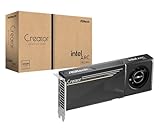
- System Compatibility Note: 2-slot card, 271x112x39mm, single 8-pin power, 200W TDP. Verify chassis clearance and PSU capacity before purchase.
- Dedicated Support: Please contact us directly through Amazon for any product questions or assistance you may require.
- 24GB GDDR6 on 192-Bit Bus: Massive 24GB memory with 456 GB/s bandwidth – ideal for LLMs, AI inference, 3D rendering, and generative design.
- Intel Xe2-HPG Architecture: Built on Intel's next-gen architecture with 20 Xe cores and 160 XMX engines for AI acceleration (197 INT8 TOPS).
- PCIe 5.0 Support: PCI Express 5.0 x16 interface for maximum bandwidth with the latest workstation platforms.
Oasis
Oasis remains the interactive-world line, but Decart increasingly describes it in terms of simulation and physical-AI applications. “World model” here refers to systems that generate or transform interactive environments; it does not by itself prove robust, general-purpose understanding of the physical world.
What the platform costs
Decart’s API documentation lists pay-as-you-go pricing with no subscription or minimum spend stated on the pricing page. Realtime and video models are billed by active generation or generated seconds, while image models are billed per image. Prices shown when reviewed were:
| Model | Listed price |
|---|---|
| Lucy 2.5 realtime, 720p | $0.02 per active generation second |
| Lucy VTON 3.5 realtime, 720p | $0.02 per active generation second |
| Lucy Restyle 2 realtime, 720p | $0.01 per active generation second |
| Oasis 3 Preview realtime | $0.02 per active generation second |
| Lucy 2.5 video, 720p | $0.04 per generated second |
| Lucy Image 2, 720p | $0.02 per image |
New accounts receive free credits, and enterprise volume pricing is available by contacting Decart. See the official pricing page for current rates; usage prices can change.
Who might use it—and who might not
- Potential fits: live video restyling, virtual try-on, interactive-world prototypes, driving-simulation research and consumer apps where low latency matters.
- Potentially poor fits: frame-perfect repeatability, long-lived character or object continuity, deterministic game physics, offline maximum-quality rendering, safety-critical robotics and projects requiring clearly documented licensing for a specific training or output use.
Conventional game engines remain better suited to persistent state, deterministic physics and established asset pipelines. Traditional cloud GPU providers offer more control over a company’s own models and infrastructure but require more engineering. General video APIs may be better for offline generation, while specialized virtual-try-on vendors may fit a narrowly defined retail workflow.
Bottom line on the $32 million round
Decart’s 2024 financing was a bet that infrastructure revenue could subsidize ambitious real-time generative applications. Oasis made that strategy visible, but its early instability showed why an AI-generated world is not the same thing as a finished game. The subsequent $100 million and $300 million financings, Lucy products and Oasis updates suggest that investors valued the larger low-latency AI platform—while the reported Anthropic discussions remained uncompleted as of August 18, 2026.
Quick Recap
Product prices and availability are accurate as of the date/time indicated and are subject to change. Any price and availability information displayed on Amazon at the time of purchase will apply.




