Yes—data-center momentum is still accelerating through August 18, 2026. Cloud and AI revenue, hyperscaler spending, colocation commitments and infrastructure financing all point to real demand. The limiting factor has shifted, however: projects now compete for deliverable electricity, equipment, financing, permits and community support. That means a large announced megawatt figure is not the same as operating capacity or dependable returns.
What the strongest evidence shows
The most persuasive signal is the combination of revenue growth and physical commitments, rather than a promotional project list.
| Indicator | What it says | Important qualification |
|---|---|---|
| AWS Q2 2026 | $42.2 billion revenue, up 37% year over year; $169 billion annualized run rate | Amazon-reported quarterly result and annualized run rate, not annual revenue. Amazon’s Q2 2026 report |
| Amazon investment | Trailing-12-month property-and-equipment purchases rose $66.1 billion year over year, primarily reflecting AI investment | Includes more than data-center buildings; it is not a pure construction measure. Company disclosure |
| Hut 8 | 949 MW of contracted IT capacity and about $26.6 billion of expected aggregate base-term contract value | Contracted or backstopped capacity is not necessarily energized or revenue-producing. Hut 8 Q2 results |
| Global colocation | Supply grew 19.1% in 2025; committed supply rose from 48.2 GW to 68.5 GW, a reported 42.1% increase | Committed pipeline is not live inventory. Figures are DC Byte data reproduced in a Mapletree filing. Filing |
Amazon has also said it expected approximately $200 billion of 2026 capital expenditure and that a substantial portion of AWS spending was supported by customer commitments. That is management guidance, not audited final spending or an industry-wide total. Amazon shareholder letter
Why demand remains broad beyond training AI models
Generative-AI training is only one demand source. Inference—the repeated serving of models to users and applications—can create steadier, geographically distributed demand. Cloud migration, enterprise modernization, recommendation systems, analytics, storage, high-performance computing, sovereign-cloud programs and national AI initiatives also require capacity.
#1 Best Overall

- Save valuable floor space: 6U wall mount server cabinet Dimensions: 13.78" H x21.65" W x17.72" D.Maximum mounting depth is 14.2"
- Keep critical network equipment secure: glass door and side panels are lockable to prevent unauthorized access. Front door can be installed on either side of the front of the cabinet to satisfy your door swing orientation preference
- Easy equipment configuration: Fully adjustable mounting rails and numbered U positions, with square holes for easy equipment mounting with top and bottom punch-out panels for easy cable access
- Durability: Made of high quality cold rolled steel holds up to 110lb (50kg) (Easy Assembly Required)
- PCI & HIPPA and EIA/ECA-310-E compliant
A Bloom Energy survey of 156 data-center ecosystem decision-makers in April 2026 said inference represented more than half of AI compute. That is a survey-based industry estimate from a company that sells distributed-energy technology, not a universal operating statistic. Bloom survey
What hyperscaler results do—and do not—prove
Amazon and AWS
AWS growth and Amazon’s AI revenue run rate above $25 billion provide unusually direct evidence that customers are paying for cloud and AI services. The AI figure is a company-reported run rate, not separately reported GAAP AI revenue. Amazon commentary
Microsoft
Microsoft’s cited fiscal Q3 2026 release describes continued cloud and AI strength, but it is dated April 29, 2026. It should not be treated as the company’s latest quarter in an August briefing without a newer investor-relations release. Microsoft release
Alphabet and other buyers
The available Alphabet material is for Q2 2025, so its $22.4 billion quarterly capital-expenditure figure is historical context only—not a current 2026 number. Alphabet earnings page
Rank #2

- Universal 19” Rack Mount Compatibility – Perfect for pro audio, video, IT, and network gear. Compatible with mixers, routers, patch panels, servers, power amps, and more.
- Heavy-Duty Load Capacity – Built to support up to 550 lbs. Ideal for studio gear, DJ setups, server equipment, and AV components that demand serious stability.
- Robust Steel Frame & Design – Made with 1.5mm thick steel and weighs 36 lbs for maximum durability, reduced vibration, and long-term reliability in any setting.
- Mobile & Secure – Preinstalled with 3” industrial-grade caster wheels (lockable), making it easy to move and position your rack exactly where you need it.
- All-In-One Setup Kit Included – Comes with 34 rack screws (5mm & 6mm), a 1U blank spacer, and an assembly tool—ready for fast installation out of the box.
Capacity headlines need a status label
Operators, investors and lenders should separate each project’s stage. A useful evidence hierarchy is:
- Operational and utilized: equipment is serving customers.
- Leased with disclosed terms: a customer commitment exists, but delivery conditions still matter.
- Financed and under construction: funding has closed and physical work has begun.
- Power-secured or permitted: important milestones, but not proof of energization.
- Announced or forecast: the least certain category.
“MW” also needs definition. IT load describes power delivered to computing equipment; facility load includes cooling and other systems. A pipeline gigawatt can be phased over years, and the same capacity can appear in announcements from a developer, operator and customer. Hut 8’s figures illustrate why contracted capacity should not be presented as current operating supply. Hut 8 disclosure
Power is now the central bottleneck
Site selection is moving from “land plus fiber” to deliverable electricity. Utility interconnection queues, substations, transformers, transmission upgrades and generation availability can determine whether a campus starts on schedule. Water, cooling, emissions rules, noise and local rate allocation can become binding constraints after power is secured.
The DC Byte analysis reproduced in Mapletree’s filing identifies power availability and grid interconnection as structural limits on growth. Mapletree filing Bloom’s survey similarly cites power, construction costs and community scrutiny, but its commercial position means readers should treat the results as directional industry sentiment rather than neutral grid-system evidence. Bloom report
Quick wins for a faster PC:
Clear out junk files and repair common Windows errorsFree Scan →Fix the driver behind crashes, sound loss and screen glitchesFind Drivers →Repair Windows errors before they cause bigger problemsFix Now →Rank #3

- ADJUSTABLE DEPTH: 4- Post 22U 19" server rack enclosure with 4 vertical rails and adjustable mounting depth 5.7" to 33.0" (14,4cm to 83,8cm); IT rack is compatible with various servers / switches / data / video / AV and other IT networking equipment
- EASY SHIPPING AND ASSEMBLY: Enclosed 22U data rack cabinet ships compact flat-packed to avoid damage and facilitate installation; Include wheels & levelling feet to offer more stability; Home server rack cabinet is only 46.6in (118,3cm) in height
- DESIGN AND VENTILATION: Half height server rack cabinet has lockable and removable door and side panels with vented top allowing airflow; 4 Post 19" rack with 1764lb (800kg) weight capacity (stationary); Computer cabinet rack is EIA/ECA-310-E Compliant
- HARDWARE INCLUDED: Rolling home network rack includes rack mounting and equipment mounting hardware, such as 20 M6 cage nuts / screws, PVC cup washers; Front/rear doors and side panels Keys, 2x allen keys; Rack assembly hardware; Casters and leveling feet
- THE IT PRO'S CHOICE: Designed and built for IT Professionals, this 22U IT Server Cabinet is backed for life, including free lifetime 24/5 multi-lingual technical assistance
How developers are responding
- Buying or leasing campuses with existing transmission and generation.
- Using behind-the-meter gas generation, batteries, solar or storage.
- Pursuing nuclear proposals and long-term power agreements.
- Building in phases rather than energizing an entire campus at once.
- Deploying liquid cooling to fit more compute into constrained buildings.
- Using long-term, sometimes take-or-pay, leases and project-level financing.
On-site generation can shorten a grid wait, but it adds fuel-price, emissions, permitting, maintenance and reliability risk. It is not automatically cheaper, cleaner or faster than utility power.
AI is changing the physical facility
High-density GPU clusters require stronger power distribution, high-speed networking, substantial memory and storage, and more sophisticated heat rejection. Liquid cooling can support rack densities that air cooling cannot handle economically, but it requires facility plumbing, compatible hardware, leak-management procedures and heat-rejection capacity. A project described as “AI-ready” is therefore not necessarily ready for every GPU generation or workload.
Core Scientific’s Q2 2026 results show specialist operators investing in high-density colocation, but its capital-expenditure definition should be read from the company’s own presentation before comparing it with a hyperscaler’s broader capex. Core Scientific results
Regional momentum is uneven
| Region | Current pattern | Constraint to watch |
|---|---|---|
| North America | Largest concentration of hyperscaler, colocation and AI-campus activity | Interconnection queues, transmission, transformers, permitting and community opposition |
| Europe | Strong cloud and AI demand with tighter scrutiny of energy, emissions, water and planning | Power cost, environmental approvals and local restrictions |
| Asia-Pacific | Reported pipeline growth of 7.1 GW in the first half of 2026; Southeast Asia represented roughly half of capacity under construction in cited coverage | Methodology and definitions in the secondary report require care; power and connectivity vary by market. Computer Weekly coverage |
| Middle East | Sovereign AI and large digital-infrastructure programs | Generation, cooling, water and execution of very large phased projects |
| India and Latin America | Campus growth tied to cloud, AI and digital services | Availability of reliable power, fiber and suitable sites differs materially by city |
| China | Domestic AI infrastructure shaped by local supply chains | Export controls and technology availability |
Is the boom economically healthy?
The expansion is real, but capital deployment is easier to observe than realized returns. Positive signals include cloud revenue, signed commitments, long leases, project financing, low vacancy in some major markets and continued spending on GPUs, networking, cooling and power.
What’s actually slowing this PC down?
Pick the symptom - the matching free tool is one click away.
Rank #4
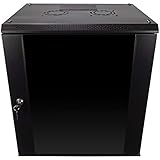
- DURABLE BUILD: Constructed from high-quality Cold Rolled Steel, the NavePoint Consumer Series 12U network cabinet boasts a sturdy, welded frame. Fitting EIA standard 19” networking equipment, this server cabinet confidently supports up to 110 lbs, providing a resilient base for your vital IT gear and equipment
- CONVENIENT DESIGN: This 12U cabinet features a reinforced, heat-treated, tempered glass front door with a security lock. Perfect for applications requiring both security and accessibility, its compact design of 17.72"L x 21.65"W x 24.42"H offers a practical solution for space-constrained settings.
- EASY & CUSTOMIZABLE EQUIPMENT SET UP - The 12U IT cabinet, with removable side panels and security locks, offers customization at its finest. Whether it's for an efficient device or cable management, this data cabinet ensures secure, adaptable configurations that suit your networking server requirements
- ENHANCED VENTILATION & SECURITY - Built-in fans and flow-through ventilation work to prevent overheating, ensuring optimal operation of your equipment. The reinforced, lockable tempered glass front door not only boosts security but also facilitates easy monitoring of installed equipment.
- SAFETY & COMPLIANCE - All NavePoint products are built to industry standards.
Risks are concentrated in the gap between a long-lived facility and uncertain workload demand:
- Hyperscaler capex may grow faster than monetized AI revenue.
- Facilities can complete before customers are fully contracted.
- Shorter neocloud offtake contracts can create refinancing and utilization risk.
- High rates and construction inflation can erode project returns.
- Grid, equipment or permitting delays can strand land and purchased hardware.
- AI efficiency improvements may reduce compute per task even as total usage rises.
- Specialized facilities may have few alternative uses.
- Local residents may challenge costs, water use, emissions or noise.
BloombergNEF describes investor concern about high capital commitments and the risk of shorter neocloud contracts if long-term AI demand disappoints. BloombergNEF analysis Construction disputes and community resistance are also appearing alongside the buildout. Data Center Knowledge
What this means for investors and households
For investors, the useful question is not “How many gigawatts were announced?” It is whether a company can convert capacity into operating cash flow while controlling power, construction and customer-concentration risk. Examine interconnection status, financing close, lease commencement conditions, counterparty quality, facility-versus-IT load, expected first power and refinancing needs.
For households, the buildout can affect electricity planning and utility rates where large-load projects require new generation or grid upgrades. The effect is local and depends on regulatory cost allocation; national headlines do not establish that every utility customer will pay more.
PC Slower Than It Used to Be?
A free scan shows the junk files, broken settings and background clutter dragging Windows down - then fixes them in one click.Free scan · Windows 10 & 11Crashes, No Sound, or Screen Glitches?
Random freezes, missing sound and display glitches usually trace back to one bad driver. Find and replace yours safely.Free scan · under a minuteWhat to watch next
- Hyperscaler third-quarter 2026 capex updates and explanations of customer-backed spending.
- Utility interconnection approvals, transmission milestones and first power at major campuses.
- Transformer, switchgear, generator, GPU and liquid-cooling availability.
- Lease commencements—not merely lease announcements—and customer utilization.
- Local permitting, litigation, water plans and rate-allocation decisions.
- Inference economics, model-efficiency gains and the durability of AI revenue.
- Developer balance sheets, project-level debt and refinancing dates.
What “momentum continues” does not mean
- Every announced project will be built.
- Every planned megawatt has secured, deliverable power.
- A signed lease produces immediate revenue.
- AI demand is uniform across regions or workloads.
- On-site generation removes cost, emissions or reliability risk.
- Hyperscaler spending automatically produces healthy industry returns.
The Bottom Line
Bottom line: Data-center momentum is genuine as of August 18, 2026, but the market is becoming execution-constrained. The strongest opportunities are with operators that have contracted demand, secured power, committed financing and a credible path from construction to energized, revenue-producing capacity. The largest risks sit in speculative pipelines, weak power deliverability, concentrated customers and projects whose economics depend on permanently accelerating AI demand.
Quick Recap
Product prices and availability are accurate as of the date/time indicated and are subject to change. Any price and availability information displayed on Amazon at the time of purchase will apply.




