Quick wins for a faster PC:
Repair Windows errors before they cause bigger problemsFix Now →Fix the driver behind crashes, sound loss and screen glitchesFind Drivers →Intel launched Core Ultra Series 3, code-named Panther Lake, at CES on January 5, 2026. It is the company’s first client platform built on Intel 18A and a significant test of Intel’s ability to manufacture advanced chips for its own products. Separately, reports say Apple has explored using Intel as a manufacturer for some Apple-designed chips. That is a possible foundry relationship—not evidence that Apple is bringing Intel-designed processors back to Macs.
What Intel launched at CES 2026
Core Ultra Series 3 is Intel’s new mobile processor family, built around Panther Lake. Intel is targeting laptops, AI PCs, gaming systems and, in related variants, edge and industrial devices. The lineup includes Core Ultra X9 and X7 tiers, alongside mainstream Core models based on the same foundational architecture.
Intel said more than 200 PC designs were planned with global partners. Its CES supporting material named Acer, ASUS, Dell, HP, Lenovo, LG, MSI, Samsung and Microsoft among participating companies. That figure describes announced design plans, not 200 laptops available at launch. Intel’s launch announcement and partner material provide the company’s details.
Intel’s announced timetable was preorders for the first consumer laptops starting January 6, 2026, followed by global availability beginning January 27. More designs were expected through the first half of the year. The dates refer to the first systems, not every Series 3 processor, configuration or country.
#1 Best Overall

- Next‑Gen Platform Support: Compatible with Intel 800 Series Chipset‑based motherboards with LGA1851 Socket enabling PCIe 5.0/4.0 and high‑speed DDR5 memory (up to 7200 MT/s).
- High‑Performance Core Configuration: Features up to 24 cores (8 P‑cores + 16 E‑cores) for demanding gaming and creator
- Ultra‑Fast Boost Clocks: Reaches up to 5.5 GHz max turbo frequency for top‑tier responsiveness and performance
- Built for Enthusiasts: Unlocked for performance tuning when paired with Intel Z‑series chipsets, making it ideal for overclockers and power users.
- Robust Power & Thermal Design: Engineered with 125W base power and 250W max turbo power to sustain high‑intensity
Why Intel 18A matters
18A is Intel’s name for a leading-edge manufacturing process; it is not a literal measurement that can be directly compared with another company’s node label. Intel describes it as a U.S.-developed and U.S.-manufactured, 2-nanometer-class process. Panther Lake is a strategic proof point because it puts 18A into a client product while Intel also seeks external customers for its foundry business.
Intel identifies three technologies central to the platform:
- RibbonFET: Intel’s gate-all-around transistor architecture.
- PowerVia: backside power delivery intended to improve power distribution and signal routing.
- Foveros: packaging technology used to integrate multiple tiles into a larger system-on-chip.
Intel says 18A offers up to 15% better performance per watt and 30% greater density versus Intel 3. These are Intel’s process comparisons, not independent industry-wide findings. Intel confirms Panther Lake includes an 18A compute tile; that does not mean every tile in every configuration is made on 18A. Intel’s architecture preview describes the process and tile design.
Rank #2

- Get ultra-efficient with Intel Core Ultra desktop processors that improve both performance and efficiency so your PC can run cooler, quieter, and quicker.
- Core and Threads 24 cores (8 P-cores plus 16 E-cores) and 24 threads. Integrated Intel Graphics included
- Performance Hybrid Architecture Integrates two core microarchitectures, prioritizing and distributing workloads to optimize performance
- Performance Unlocked Up to 5.7 GHz unlocked. 40MB Cache
- Compatibility Compatible with Intel 800 series chipset-based motherboards
Panther Lake specifications and Intel’s performance claims
Panther Lake uses a multi-tile design combining compute, integrated graphics, and I/O and platform components. Intel says the configurations scale across laptop classes and price points, but buyers need to check the exact processor and system rather than infer performance from the family name.
| Item | Intel’s stated figure or comparison | How to interpret it |
|---|---|---|
| CPU | Up to 16 cores | Maximum cited configuration; not every Series 3 SKU has this core count. |
| Integrated graphics | Up to 12 Xe cores | Maximum cited configuration; graphics capability varies by processor and laptop. |
| NPU | Up to 50 TOPS | Theoretical NPU throughput, not an application-speed or battery-life result. |
| Total platform AI throughput | Up to 180 TOPS | Combines platform compute engines; it is not equivalent to 180 NPU TOPS. |
| Multithread performance | Up to 60% better than Lunar Lake | Intel compared a Core Ultra X9 388H with a Core Ultra 9 288V at similar power using Cinebench 2024. |
| Gaming performance | More than 77% faster than Lunar Lake | Intel’s comparison used a 45-game geometric mean at 1080p High settings, with upscaling where supported. |
| Battery life | Up to 27 hours | Intel’s stated result came from a Lenovo IdeaPad reference design streaming Netflix in Microsoft Edge. |
The benchmark and battery figures are Intel claims under specified conditions, not a guarantee for retail laptops. Cooling, power limits, battery size, memory, firmware, display resolution and operating-system settings can change real-world results. The figures also do not establish that Panther Lake beats AMD Ryzen AI, Qualcomm Snapdragon X or Apple M-series systems across workloads; independent reviews of comparable retail laptops are needed.
What the AI figures do—and do not—tell you
The platform has three compute engines with different roles: the CPU handles general-purpose and latency-sensitive tasks; the GPU handles graphics, parallel workloads and some AI inference; and the NPU is designed for sustained AI operations at lower power. A TOPS figure is a theoretical throughput measure, not a direct measure of model quality, compatibility, memory bandwidth, token generation, image-generation speed or battery impact.
Rank #3

- 20 cores (8 P-cores + 12 E-cores) and 20 threads. Integrated Intel Graphics included
- Performance hybrid architecture integrates two core microarchitectures, prioritizing and distributing workloads to optimize performance
- Up to 5.3 GHz. 36 MB Cache
- Compatible with Intel 800 series chipset-based motherboards
- Turbo Boost Max Technology 3.0, and PCIe 5.0 & 4.0 support. Intel Optane Memory support. No thermal solution included
Before choosing an AI PC, check whether the applications you use support the NPU, whether they instead use the GPU or CPU, how much system RAM is available, and whether the feature depends on cloud services. Intel also promoted edge uses such as robotics, healthcare, automation and computer vision. Those are distinct from consumer laptop workloads, with different power, temperature, reliability and software needs. Intel’s launch materials describe the platform claims.
What laptop buyers should compare
A high-end X9 in a larger chassis should not be judged as though it were the same product as a low-power Series 3 chip in a thin ultraportable. Compare the complete configuration and the work you expect it to sustain.
Do these 3 things before closing this tab:
1Clear out junk files and repair common Windows errors2Fix the driver behind crashes, sound loss and screen glitches3Repair Windows errors before they cause bigger problems- Exact processor SKU, CPU core count and Xe-core count.
- Sustained power limits, cooling design and whether the laptop has a discrete GPU.
- RAM capacity and whether memory is soldered, especially for local AI workloads.
- Battery capacity, display resolution and refresh rate, which affect runtime.
- Storage, weight, ports, firmware and driver maturity.
- Application support for the NPU and any enterprise support or warranty requirements.
- Price and availability for the exact configuration in your country.
A Series 3 laptop may not suit CUDA-dependent work, macOS-only software, or workloads that require a powerful discrete GPU. Buyers who already have a recent laptop should weigh the actual benefit they need—such as stronger integrated graphics or local AI acceleration—against the cost of replacing it.
Rank #4
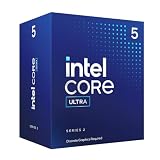
- 10 cores (6 P-cores + 4 E-cores) and 14 threads.
- Performance hybrid architecture integrates two core microarchitectures, prioritizing and distributing workloads to optimize performance
- Up to 4.9 GHz. 22 MB Cache
- Compatible with Intel 800 series chipset-based motherboards
- PCIe 5.0 & 4.0 support. Intel Optane Memory support. No thermal solution included. Discrete graphics required
What is actually reported about Apple and Intel
Reported: Bloomberg described exploratory discussions involving Apple, Intel and Samsung about manufacturing some Apple device chips in the United States. A later account by analyst Ming-Chi Kuo, reported by MacRumors, described small-scale testing for possible lower-end iPhone, iPad and Mac chips, with potential production timing discussed for 2027–2028. Those are reports about a possible supplier relationship, not a public Apple production announcement. See Bloomberg’s report and MacRumors’ account.
Not established by those reports: a finalized large-volume order, a confirmed Apple choice of Intel 18A for a specific chip, or a plan to replace TSMC as Apple’s primary supplier. A later political claim that Apple had agreed to work with Intel was not itself a company announcement; Tom’s Hardware’s report likewise distinguishes the claim from confirmed commercial details.
If an arrangement materializes, Intel’s role would reportedly be as a foundry: manufacturing chips designed by Apple and based on Apple’s architecture. That is fundamentally different from Intel designing and supplying the x86 processors used in Macs before Apple’s transition to its own silicon, which began in 2020. The CES Panther Lake announcement was not an Apple partnership announcement, and there is no evidence in the cited reporting that Panther Lake will power Macs.
Best Value

- 10 cores (6 P-cores + 4 E-cores) and 14 threads. Integrated Intel Graphics included
- Performance hybrid architecture integrates two core microarchitectures, prioritizing and distributing workloads to optimize performance
- Up to 4.9 GHz. 22 MB Cache
- Compatible with Intel 800 series chipset-based motherboards
- PCIe 5.0 & 4.0 support. Intel Optane Memory support. No thermal solution included.
Why a foundry relationship could matter
For Apple, a second manufacturing source could diversify supply, add North American capacity and improve negotiating leverage on capacity or cost. For Intel, a major external customer would be a test of its foundry capability beyond its own products. An Apple engagement would require more than a promising process node: Intel would need competitive yields and volume, dependable delivery, strong customer support and protection of customer intellectual property.
Bloomberg called the discussions exploratory. Talks or tests do not establish a signed deal, production volume or manufacturing success. The reported timelines also mention possible future nodes; they should not be collapsed into a claim that Apple has chosen the specific 18A process used for Panther Lake.
Quick Recap
What to watch next
- For PC buyers: independent tests of retail laptops by exact SKU, with attention to sustained power, battery capacity and display configuration—not just Intel’s reference-system results.
- For investors: evidence that Intel can ramp 18A at competitive yields and cost, deliver consistently across OEM designs, and grow client share.
- For foundry customers: clear evidence of capacity, process execution, packaging capabilities and customer safeguards.
- For the Apple story: a direct company announcement or concrete production details. Without those, testing and exploratory talks remain early-stage signals, not a confirmed manufacturing contract.
Product prices and availability are accurate as of the date/time indicated and are subject to change. Any price and availability information displayed on Amazon at the time of purchase will apply.




