Free tools Windows power users keep installed
One-click scans. No signup required.
The startup is Cerebras Systems. Its Wafer-Scale Engine (WSE) turns a wafer-sized piece of silicon into one large AI processor, rather than splitting the work among many smaller chips. Cerebras sells integrated systems for enterprise use and offers cloud access, so most individuals interested in trying the technology are more likely to use it online than buy the hardware.
What does “whole-wafer AI chip” mean?
A silicon wafer is the round slice of material used to manufacture chips. Most processors are cut from a wafer into separate dies, then packaged as individual chips. Cerebras instead builds its Wafer-Scale Engine as one unusually large processor on a wafer-sized area of silicon, combining extensive compute and memory resources on the device.

Cerebras was founded in 2015 by Andrew Feldman, Gary Lauterbach, Michael James, Sean Lie, and Jean-Philippe Fricker to commercialize wafer-scale computing. In 2019, it introduced the first WSE and the CS-1 system. Cerebras announced that first engine as a 46,225 mm² chip with more than 1.2 trillion transistors.
“Spins” in the headline is a playful description, not a literal account of the technology: the idea is to use a wafer-sized processor for AI, not to rotate a wafer during computation.
#1 Best Overall

- Powered by 26 Tera-Operations Per Second (TOPS) Hailo-8 AI Processor.
- 2.5W typical power consumption
- Enabling real-time low latency and high-efficiency AI inferencing on the edge devices
- Supports TensorFlow TensorFlow Lite, ONNX, Keras, Pytorch frameworks
- Supports Linux and Windows.
Why put so much AI compute on one device?
Large AI workloads often have to be divided among processors. Those processors then exchange data, and that communication can add overhead to training or inference. A wafer-scale design aims to keep more of the work and data movement within one large device, reducing the need to send information between separate chips.
That is a systems trade-off, not a guarantee that every AI task will run faster or cost less. A much larger custom device can reduce some inter-chip communication, but it also calls for specialized manufacturing and packaging, compatible software, substantial cooling, and enterprise-scale procurement. Performance depends on the model, workload, system configuration, and comparison setup.
How Cerebras’s products have developed
| Milestone | What it means |
|---|---|
| 2015 | Cerebras was founded to commercialize wafer-scale computing. |
| 2019 | The company introduced WSE-1 and the CS-1 system; its announcement described a 46,225 mm² processor with more than 1.2 trillion transistors. |
| WSE-3 | Cerebras’s third-generation wafer-scale processor. The company says it is 56 times larger than the largest GPU and that its inference and training are more than 20 times faster than competing solutions. Those are company claims, not independent benchmark results. |
| August 2026 | Cerebras announced CS-4, a rack-scale system built from three WSE-3 Turbo processors. The company stated an “up to 30×” inference advantage over GPU-based solutions; that is also a vendor claim. |
The CS-3 product page describes an engine-block packaging approach and 12 standard 100-Gigabit-Ethernet links driving 900,000 cores. These specifications illustrate that the WSE is part of a complete system design, not a standalone consumer component.
How should you compare Cerebras with GPU systems?
A headline speed multiplier is not enough to judge which platform is better for a particular user. A useful comparison should match the model and workload, then examine:
The Tool Desk
Outbyte PC Repair FREEClear out junk files and repair common Windows errorsFree Scan →Outbyte Driver Updater FREEFix the driver behind crashes, sound loss and screen glitchesFind Drivers →Rank #3

- 48GB AI graphics accelerator
- Inference latency and sustained throughput: how quickly the system responds, and how much work it can handle over time.
- Training time and scaling efficiency: how long training takes and what happens as the workload grows.
- Memory: on-chip capacity and bandwidth, which affect how models and data can be handled.
- Interconnect: bandwidth and communication overhead between processors.
- Power and cooling: the energy and infrastructure needed to operate the system.
- Software compatibility: whether the tools, models, and workflows an organization uses are supported, and how portable they are.
- Deployment and cost: whether cloud access or on-premise infrastructure fits the organization’s needs, including availability and vendor concentration.
Cerebras’s published 20× and up-to-30× figures come from the company. They should not be treated as independent, apples-to-apples results across all workloads. A complete independent cost comparison is not established by the available information, so those multipliers alone cannot show which option offers better value.
Can you try Cerebras, and can you buy its hardware?
Cerebras says developers and enterprises can access its platform through pay-as-you-go cloud offerings. That is the practical route for people who want to experiment without acquiring and operating a specialized system. Check current cloud availability, terms, and pricing directly with Cerebras before committing; specific prices are not established here.
Rank #4

- Axial-Fan Tech Built to Endure - Triple 100mm axial fans feature refined blades for 15% more airflow, counter-rotation to cut turbulence, and durable dual-ball bearings. Stealth Mode stops fans at low temps for silent operation, boosting card longevity and performance.
- Masterfully Crafted Cooling - Advanced vapor chamber and ultra-dense heatsink rapidly pull heat from the GPU, while an open aluminum backplate boosts airflow and ventilation, resulting in lower temperatures for stronger performance and stability in demanding workloads.
- VelocityX Software - Gain full control over your PNY graphics card to maximize its performance. Fine-tune core and memory clocks, dial in custom fan curves, and monitor real-time temperatures and speeds, all from one intuitive interface. Save up to five profiles for instant recall.
- Your Creative AI-dvantage - Experience RTX accelerations in top creative apps, world-class NVIDIA Studio drivers engineered and continually updated to provide maximum stability, and a suite of exclusive tools that harness the power of RTX for AI-assisted creative workflows.
- NVIDIA Blackwell Architecture - The Ultimate Platform for Gamers and Creators. Do it all with 5th-Gen Tensor cores for Max AI performance, new streaming multiprocessors that are optimized for neural shaders, and 4th-Gen Ray Tracing cores built for Mega Geometry.
CS-3 and CS-4 are integrated enterprise systems intended for organizations deploying AI infrastructure, rather than ordinary consumer hardware. The company describes on-premise AI supercomputers as one use for its systems, but public information here does not establish a standard purchase price or a complete cost comparison. Organizations considering procurement would need to assess their own workloads, infrastructure requirements, support needs, and commercial terms.
Independent reader supportYour contribution helps us test, update, and keep practical guides available for everyone.What Cerebras’s story means for buyers
Cerebras is a notable alternative in AI computing because it takes a different architectural approach: one wafer-scale processor rather than many separate processors coordinating work. That can be relevant to organizations weighing performance, data movement, and deployment options, but the company’s speed claims do not settle the question of total cost or suitability for a particular use.
Recommended Free Tools
Best Value
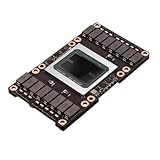
- Robust Design:Constructed to withstand high temperatures, the V100 16GB SXM2 card operates efficiently up to 105℃.
- Advanced Connectivity:Features a SXM2 connector for seamless integration with a wide range of systems, ensuring compatibility.
For individual readers, the distinction is simpler: the WSE is the processor technology, CS-3 and CS-4 are enterprise systems built around it, and cloud access is the route to explore the platform without buying a supercomputer.
Quick Recap
Product prices and availability are accurate as of the date/time indicated and are subject to change. Any price and availability information displayed on Amazon at the time of purchase will apply.




