Cake announced a $13 million seed round on December 4, 2024, led by Gradient, Google’s early-stage AI fund. Primary Venture Partners, which had provided Cake’s pre-seed financing, also participated, alongside Alumni Ventures, Friends & Family Capital, Correlation Ventures, Firestreak Ventures and individual technology investors. The New York City company sells a managed infrastructure layer intended to help businesses deploy open-source AI without building every platform, security and operations function themselves.
The financing is a historical launch-stage announcement, not evidence of Cake’s latest financing or independently verified product-market fit. Cake’s current website presents a broader enterprise AI platform covering data, models, orchestration, inference, governance, observability and cost management.



What Cake’s 2024 funding announcement said
Cake said it launched in 2023 to serve mid-market businesses and other organizations without large machine-learning platform teams. The company did not disclose valuation, revenue, customer count, retention, gross margin, deployment volume, dilution or a detailed use-of-proceeds breakdown in the announcement. Those omissions matter: a funding round shows investor commitment, not audited operating performance.
Gradient’s stated thesis was that businesses were struggling to move AI tools into production and that Cake’s founders were listening closely to less-technical customers. That is an investor view. The release also described customers in financial services, healthcare, insurtech, e-commerce and traditional SaaS using Cake in production, but the claims were company-reported rather than independently audited. (Cake’s funding announcement)
The infrastructure problem Cake is targeting
Downloading an open-source model is not the same as operating a dependable AI product. A production system may require data ingestion and transformation, experiment tracking, model serving, vector search, retrieval, workflow orchestration, monitoring, tracing, identity controls, GPU scheduling and cost allocation. Each tool can be useful alone while still creating integration and upgrade work across the whole system.
Cake’s current company explanation describes this connecting layer as “platform glue.” Its pitch is to manage that glue so a company can select models and frameworks without assembling a large internal team to secure, deploy, observe and maintain them.
What Cake offered when it raised the round
The 2024 release described a modular managed platform with:
- Deployment and integration for dozens of open-source AI technologies.
- Production infrastructure, security and user management.
- Compute management, monitoring, autoscaling and cost visibility.
- Managed upgrades as open-source packages change.
- Templates and expert project support.
- A separation between infrastructure and AI components intended to reduce lock-in.
“Open-source AI infrastructure” here should not be read as saying Cake’s commercial control plane is itself entirely open source. Cake manages and integrates open-source components; the platform, support model and enterprise controls are a commercial offering.
PC Slower Than It Used to Be?
A free scan shows the junk files, broken settings and background clutter dragging Windows down - then fixes them in one click.Free scan · Windows 10 & 11Crashes, No Sound, or Screen Glitches?
Random freezes, missing sound and display glitches usually trace back to one bad driver. Find and replace yours safely.Free scan · under a minuteWhat the current Cake platform includes
Cake’s current materials, which describe a broader product than the 2024 announcement, list the following layers. A listed integration does not establish identical support levels, service guarantees or availability in every deployment.
Data, retrieval and analytics
The platform page lists Airflow, dbt and Prefect for ingestion and ETL; Weaviate, Milvus, Qdrant, pgvector, BGE, LangGraph and Langflow for retrieval-related workloads; Metabase, Matomo, Superset, Spark and TensorBoard for analytics; and SDV, Mostly AI, SynthCity, YData and Faker for synthetic data. (Cake platform capabilities)
Rank #3
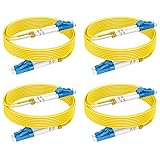
- 【6ft/2m 4pack OS2 Fiber Optic Patch Cable】 As AI continues to advance at an unprecedented pace, having reliable and efficient connectivity is crucial.RamboCables offers a cost-effective solution for your AI infrastructure with the 4-Pack OS2 LC-LC Single Mode Fiber Patch Cables. These high-quality fiber optic patch cords are designed to provide reliable and efficient connectivity for your AI applications.
- 【Wide Application】Whether you're using AI for data processing, machine learning, or other applications, the OS2 LC-LC Single Mode Duplex Fiber Patch Cable is ideal for connecting high-speed transceivers such as 10G SR, 40G BIDI SR, QSFP+, SFP+, and more. It is suitable for 1G/10G/40G/100G/400G Ethernet connections, making it a versatile choice for data centers, cloud storage networks, server farms and any other environments where reliable fiber optic connectivity is essential.
- 【Max Transmission Distance】With the OS2 Single Mode Optic Fiber Cable, you can transmit data for up to 10km at 1310nm or up to 40km at 1550nm. It offers excellent bandwidth at 1310nm-1550nm, with a low attenuation rate of 0.36 dB/km-0.22 dB/km, and can operate in a wide temperature range of -20~70°C, ensuring reliable performance even in harsh environments.
- 【Industry Standard】The OS2 LC-LC Fiber Patch Cords are built to industry standards. With LSZH (Low Smoke Zero Halogen) jacket, LC/UPC to LC/UPC connectors, 9/125μm high-rated fiber cladding, and a 2.0mm cable diameter, feature an LSZH environmentally friendly jacket, Zirconia Ceramic Ferrule, and 15mm minimum bend radius, all in accordance with EIA/TIA 604-2 standards, ensuring optimum insertion loss (IL) and return loss (RL) performance.
- 【Standards & Reliability】With over 15 years of experience manufacturing fiber patch cords, RamboCables are dedicated to supplying high-quality products and services. Our fiber patch cables comply with industry standards to enable efficient network transmission.
Generative-AI development and operations
Listed integrations include Hugging Face, LangChain, LlamaIndex, Langflow, LangGraph, CrewAI, AutoGen, OpenAI, Google, vLLM, Ray Serve, DSPy, Promptfoo, DeepChecks, Langfuse, Arize Phoenix, OpenWebUI, Streamlit and Vercel.
MLOps and observability
Cake lists Jupyter, Kubeflow, MLflow, ClearML, Ray, PyTorch, XGBoost, vLLM, Ray Serve, NVIDIA Triton, Grafana, Prometheus, Istio, Evidently and NannyML.
The Tool Desk
Outbyte PC Repair FREERepair Windows errors before they cause bigger problemsFix Now →Outbyte Driver Updater FREEFix the driver behind crashes, sound loss and screen glitchesFind Drivers →Governance and cost controls
Current pages emphasize project budgets, role-based access control, SCIM, usage and resource quotas, model routing, request-time enforcement, and cost attribution by team, project, model, provider or workload. Cake also markets forecasting, optimization, auditability and compliance-oriented controls. (cost-management capabilities; governance capabilities)
How deployment is supposed to work
Cake says it can run inside a customer’s AWS account or VPC, with Kubernetes-based environments and no data egress as core selling points. Its documentation discusses Kubernetes, Helm, Terraform, GitHub Actions, Argo CD, PostgreSQL and GitOps-style configuration. Exact architecture, responsibilities and supported services depend on the contract and deployment. (Cake homepage; documentation; Kubernetes documentation; Cake overlays)
Keeping workloads in a customer-controlled environment can help with data residency and security requirements, but it does not remove the need for cloud, identity, data and machine-learning expertise. Autoscaling can manage demand; it cannot guarantee inexpensive or immediate access to scarce GPUs.
Customer evidence and what it does—and does not—prove
The funding release quoted Scott Stafford of Ping Data Intelligence as saying Cake produced the impact of two or three technical hires for an investment equivalent to half an employee. That is a customer testimonial, not a controlled benchmark. Cake’s current pages make additional claims about faster deployment, productivity and infrastructure or headcount savings; those are company-published marketing claims unless independently substantiated. (Cake AI-platform page)
Likewise, the financing does not establish a valuation, revenue trajectory, customer retention, deployment count, gross margin or comparative performance against an internal platform team.
Independent reader supportYour contribution helps us test, update, and keep practical guides available for everyone.Cake versus the main alternatives
| Approach | What the buyer gets | Main trade-off |
|---|---|---|
| Cake | Managed integration, governance, deployment, monitoring and cost controls around modular AI components. | Enterprise contract and continuing dependence on Cake’s control plane and support. |
| Self-managed open source | Direct control using Kubernetes, Kubeflow, Ray, MLflow, Airflow and related projects. | Lower direct software licensing cost, but the buyer owns integration, upgrades, security, reliability and on-call work. See Kubernetes, Kubeflow, Ray, MLflow and Airflow. |
| Hyperscaler-native AI | Managed services, familiar procurement and deep cloud integration. | Greater dependence on one cloud’s services and architectural patterns. Examples include AWS SageMaker, Google Vertex AI and Azure Machine Learning. |
| Specialist MLOps tools | Focused experiment management, orchestration or lifecycle functions, such as ClearML. | May require additional products and engineering to cover enterprise AI governance, inference, data and FinOps together. |
Cake’s advantage is convenience and a unified operating layer. Self-management can maximize control and customization. Hyperscalers can simplify procurement and cloud integration. The right choice depends on existing platform skills, portability requirements, workload scale and tolerance for vendor dependence.
Commercial reality: enterprise purchase, not a cheap developer tool
Cake’s website is demo-led rather than self-serve. On August 18, 2026, AWS Marketplace listed a $240,000 subscription for 12 months for Cake Platform, with AWS infrastructure charges additional. The listing also showed potential savings of up to 15% for 24-month contracts and up to 30% for 36-month contracts. Those terms are a pricing signal for one listing, not a universal quote; private offers, services, support levels and deployment scope may differ. (AWS Marketplace Cake Platform listing)
A related AWS Marketplace listing describes managed services deployed in a customer’s AWS account and indicates contract-based pricing with infrastructure charges separate. (AWS managed-services listing)
Do these 3 things before closing this tab:
1Fix the driver behind crashes, sound loss and screen glitches2Clear out junk files and repair common Windows errors3Scan for outdated or missing drivers - takes under a minuteThat makes Cake potentially sensible where the cost of hiring and retaining a platform team exceeds an enterprise subscription, but a poor fit for a small experiment, a simple hosted-model API or a company with a mature Kubernetes and MLOps organization.
Questions a buyer should ask before signing
- Which components are fully managed, and which are only integrated?
- Who applies security patches and validates upgrades when frameworks change?
- Can configurations, data pipelines and workloads be exported if the relationship ends?
- What are termination, transition and support obligations?
- Which cloud, GPU, storage, networking, model and data costs remain outside the subscription?
- What is the exact scope and date of any SOC 2 Type 2 report, and which controls remain the customer’s responsibility?
- Are performance, savings and deployment-speed claims backed by a documented methodology?
Bottom line for the funding story
Cake’s $13 million seed round was a bet by Gradient and other investors on the operationalization layer of open-source AI. The company was not raising money to introduce another foundation model; it was selling a way to make rapidly changing models and tools usable in production with deployment, governance, monitoring, upgrades and cost controls. The current platform narrative is broader than the 2024 announcement, but the central proposition remains the same: pay for managed infrastructure when building and operating that layer internally costs more than an enterprise software relationship.
Quick Recap
Product prices and availability are accurate as of the date/time indicated and are subject to change. Any price and availability information displayed on Amazon at the time of purchase will apply.




