AT&T Turbo is a paid network-priority add-on, not a speed-cap upgrade. For an eligible line, it changes how premium and hotspot traffic is treated when AT&T’s network is congested. It does not add data, improve coverage, guarantee a faster speed, or remove every plan restriction. Postpaid Turbo costs $7 per month per eligible line; AT&T Prepaid lists $7 per month or $2 per day.
Should you pay for AT&T Turbo?
Turbo is most worth testing if your AT&T phone works acceptably in quiet places but becomes laggy at crowded venues, downtown locations, campuses, commuting corridors, or other busy sites. Those symptoms can indicate congestion-related traffic scheduling, which Turbo is designed to address.
- Worth testing: an eligible 5G smartphone line with congestion-related lag during gaming, video calls, livestreaming, remote work, or hotspot use.
- Probably not worth it: weak signal, poor coverage, a damaged or outdated phone, exceeded hotspot limits, Wi-Fi or roaming use, or a need for more data rather than better traffic treatment.
- Price: $7 monthly per postpaid line. Prepaid also lists a $2 daily option.
AT&T describes Turbo as upgrading eligible premium and hotspot allotments to “performance data.” Its consumer explanation is available at AT&T’s Turbo page.
What Turbo actually changes
A mobile connection has several separate limits. Coverage determines whether your phone can reach an AT&T site. Signal quality reflects distance, building materials, interference, and radio conditions. Capacity is the bandwidth available at a location. Priority determines how traffic is scheduled when that capacity is constrained. A speed cap is a deliberate maximum, while a data allowance is how much high-speed or hotspot data your plan includes.
Quick wins for a faster PC:
Fix the driver behind crashes, sound loss and screen glitchesFind Drivers →Repair Windows errors before they cause bigger problemsFix Now →#1 Best Overall

- 【Ready for 5G】- The booster is designed for the largest cell carriers - Verizon and AT&T, boosts 4G LTE and 5G signal for all cellular devices operating on band 12, band 13 and band 17. Note: The booster only supports 5G band that largely deployed in current bands 12, 17 and 13 by Dynamic Spectrum Sharing by carriers. If you need a 5G cell booster, please ensure that you have a 5G phone and your carrier has deployed 5G in the 4G band of 12,13 and 17 before purchase.
- 【Advanced Features & Smart Device】- The booster uses AGC(Automatic Gain Control) function, which can intelligently detect the existing signal strength, and adjust itself for best performance, then reflect its working condition through LED indicator. Buy it once, and boost for life.
- 【Better Data & VoLTE】- Enhances 4G LTE data speed signals and volte, enjoy faster uploads and downloads to stream videos smoothly in your house, office, cottage, cabin, camper, basement etc., get rid of expensive monthly internet fees. Supports multiple users simultaneously.
- 【Powerful Antennas & Large Coverage】-This booster comes with high gain directional antenna, allow you to point it to the nearest signal tower more accurate and get more signals, expanding the indoor coverage up to 4,500sq ft. DIY Installation.
- 【Reliable Service Guarantee】- FCC Certified, 30-day return, 3-month replacement, Up to 3-year manufacturer repair, lifetime professional technical Support.
Turbo primarily changes priority. When the AT&T network is busy, eligible traffic may receive more favorable scheduling than lower-priority traffic. That can improve responsiveness, reduce stalls, or make an interactive application feel steadier. It does not create another cell site, strengthen the radio signal, increase tower backhaul, or change your phone’s modem capabilities.
Priority is not the same as speed
If a tower has spare capacity, lower-priority traffic may already run quickly, so Turbo can produce no visible difference. If the tower is congested, priority can matter—but AT&T does not promise a minimum download speed, upload speed, ping time, or percentage improvement.
What Turbo does not provide
- No extra data: your plan’s monthly premium-data and hotspot allotments do not increase.
- No universal throttle removal: existing plan-management rules continue after an allotment is used.
- No coverage repair: it cannot fix a dead zone, weak indoor signal, poor backhaul, or a device problem.
- No unrestricted video: existing video-management settings still apply.
- No hotspot exemption: hotspot limits and post-allotment policies remain in force. AT&T’s prepaid FAQ says referenced plans may reduce hotspot service to a maximum of 128 Kbps after the applicable allotment is exceeded.
- No Wi-Fi or roaming benefit: consumer Turbo works on AT&T’s owned-and-operated U.S. network, excluding U.S. territories; it is not available over Wi-Fi or while roaming.
These limitations are set out in AT&T’s consumer terms and its prepaid FAQ.
Rank #2

- Enhancement Function: Improve mobile phone paste, solve the problem of weak when elevator or climbing, effectively improve the effect of receiving , reduce the static electricity of ships, elevators, cars, buildings, tunnels and mountains.
- Small and Lightweight: The improved mobile phone sticker is small and lightweight, effectively reducing the burden of mobile phone, and easy to carry.
- Easy Installation: With self adhesive design, the improved sticker can be easily installed on the mobile phone.
- Large Portion: A set of 5pcs improved phone stickers is sufficient to meet your needs for heavy use and long term use.
- Widely Used: Not only used in mobile phones, but can also improve reception of walkie talkies, buzzers and even cordless home phones through PDA two way walkie talkies.
Eligibility and pricing
Consumer postpaid
AT&T currently lists Turbo for consumer postpaid lines on eligible versions of Premium 2.0, Extra 2.0, Unlimited Premium PL, Unlimited Extra EL, and certain Unlimited Elite lines that qualified for inclusion in an Unlimited Your Way group. The line must use a 5G-capable smartphone; tablets, wearables, connected cars, and other non-smartphone devices are excluded.
Free tools Windows power users keep installed
One-click scans. No signup required.
| Postpaid detail | Current information |
|---|---|
| Price | $7 per month per eligible line |
| Renewal | Automatically renews monthly until canceled |
| Device | Eligible 5G-capable smartphone |
| Network | AT&T-owned U.S. network; no Wi-Fi or roaming |
AT&T’s public eligibility language is not perfectly consistent. The current consumer page references a minimum plan price of $80 per month before discounts, while separate legal/support text references $85.99 and uses “Elite 2.0” wording. Check the add-on screen for your account rather than assuming a threshold applies universally. The relevant pages are AT&T’s current consumer page and AT&T’s legal/support text.
AT&T Prepaid
AT&T Prepaid promotes Turbo on selected plans including Unlimited MAX Plus and Unlimited Ultra. A compatible plan and 5G-capable smartphone are required.
Rank #3
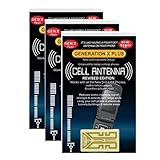
- Improves the signal strength of your device
- Use with cell phones, tablets, walkie talkies, pagers, and more to reduce static and dropped calls
- Strengthens cell range
- Easy installation
- Quantity: 3
| Prepaid option | Listed price |
|---|---|
| Monthly | $7 per line |
| Daily | $2 per line per day |
At $2 per day, the monthly option becomes cheaper after four days in a month. Prepaid Turbo still does not add data, and AT&T warns that benefits may be unnoticeable under some network conditions.
Business Turbo is a different product
AT&T also sells Turbo for Business, with different plans, terms, and pricing. A business product brief lists a $15 monthly per-line add-on and business plans that include Turbo. It is not a consumer workaround and does not guarantee speed or preempt all other traffic. See the Turbo for Business brief.
Do these 3 things before closing this tab:
1Clear out junk files and repair common Windows errors2Scan for outdated or missing drivers - takes under a minute3Repair Windows errors before they cause bigger problemsWhen Turbo may help—and when it will not
| Situation | Likely result |
|---|---|
| Crowded stadium or downtown site with otherwise good signal | Potentially useful if congestion is causing stalls or latency. |
| Video call in a busy urban area | May improve consistency; no guaranteed improvement. |
| Gaming on a lightly loaded tower | Probably little or no noticeable change. |
| Rural location with weak signal | Priority cannot compensate for poor coverage or radio conditions. |
| Hotspot after its allowance is exhausted | Turbo does not remove the underlying restriction. |
| Phone connected to Wi-Fi or roaming | Turbo does not apply. |
| Slow streaming caused by video management or a distant app server | Turbo may not address the bottleneck. |
What the QCI discussion means
Independent reporting by Ars Technica tied Turbo to a higher-priority QCI traffic class and reported that eligible consumer plans had broadly moved to a lower class. AT&T said it had materially modified the treatment, increased network resources and relative weighting, and could tune behavior using multiple variables.
Rank #4

- Outside antenna for Drive Reach cell signal booster kits
- 5G compatible
- Supports all carrier networks
- Rated to U.S.-military and NEMA standards for durability
- weBoost provides expert U.S.-based customer support through our app, chat, phone, or email, and we guarantee our products with a two-year warranty.
QCI labels are technical context, not a consumer speed guarantee. AT&T’s current consumer pages use “performance data,” not a promise that every customer will receive a particular QCI number or identical results.
Independent reader supportYour contribution helps us test, update, and keep practical guides available for everyone.How to test whether Turbo is worth $7
Use the same conditions that normally cause the problem. A single speed test can miss lower latency, fewer stalls, or better consistency.
- Choose a repeatable congested location and time.
- Before activating Turbo, record download, upload, ping, jitter, and packet loss if your test app reports them.
- Run an interactive test, such as a video call or game session, and note stalls or disconnects.
- Record whether the phone is on AT&T’s network, LTE, 5G, or 5G+, and ensure Wi-Fi is off.
- Activate Turbo on the intended line.
- Wait up to 15 minutes for activation, as AT&T advises.
- Repeat the same tests at the same place and time on at least two other days.
- Compare median results and real-world stability, not the best single reading.
Turbo can be added through myAT&T or AT&T’s online account-management experience. The exact labels can change: select the wireless line, open its add-ons or features, choose Turbo, review the recurring per-line charge, and confirm. To stop future charges, return to that line-management area and cancel it. Check the confirmation screen for the effective date.
Best Value

- 📶 𝐁𝐨𝐨𝐬𝐭 𝐒𝐢𝐠𝐧𝐚𝐥 - HiBoost cell phone signal booster for 2000 Sq.ft. Enjoy lag-free cell phone signal, faster internet connections for streaming, faster to download and upload. High power outside antenna, receive longer distance signal. (It requires at least one bar of signal for the cell phone booster to enhance the signal.)
- 📶 𝐖𝐨𝐫𝐤𝐬 𝐎𝐧 𝐀𝐥𝐥 𝐔.𝐒. 𝐂𝐚𝐫𝐫𝐢𝐞𝐫𝐬 - HiBoost cell phone booster for home works on all cellular service providers - Verizon, AT&T, Sprint, T-Mobile, Straight Talk, and U. S. Cellular. Supports bands of 700-750MHz (band 12, 13, 17), 800-850MHz (band 5), 1900MHz (band 2/25) and 1700~2100MHz (band 4).
- 📶 𝟓𝐆 𝐂𝐨𝐦𝐩𝐚𝐭𝐢𝐛𝐥𝐞 - HiBoost cell booster for home compatible with the latest 5G and 4G LTE technology, supports multiple devices simultaneously. The lte cell booster aid to eliminate weak signal areas, continuously provide you with a reliable cellular connection so that no more dropped calls when you at home
- 📶 𝐔.𝐒. 𝐋𝐨𝐜𝐚𝐥 𝐂𝐮𝐬𝐭𝐨𝐦𝐞𝐫 𝐒𝐮𝐩𝐩𝐨𝐫𝐭 - You can easily get help from installation to use. 30-Day Money Back, 3-Year Warranty - within 3 years of receipt of delievery, for any quality issue, simply reach us and we'll solve it. HiBoost cellular service booster meet all FCC guidelines, there is no need to ask the cellular provider for their consent, no monthly subscription fees required
- 📶 𝐋𝐂𝐃 𝐚𝐧𝐝 𝐀𝐏𝐏 𝐌𝐨𝐧𝐢𝐭𝐨𝐫 𝐇𝐞𝐥𝐩 𝐄𝐚𝐬𝐲 𝐈𝐧𝐬𝐭𝐚𝐥𝐥𝐚𝐭𝐢𝐨𝐧 - The color LCD screen on the cellular boosters clearly shows the real-time signal strength, you can cooperate with a partner to locate the best installation point of the outside antenna accurately, or you can achieve the same purpose through the HiBoost Signal Supervisor APP on your own, then place the booster with whip antenna on any desktop you want to get the ideal signal boost
Troubleshooting after activation
Turbo is not showing as active
- Confirm you bought it for the intended line.
- Wait the full 15-minute activation window.
- Toggle Airplane Mode or restart the phone; this is a practical network re-registration step, not an AT&T guarantee.
- Turn off Wi-Fi and verify the phone is using AT&T rather than roaming.
- Recheck the plan and device eligibility.
- Contact AT&T if the add-on is billed but still missing from the account.
There is no noticeable improvement
That does not necessarily indicate a failure. A lightly loaded tower offers little priority advantage, and coverage, device hardware, video settings, and the application’s server can dominate the result.
Hotspot or video remains restricted
Turbo does not add hotspot data or override hotspot and video-management policies. Normal plan rules continue after applicable allowances are exceeded.
Alternatives to paying for Turbo
- Change AT&T plans: compare the recurring cost of a plan with more data or different management rules, rather than assuming Turbo solves a data-allowance problem.
- Improve the device: a newer 5G phone may add supported bands or a better modem, but cannot fix an unavailable or overloaded site.
- Use Wi-Fi or fixed broadband: often better for a home or office bottleneck, though it does not solve mobile congestion while traveling.
- Test another carrier: use a trial or temporary SIM at the actual problem location before switching; another network is not automatically better.
For one postpaid line, Turbo costs $84 per year before taxes and fees. Three lines cost $21 per month, or $252 per year, before taxes and fees. Because the charge is per line, a family should test only the lines that experience the congestion.
The Bottom Line
Bottom line: AT&T Turbo is best understood as a $7-per-line congestion-priority option. Buy it only when an eligible AT&T line has a repeatable congestion problem and you can test the same location before and after activation. It is not a magic speed button, extra data bucket, coverage upgrade, or universal throttle bypass.
Recommended Free Tools
Quick Recap
Product prices and availability are accurate as of the date/time indicated and are subject to change. Any price and availability information displayed on Amazon at the time of purchase will apply.




