Astera Labs priced its March 2024 IPO at $36 a share, opened at $52.56 and closed at $62.03. That means the stock gained about 46% at the open, reached roughly 55% above the IPO price intraday, and finished its first session 72% higher. The often-repeated “54% pop” describes neither the opening gain nor the closing gain precisely.
What happened in Astera Labs’ IPO
Astera sold 19.8 million shares at $36 each, raising approximately $712.8 million before expenses. The company priced above its marketed range, then began trading on Nasdaq under ALAB on March 20, 2024.
- IPO price: $36.
- Opening price: $52.56, approximately 46% above the offering price.
- Reported intraday high: about $55.89, approximately 55% above the offering price.
- Closing price: $62.03, approximately 72% above the offering price.
The pricing and offering details came from Astera Labs’ IPO announcement. Trading prices were reported by TechCrunch and Reuters-syndicated coverage carried by ThePrint.
A large first-day increase can reflect strong buying, conservative IPO pricing, a limited initial float, or short-term speculation. It is not the same thing as a 72% increase in the company’s operating value or a forecast of future returns.
Do these 3 things before closing this tab:
1Scan for outdated or missing drivers - takes under a minute2Clear out junk files and repair common Windows errors3Fix the driver behind crashes, sound loss and screen glitches#1 Best Overall

- 𝗢𝗻𝗲 𝗦𝘄𝗶𝘁𝗰𝗵 𝗠𝗮𝗱𝗲 𝘁𝗼 𝗘𝘅𝗽𝗮𝗻𝗱 𝗡𝗲𝘁𝘄𝗼𝗿𝗸: 5× 10/100/1000Mbps RJ45 Ports supporting Auto Negotiation and Auto MDI/MDIX.
- 𝗚𝗶𝗴𝗮𝗯𝗶𝘁 𝘁𝗵𝗮𝘁 𝗦𝗮𝘃𝗲𝘀 𝗘𝗻𝗲𝗿𝗴𝘆: Latest innovative energy-efficient technology greatly expands your network capacity with much less power consumption and helps save money.
- 𝗥𝗲𝗹𝗶𝗮𝗯𝗹𝗲 𝗮𝗻𝗱 𝗤𝘂𝗶𝗲𝘁: IEEE 802.3X flow control provides reliable data transfer and Fanless design ensures quiet operation.
- 𝗣𝗹𝘂𝗴 𝗮𝗻𝗱 𝗣𝗹𝗮𝘆: Easy setup with no software installation or configuration needed.
- 𝗔𝗱𝘃𝗮𝗻𝗰𝗲𝗱 𝗦𝗼𝗳𝘁𝘄𝗮𝗿𝗲 𝗙𝗲𝗮𝘁𝘂𝗿𝗲𝘀: Prioritize your traffic and guarantee high quality of video or voice data transmission with Port-based 802.1p/DSCP QoS and IGMP Snooping.
Why investors classified Astera as AI infrastructure
Astera is not an AI-model developer and does not make the dominant general-purpose AI accelerators. It sells semiconductor connectivity products that help processors, accelerators, memory and networking equipment exchange data reliably inside servers and data centers.
AI systems move unusually large volumes of data at high speeds. Longer or more complex connections create signal-integrity, latency, power, thermal and memory-expansion problems. Retimers, cable modules and memory-connectivity controllers address those physical bottlenecks. That made Astera an AI-adjacent or AI-infrastructure investment: an “ picks-and-shovels” supplier to the systems running AI workloads, rather than an AI software company.
Rank #2

- GIGABIT ETHERNET PORTS: Features 5 x 1.0Gbps Ethernet ports for high-speed connectivity. Auto-negotiating ports detect the optimal speed for connected devices and work with existing Cat5e or Cat6 Ethernet cables.
- PLUG-AND-PLAY UNMANAGED NETWORK SWITCH: Simple plug-and-play setup with no software to install or configuration required.
- FLEXIBLE MOUNTING OPTIONS: Compact metal design supports desktop or wall-mount placement for versatile installation.
- SILENT & ENERGY-EFFICIENT OPERATION: Fanless design ensures silent performance, while IEEE 802.3az Energy Efficient Ethernet reduces power consumption without compromising high-speed network performance.
- REGIONAL COMPATIBILITY: Made for use in U.S. & CA only
Astera’s product and market descriptions are set out in its SEC Form S-1.
What Astera Labs sold
Aries: PCIe and CXL retimers
Aries products are Smart DSP retimers. They restore signal quality across high-speed links, helping servers connect CPUs, accelerators, memory and other components over the distances and board layouts required by modern systems.
Rank #3

- GIGABIT ETHERNET PORTS: Features 8 x 1.0Gbps Ethernet ports for high-speed connectivity. Auto-negotiating ports detect the optimal speed for connected devices and work with existing Cat5e or Cat6 Ethernet cables.
- PLUG-AND-PLAY UNMANAGED NETWORK SWITCH: Simple plug-and-play setup with no software to install or configuration required.
- FLEXIBLE MOUNTING OPTIONS: Compact metal design supports desktop or wall-mount placement for versatile installation.
- SILENT & ENERGY-EFFICIENT OPERATION: Fanless design ensures silent performance, while IEEE 802.3az Energy Efficient Ethernet reduces power consumption without compromising high-speed network performance.
- REGIONAL COMPATIBILITY: Made for use in U.S. & CA only
Taurus: Ethernet Smart Cable Modules
Taurus modules target high-speed Ethernet connections used in cloud and AI infrastructure. The company’s prospectus identified Broadcom, Credo and Marvell among relevant competitors.
Leo: CXL memory-connectivity controllers
Leo products support CXL-based memory connectivity. CXL uses the physical infrastructure associated with PCIe while enabling coherent communication among processors, memory and accelerators. The goal is to reduce memory bottlenecks and support expanded or composable memory architectures. Astera named Marvell, Microchip, Montage Technology and Rambus among competitors for this product family.
Rank #4
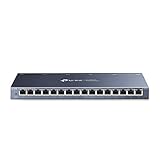
- One Switch Made to Expand Network-16× 10/100/1000Mbps RJ45 Ports supporting Auto Negotiation and Auto MDI/MDIX
- Gigabit that Saves Energy-Latest innovative energy-efficient technology greatly expands your network capacity with much less power consumption and helps save money
- Reliable and Quiet-IEEE 802.3X flow control provides reliable data transfer and Fanless design ensures quiet operation
- Plug and Play-Easy setup with no software installation or configuration needed
- Advanced Software Features-Prioritize your traffic and guarantee high quality of video or voice data transmission with Port-based 802.1p/DSCP QoS and IGMP Snooping
- PCIe is a high-speed internal computer interconnect.
- CXL extends that physical link for coherent processor, memory and accelerator communication.
- Ethernet is widely used for networking within data centers.
The financial evidence behind the enthusiasm
Astera reported revenue of approximately $79.9 million in 2022 and $115.8 million in 2023, an increase of about 45%. Those figures, reported by TechCrunch and disclosed in the final prospectus, gave investors more than an AI narrative: the company had shipping products and rapidly growing sales.
The prospectus also warned that growth did not remove ordinary semiconductor risks. Investors were told to consider customer concentration, dependence on external manufacturers and suppliers, product qualification and redesign cycles, competition, stock-based compensation, operating losses and the possibility that cloud or AI infrastructure spending could slow. The filing is the controlling source for the company’s exact margins, losses, customer mix and other accounting details; those figures should not be inferred from the first-day stock move.
What’s actually slowing this PC down?
Pick the symptom - the matching free tool is one click away.
Best Value

- 8 GIGABIT PORTS: Features 8 RJ45 ports supporting 10/100/1000 Mbps speeds, providing high-speed wired network connectivity for computers, printers, gaming consoles, and other Ethernet-enabled devices
- PLUG AND PLAY SETUP: No configuration required; simply connect the switch to your network devices and it is ready to use immediately, making network expansion quick and hassle-free
- FANLESS QUIET DESIGN: The fanless design ensures silent operation, making this switch suitable for noise-sensitive environments such as home offices, bedrooms, or conference rooms
- STURDY METAL CONSTRUCTION: Built with a durable metal housing and shielded ports that provide reliable performance, better heat dissipation, and protection against electromagnetic interference
- TRAFFIC OPTIMIZATION: Supports IEEE 802.3x flow control and advanced traffic optimization technology to reduce data bottlenecks and ensure smooth, efficient data transfer across your network
Was this genuine demand or an AI-label trade?
Why the debut supported a real-demand thesis
- The deal priced above its expected range and was upsized to 19.8 million shares, evidence that orders were strong enough for underwriters to increase the offering.
- Astera addressed identifiable data-movement problems created by more complex servers and AI systems.
- Revenue grew substantially from 2022 to 2023 across multiple product families.
- The debut arrived while investors were rewarding semiconductor companies exposed to data-center capital spending.
Reuters-syndicated coverage described the event as a strong Nasdaq debut amid enthusiasm for AI-related infrastructure; see Investing.com.
Why the result cannot be generalized
- A first-day pop can mean the IPO was underpriced. Existing shareholders may have left money on the table even as the trading debut looked spectacular.
- Limited initial supply and momentum traders can amplify early price movements.
- Supplying major cloud or AI customers can validate a product while also creating concentration and bargaining risks.
- Astera faced larger semiconductor competitors, including Broadcom, Marvell, Credo, Microchip, Montage, Parade and Rambus, depending on the product.
- AI infrastructure remains exposed to semiconductor cyclicality, customer redesigns and changes in capital spending.
What the debut said about the 2024 IPO market
Astera’s listing was one of two closely watched technology offerings in March 2024, alongside Reddit’s IPO. Contemporary coverage treated both as tests of whether public-market investors would fund new technology companies with an AI connection; Axios described that broader context.
One successful debut could encourage private companies to list, but it could not establish that the IPO market had fully reopened. A durable recovery would require additional offerings, healthy trading liquidity, sustained aftermarket performance and demand for companies without an especially fashionable narrative.
How to judge the investment case beyond day one
- Revenue quality: Determine whether growth is recurring and diversified or tied to a temporary build-out cycle.
- AI exposure: Separate revenue directly tied to AI systems from broader cloud and general-purpose data-center connectivity.
- Customer concentration: Assess whether the loss or delay of one large customer could materially affect results.
- Competitive differentiation: Look for advantages in performance, power efficiency, software, customization or deployment speed.
- Profitability and cash flow: Review gross margin, operating results, cash generation, manufacturing costs and stock compensation in the prospectus.
- Valuation: Compare the market value implied by the first-day price with sales and realistic future growth. A large pop may indicate demand, conservative pricing, or both.
Bottom line on the 54% headline
Astera Labs’ March 20, 2024 debut demonstrated that investors were willing to pay a premium for a credible, fast-growing supplier to AI and cloud infrastructure. The accurate sequence was a 46% opening gain, roughly a 55% intraday gain at the reported high and a 72% first-day close gain. That was meaningful evidence of enthusiasm for AI-enabling hardware—not proof that every AI-linked company, or the entire IPO market, had become healthy.
Quick Recap
Product prices and availability are accurate as of the date/time indicated and are subject to change. Any price and availability information displayed on Amazon at the time of purchase will apply.




