Recommended Free Tools
Short answer: The lawsuits filed after the U.S. Department of Justice sued Apple were proposed private antitrust cases, not a court ruling that the iPhone is an illegal monopoly. The DOJ alleges Apple unlawfully maintained monopoly power in defined U.S. smartphone markets; separate consumers and other private plaintiffs seek damages or injunctions. The private cases were centralized for pretrial coordination as MDL No. 3113 in New Jersey, while the DOJ case survived Apple’s motion to dismiss on June 30, 2025 and remains unresolved.
What happened after the DOJ sued Apple?
The immediate trigger was the DOJ’s civil antitrust complaint filed on March 21, 2024, in the U.S. District Court for the District of New Jersey. The United States sued with 16 state and district attorneys general, alleging violations of Section 2 of the Sherman Act. The government said Apple used control over the iPhone ecosystem to preserve monopoly power in U.S. smartphone and “performance smartphone” markets.
Four more states—Indiana, Massachusetts, Nevada and Washington—joined the government case on June 11, 2024, bringing the government-side coalition to 19 states and the District of Columbia alongside DOJ. Four days after the original filing, reporting identified at least three proposed consumer class actions in New Jersey and California. Those complaints reportedly drew on many of the DOJ’s allegations, but they were separate lawsuits and did not necessarily assert identical claims or define the same proposed class.
The private cases were transferred to the District of New Jersey for coordinated pretrial proceedings on June 7, 2024, as In re Apple Inc. Smartphone Antitrust Litigation, MDL No. 3113. New complaints have continued to be transferred into the MDL. Coordination does not itself decide liability or certify a class.
#1 Best Overall

- [2 Pack] This product includes 2 pack privacy screen protectors.WORKS FOR iPhone 17e/16e/14/iPhone 13/13 Pro 6.1 Inch tempered glass screen protector.Featuring maximum protection from scratches, scrapes, and bumps.[Not for iPhone 16 6.1 inch, iPhone 13 mini 5.4 inch, iPhone 13 Pro Max/iPhone 14 Pro Max/iPhone 14 Plus 6.7 inch, iPhone 14 Pro 6.1 inch]
- Specialty: to enhance compatibility with most cases, the Tempered glass does not cover the entire screen. HD ultra-clear rounded glass for iPhone 17e/16e/14/iPhone 13/13 Pro is 99.99% touch-screen accurate.
- 99.99% High-definition clear hydrophobic and oleophobic screen coating protects against sweat and oil residue from fingerprints.
- High Privacy: Keeps your personal, private, and sensitive information hidden from strangers,screen is only visible to persons directly in front of screen.Good choose when you are in the bus,elevator,metro or other public occasions.(Note: Due to this privacy cover will darken the image to prevent the peeking eyes near you, you might need to turn your device display brightness up a bit when use it.)
- Online video installation instruction: Easiest Installation - removing dust and aligning it properly before actual installation,enjoy your screen as if it wasn't there.
Key dates
| Date | Development |
|---|---|
| March 21, 2024 | DOJ and 16 state and district attorneys general file the government antitrust complaint. |
| March 25, 2024 | At least three proposed private consumer class actions are reported in New Jersey and California. |
| June 7, 2024 | Related private cases are centralized in New Jersey as MDL No. 3113. |
| June 11, 2024 | Indiana, Massachusetts, Nevada and Washington join the government case. |
| June 30, 2025 | The court denies Apple’s motion to dismiss the DOJ case. |
| August 18, 2026 | The litigation remains active; the MDL court directs readers to PACER for current filings. |
Sources: DOJ announcement, initial private-lawsuit reporting, MDL transfer order, June 2024 state additions and the official MDL page.
What the DOJ alleges Apple did
The complaint’s theory is broader than App Store commissions. The DOJ alleges that Apple combined contractual restrictions, control over access points and technical limitations to make rival products and services less useful, less compatible or less attractive. In the government’s view, those practices raised switching costs and protected Apple’s position in the relevant markets.
| Area | Government allegation |
|---|---|
| Third-party smartwatches | Apple restricted functionality available to non-Apple watches, making it harder for rivals to compete and more costly for iPhone users to switch. |
| Digital wallets and tap-to-pay | Apple allegedly limited third-party access to the iPhone’s near-field communication (NFC) capability needed by competing payment products. |
| Messaging | The DOJ says Apple’s treatment of cross-platform messaging helped make rival smartphones appear inferior to iPhones. |
| Cloud gaming and other apps | Restrictions on cloud-streaming apps and other software allegedly prevented services from reducing dependence on Apple’s native ecosystem. |
| Browsers, advertising, location, cars, news and entertainment | These services are cited as examples of how Apple’s control over iPhone access points could affect adjacent markets. |
These are allegations, not separate findings that every listed practice independently violates antitrust law. The DOJ’s complaint, case page and an explanation by Attorney General Merrick Garland describe the theory in detail.
What the private lawsuits claim
The initial private complaints reportedly alleged that Apple monopolized or attempted to monopolize the smartphone market, suppressed competing products and services, and caused consumers to pay more for Apple products or related services. Plaintiffs sought private remedies such as damages and injunctions and proposed to represent potentially nationwide groups of consumers.
Rank #2

- [3 Pack] This product includes 3 pack privacy screen protectors.WORKS FOR iPhone 16/iPhone 15/iPhone 15 Pro 6.1 Inch tempered glass screen protector. Due to the rounded edge design of the iPhone 16/iPhone 15/iPhone 15 Pro and to enhance compatibility with most cases,the tempered glass screen protectors will be slightly smaller than the phone screen.[Not for iPhone 16e 6.1 inch, iPhone 15 Plus/iPhone 15 Pro Max/iPhone 16 Plus 6.7 inch,iPhone 16 Pro 6.3 inch,iPhone 16 Pro Max 6.9 inch]
- Specialty: HD rounded glass for iPhone 16/iPhone 15/iPhone 15 Pro 6.1 Inch is 99.99% touch-screen accurate.
- 99.99% High-definition hydrophobic and oleophobic screen coating protects against sweat and oil residue from fingerprints. Featuring maximum protection from scratches, scrapes, and bumps.
- High Privacy: Keeps your personal, private, and sensitive information hidden from strangers,screen is only visible to persons directly in front of screen.Good choose when you are in the bus,elevator,metro or other public occasions.(Note: Due to this privacy cover will darken the image to prevent the peeking eyes near you, you might need to turn your device display brightness up a bit when use it.)
- Online video installation instruction: Easiest Installation - removing dust and aligning it properly before actual installation,enjoy your screen as if it wasn't there.
Each complaint is its own pleading. Proposed class definitions, purchase periods, legal theories and claimed injuries can differ. Apple’s 2024 annual report acknowledged private lawsuits alleging similar antitrust violations and seeking monetary and nonmonetary relief, but that disclosure did not concede liability.
Government enforcement and private class actions are different
| Issue | DOJ and states | Private cases |
|---|---|---|
| Who sues? | The United States and state governments. | Consumers, developers, businesses or other private parties. |
| Primary objective | Public enforcement and equitable remedies affecting conduct. | Damages, injunctions or other private relief. |
| Class certification | Not applicable as a consumer class. | Plaintiffs must move for certification and satisfy legal requirements. |
| What must be proved? | Antitrust claims, including market power and exclusionary conduct. | Standing, antitrust injury, causation, commonality and other class-action requirements, in addition to the underlying claims. |
| Effect of success | Potential court-ordered changes to Apple’s conduct. | Potential damages or private injunctive relief for an approved class or individual plaintiffs. |
A DOJ complaint does not automatically establish a private plaintiff’s injury or guarantee a private recovery. Government allegations may provide evidence and context, but each private case must stand on its own.
“Class action” does not mean a certified class
At this stage, “class action” describes what plaintiffs proposed, not what the court approved. The usual path is:
- A plaintiff files a proposed class complaint.
- Related cases may be transferred for coordinated discovery and pretrial motions in an MDL.
- Plaintiffs ask the court to certify one or more classes.
- Apple can challenge standing, injury, market definition, causation and whether common issues predominate.
- Only a certified class can litigate on behalf of the defined group, subject to later modification or decertification.
- Any settlement class would require notice and court approval.
The MDL transfer order and the District of New Jersey’s MDL page show the coordination posture; neither establishes that a class has been certified. The available record also does not establish a settlement or automatic payments to iPhone owners.
Rank #3

- Perfect Fit for iPhone 17 Pro Max:Engineered exclusively for iPhone 17 Pro Max with seamless edge-to-edge coverage, ensuring precise alignment and reliable full-screen protection.
- Advanced Privacy Protection:Features a 28° privacy filter with smooth 2.5D curved edges, preventing side glances in public. Your screen remains visible only to you—ideal for commuting, traveling, and crowded environments.
- Effortless Installation:Equipped with an auto dust-elimination tool that delivers a fast, accurate, and bubble-free application, keeping your screen perfectly clear with minimal effort.
- Military-Grade Protection:Made of nano-reinforced 9H tempered glass, SGS certified. Provides 5X stronger scratch resistance and proven durability, withstanding thousands of pressure and impact tests.
- Smudge & Fingerprint Resistant:Hydrophobic and oleophobic coating repels fingerprints, sweat, and oil—ensuring your screen stays clean, clear, and smooth to the touch.
Where the DOJ case stands
On June 30, 2025, Judge Julien Neals denied Apple’s motion to dismiss. That ruling means the government had pleaded enough for the case to proceed to discovery and later litigation stages. It did not decide that Apple is liable or legally an illegal monopoly.
The government alleges monopolization and attempted monopolization under Section 2 of the Sherman Act. The case remains active, and the MDL court says the most current filings are available through PACER. No trial date or final liability judgment is established in the materials available here.
Read the June 30, 2025 opinion and the court’s case page for procedural updates.
Why market definition matters
Antitrust law does not ask only whether Apple sells many popular phones. The government alleges specific U.S. markets for smartphones and “performance smartphones.” Apple is expected to argue that the relevant market should include a broader range of phones, operating systems, devices or consumer alternatives, including Android.
Rank #4

- 【Industry-Leading 100% Anti-Spy Privacy Protection】Designed for iPhone 17 Pro. Larger iPhone screens are easier for others to glance at, so UltraGlass uses patented, SEGI-certified 25° Blackout-3 optical technology to help block side views and keep emails, banking apps, and private content visible only to you—while keeping the front view HD-clear and comfortable through hours of scrolling and streaming.
- 【Unbreakable TOP 9H+ Glass, the Excellent 2nd Screen for Your iPhone】Boasting unparalleled shatter resistance and durability. And the core excellence is the top 9H+ tempered glass material, which is widely applied in aerospace and military fields for its ① Shatter-proof ② Scratch & Wear Resistance ③ Durability that is 7-8 times higher than other materials. Thus, UltraGlass builds a second tough screen for your iPhone 17 Pro.
- 【Industry NO.1 Military-Grade Shatterproof】Authorized by the International Military Standard with 50+ rigorous engineering tests of 220 lbs impact, 8,000+ drop tests, 20,000+ scratch tests, etc., its strength, toughness and durability perform NO.1 among all glass. By especially breaking the industry's record with a 12ft drop, the iPhone 17 Pro screen protector is ensured to be unbreakable from its surface to every edge and corner!
- 【Invisible Armor, 1:1 Full Covers the iPhone's Screen】Mimicking the iPhone's original screen design, it uses a 1:1 3D curved reinforced black edge that wraps around every curve — case friendly — while securing even the most vulnerable edges. Seamlessly blending with the iPhone 17 Pro screen, it's virtually invisible and feels like the original screen while offering enhanced full-screen protection!
- 【0 Bubbles + 0 Dust + 0 Misaligned =100% Successful Installation】Includes everything you need with pioneering automatic positioning, dust removal, and absorption technology, making the installation just effortlessly easy in seconds. No bubbles, no troubles—transforming beginners into experts.
- Market share is the percentage of sales or users in a defined market.
- Monopoly power is the legal ability to control prices or exclude competition; popularity alone is not enough.
- Exclusionary conduct is conduct that harms the competitive process, rather than merely disadvantaging one rival.
- Consumer injury is the economic harm a private plaintiff must connect to the alleged conduct.
The June 30, 2025 ruling allowed the government’s market-definition allegations to proceed, but did not finally resolve them.
Independent reader supportYour contribution helps us test, update, and keep practical guides available for everyone.Apple’s expected defenses
Apple has said the DOJ’s case is wrong on the facts and law and that it intends to defend itself vigorously. Its central responses include:
- The government defines the market too narrowly and ignores competition from Android.
- Apple competes through quality, privacy, security, reliability, integration and user experience.
- Technical and contractual limits can protect users from fraud, security threats and unreliable software.
- The government is trying to convert ordinary product-design decisions into antitrust violations.
- Private plaintiffs may be unable to prove individualized injury, causation or a common classwide method of damages.
- Some alleged costs may have been incurred by developers or intermediaries rather than directly by consumers.
Apple’s regulatory disclosure says it believes it has substantial defenses. See its SEC filing and its public response reported by The Associated Press.
Could iPhone owners receive money?
Not simply because they own or once owned an iPhone. Eligibility would depend on the eventual complaint, class definition, relevant purchase or use period, proof of an antitrust injury and any arbitration or settlement terms. A case could be dismissed, narrowed, denied certification, settled for a limited group or tried without producing a consumer payment.
The Tool Desk
Outbyte Driver Updater FREEScan for outdated or missing drivers - takes under a minuteDriver Scan →Outbyte PC Repair FREERepair Windows errors before they cause bigger problemsFix Now →Best Value
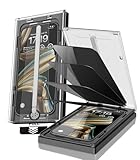
- 【Innovative 1-Step Installation! 】Simplify the application process! Featuring automatic alignment functionality, enjoy a quick and easy installation,swiftly eliminate air bubbles, providing you a hassle-free installation experience for the iPhone 16 Pro Max privacy screen protector.Friendly Reminder: Please watch the installation video before you begin.
- 【Indestructible Ultra 9H Glass for Ultimate Protection】With nearly diamond-like 9H hardness, this privacy screen protector for iPhone 16 Pro Max effectively avoids shattering, cracking, and scratches. It is up to 4X stronger than traditional tempered glass protectors and reliably protects the entire phone screen from compression and other impacts.
- 【Ultra-Clear and Ultra-Sensitive】This protective film covers the iPhone 16 Pro Max 6.9-inch, ensuring you feel as if there's nothing on your iPhone screen.The high-quality anti-fingerprint surface keeps your screen clean, bubble-free, delivering the most natural viewing and sensitive touch for videos and gaming.
- 【26° Anti-Spy Privacy Protection】Featuring upgraded micro-louver optical technology, this iPhone 16 Pro Max privacy screen protector delivers a precise 26° privacy viewing angle. It maintains ultra HD clarity from the front view, while instantly darkening the screen for anyone viewing from the sides or behind.
- 【Professional After-Sales Support】Each package contains 4 privacy screen protectors for the 6.9-inch iPhone 16 Pro Max. We also offer a 365-day warranty service. We provide free replacement support for installation failures caused by product defects, size mismatch, or other verified quality issues. Please feel free to contact our customer support team for assistance.
If a private settlement is reached, official notices would come from the court, class counsel or a claims administrator—not the DOJ. Be skeptical of websites promising guaranteed compensation or requesting unnecessary personal information. Do not confuse these cases with unrelated Apple litigation involving App Store practices, batteries, warranties, Siri or device performance.
What the litigation could change
Plaintiffs seek relief that could include conduct restrictions, greater interoperability or access changes, but no filing guarantees that Apple will open iOS, change messaging, permit a particular wallet or redesign the iPhone. A court-ordered remedy, a voluntary Apple change and a technically feasible implementation are different things.
For consumers
Potential outcomes could affect compatibility among phones, watches, payment services and messaging platforms. Until a court orders or Apple adopts a change, current product behavior and pricing remain in place.
For developers
Developers may have different claims involving App Store distribution, payment rules, device-function access or competing services. Their alleged injuries should not be assumed to match those of an iPhone-purchaser class.
Quick wins for a faster PC:
Repair Windows errors before they cause bigger problemsFix Now →Fix the driver behind crashes, sound loss and screen glitchesFind Drivers →For investors
Important risks include litigation expense and duration, conduct remedies affecting services revenue or ecosystem control, parallel private damages claims and regulatory spillover. Speculative damages figures are not established exposure.
What readers should do now
- Do not assume you are a class member until a court-approved notice defines the class.
- Keep records only if you may later need to document purchases, services or specific economic harm; do not send sensitive information to an unverified site.
- Check the official MDL page and PACER for authoritative filings rather than relying on old headlines.
- Seek individualized legal advice if you are a developer, business or consumer with a distinct antitrust injury.
The Bottom Line
The post-DOJ lawsuits are allegations, not a finding that Apple is an illegal monopoly. The government case survived a motion to dismiss, and related private cases are coordinated in MDL No. 3113, but no consumer class certification, settlement or automatic payout has been established.
Quick Recap
Product prices and availability are accurate as of the date/time indicated and are subject to change. Any price and availability information displayed on Amazon at the time of purchase will apply.




