Apple permanently closed its Apple Parkland store in Dalian, Liaoning, on August 9, 2025. It was the first permanent closure of a directly operated Apple Store in mainland China since Apple opened its first mainland location in Beijing in July 2008. Apple said several retailers had left Parkland Mall, making the decision a property-specific retail call—not an announcement that it was leaving China.
The closure is still significant. It shows that Apple’s mainland store network has entered a more selective phase, just as Huawei and other domestic brands are putting pressure on Apple’s premium position. Later smartphone data, including Apple’s strong fourth quarter of 2025, also show why the event should not be treated as proof of a nationwide retreat.
What exactly closed?
The store was Apple Parkland in Parkland Mall, in Dalian’s Zhongshan district. Apple’s notice put the permanent closure at 8 p.m. on August 9, 2025. Contemporary reports said customers were directed to other Apple retail and service options, including the company’s remaining Dalian presence.
Apple attributed the decision to the shopping center’s condition, saying that multiple retailers had left Parkland Mall. The company did not publish store-level sales, traffic, rent, profitability or employee figures.
Quick wins for a faster PC:
Fix the driver behind crashes, sound loss and screen glitchesFind Drivers →Repair Windows errors before they cause bigger problemsFix Now →#1 Best Overall

- The MagSafe Charger makes wireless charging a snap. The perfectly aligned magnets attach to compatible iPhone models. The MagSafe Charger provides faster wireless charging up to 25W when paired with a 30W power adapter.
- The MagSafe Charger is certified for Qi2.2 and Qi charging, so it can be used to wirelessly charge your iPhone 8 or later, as well as AirPods models with a wireless charging case.
- Available in two cable lengths: 1 meter and 2 meter.
That distinction matters. “Apple closed because iPhone sales were weak” is an interpretation, not Apple’s stated reason. Weak traffic, changing tenant mix, redevelopment, lease economics and lower service demand could all have contributed, but the available public statement does not identify one of them as decisive.
Apple’s mainland store directory remains the best current reference for its active locations.
Why the 17-year record matters
Apple’s first mainland store opened in Beijing’s Sanlitun district in July 2008. The Dalian closure in August 2025 therefore ended roughly 17 years in which a mainland Apple Store closure was not clearly a permanent withdrawal.
| Event | What happened | Why it is different |
|---|---|---|
| Sanlitun, Beijing, 2020 | The original store closed when Apple opened a larger replacement nearby. | A relocation and upgrade, not an exit from the market. |
| Apple Parkland, Dalian, 2025 | The Parkland Mall store closed permanently; no same-site replacement was announced. | The first clearly permanent closure of a directly operated mainland location since entry. |
Apple described the 2020 Sanlitun replacement as the next iteration of its first China store. It was twice the size of the previous location and included a Forum, Viewing Gallery, Boardroom, broad glass frontage and an integrated solar array. Apple also said the original location had drawn more than 22 million visitors during its first 12 years. The company’s announcement is at Apple Newsroom.
Rank #2
- The MagSafe Charger makes wireless charging a snap. The perfectly aligned magnets attach to compatible iPhone models. The MagSafe Charger provides faster wireless charging up to 25W when paired with a 30W power adapter.
- The MagSafe Charger is certified for Qi2.2 and Qi charging, so it can be used to wirelessly charge your iPhone 8 or later, as well as AirPods models with a wireless charging case.
- Available in two cable lengths: 1 meter and 2 meter.
A mall problem, an Apple problem, or both?
A store inside a weakening mall carries costs beyond its lease. Apple pays for staff, inventory, repairs, security and a premium physical presentation. A mall with fewer anchor tenants can reduce discovery traffic, appointment demand and the brand value of the location even if the surrounding city remains commercially important.
Apple’s explanation therefore points first to a retail-real-estate problem. It does not prove that Dalian’s iPhone demand had collapsed, nor does it establish the store’s profitability. The most defensible reading is that Apple no longer considered this particular mall ecosystem valuable enough to keep funding.
That is strategically meaningful because Apple Stores do more than sell devices. They provide product demonstrations, technical support, repairs, customer education, launch visibility and a controlled premium environment. Apple can preserve those functions in high-traffic destinations while removing a marginal mall site.
China became a tougher smartphone market
The closure came during a period of greater competitive pressure. Huawei’s Mate and Pura families restored a strong domestic alternative in the premium segment, while Vivo, Oppo, Xiaomi and Honor compete on cameras, battery life, pricing, software, promotions and distribution. Chinese consumers can now compare several sophisticated local ecosystems rather than treating Apple as the automatic premium choice.
Recommended Free Tools
Rank #3

- DESIGNED BY APPLE — This MagSafe Charger makes wireless charging fast, easy, and convenient. The perfectly aligned magnets attach to iPhone 12 or later models featuring MagSafe.
- FASTER WIRELESS CHARGING — The MagSafe Charger provides faster wireless charging up to 25W — up to 50 percent battery in around 30 minutes* for iPhone 16 and iPhone 16 Pro when paired with the 30W USB-C Power Adapter.
- Testing conducted by Apple in August 2024 using preproduction iPhone 16, iPhone 16 Plus, iPhone 16 Pro, and iPhone 16 Pro Max units and software, and Apple MagSafe Chargers (1-meter Model A2580 and 2-meter Model A3250) with Apple USB-C Power Adapter (30W Model A2164). Fast-charge testing conducted with drained iPhone units. Times measured from the appearance of the Apple logo as the unit started up. Charge time varies with settings and environmental factors; actual results will vary.
- COMPATIBLE WITH QI2 and QI CHARGING — Can be used to wirelessly charge your iPhone 8 or later, as well as AirPods models with a wireless charging case, as you would with any Qi2 or Qi-certified charger.
- WHAT’S IN THE BOX — Apple MagSafe Charger and USB‑C integrated cable only. Power adapter sold separately.
Market-share estimates vary because firms measure different things—shipments or sell-through, retail or channel data, quarterly or annual periods, and sometimes different geographic scopes. For example, Counterpoint reporting cited Apple’s China share at 17.9% in 2023 and 15.5% in 2024. IDC reporting placed Apple fifth in mainland China in the second quarter of 2025, while Canalys figures cited by Digitimes put it around 15% share and fourth. These rankings should not be blended into one supposedly exact league table.
Apple’s Greater China revenue also fell in several recent fiscal periods, including an 11% year-over-year decline to $18.5 billion in the quarter ended December 28, 2024, and a 2% decline in the quarter ended March 29, 2025, according to contemporary reporting. Greater China includes mainland China, Hong Kong, Macau and Taiwan, and regional revenue is not the same as Apple Store revenue.
Huawei is central to the story because its comeback affects Apple’s premium positioning, not merely its unit count. Counterpoint’s analysis of the China smartphone market linked Huawei’s Pura 70 and Mate 60 families to its premium strength. Apple also faces questions about the timing and availability of some artificial-intelligence features in China, where local software and services can be tailored more directly to consumer expectations.
Apple’s retail network is not disappearing
Contemporary reports placed Apple’s Greater China network at roughly 56 to 57 stores, depending on the date and whether Hong Kong, Macau and Taiwan were included. The exact count changes as stores open, close or move. Apple’s official mainland list continues to show locations in major markets such as Beijing, Shanghai, Shenzhen, Guangzhou, Chengdu, Tianjin and Nanjing.
Rank #4

- 【Fast Charging 2-Pack for Phones & Earbuds】Supports 25W wireless fast charging with the magnetic compatibility standard. This 2-pack charger efficiently powers your smartphones and earbuds - perfect for home, office, or sharing with family
- 【Efficient Charging】Delivers 25W fast charging, charging up to 20 minutes faster than traditional 15W wireless chargers and reaching 50% in approximately 30 minutes on compatible phones. Magnetic Alignment ensures enhanced energy efficiency, reduced heat generation, and optimized power delivery for a safer, faster charge. For best performance, please use a compatible power adapter (30W+ recommended, not included)
- 【Wide Compatibility】Compatible with all magnetic enabled devices, including iPhone Duo/18/Air/17/16/15/14/13/12 series, AirPods models (wireless charging case required). No need to worry about compatibility, simply place your device on the pad for a secure connection. The maximum charging power is determined by your device
- 【Strong Magnetic Alignment】Built with N52 magnets for precise magnetic alignment and secure attachment. The auto snap-on design ensures perfect positioning every time, reducing energy loss and improving charging efficiency compared to standard wireless chargers. These ultra-strong magnets ensure your phone stays secure even during vibrations or sudden movements while providing fast charging capabilities without interruption
- 【Case Compatibility】This magnetic charging pad works best with bare devices or MagSafe-compatible cases (≤0.12 inch/3 mm thick). For optimal charging speed and alignment, please ensure your device is Mag-enabled or use a thin Mag-compatible case. Not compatible with metal cases, cases with metal plates or credit cards, or non-Mag cases
One underperforming mall site can close while Apple maintains or expands flagship locations. Sanlitun remains the clearest example of that model: Apple replaced a smaller store with a larger, experience-focused destination rather than abandoning Beijing.
Apple also sells through its China online store and Store app, alongside carriers and authorized resellers. Those channels reduce the need to preserve every physical location while keeping products, support and upgrades available nationally.
Independent reader supportYour contribution helps us test, update, and keep practical guides available for everyone.What the later data says about the retreat narrative
Evidence after the Dalian announcement complicates any straight-line decline story. Omdia reported that Huawei led mainland China for full-year 2025 with 17% share, but Apple led the fourth quarter with 16.5 million shipments and a 22% share, helped by the iPhone 17 series. The results are summarized in Omdia’s market release.
IDC later described a declining Chinese smartphone market and continuing competitive pressure in the second quarter of 2026, while noting that Apple and Huawei held up better than several rivals. See IDC’s Q2 2026 analysis.
Do these 3 things before closing this tab:
1Repair Windows errors before they cause bigger problems2Fix the driver behind crashes, sound loss and screen glitches3Clear out junk files and repair common Windows errorsBest Value
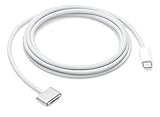
- This 2-meter charge cable features a magnetic MagSafe 3 connector that helps guide the plug to the charging port of your Mac notebook.
- Pair it with a compatible USB-C power adapter to conveniently charge your notebook from a wall outlet and take advantage of fast-charging capabilities.
- The magnetic connection is strong enough to resist most unintended disconnects, but if someone trips on the cable,
- it releases so your Mac notebook stays put. An LED turns amber when the battery is charging and green when it’s fully charged. Made with a woven design for long-lasting durability.
- USB-C Power Adapter sold separately.
These results illustrate product-cycle volatility. A successful iPhone launch can lift quarterly shipments without restoring the economics of every mall store. Conversely, a store rationalization can occur while Apple remains capable of winning a particular product cycle.
How to tell whether this becomes a strategic retreat
The Dalian decision should be judged against five indicators rather than one headline:
- Closure pattern: whether more mainland stores close without replacements.
- Replacement investment: whether Apple opens larger stores in stronger urban destinations.
- Footprint trend: whether the mainland location count falls, holds steady or grows.
- Sales trend: whether China weakness persists across product cycles or reverses with launches.
- Channel mix: whether Apple shifts more volume to online, carriers and authorized resellers.
One isolated closure, alongside continued flagship operations and a current online channel, does not meet the evidence threshold for calling this a nationwide withdrawal.
What Apple’s China retail strategy may look like next
The most plausible interpretation is selective rationalization:
- Fewer marginal stores in malls that are losing tenants or traffic.
- More investment in major-city flagships where demonstrations, support and brand experience justify the cost.
- Greater use of online purchasing and partner distribution for routine transactions.
- More emphasis on services, repairs and education in locations with dependable demand.
- A continuing need to differentiate Apple’s premium products against Huawei and other domestic brands.
These are strategic inferences, not a published Apple store-closure program. Their confirmation will depend on the pattern of openings, relocations and closures that follows.
The practical reading
Dalian was a small physical event with outsized symbolic value. It showed that Apple’s mainland expansion is no longer automatically self-justifying: a store in a deteriorating mall can be removed even while China remains an important market and Apple continues to operate major flagships.
The evidence supports a warning about Apple’s China retail model and competitive position, not a claim that Apple is leaving China. China has become harder for Apple, but the company’s later product performance shows that “harder” is not the same as “finished.”
Quick Recap
Product prices and availability are accurate as of the date/time indicated and are subject to change. Any price and availability information displayed on Amazon at the time of purchase will apply.
The Tool Desk
Outbyte PC Repair FREEClear out junk files and repair common Windows errorsFree Scan →Outbyte Driver Updater FREEFix the driver behind crashes, sound loss and screen glitchesFind Drivers →



