Free tools Windows power users keep installed
One-click scans. No signup required.
Apple reportedly told operations managers to seek reductions of up to 50% in the workers assigned to some iPhone final-assembly lines. That is a workforce-reduction objective—not evidence that half of every iPhone assembly task, half of all iPhone manufacturing, or half of Apple’s supplier workforce will be replaced by robots.
The June 24, 2024 report from The Information describes a renewed automation drive that has produced successes on selected iPhone 15 processes but ran into defect and cost problems on planned iPhone 16 operations. Apple’s public supply-chain documents available in 2026 discuss robotics and automation training, but do not confirm that the reported target was achieved.
What Apple reportedly set out to do
The Information reported on June 24, 2024, that Apple managers were instructed to pursue reductions of as much as 50% in the number of workers on iPhone final-assembly lines over the following years. The report attributed the objective to sources familiar with operations under Sabih Khan, who was then Apple’s senior vice president of operations. Apple’s current supply-chain page identifies Khan as chief operating officer; that later title should not be read back into the 2024 report.
The wording matters. A smaller crew on a line can result from automating one station, combining stations, changing staffing patterns or increasing output per worker. It does not establish that 50% of the phone is robot-built.
Quick wins for a faster PC:
Repair Windows errors before they cause bigger problemsFix Now →Fix the driver behind crashes, sound loss and screen glitchesFind Drivers →Clear out junk files and repair common Windows errorsFree Scan →#1 Best Overall

- Super Magnetic Attraction: Powerful built-in magnets, easier place-and-go wireless charging and compatible with MagSafe
- Compatibility: Only compatible with iPhone 13/14; precise cutouts for easy access to all ports, buttons, sensors and cameras, soft and sensitive buttons with good response, are easy to press
- Matte Translucent Back: Features a flexible TPU frame and a matte coating on the hard PC back to provide you with a premium touch and excellent grip, while the entire matte back coating perfectly blocks smudges, fingerprints and even scratches
- Shock Protection: Passing military drop tests up to 10 feet, your device is effectively protected from violent impacts and drops
- Check your phone model: Before you order, please confirm your phone model to find out which product is right for you
| Claim | What the reporting supports |
|---|---|
| Up to 50% fewer workers | Reported objective for some iPhone final-assembly lines |
| 50% of assembly operations automated | Not established |
| 50% of all iPhone manufacturing automated | Not established |
| 50% of Apple’s supplier workforce replaced | Not established |
| Fully autonomous, “lights-out” iPhone factories | Not established |
Apple has not publicly confirmed the 50% target in its current supply-chain materials. The claim should therefore be treated as a reported internal objective, not an Apple-announced commitment. See The Information’s report and Apple’s public supply-chain overview.
What was already automated
Apple and its manufacturing partners reportedly achieved significant automation in parts of iPhone 15 final assembly. Reported examples include installing metal brackets and attaching or positioning flexible printed-circuit boards. One supplier employee cited by 9to5Mac said some individual processes reduced headcount by as much as 30%. Those figures came from unnamed people familiar with the supply chain and were not independently audited.
Final assembly is not one operation. It is a chain of subassembly lines in which modules are prepared, inspected and transferred before they become a completed phone. That structure creates opportunities for dedicated machines, but every added fixture, transfer, tool and inspection step must work reliably together. Potential targets include repetitive work involving speakers, receivers, buttons, cameras, wireless-charging coils, chassis and logic-board preparation. A successful automated station still needs people to feed parts, clear faults, inspect output, perform rework and maintain equipment.
For an accessible account of the reported iPhone 15 results and process-level reductions, see 9to5Mac’s coverage.
Crashes, No Sound, or Screen Glitches?
Random freezes, missing sound and display glitches usually trace back to one bad driver. Find and replace yours safely.Free scan · under a minuteWindows Errors? Fix Them Before They Spread
Repair common Windows errors and clear accumulated junk for a smoother, more stable PC - no reinstall needed.Free scan · no reinstallWhy the iPhone 16 effort reportedly stalled
The reported setback shows why smartphone assembly is harder to automate than a headline about robots suggests. Apple and partners reportedly abandoned attempts to automate installation of iPhone 16 buttons, the receiver, speaker and main logic board after machines struggled to fasten components accurately. Defect rates were too high, and the delay pushed the headcount-reduction timetable back by at least a year, according to The Information.
Rank #2
![miracase for iPhone 16e case & iPhone 17e Case for MagSafe [with 2×9H+ Screen Protectors] TOP Military-Grade Protection Shockproof with Velvet Touch for iPhone 16e/17e Phone Case 6.1', Matte Black](https://m.media-amazon.com/images/I/41iFdHWdyyL._SL160_.jpg)
- [Enhanced MagSafe Compatibility] Engineered exclusively for iPhone 16e case & iPhone 17e case: Built-in 38×N56+ Magnet System with an innovative Focus-Ring, delivering 60% stronger magnetic adhesion than other cases. Ensures perfect alignment for secure fast charging up to 25W with MagSafe or Qi wireless chargers and provides a stable hold on all MagSafe accessories.
- [Military-Grade Drop Protection] Exceeds MIL-STD-810G military standards: Advanced Shockproof Tech at all four corners, internal 360° Airbags and 3-layer TPU cushioning bumper. This combination provides superior protection, safeguarding your phone from drops of up to 15 feet, verified by 6,500+ drop tests in 40+ different test environments.
- [Complete & Machined Function] This phone case for iPhone 16e/17e protects your phone with 2 9H+ tempered glass screen protectors against scratches and a 1.5mm raised camera frame against impacts and lens damage, ensuring original image quality .The Machined, interchangeable side buttons made from Aerospace-Grade Aluminum are designed to resist dust and punctures and exude premium quality.
- [Slim Design & Premium Feel] With our Shockproof Tech and Ergonomic Design, the iPhone 16e/iPhone 17e case masterfully balances a slim profile with optimal protection. The innovative Nano Coating ensures long-lasting scratch resistance and effectively blocks stains, like fingerprints, while the soft bumper offers a soft, silky, skin-friendly grip.
- [Flawless Compatibility & Lifetime Support] Precision-engineered for the iPhone 16 e/ iPhone 17 e phone case (6.1-inch). Please verify your phone model before ordering. Our dedicated support team provides personalized, 24-hour assistance. Backed by a lifetime manufacturer's warranty that includes hassle-free replacements.
The difficult parts of the operation
- Tiny, flexible components: Cables and flexible printed-circuit boards can bend, shift or snag during pickup and routing.
- Angled fastening: Screws may have to be placed at awkward angles, with the tool aligned precisely to avoid damage.
- Torque as well as placement: A screw that lands in the right location can still fail if it is tightened too much or too little.
- Part and batch variation: Small differences in tolerances, surfaces and incoming components can upset a rigid process.
- Adhesives, seals and fragile surfaces: These require controlled force and timing, not simply a repeatable pick-and-place motion.
- Product redesigns: New iPhone generations can make expensive tooling obsolete or require extensive requalification.
- Launch economics: A defect during a high-volume ramp can cost more than retaining a manual step.
The limiting question is not whether a machine can move a component once. It is whether it can complete the whole operation at production speed, with acceptable yield, across normal part variation and a demanding launch schedule.
Why Apple wants more automation
Labor cost is only one part of the rationale. The reported initiative followed years of automation work and the November 2022 unrest at Foxconn’s Zhengzhou plant, but the unrest was a catalyst rather than the sole cause.
More reliable staffing
iPhone production depends heavily on contract manufacturers and very large seasonal workforces. Recruiting, training and retaining people for repetitive tasks becomes especially difficult during rapid production ramps. Machines can reduce exposure to sudden labor shortages, although they add their own maintenance and engineering requirements.
Do these 3 things before closing this tab:
1Scan for outdated or missing drivers - takes under a minute2Repair Windows errors before they cause bigger problems3Fix the driver behind crashes, sound loss and screen glitchesLower variation and fewer bottlenecks
Once stabilized, an automated station can apply consistent force, timing and inspection criteria. That may reduce process variation and keep one slow operation from constraining an entire line. It does not guarantee a lower defect rate: poorly tuned equipment can create defects faster than people can.
Cost and turnover pressure
Former Apple operations employees told The Information that rising Chinese labor costs and difficulty recruiting for repetitive work had encouraged automation projects well before 2022. Higher wages can improve workers’ circumstances while still making capital-intensive equipment more attractive at iPhone volumes.
Rank #3
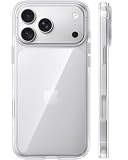
- [Compatibility] ✅Confirm your model: Only for iPhone 17 Pro. Not for ❌iPhone 17 Pro Max/ 17.
- [Crystal Clear & Advanced Non-Yellowing] Designed for iPhone 17 Pro, this transparent case highlights your device's original beauty. Engineered with TORRAS Exclusive upgraded nano antioxidant coating and 2.0 BlueMolecule technology, it resists 99.9% yellowing caused by sweat and UV exposure. TORRAS exclusive Micro-dot design and vacuum-plated anti-fingerprint TPU material ensure a crystal-clear, bubble-free adhesion. Keep your clear case looking brand new, just like the day you unboxed it.
- [Trusted Protection & Slim Profile] This phone case for iPhone 17 Pro provides everyday protection with TORRAS shock-absorbing TPU and Military-Grade Anti-fall Airbag Tech. A raised 2.5mm camera bezel and 1.5mm screen lip safeguard against scratches and drops. All within a sleek, 0.03-inch profile that preserves your phone's slim design, so you can showcase its pure, original beauty.
- [Perfect Fit & Full Wireless Charging Support] Precision-cut for iPhone 17 Pro, it offers effortless access to all buttons and ports. The secure-grip side coating ensures a comfortable, non-slip hold. Most importantly, ultra-thin supports full wireless charging compatibility—no need to remove the case to power up.
- [7-Year Craftsmanship & Over 7 Upgrades] TORRAS has pioneered clear case technology, relentlessly refining our materials through over 7 generations. This journey culminates in the case for iPhone 17 Pro — a testament to our craft. Experience the confidence that comes with eternal clarity, trusted by a community of over 191,011,197 users who choose enduring design.
Supply-chain resilience
Automated processes could make output less dependent on a large pool of workers in one location. They may also help Apple transfer selected operations between factories. But moving automation is not frictionless: tooling, software, process knowledge and trained technicians must move with it.
The supplier investment problem
Apple does not directly operate most iPhone final-assembly factories. Foxconn, Luxshare Precision, Pegatron and other contract manufacturers perform major portions of the work. Large-scale automation therefore requires coordination among Apple, assemblers and equipment makers.
2024 coverage put the machinery investment for broad automation in the hundreds of millions of dollars. The commercial question is who bears that risk: Apple, the supplier, an equipment vendor or some combination. A supplier may hesitate to buy specialized equipment that benefits Apple’s volume plans but becomes obsolete after one product cycle. Apple can pay, share costs, guarantee production volumes or pressure suppliers to invest, but each approach changes bargaining power and financial exposure.
The trade-off is straightforward but difficult in practice:
| Choice | Potential advantage | Principal risk |
|---|---|---|
| Manual work | Flexible when designs or parts change | Recruiting, turnover and process variation |
| Dedicated automation | Consistent cycle times and lower staffing at a mature station | High capital cost and limited flexibility |
| Hybrid line | Machines handle repeatable work while people handle exceptions | Requires effective feeding, inspection, rework and maintenance systems |
Automation and the China–India manufacturing shift
Automation and geographic diversification are related, but they are not the same strategy. Apple continues to use China as a major production base while expanding supplier and assembly activity in India.
Rank #4

- Strong Magnetic Attraction: Aligns perfectly with wireless power bank, wallets, car mounts and wireless charging stand. The iPhone 16 magnetic case has built-in 38 super N52 magnets. Its magnetic attraction reaches 2400 gf, which is almost 7X stronger than ordinary, therefore it won't fall off no matter how it shakes when you are charging
- Crystal Clear & Never Yellow: Using high-grade Bayer's ultra-clear TPU and PC material, allowing you to admire the original sublime beauty for iPhone 16 while won't get oily when used. The Nano antioxidant layer effectively resists stains and sweat, keeping the case clear like a diamond longer than others
- 10FT Military Grade Protection: Passed Military Drop Tested up to 10 FT. This iPhone 16 clear case backplane is made with rigid polycarbonate and flexible shockproof TPU bumpers around the edge and features 4 built-in corner Airbags to absorb impact, which can prevent your Phone from accidental drops, bumps, and scratches
- Raised Camera & Screen Protection: The tiny design of 2.5 mm lips over the camera, 1.5 mm bezels over the screen, and 0.5 mm raised corner lips on the back provides extra and comprehensive protection, even if the phone is dropped, can minimize and reduce scratches and bumps on the phone. Molded strictly to the original phone, all ports, lenses, and side button openings have been measured and calibrated countless times, and each button is sensitive and easily accessible
- Compatibility & Professional Support: Only compatible for iPhone 16 Phones. We have enough confidence to provide you with quality products and services. Any concerns or questions about iPhone 16 Phone Case, please feel free to contact us
Bloomberg reported that Apple assembled approximately 55 million iPhones in India in 2025—about one quarter of worldwide production—based on people familiar with the matter rather than Apple-disclosed figures. The report is available at Bloomberg.
Recommended Free Tools
Apple’s India supply-chain page documents iPhone assembly and robotics training, showing that capability-building is occurring across the network rather than in one country alone. Automation could make expansion in lower-labor-cost locations easier by reducing dependence on very large workforces. Conversely, sophisticated equipment, process controls and engineering talent can concentrate advanced assembly among the largest suppliers.
India’s growth should not be described as a complete replacement for China. Production can be split by model, component, season and factory, and the public figures do not provide a complete country-by-country manufacturing ledger.
Independent reader supportYour contribution helps us test, update, and keep practical guides available for everyone.What the changes mean for workers
Possible benefits
- Less exposure to repetitive or physically demanding operations.
- More stable output during extreme seasonal ramps.
- New demand for technicians, equipment engineers, automation programmers and quality specialists.
- Potentially more consistent processes at mature stations.
Risks and unresolved questions
- Fewer entry-level assembly positions in regions dependent on electronics manufacturing.
- Reduced bargaining power for contract workers when fewer people are needed per line.
- Job losses concentrated among workers least able to move into technical roles.
- Training that does not guarantee equivalent pay, hours or employment.
- Productivity gains that may accrue to Apple and suppliers rather than appear as lower iPhone prices.
Apple says its supplier-employee programs include robotics, automation and smart-manufacturing training. Its March 26, 2026 announcement also described a Detroit Manufacturing Academy supporting training in AI, automation and smart manufacturing (Apple Newsroom). Those programs establish an investment in skills, not a guarantee that every displaced assembler will receive an equivalent job.
Apple reported that its monitored supplier workforce fell from 1.6 million in 2022 to 1.4 million in 2023, according to 9to5Mac. That population covers workers Apple monitors under its reporting methodology; the comparison does not prove that automation caused the decline, and it is not a count of every supplier employee.
Best Value

- PRECISION FIT FOR IPHONE 17e–13 – Expertly engineered to match the exact dimensions of iPhone 17e, 16e, 15, 14, and 13 for a secure, form‑fitting hold that stays confidently in place.
- 3X MILITARY‑GRADE DROP PROTECTION – Dual‑layer construction engineered to withstand drops beyond everyday accidents, exceeding military drop standards for dependable daily defense.
- SLIM, POCKET‑FRIENDLY PROTECTION – A streamlined profile with rubber‑gripped edges delivers a secure hold without bulk, while port covers help block dust and debris during daily use.
- DUAL‑LAYER IMPACT DEFENSE – A shock‑absorbing soft inner layer cushions impacts while a rigid outer shell adds structure and durability, crafted a minimum of 35% recycled plastic.
- TRUSTED OTTERBOX QUALITY – As America’s most trusted phone case brand, OtterBox pioneered military‑grade phone case protection and continues to raise the bar. With OtterBox every design is built for real‑world reliability and everyday readiness.
Where Apple’s other robots fit
Apple’s Daisy robot is often cited in discussions of manufacturing automation, but Daisy performs reverse assembly: it disassembles iPhones so materials can be recovered. Apple describes Daisy in its recycling announcement and on its environment page. Daisy demonstrates robotics capability, but it is not evidence that new iPhones are built by an equivalent automated process.
The 2024 reporting also linked Apple’s manufacturing work to acquisitions of DarwinAI and Drishti. DarwinAI’s technology can support visual inspection and defect identification, including on printed-circuit boards. Drishti analyzes manufacturing-line video to identify bottlenecks and production problems in real time. These are reported contributions to inspection and manufacturing intelligence, not proof that either acquisition independently automated iPhone assembly.
Inspection may advance faster than physical manipulation. Cameras and software can identify a defect without having to grip a delicate cable, route it around an obstruction and fasten it at a precise torque.
What Apple’s public record shows in 2026
As of August 18, 2026, Apple’s public supply-chain materials document robotics training, automation education, manufacturing investment and materials-recovery robotics. Its 2026 Supply Chain Progress Report does not publicly confirm the reported 50% final-assembly workforce target, whether it was reached or how many jobs were affected.
What’s actually slowing this PC down?
Pick the symptom - the matching free tool is one click away.
That distinction is important for anyone assessing manufacturing productivity or labor trends. Public evidence supports an ongoing automation program and selected task-level successes. It does not support a claim that Apple has achieved fully autonomous final assembly or replaced half of its iPhone production workforce.
How to interpret future automation claims
- Identify the unit being measured: Is the figure about a task, station, subassembly, line headcount, factory employment or total supplier employment?
- Check the source: Separate Apple’s disclosures from reports based on unnamed supply-chain sources.
- Ask what remains manual: Feeding, inspection, rework, maintenance and material movement can keep a highly automated line labor-intensive.
- Check the time frame: A one-generation pilot may not survive a redesign or production transfer.
- Separate volume from staffing: Fewer workers per line does not necessarily mean fewer total jobs if production volume rises.
- Look for yield and cost evidence: A machine that operates quickly but creates defects may not be economically superior.
The Bottom Line
Apple is reportedly pursuing fewer workers on selected iPhone final-assembly lines, with a headline objective of up to 50%. The practical model supported by the evidence is human-supervised, task-level automation: machines handle repeatable operations while people manage variation, quality, exceptions and equipment. Technical failures, launch deadlines, supplier investment risk and workforce consequences make “robot-made iPhones” an unsupported description of Apple’s current position.
Quick Recap
Product prices and availability are accurate as of the date/time indicated and are subject to change. Any price and availability information displayed on Amazon at the time of purchase will apply.




