Windows Errors? Fix Them Before They Spread
Repair common Windows errors and clear accumulated junk for a smoother, more stable PC - no reinstall needed.Free scan · no reinstallCrashes, No Sound, or Screen Glitches?
Random freezes, missing sound and display glitches usually trace back to one bad driver. Find and replace yours safely.Free scan · under a minuteApple is reportedly developing a dedicated artificial-intelligence server chip, internally code-named Baltra, for its own data centers. The project is not a confirmed product launch: Apple has disclosed no specifications, benchmark results, price, release date or plan to sell the chip.
The important financial and technology point is the contrast. Apple is pursuing custom silicon to control infrastructure costs and performance, while its Private Cloud Compute expansion still uses Nvidia GPUs in Google Cloud for some demanding Apple Intelligence workloads.

What Apple is reportedly building
The Information reported that Apple is developing Baltra as a server processor designed specifically for AI processing, rather than as another Mac or iPhone chip. The reported target is internal use in Apple data centers, supporting services such as Apple Intelligence. The report also said Apple was working with Broadcom on networking technology. (The Information)
That distinction matters. Baltra has not been announced as an Apple product, a public-cloud processor or a replacement for Nvidia hardware across every workload. Broadcom’s reported involvement does not establish that Broadcom is designing or manufacturing the entire processor; the reported focus is networking, while the division of engineering, packaging and manufacturing responsibilities remains undisclosed.
#1 Best Overall
What is confirmed, reported and still unknown
| Confirmed | Reported | Unknown |
|---|---|---|
| Private Cloud Compute (PCC) processes some complex Apple Intelligence requests. | The dedicated project is code-named Baltra. | Architecture, memory system and process technology. |
| Apple uses Apple-designed silicon in parts of its AI infrastructure. | Broadcom is helping with networking technology. | Final production date and capacity. |
| Apple expanded PCC to Google Cloud on June 8, 2026, using Nvidia GPUs, Intel CPUs and Google’s Titan security technology. | Apple has explored AI-chip acquisitions and has faced limits with some large workloads. | Performance, cost per request and comparison with Nvidia. |
| Apple’s technical report describes separate on-device and scalable server models. | An earlier report targeted mass production in 2026. | Whether Apple will ever offer the chip commercially. |
Apple has not publicly confirmed Baltra. Later 2026 reporting suggested the schedule may have changed as Apple considered acquisitions of AI-chip companies, but no revised timetable has been announced. (The Information)
Why Apple wants data-center silicon
Apple’s foundation-model strategy divides work between devices and the cloud. Its technical report describes an on-device model optimized for Apple silicon and a scalable server model for PCC. (Apple Intelligence foundation-model technical report)
A chip designed around Apple’s own models could potentially:
- Increase inference capacity for Apple Intelligence.
- Improve performance per watt for selected serving workloads.
- Reduce spending on rented or purchased third-party accelerators.
- Give Apple more control over memory, networking and its software stack.
- Reduce exposure to Nvidia pricing, supply and product cycles.
- Align hardware more closely with PCC’s isolation and attestation requirements.
These are strategic reasons, not published Baltra results. Apple has released no power figures, benchmarks, memory capacity or cost projections. Data-center efficiency also depends on cooling, networking, software utilization and the complete rack design, not just the processor.
Recommended Free Tools
How Private Cloud Compute fits in
PCC is Apple’s system for sending requests that are too complex for an iPhone, iPad or Mac to Apple’s cloud infrastructure while preserving its privacy and security model. Apple’s June 8, 2026 announcement said PCC was expanding to Google Cloud. That implementation uses Nvidia GPUs with confidential-computing capabilities, Intel CPUs with TDX and Google’s Titan chip, together with isolation and attestation mechanisms. (Apple Security Research)
Rank #2
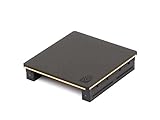
- Part number 900-53651-2500-000 and model: P3651
- This is the 2 slot version for when there is no empty slots between 2 slot cards. If you have one or more empty slots between the cards or the cards are 3 slot this NVLink will not work. See the attached images showing the card layout.
- NVLink 3.0 for any brand of RTX Ampere model graphics cards: 3090, A30, A40, A100 / H100 (Requires three NVLinks), A800, A4500, A5000, A5500, A6000
- This is the same as PNY part number: NVLAMP-2SLOT-BSP and RTXA6000NVLINK-KIT
- This is the same as Dell part number: 0RWJ7Y
This is a confirmed example of Apple using outside data-center hardware without presenting PCC as an Apple-silicon-only system. It also shows why a future Apple accelerator would complement, rather than immediately eliminate, external capacity.
Apple silicon servers are not the same as Baltra
Reports have described Apple using Mac-derived systems, including M2 Ultra chips, for internal AI-server work and considering upgrades based on newer Ultra processors. Those details are reported rather than specified in Apple’s product documentation. (The Information)
A Mac-derived server can reuse Apple’s architecture and software ecosystem. A purpose-built AI server chip could instead be designed around:
- High-throughput inference rather than general personal-computer workloads.
- Larger or more specialized memory systems.
- High-bandwidth chip-to-chip and server-to-server communication.
- Rack-scale power, thermal and deployment constraints.
- Apple’s private-cloud model-serving software.
No public report establishes Baltra’s accelerator type, memory technology, packaging, process node or interconnect standard.
Why Apple still needs Nvidia
Large models create requirements that differ from on-device AI: substantial memory capacity and bandwidth, distributed inference, mature software frameworks and fast communication among processors. A chip that is efficient for Apple’s own inference models does not automatically handle every training, fine-tuning or frontier-model workload efficiently.
Rank #3
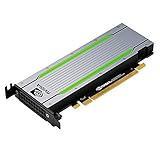
- Video/Sound Cards
- Passive Cooling
In 2026 reporting, Apple was said to have tried running Google’s Gemini models for work related to a redesigned Siri, with some workloads running on Nvidia hardware in Google Cloud. Apple’s own PCC announcement independently confirms Nvidia GPUs as part of its expanded cloud infrastructure. The resulting strategy is hybrid:
- Apple silicon for selected internal workloads.
- Nvidia-based cloud infrastructure for demanding or newer workloads.
- A possible future Apple AI chip to narrow that gap for workloads Apple controls.
This is not evidence that Apple has abandoned custom silicon. It is evidence that custom mobile and desktop silicon does not, by itself, solve large-scale AI serving.
Free tools Windows power users keep installed
One-click scans. No signup required.
Is Apple trying to compete with Nvidia?
Apple appears to be competing for control of its own infrastructure, not preparing a merchant accelerator for sale to cloud providers. An internal chip could reduce Apple’s operating costs for selected services, but Nvidia’s broader advantage includes CUDA, developer adoption, networking, systems integration, cloud availability and framework support.
A successful Baltra would therefore be better understood as a way to reduce Apple’s Nvidia dependence, not as a direct retail rival to Nvidia’s data-center platform.
Broadcom’s reported role
AI systems frequently distribute model-serving work across multiple processors and servers, making networking and interconnects critical. The Baltra report linked Broadcom to networking technology, but did not disclose whether the company is responsible for other parts of the system. Broadcom’s reported partnership extension with Apple through 2031 was not shown to be exclusively for Baltra. (MacRumors)
Rank #4

- CUDA Cores: 4608 / NVIDIA Tensor Cores: 576 / NVIDIA RT Cores: 72
- GPU Memory: 24 GB GDDR6 with ECC / Bandwidth: 624 GB/Sec
- System Interface: PCI Express 3.0 x16
- Four DisplayPort 1.4 Connectors
- 3D Stereo Support with Stereo Connector
Timeline and current status
- 2024: Apple introduced Private Cloud Compute, and reports emerged about server-chip development.
- 2024: Reporting identified the AI-server effort as Baltra and described Broadcom’s networking role.
- 2025: Apple’s technical report documented separate on-device and server foundation models.
- June 8, 2026: Apple announced PCC expansion to Google Cloud with Nvidia and Intel hardware plus Google security technology.
- July 2026: Reports said Apple was exploring AI-chip acquisitions and reassessing its server-chip effort.
- As of August 18, 2026: Apple had not publicly confirmed Baltra’s specifications, production or commercial availability.
The original mass-production target was 2026, but that was an earlier reported expectation rather than a delivery promise. The current schedule is uncertain.
What’s actually slowing this PC down?
Pick the symptom - the matching free tool is one click away.
What this means for Apple users and investors
Consumers should not expect to buy Baltra. If the project succeeds, effects would be indirect: more Apple Intelligence capacity, potentially more efficient cloud processing and less exposure to Nvidia supply constraints. The chip alone would not guarantee a better Siri, lower Apple prices or a specific feature launch.
For investors and infrastructure buyers, the signal is strategic. Apple is trying to extend its custom-silicon advantage into the data center while retaining access to outside cloud capacity. It has also reportedly explored a developer cloud service using Apple-powered servers, but that remains an unannounced idea rather than an AWS-style product. (The Information)
That report estimated Apple’s external-cloud spending at about $7 billion a year, attributed to people familiar with the spending rather than an audited company disclosure. The figure should not be treated as an official Apple financial metric.
Commercial context: what can actually be bought
| Option | Relevance | Qualification |
|---|---|---|
| Google Cloud | GPU infrastructure and a confirmed host for part of Apple’s expanded PCC. | Relevant to developers and enterprises, not ordinary Apple users. |
| Amazon Web Services | Major alternative for AI compute and accelerated instances. | Apple-specific use is reported; it is not a substitute for PCC. |
| Microsoft Azure | Enterprise AI-compute comparator. | No evidence in the available reporting that Azure hosts Apple’s PCC deployment. |
| Nvidia data-center platform | The key comparison because Nvidia GPUs are confirmed in expanded PCC. | Pricing varies by GPU, provider, contract and availability. |
| Apple Mac Studio | Useful for local development and smaller-model experimentation. | Not equivalent to a dedicated, networked AI data-center accelerator. |
Baltra has no buying page, price, preorder or public availability statement.
The Tool Desk
Outbyte PC Repair FREERepair Windows errors before they cause bigger problemsFix Now →Outbyte Driver Updater FREEFix the driver behind crashes, sound loss and screen glitchesFind Drivers →Bottom line
Apple is reportedly building toward a more specialized AI data-center architecture, but it is not yet independent of Nvidia-powered infrastructure. Baltra is strategically important and technically plausible, yet its final design, schedule and even production status remain unconfirmed by Apple.
Quick Recap
Product prices and availability are accurate as of the date/time indicated and are subject to change. Any price and availability information displayed on Amazon at the time of purchase will apply.




