Ambarella is not abandoning direct sales. It is adding an ecosystem-led route to market in which independent software vendors, distributors, system integrators, module makers and strategic customers help sell and deploy its edge-AI technology. The goal is to reach fragmented robotics and edge-infrastructure markets that are expensive for a semiconductor company to serve one customer at a time.
For investors, the distinction matters: the strategy could broaden Ambarella beyond traditional camera chips, but partner announcements, design wins and addressable-market estimates are not the same as recognized revenue.
What Ambarella is changing
Ambarella historically sold system-on-chips and related technology directly to manufacturers designing cameras, automotive systems and other embedded products. Its newer plan keeps those direct relationships—especially with major automotive and security customers—but adds an indirect channel.
The company says independent software vendors, distributors and system integrators will help it reach small and midsized customers, particularly in fragmented robotics and edge-infrastructure markets. Board and system-module manufacturers, application developers and industry-specific solution providers can package Ambarella silicon into a complete product rather than asking every customer to start with a bare chip.
PC Slower Than It Used to Be?
A free scan shows the junk files, broken settings and background clutter dragging Windows down - then fixes them in one click.Free scan · Windows 10 & 11Crashes, No Sound, or Screen Glitches?
Random freezes, missing sound and display glitches usually trace back to one bad driver. Find and replace yours safely.Free scan · under a minute#1 Best Overall

- 6 TOPS Edge AI & Deploying Custom Models Trained with YOLO: Powered by a 1.6GHz dual-core processor and a 6 TOPS AI accelerator, it handles complex neural networks locally. Built-in with 20+ algorithms (face, gesture, posture tracking), it also supports a complete toolchain for training and deploying custom YOLO models without relying on cloud computing.
- 116.6° WIDE-ANGLE VISION TO MINIMIZE BLIND SPOTS: The Plus Kit includes a specialized Wide-Angle Camera Module featuring an expansive FOV (D: 116.6°, H: 107.6°, V: 72.6°). Optimized for a near-field effective capture distance of 0.1~1.5m, it is perfectly designed for dynamic mobile robots, desktop robotic arms, and STEM competitions. It captures massive environmental data in a single frame, ensuring targets are detected earlier and is not lost during fast close-range movements.
- DUAL-MODE REAL-TIME VIDEO TRANSMISSION: Break traditional connection limits! Equipped with the WiFi module, it supports both USB wired and WiFi wireless real-time video transmission. Utilizing highly efficient image compression technology, it achieves millisecond-level latency, seamlessly syncing recognition results and live visuals to your remote terminals. It provides extremely reliable remote visual perception and data collection for enclosed robotic chassis.
- LLM INTEGRATION VIA MCP: HUSKYLENS 2 is the first AI vision sensor to support the Model Context Protocol (MCP). It acts as the "intelligent eyes" for Large Language Models (LLMs), sending structured contextual summaries (e.g., "A person is doing a specific gesture") directly to your AI Agents for smarter decision-making.
- PLUG-AND-PLAY: Featuring standard UART and I2C (Gravity) interfaces, it's fully compatible with Arduino, ESP32, Raspberry Pi, micro:bit, and UNIHIKER. Its intuitive "learn-and-use" touchscreen interface allows beginners and pros alike to build AI projects in minutes.
That is channel diversification, not a wholesale replacement of direct sales. Ambarella describes the initiative in its fiscal 2026 earnings presentation.
Why an ecosystem is needed now
Edge AI is moving beyond cameras
Ambarella built its reputation around integrated image processing, video codecs and computer-vision acceleration. The opportunity it now describes includes multimodal perception, generative AI at the edge, industrial inspection, fleet telematics, robotics, drones, on-premise inference and local servers aggregating camera, audio, radar and LiDAR data.
Its N1 announcement identifies industrial robotics, healthcare imaging, fleet telematics and edge AI servers as target applications.
Direct semiconductor coverage has limits
A direct sales force can economically support a large OEM with a substantial design program. It is less efficient when the market contains thousands of smaller robotics companies, regional integrators and specialist module builders. Partners can contribute local support, preintegrated hardware, application software, manufacturing capacity and existing customer relationships.
Software determines whether hardware gets designed in
Technical specifications alone rarely secure a production design. Developers need model-conversion tools, documentation, sample applications, debugging support and a reliable path from evaluation to deployment. Ambarella’s Developer Zone launch is intended to put those resources in one place, including optimized models, tutorials, a model garden, agentic blueprints and partner materials.
What “embracing the edge ecosystem” means in practice
The model connects several layers:
- Ambarella: supplies edge-AI SoCs, image processing, video encoding and decoding, computer-vision acceleration and software.
- Independent software vendors: adapt models and applications for security, robotics, industrial, automotive and other verticals.
- Module and board makers: turn chips into development kits, systems-on-module products, PCIe products, AI boxes and production boards.
- Distributors: provide regional sales, logistics and first-line technical access.
- System integrators: combine sensors, software, networking and deployment services for a specific customer or industry.
- OEMs and strategic customers: incorporate the resulting systems into cameras, vehicles, robots, industrial equipment and enterprise infrastructure.
The practical issue for customers is who owns the relationship, support obligations and roadmap when several companies participate. Ambarella will need clear account rules, pricing policies, referral arrangements and escalation paths to avoid channel conflict with its direct customers.
Cooper and the Developer Zone are the platform layer
Cooper Foundry and Cooper Metal
Ambarella presents Cooper as a combined hardware-and-software environment. Cooper Metal covers Ambarella SoCs, developer kits, modules and board-level systems. Cooper Foundry is the software environment:
Rank #2
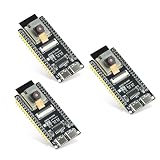
- Dual-core processor: The ESP32 module is based on the powerful ESP32-S3-WROOM N16R8 module and is equipped with a dual-core 32-bit LX7 processor. Its excellent AI computing performance, real-time processing capabilities, and low power consumption make it ideal for image recognition, edge AI, and complex IoT applications
- Integrated 2-megapixel OV3660 camera: Built-in OV3660 camera to capture clear images and stream video in real time. Perfect for smart surveillance, face recognition, and AI-based computer vision projects. It is the preferred solution for DIY makers and professionals to build camera-enabled IoT systems
- Dual Type-C ports for OTG and serial debugging: Designed with two USB Type-C interfaces - one supports USB OTG for host/device functions, and the other provides TTL serial for easy programming and debugging
- Shared antenna: Supports IEEE 802.11b/g/n Wi-Fi (2.4GHz) and Bluetooth 5 (LE and Mesh), using shared antennas to optimize wireless performance. Enhanced 2 Mbps PHY and long-distance communication (Coded PHY) ensure stable multitasking in harsh environments
- Multi-scenario applications: The ESP32 S3 development board maintains high stability even at high temperatures, making it ideal for industrial environments, educational purposes, and AI-driven projects. It is a versatile choice for robots, smart devices, and machine vision in lab or field applications
- Cooper Core: a Linux-based operating system, compiler and SDK.
- Cooper Foundation: tools for constructing and deploying machine-learning applications.
- Cooper Vision: multimodal processing and sensor fusion for cameras, radar and LiDAR.
- Cooper UX: analytics and development tools.
This is commercially important because it attempts to move Ambarella from a component evaluation toward a repeatable application-development and deployment workflow. It is not evidence that every application is turnkey or that customers are free from vendor lock-in; long-term SDK support, model portability and production support still require diligence.
Free tools Windows power users keep installed
One-click scans. No signup required.
Developer Zone access
The public Developer Zone provides model resources, learning materials, sample applications and agentic blueprints. Access is registration-based, and the materials reviewed do not show a public subscription price. A developer portal can lower evaluation friction, but registration does not establish production support, guaranteed supply, commercial licensing or a large active developer community.
Ambarella’s product map
Ambarella’s product materials describe different families for different power, performance and deployment requirements.
| Family | Strategic role | Example applications |
|---|---|---|
| CV7 | High-performance integrated vision and edge AI, with 8K processing, video encode/decode and CVflow processing | Security, robotics, drones, automotive systems, conferencing and consumer devices |
| CV72/CV75 | Lower-power embedded edge systems | IP cameras, robots, drones, automotive recorders, driver and cabin monitoring |
| CV3 | Automotive central compute, combining camera perception with sensor-fusion and path-planning software layers | ADAS, sensor fusion and automated-driving architectures |
| N1 | Higher-performance multimodal and generative-AI processing for local systems | Robotics, edge servers, industrial systems, healthcare imaging and on-premise AI |
Descriptions are based on Ambarella’s consumer, automotive and AIoT, industrial and robotics portfolios. Ambarella reported bringing CV72 and CV75 into mass commercialization during fiscal 2026.
What N1’s model claim does—and does not—mean
Ambarella’s 2026 Form 10-K says N1 can run models of up to 34 billion parameters and combines neural-network processing, a general vector processor, image processing, stereo and optical-flow processing, Arm CPU cores and GPU capability. That is a vendor capability claim, not a universal performance result. Usable latency, throughput and power depend on quantization, memory, compiler and runtime support, model architecture and workload. The relevant filing is Ambarella’s 2026 Form 10-K.
Recommended Free Tools
Why robotics and edge infrastructure need partners
Robotics is a collection of markets
A warehouse robot, agricultural machine, drone, consumer robot and humanoid platform have different sensor mixes, safety requirements, production volumes and software stacks. Ambarella may be attractive where vision processing and power efficiency are central, but a chip or SDK is not a complete robotics-control system. Integrators and application specialists fill the gaps in mechanical design, navigation, fleet management, certification and deployment.
“Edge infrastructure” is not hyperscale computing
In Ambarella’s context, the phrase can mean a local AI box, multi-camera analytics appliance, factory inference system, fleet gateway or on-premise server. These systems process data close to where it is generated, reducing cloud bandwidth, latency or privacy exposure. They are different from large centralized data-center GPU clusters, and the competitive comparison should therefore focus on workload, power, sensor connectivity, software and total system cost rather than headline AI throughput alone.
Rank #3
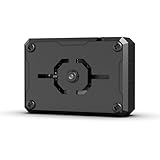
- Ultra High Resolution with WiFi Video Transmission: This module features a 2-megapixel camera and supports dual-mode network communication for real-time WiFi video transmission.
- Developed upon ESP32-S3 Chip: Powered by the ESP32-S3 chip, it operates at frequencies of up to 240MHz and supports Type-C and IIC communication protocols.
- Intelligent Vision Recognition: The S3 vision module is capable of face recognition, color detection, line tracking, and more, with options for custom recognition features.
- Versatile Compatibility: Works with most main control board and other platforms for a range of applications
Hanwha is a strategic test case
On May 28, 2026, Ambarella and Hanwha announced a long-term agreement covering current and next-generation SoCs and software for video security, robotics, industrial automation and life sciences. The announcement describes potential revenue exceeding $800 million over more than 10 years. That figure is not reported revenue, backlog, guaranteed sales or a purchase order.
The arrangement matters because it spans multiple industries and combines Hanwha Vision’s security and cybersecurity capabilities with Ambarella’s edge-AI technology. It is evidence of broader strategic scope, not proof that the entire potential value will be realized. Follow-up analysis should look for production milestones, customer deployments, purchase commitments, volume ramps and revenue recognition. See the Hanwha–Ambarella announcement.
Current revenue versus future opportunity
Ambarella’s fiscal 2025 annual report said more than 70% of revenue came from edge-inference AI SoCs by the end of fiscal 2025 and that cumulative shipments had reached 30 million edge-AI SoCs at that time. In fiscal 2026 materials, the company described approximately 78% of revenue as coming from IoT applications.
Ambarella estimated an IoT serviceable available market of $2.5 billion in fiscal 2026 and $5.7 billion in fiscal 2031. Those are Ambarella’s estimates, not independently verified market totals. Fiscal 2026 revenue was $390.7 million, according to the company’s full-year results announcement.
The numbers show an established edge-AI and IoT business alongside a larger expansion thesis. They do not show that edge infrastructure or robotics has already become a comparable revenue contributor. Ambarella itself warns that design wins, new customers and new-market expansion do not guarantee future revenue.
Independent reader supportYour contribution helps us test, update, and keep practical guides available for everyone.Could this make Ambarella more than a camera-chip company?
The strategy could broaden the company’s role from a component supplier into what management presents as an edge-computing platform provider: silicon, operating software, compilers, models, sensor processing, development kits, modules and deployment partners working together.
What’s actually slowing this PC down?
Pick the symptom - the matching free tool is one click away.
That positioning is different from becoming a conventional data-center GPU company. Ambarella’s stated emphasis is integrated, low-power, vision-centric edge computing. Relevant alternatives include:
Rank #4

- Powerful ESP32-S3 Dual-Core Processor with Built-in NPU for Onboard AI:Equipped with ESP32S3 32-bit dual-core LX7 MCU running up to 240MHz, built-in 512KB SRAM plus dedicated NPU neural accelerator supporting INT8/FP16 AI inference for pose detection & image classification. esp32 cam Hardware floating-point acceleration and independent RTC peripheral coprocessor cut main CPU load drastically, enabling stable local AI vision calculation without extra external chips
- Oversized Upgraded Memory esp32 camera for Large Program & High-Res Image Storage:Comes pre-soldered with 16MB SPI NOR Flash and 8MB PSRAM, ample cache for high-definition camera frame buffering, multi-task operation and OTA remote firmware upgrade. Reserved SPI slot for expandable max 128GB SD card to store massive captured video/data; hardware firmware encryption & secure boot prevents program tampering and reverse engineering effectively
- Dual-Band Wi-Fi + BLE5.0 Mesh for Long-Range Stable Wireless Connection:esp32 cam with antenna Features 2.4GHz 802.11b/g/n Wi-Fi up to 150Mbps with WPA3 secure encryption, supporting Station/AP hybrid working mode. Integrated Bluetooth 5.0 with BLE low power & classic Bluetooth, Bluetooth Mesh links over 200 terminal nodes; long-distance BLE transmission reaches over 1000m in open space, ideal for multi-device IoT linkage & remote camera wireless preview
- Rich Multifunctional Peripheral Ports & Onboard Multi Sensors for DIY Expansion:32 reusable interrupt-enabled GPIO pins, including 20CH 12-bit ADC, 3×SPI, 2×I2C,3×UART,2×I2S audio port,2×DAC & 8CH PWM for motor/LED control. All-in-one Type-C for power, data download & firmware flashing, plus onboard 3.7V lithium battery charging circuit(max 1A charge current). Pre-installed precision temp sensor(±0.1℃,-40~125℃) and 6-axis inertial gyro/accelerometer, compatible with most I2C/SPI external sensors for smart home & robot projects
- Multi-Voltage Power Supply & Full Security + Multi Low-Power Modes:Supports 3 power options: Type-C 5V input, 3.7V Li-ion(300~2000mAh) and external 3.3V~5V DC input, built-in full protection against overcharge/over-discharge/short circuit. Four graded low-power consumption modes from 120mA active down to 1μA deep hibernation with RTC/sensor wakeup. esp32 camera module On-chip AES/SHA/RSA hardware encryption, unique UID & anti-tamper auto data erase function to secure your IoT device data
- NVIDIA Jetson for a broad GPU-oriented developer ecosystem and CUDA compatibility.
- NXP i.MX and edge processors for embedded, automotive and industrial designs with processor integration and long-life requirements.
- Hailo processors where a dedicated inference accelerator fits the system architecture.
- Qualcomm platforms where connectivity, automotive qualification and integrated compute are important.
- Intel edge systems where x86 compatibility and existing industrial infrastructure matter.
No single comparison based on TOPS settles these decisions. Camera ISP quality, codecs, sensor interfaces, memory, thermal design, compiler maturity, safety features, software support and total system cost can matter more for a particular deployment.
Risks investors should monitor
Partner reach versus control
Distributors and integrators can increase coverage while reducing Ambarella’s direct visibility into end customers, pricing, product roadmaps and deployment quality. Uneven partner capability could also damage support experiences.
Channel conflict
Direct customers may resist partners approaching similar accounts. Ambarella must define account ownership, pricing and support responsibilities without weakening existing relationships.
Software maturity and portability
A full stack can improve stickiness, but customers may worry about migration costs, long-term SDK support and whether models can move cleanly among CV7, CV72/CV75, CV3 and N1 systems.
Long qualification cycles
Automotive and industrial programs can take years to reach production. Demonstrations, development kits and platform selections should not be treated as immediate sales.
Customer concentration and execution
Large design wins can create meaningful volume but also revenue volatility if a customer changes specifications, manages inventory or delays a launch. New-market growth also brings supply-chain, geopolitical, certification and manufacturing risks.
Unproven ecosystem scale
A portal, model library or partner list does not establish a large active community. More convincing indicators would be production deployments, active ISVs, commercially available modules, evaluation-to-design-win timing and repeat orders.
Quick wins for a faster PC:
Repair Windows errors before they cause bigger problemsFix Now →Scan for outdated or missing drivers - takes under a minuteDriver Scan →Clear out junk files and repair common Windows errorsFree Scan →How to evaluate the strategy
- Separate demonstrations and development kits from production shipments and recognized revenue.
- Check whether partner announcements include manufacturing capacity, support commitments and named deployments.
- Track the mix of direct and indirect sales, customer concentration and the timing of new-market revenue in filings.
- Evaluate workload fit: camera perception, multimodal inference, sensor fusion, robotics control or video encoding.
- Compare power, memory, storage, networking, camera and sensor interfaces—not only accelerator performance.
- Ask whether the required safety, security and lifecycle commitments exist for the target industry.
- For long-term agreements, distinguish a potential value or ceiling from a contractual minimum and look for actual volume ramps.
Bottom line
Ambarella is trying to make its technology easier to buy, integrate and deploy across fragmented edge-AI markets. Cooper, the Developer Zone and the addition of software, distribution, module and integration partners are the infrastructure for that effort, while CV7, CV72/CV75, CV3 and N1 address different performance and application tiers.
The opportunity is credible but still execution-dependent. Current revenue remains rooted in the established IoT and edge-endpoint business; robotics, edge infrastructure and physical AI are expansion opportunities. The Hanwha agreement and fiscal 2026 results provide strategic evidence, but neither converts potential market size or potential contract value into guaranteed future revenue.
Quick Recap
Product prices and availability are accurate as of the date/time indicated and are subject to change. Any price and availability information displayed on Amazon at the time of purchase will apply.




