Amazon debuted Rufus on February 1, 2024, as a generative-AI shopping assistant inside its mobile app. It began as a limited U.S. beta for product research, comparisons and recommendations—not an autonomous buyer. Amazon later expanded it to U.S. desktop and mobile customers, added more agentic shopping features, and renamed the experience Alexa for Shopping on May 13, 2026. The name Rufus now describes a major step in Amazon’s shift from keyword search toward conversational and personalized commerce.
What Rufus was at launch
Rufus was a conversational shopping assistant integrated into Amazon’s existing shopping experience, rather than a separate app. Amazon said it combined information from its product catalog, customer reviews, community questions and answers, and material from across the web. The system was intended to help throughout shopping: discovering a category, learning what matters, comparing products and deciding what to consider buying.
That connection to Amazon’s catalog and purchase workflow distinguished Rufus from a general-purpose chatbot. A shopper could begin with a broad question and move toward relevant product categories and individual listings.
Amazon’s public technical descriptions later said Rufus used Amazon Bedrock and a mixture of models, including Anthropic’s Claude Sonnet, Amazon Nova and a custom model based on Amazon store knowledge. Those are Amazon’s descriptions; they do not provide an independently audited account of every source behind an answer.
#1 Best Overall

- Your favorite music and content – Play music, audiobooks, and podcasts from Amazon Music, Apple Music, Spotify and others or via Bluetooth throughout your home.
- Alexa is happy to help – Ask Alexa for weather updates and to set hands-free timers, get answers to your questions and even hear jokes. Need a few extra minutes in the morning? Just tap your Echo Dot to snooze your alarm.
- Keep your home comfortable – Control compatible smart home devices with your voice and routines triggered by built-in motion or indoor temperature sensors. Create routines to automatically turn on lights when you walk into a room, or start a fan if the inside temperature goes above your comfort zone.
- Do more with device pairing – Fill your home with music using compatible Echo devices in different rooms, or create a home theatre system with Fire TV.
- Say goodbye to drop-offs and buffering - With eero Built-in, Echo Dot doubles as a mesh wifi extender, adding up to 1,000 sq. ft. of wifi coverage to your existing eero network.
Amazon’s launch announcement and TechCrunch’s February 1, 2024 report document the debut.
What shoppers could ask Rufus
Rufus was designed to understand shopping intent, not just product names. Launch examples included:
- “What should I consider when buying running shoes?”
- “What’s the difference between trail and road running shoes?”
- “Are these durable?”
- “What do I need for cold-weather golf?”
- “I want to start an indoor garden.”
- “What should I consider when buying headphones?”
- “What are clean beauty products?”
A useful conversation could move from a use case to a checklist, then to comparisons and Amazon listings. For example, a shopper might ask which cordless-vacuum specifications matter for pet hair, request three models under a budget, and then ask about recurring complaints in their reviews.
How the original mobile beta worked
The February 2024 interface was beta software and could change during rollout. For an account included in the initial U.S. test, the basic flow was:
Free tools Windows power users keep installed
One-click scans. No signup required.
Rank #2

- Your favorite music and content – Play music, audiobooks, and podcasts from Amazon Music, Apple Music, Spotify and others or via Bluetooth throughout your home.
- Alexa is happy to help – Ask Alexa for weather updates and to set hands-free timers, get answers to your questions and even hear jokes. Need a few extra minutes in the morning? Just tap your Echo Dot to snooze your alarm.
- Keep your home comfortable – Control compatible smart home devices with your voice and routines triggered by built-in motion or indoor temperature sensors. Create routines to automatically turn on lights when you walk into a room, or start a fan if the inside temperature goes above your comfort zone.
- Do more with device pairing – Fill your home with music using compatible Echo devices in different rooms, or create a home theatre system with Fire TV.
- Say goodbye to drop-offs and buffering - With eero Built-in, Echo Dot doubles as a mesh wifi extender, adding up to 1,000 sq. ft. of wifi coverage to your existing eero network.
- Update the Amazon Shopping app.
- Type or speak a question in the app’s search bar.
- Look for a Rufus chat panel near the bottom of the screen.
- Expand the panel to read the response.
- Tap a suggested follow-up or enter another question.
- Swipe the panel down to return to conventional search results.
Later U.S. instructions told customers to update the app and tap the Rufus icon—chat bubbles with a sparkle—in the bottom navigation bar. On desktop, Rufus was accessed from an icon near the upper-left area of Amazon’s site. Those 2024 controls should not be treated as the current interface because Amazon now brands the successor Alexa for Shopping.
Rufus availability: a timeline
| Date | Availability or change |
|---|---|
| February 1, 2024 | Limited beta for selected U.S. customers using the mobile app. |
| July 12, 2024 | Amazon announced availability for all U.S. customers in the mobile app and on desktop. |
| October 29, 2024 | Amazon announced beta availability in additional European markets, including France, Germany, Italy, Spain and the United Kingdom. |
| May 13, 2026 | Amazon renamed Rufus Alexa for Shopping and combined it with Alexa+ capabilities. |
Availability has always depended on country, account, platform and rollout stage. Amazon’s current description says Alexa for Shopping is available to U.S. customers on the Amazon Shopping app and website, with additional Echo Show functionality. Amazon says a Prime membership and an Echo device are not required for the U.S. shopping-assistant experience.
See Amazon’s U.S. rollout instructions, European announcement and current Alexa for Shopping description.
What Rufus became by 2026
The successor goes beyond answering questions. Amazon describes Alexa for Shopping as combining Rufus’s product expertise with Alexa+ personalization and context.
Rank #3
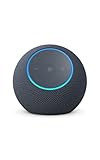
- Meet Echo Dot Max: Experience rich room-filling sound that automatically adapts to your space and fine-tunes playback. Features a built-in smart home hub and Omnisense technology for highly personalized experiences.
- Music to your ears: With nearly 3x the bass versus Echo Dot (2022 release), it fits beautifully in any space, delivering your personal sound stage with deep bass and enhanced clarity. Listen to streaming services, such as Amazon Music, Apple Music, Spotify, and SiriusXM. Encore!
- Do more with device pairing: Connect compatible Echo smart speakers and smart displays in different rooms, or pair with a second Echo Dot Max to enjoy even richer sound. Pair your Echo Dot Max with compatible Fire TV devices to create a home theater system that brings scenes to life.
- Simple smart home control: Set routines, pair and control lights, locks, and thousands of smart home devices that work with Alexa without needing a separate smart home hub. With Omnisense technology, you can activate routines via temperature or presence detection.
- Say goodbye to drop-offs and buffering - With eero Built-in, Echo Dot Max doubles as a mesh wifi extender, adding up to 1,000 sq. ft. of wifi coverage to your existing eero network.
Personalized research and recommendations
Amazon says recommendations can use shopping activity such as purchase history, searches, lists, reviews and conversations. It can research categories, compare products dynamically, suggest alternatives and create shopping guides for larger purchases.
Prices, deals and history
Later Amazon descriptions mention deal finding, price monitoring and price history. Materials have described 30- and 90-day tracking in some contexts, while 2026 Alexa for Shopping materials describe up to a full year of price history. The applicable feature and period can vary by market and rollout.
Carts and routine purchases
The assistant can add items to a cart, help turn a handwritten grocery list into a cart, reorder routine purchases and, under configured conditions, take price-triggered or other automated actions. Amazon also says it can shop for some brands and products beyond its own marketplace.
These levels of assistance are not interchangeable:
What’s actually slowing this PC down?
Pick the symptom - the matching free tool is one click away.
Rank #4

- Your favorite music and content – Play music, audiobooks, and podcasts from Amazon Music, Apple Music, Spotify and others or via Bluetooth throughout your home.
- Alexa is happy to help – Ask Alexa for weather updates and to set hands-free timers, get answers to your questions and even hear jokes. Need a few extra minutes in the morning? Just tap your Echo Dot to snooze your alarm.
- Keep your home comfortable – Control compatible smart home devices with your voice and routines triggered by built-in motion or indoor temperature sensors. Create routines to automatically turn on lights when you walk into a room, or start a fan if the inside temperature goes above your comfort zone.
- Do more with device pairing – Fill your home with music using compatible Echo devices in different rooms, or create a home theatre system with Fire TV.
- Say goodbye to drop-offs and buffering - With eero Built-in, Echo Dot doubles as a mesh wifi extender, adding up to 1,000 sq. ft. of wifi coverage to your existing eero network.
| Action | What it means |
|---|---|
| Recommendation | The assistant suggests a product; you decide whether to buy. |
| Cart action | An item is added for your review; it is not necessarily ordered. |
| Automated purchase | A configured action can complete an order or trigger one when stated conditions are met. |
The original 2024 Rufus launch was primarily conversational research and recommendation. Describing it as an autonomous purchasing agent from day one would be inaccurate.
Where an AI shopping assistant helps—and where it does not
Good uses
- Turning a broad need into a shopping checklist.
- Comparing products with similar specifications.
- Finding options for an event, hobby, room or recipient.
- Summarizing recurring themes across many reviews.
- Finding substitutes when a preferred item is unavailable.
- Drafting a cart or monitoring a price.
Poor or high-risk uses
- Medical devices, supplements and products making health claims without independent verification.
- Safety-critical, electrical, automotive, childcare or protective equipment.
- High-value purchases where authenticity, seller identity, warranty and returns matter.
- Requests requiring a market-wide comparison rather than Amazon’s marketplace.
- Situations where personalized history could steer you toward an unsuitable choice.
Limitations, bias and privacy
Amazon warned at launch that Rufus, like other generative-AI systems, could be wrong. Product facts may be outdated or hallucinated. Reviews can be incomplete, contradictory, manipulated or unrepresentative. A fluent response does not establish that an item is safe, durable, compatible or the best-priced option.
Rufus and Alexa for Shopping operate inside Amazon’s commercial marketplace. They can make buying on Amazon more efficient, but they are not automatically independent purchasing advisers, and recommendations may omit products sold elsewhere. Amazon says some answers use information from across the web without identifying every external source for every response.
Personalization adds a separate trade-off. Amazon says shopping history, searches, lists, reviews and conversations can shape recommendations. Customers can review and edit information through About You, or ask Alexa for Shopping, “What do you know about me?” Controls and wording may differ by region. Amazon’s privacy position is described at its privacy page; personalization still requires the system to use customer-related data.
Best Value

- MEET ECHO SPOT - A sleek smart alarm clock with Alexa and big vibrant sound. Ready to help you wake up, wind down, and so much more.
- CUSTOMIZABLE SMART CLOCK - See time, weather, and song titles at a glance, control smart home devices, and more. Personalize your display with your favorite clock face and fun colors.
- BIG VIBRANT SOUND - Enjoy rich sound with clear vocals and deep bass. Just ask Alexa to play music, podcasts, and audiobooks. See song titles and touch to control your music.
- EASE INTO THE DAY - Set up an Alexa routine that gently wakes you with music and gradual light. Glance at the time, check reminders, or ask Alexa for weather updates.
- KEEP YOUR HOME COMFORTABLE - Control compatible smart home devices. Just ask Alexa to turn on lights or touch the screen to dim. Create routines that use motion detection to turn down the thermostat as you head out or open the blinds when you walk into a room.
For automated actions, check the item, seller, quantity, variant, price, shipping, payment method, delivery address, return terms and whether the assistant is only adding to a cart or completing a purchase. Alexa+ add-on requirements also emphasize clear purchase controls, cancellation support and confirmation safeguards (Amazon’s developer policy), although that policy does not necessarily describe every consumer workflow.
Prompts that produce more useful results
Specific constraints make an AI recommendation easier to evaluate. Try prompts such as:
- “What should I look for in a cordless vacuum for pet hair?”
- “Compare these three models by noise, battery life, warranty and replacement-part cost.”
- “What are the biggest recurring complaints in the reviews?”
- “Which specifications should I verify before buying?”
- “Show alternatives under $150, excluding refurbished products.”
Ask for several alternatives and the reason for each selection. State dimensions, compatibility requirements, materials, budget, brand exclusions and return requirements rather than relying on an implied understanding of your needs.
What to do when Rufus or Alexa for Shopping fails
The assistant is missing
- Update the Amazon Shopping app.
- Confirm that your country and account are supported.
- Try Amazon’s website if the app does not show the assistant.
- Look for Alexa for Shopping branding instead of the historical Rufus label.
The answer is vague or wrong
- Ask a narrower follow-up and include the exact model number or variation.
- Open the listing and verify specifications against the manufacturer’s documentation.
- Compare multiple listings and use available feedback controls.
The recommendation is too narrow or an item is unavailable
- Add explicit constraints and request alternatives.
- Check seller reputation, authenticity, warranty and return policy for substitutes.
- Search outside Amazon when you need market-wide coverage.
Why the Rufus launch mattered
Rufus represented a change from typing keywords and scanning listings to asking Amazon questions in ordinary language. The larger strategic shift came later: Amazon connected that conversational layer to personal shopping context, price monitoring, carts and selected automated actions.
Do these 3 things before closing this tab:
1Repair Windows errors before they cause bigger problems2Fix the driver behind crashes, sound loss and screen glitches3Clear out junk files and repair common Windows errorsAmazon says Rufus helped more than 300 million customers in 2025 and that customers using it were over 60% more likely to purchase during that shopping trip. These are company-reported figures; the latter is a reported correlation, not proof that Rufus caused the purchases. Amazon’s broader descriptions are available in its feature overview, agentic-shopping overview and Amazon Ads announcement.
For shoppers, the practical rule is simple: use the assistant to structure research and reduce effort, then verify important facts on the product page, manufacturer documentation and seller terms before committing money.
Quick Recap
Product prices and availability are accurate as of the date/time indicated and are subject to change. Any price and availability information displayed on Amazon at the time of purchase will apply.




