Recommended Free Tools
There is no universal winner: Stripe is the strongest default for startups, SaaS businesses and developers seeking a broad payments platform; Mollie is a compelling fit for European businesses that prioritize local payment methods and straightforward pay-as-you-go pricing; Adyen is better suited to larger or operationally complex businesses that need global acquiring, settlement control and unified in-person and online payments.
The right choice depends on where your business is established, how customers pay, whether you need subscriptions or seller payouts, and what your total costs look like at your real transaction mix. Compare eligibility and the entire flow of money—not just the advertised card rate.
Adyen, Mollie and Stripe at a glance
| Provider | Best fit | Main strength | Key consideration |
|---|---|---|---|
| Stripe | Startups, SaaS, developer-led businesses and marketplaces | Broad APIs and products for payments, subscriptions and platforms | Separate products and add-on pricing can make the full stack more complex than the base payment rate suggests. |
| Mollie | European ecommerce and retail businesses | Strong range of European local payment methods and a direct hosted-checkout flow | Method availability and fees depend on merchant country, currency and account configuration. |
| Adyen | Larger, international or omnichannel merchants | Acquiring, online and in-person payments, local methods and settlement options on one platform | Implementation and onboarding can involve more configuration; a minimum invoice may apply to some businesses. |
This is a comparison of different kinds of payment platforms, not three interchangeable card gateways. Stripe presents a broad payments and financial-infrastructure toolkit; Mollie focuses on payments with a particularly strong European orientation; Adyen emphasizes acquiring, processing and settlement across online and in-person channels. See Stripe’s product and pricing overview, Mollie’s pricing page and Adyen’s payments overview.
Which provider is best for your business?
Choose Stripe for a broad, developer-friendly platform
Stripe is a strong starting point for a new online business, a SaaS company building recurring revenue, or a marketplace that needs seller onboarding and payouts. Its product range includes payments, Billing for recurring-revenue workflows, and Connect for platforms and marketplaces. These are distinct products: confirm what your required setup costs and supports rather than assuming every feature comes with standard payments pricing. See Stripe Billing documentation and Stripe Connect documentation.
Do these 3 things before closing this tab:
1Clear out junk files and repair common Windows errors2Fix the driver behind crashes, sound loss and screen glitches3Repair Windows errors before they cause bigger problems#1 Best Overall

- With Square Terminal, you can ring up sales, accept payments, and print receipts, all with one device. Use it at the counter or ring up customers anywhere in your store.
- Accept all major credit and debit cards and pay one low rate with no hidden fees and no long-term contracts.
- Process chip cards in just two seconds.
- Get your money as soon as the next business day.
- Use it cordlessly with the built-in battery, designed to last all day.
Stripe advertises cardholder support in 195+ countries, 135+ currencies and 100+ payment methods on its public pricing page. Those platform-level figures do not mean every method or currency is available to every merchant. Your legal entity’s country, business type and product eligibility determine what you can activate. See Stripe pricing and availability details.
Choose Mollie for European local-payment coverage
Mollie is worth considering if your customers are mainly in Europe and use methods such as iDEAL/Wero, Bancontact, BLIK, Przelewy24, SEPA Direct Debit, Klarna, Vipps or MobilePay. Its documentation describes a simple basic flow: create a payment, read the checkout link returned by the API and send the shopper to that checkout. Method availability, activation requirements, currencies and fees vary, so verify the exact combinations that matter to your customers. See Mollie’s payment-method documentation and its pricing page.
Choose Adyen for complex international or omnichannel operations
Adyen is a natural candidate for larger merchants that need online and in-store payments, international acquiring connections, local methods, multi-currency operations or more control over payment routing and settlement. Its documentation describes web and mobile integrations using Drop-in or Components, with server-side payment handling and webhooks for payment-status updates. That flexibility can suit a payments team but may require more implementation and operational expertise than a basic hosted checkout. See Adyen online-payments documentation.
How to compare pricing fairly
Headline rates are not directly comparable. Stripe’s public page currently displays 2.9% + $0.30 for a successful domestic-card transaction in its US-style example. Mollie publishes method- and country-specific pricing and displays a €0-per-month pay-as-you-go option for certain products. Adyen’s displayed pricing shows a $0.13 processing fee plus a payment-method fee; the method component can vary, and Adyen describes interchange-plus pricing as passing interchange through to the merchant with its own fee added. These are examples from the providers’ public pages, not a like-for-like quote or a universal price. Check current terms for your country and account: Stripe, Mollie and Adyen.
Estimate your effective cost using the full payment mix:
Rank #2

- Get your money as soon as the next business day.
- Get set up quickly with no long-term commitments. Download the Square Point of Sale app for free, create an account, and start taking payments anywhere.
- Run your business all in one place with the free Square Point of Sale app. Track your sales, manage inventory, accept tips, send receipts digitally, and more.
- Works with Apple devices with a Lightning connector.
Effective cost = processing fees + interchange and scheme fees + payment-method fees + currency conversion and cross-border costs + disputes and refunds + payout or settlement costs + optional product fees + any monthly or minimum-volume commitments.
For a useful estimate, include your merchant country, customer countries, transaction currency, average order value, monthly volume, payment-method and card mix, refund and dispute rates, settlement currencies, and whether you qualify for custom pricing. A low-volume domestic-card estimate will not tell you what a European local-method order or an international, multi-currency business will pay. Stripe and Adyen publish options for custom pricing, and Adyen notes that a minimum invoice may apply depending on industry or business model.
- Low-volume domestic-card sales: Compare the public rate for the merchant’s country and the impact of any fixed per-transaction fee at your average order value.
- European local-method sales: Compare the specific method’s fee, eligibility, currency and payout terms; do not substitute a card rate for an iDEAL/Wero, Bancontact or BLIK transaction.
- International or enterprise operations: Request quotes based on actual card and method mix, settlement needs and volume. Public list prices alone cannot establish which provider is cheapest.
Payment methods, geography and currencies
Choose from the methods your customers actually use, not from the largest advertised count. For each important country, check whether the method supports your merchant entity, customer location, currency and business category. Also check whether it works for one-time or recurring payments and supports the refund and dispute process you need.
Quick wins for a faster PC:
Clear out junk files and repair common Windows errorsFree Scan →Fix the driver behind crashes, sound loss and screen glitchesFind Drivers →Repair Windows errors before they cause bigger problemsFix Now →Stripe’s advertised coverage is broad, while Mollie’s notable strength is its European local-method range. Adyen supports cards, wallets and local methods through web and mobile integrations and can align online and in-person processing. None of these broad descriptions proves that every method is available to every merchant. Confirm the precise country-method combination with the provider before building around it.
Keep three currency questions separate: what currency you can charge, what currency your provider holds or settles, and what currency your bank receives. Accepting a customer’s currency does not necessarily mean you can receive a like-for-like payout without conversion. Adyen documents that settlement and payout options depend on currency, acquiring connection and bank-account geography; some currencies require local bank accounts, while cross-border payouts may use SWIFT and involve longer processing or bank fees. See Adyen’s supported-currency information and its bank-payout documentation.
Rank #3
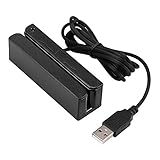
- MSR90 is a USB emulation keyboard interface that not need any driver or software,USB simply plug and play
- Reads up to 3 tracks of information,can reads ISO7811, AAMVA, CA DMV and most other card data formats
- Threaded inserts for mounting. LED indicator, green light is on when connecting,green light blinks when cards swiped
- Bi-directional swipe reading, superior reading of high jitter, scratched, and worn magstripe cards, reliable for over 1,000,000 card swipes
- Configuration software makes configuration changes easy,works with: Windows OS and Mac OS
Checkout and integration
Stripe
Stripe offers hosted and embedded checkout options, APIs, SDKs and prebuilt components. That can make an initial integration practical and leave room to add products later. The trade-off is that a larger product suite brings more separate features, pricing and webhook flows to understand.
Mollie
Mollie’s documented basic payment flow creates a payment and redirects the shopper to the checkout URL in the response. It is a useful fit for a conventional ecommerce flow, particularly when the required local methods are supported. Before committing, check that its checkout customization and platform integrations meet your needs.
Free tools Windows power users keep installed
One-click scans. No signup required.
Adyen
Adyen’s online integration uses client-side components such as Drop-in or Components, server-side payment handling and webhooks. This gives teams options to tailor checkout and align it with in-person operations, but it is not automatically the simplest route for a small store with standard needs.
With any provider, do not treat a shopper’s return to a “success” page as proof that payment completed. Use server-verified provider notifications, make fulfillment idempotent, and handle delayed, failed, expired, canceled and disputed payments. For Mollie’s documented checkout-link flow, see the payment-method guide; for Adyen’s integration components, see its online-payments guide.
Subscriptions and SaaS
Stripe has a dedicated Billing product for subscriptions and recurring-revenue workflows. That makes it a strong contender for SaaS, memberships and recurring services, but the right comparison is the complete billing operation—not merely whether a provider can charge a card repeatedly.
Rank #4
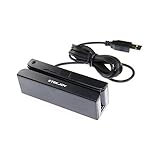
- USB interface, keyboard emulation, no need to install software to read, configuration software for changing settings available.
- Read data from all 3 tracks, high and low coercivity cards, ISO7811, AAMVA, CA DMV and most magnetic card data formats.
- Work on Windows, Mac and other USB capable systems. Work with TXT, notepad, Word, Excel, POS systems and son on.
- Compact size, with 145cm USB cord, two 3mm-diameter screw holes for fixing at the bottom, a LED indicator light
- Perfect for POS, Banking, Loyalty, Access Control, ID verification and other applications.
- Recurring card payments and bank-debit mandates for your customer markets.
- Trials, usage-based billing, proration and subscription changes.
- Retries, expired-card handling, customer self-service and cancellation rules.
- Invoice generation, tax calculation and any separate product charges.
- Whether a payment method permits recurring merchant-initiated charges and what happens when a mandate or authorization fails.
Stripe’s subscription capabilities are documented at Stripe Billing. For Mollie or Adyen, assess the precise billing tools or third-party systems you would pair with payment processing; a recurring-payment capability alone does not establish equivalent metering, dunning, invoicing or tax features.
Marketplaces and platforms
A marketplace must evaluate money movement and compliance separately from ordinary merchant checkout. Compare seller onboarding and identity verification, split payments, platform fees, payout scheduling, refund responsibility, reserves, negative balances and seller-country coverage.
Stripe Connect is expressly designed for platforms and marketplaces, with connected-account onboarding and payout workflows. Adyen documents platform capabilities including payouts to users in supported countries and regions. See Stripe Connect and Adyen marketplace custom payouts. For Mollie, establish the exact onboarding, split-payment, balance and payout capabilities available for your intended countries and model rather than assuming a standard ecommerce account will cover them.
Independent reader supportYour contribution helps us test, update, and keep practical guides available for everyone.In-person and omnichannel payments
Adyen’s clearest differentiation is the ability to manage online and in-person payments within the same platform, with transaction data and reporting across channels. Stripe also offers in-person payments through its broader platform, including Terminal. Mollie lists in-person and terminal offerings, but device and plan availability depend on market. See Adyen’s online-payments documentation, Stripe’s product overview and Mollie’s pricing page.
Before choosing a terminal provider, confirm hardware availability where you trade, any purchase or contract requirements, and whether online and store transactions share the operational features you need. In particular, check cross-channel refunds, customer and transaction reporting, partial refunds, and whether the same risk and reconciliation processes apply to each channel.
Best Value

- Pay one transparent rate per swipe for Visa, Mastercard, Discover and American Express.
- Works in conjunction with most downloadable Square point-of-sale apps on your device. Customers can pay, tip and sign directly on your device. Track payments in cash, gift cards and more. Also lets you send receipts via e-mail or text message, makes it easy to apply discounts, keeps a data and sales history log and more.
- Accepts magstripe credit card payments, including those from Visa, Mastercard, Discover and American Express (fees apply).
- App sends deposits to your bank account within 1 to 2 business days, or enjoy instant deposits (fees apply).
Settlement, payouts and cash flow
A payment provider’s money flow has several stages: when a transaction settles into your provider balance, when the provider sends a payout, when your bank credits it, and whether any funds are held in reserve. A stated payout schedule is not the same as a guaranteed bank-receipt time.
Stripe advertises rolling, weekly or monthly payout options and payout visibility in its Dashboard. Mollie’s pricing page sets out payout conditions that can depend on monthly allowance, currency and account configuration. Adyen documents payout timing, supported currencies, local and cross-border routes, and bank-account requirements. Check the applicable terms for your account and destination: Stripe pricing, Mollie pricing, Adyen payout timing and Adyen supported currencies.
Eligibility and risks to resolve before signing up
Country coverage does not guarantee approval for a specific company or business model. Confirm merchant-country eligibility, restricted-business rules, beneficial-owner verification, bank-account requirements, intended currencies, potential reserves and payout conditions. Do not plan a launch around an account until the provider confirms that your entity and activity can be supported.
Businesses with frequent refunds or marketplace sellers should also establish whether refunds can be funded after payout, how negative balances are recovered, who bears loss if a seller cannot cover a refund, and how disputes are handled. Fraud products are not comparable by marketing labels alone: ask whether screening is included or separately priced, whether it blocks or flags payments, which channels and methods it covers, and who submits dispute evidence. The available provider product descriptions do not establish comparative fraud rates, authorization performance or conversion outcomes.
What’s actually slowing this PC down?
Pick the symptom - the matching free tool is one click away.
How to choose: a practical scorecard
Score each provider against your actual operating requirements. Weight the categories differently by business model: a Dutch ecommerce shop may prioritize local methods and fees, while a global marketplace should give greater weight to verification, payouts and cross-border operations.
| Criterion | Suggested weight | What to verify |
|---|---|---|
| Country and entity eligibility | 15% | Can your company onboard and receive payouts? |
| Customer payment methods | 15% | Are the methods used by your customers available to your account? |
| Total cost at your actual mix | 15% | Include processing, methods, FX, disputes, payouts and add-ons. |
| Developer experience | 10% | Evaluate APIs, SDKs, webhooks, test tools and documentation. |
| Checkout suitability | 10% | Check local language, redirects, authentication and mobile use. |
| Recurring billing | 10% | Test mandates, retries, metering, invoices and tax needs. |
| International expansion | 10% | Review acquiring, currencies, settlement and local methods. |
| Marketplace support | 5% | Assess onboarding, verification, split payments and payout liability. |
| Omnichannel | 5% | Check terminals, online integration and unified reporting. |
| Risk and support | 5% | Review fraud controls, disputes and support arrangements. |
Switching providers: reduce migration risk
Changing processors is more than replacing an API endpoint. Saved payment methods, recurring mandates, customer identifiers, subscription schedules, tax invoices, dispute history, webhook semantics and reconciliation can all be affected.
- Confirm eligibility and commercial terms. Verify the entity, business model, currencies, required methods, payout rules and any minimums before building the migration plan.
- Inventory payment flows. Document one-time and recurring methods, refunds, partial captures, disputes, marketplaces, terminals and every system that consumes payment events.
- Model total cost. Use actual transaction data, including country, order value, method mix, FX, refunds and payout needs; request a quote where pricing is custom.
- Plan customer and mandate continuity. Ask both providers how stored credentials or bank mandates can be migrated and what customer action or reauthorization may be required.
- Rebuild and test event handling. Validate successful, pending, failed, expired, refunded and disputed states; ensure fulfillment and accounting actions are idempotent.
- Run a controlled rollout. Reconcile provider balances against orders and bank receipts, monitor failures and keep a rollback path while the new flow is proven.
For Adyen teams setting up API access, its documentation gives the Customer Area path as Company account > Developers > API credentials, followed by selecting the Payments or Platforms tab and creating a Web service user. Adyen says a generated API key cannot be copied again after leaving the page; on rotation, the new key is active immediately and the old key remains active for 24 hours. See Adyen API credential documentation.
Quick Recap
Product prices and availability are accurate as of the date/time indicated and are subject to change. Any price and availability information displayed on Amazon at the time of purchase will apply.




