Windows Errors? Fix Them Before They Spread
Repair common Windows errors and clear accumulated junk for a smoother, more stable PC - no reinstall needed.Free scan · no reinstallCrashes, No Sound, or Screen Glitches?
Random freezes, missing sound and display glitches usually trace back to one bad driver. Find and replace yours safely.Free scan · under a minuteBase Power raised a $200 million Series B announced April 9, 2025. The round was co-led by Addition, Andreessen Horowitz (a16z), Lightspeed Venture Partners and Valor Equity Partners—not a16z alone. Base plans to use the money for residential battery deployment, distributed-storage software, a planned Texas factory, utility partnerships and hiring.
The Austin company is pursuing a model that combines home backup batteries with retail electricity service. Customers get outage protection, while Base operates an aggregated battery fleet as a potential virtual power plant (VPP).
| # | Preview | Product | Price | |
|---|---|---|---|---|
| 1 |

|
Anker SOLIX C1000 Gen 2 Portable Power Station | $499.99 | Buy on Amazon |
| 2 |
|
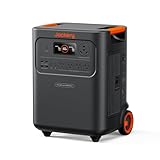
Jackery HomePower 3600 Plus Power Station, 3584Wh, 3600W AC Output | $1,709.00 | Buy on Amazon |
| 3 |

|
CyberPower CP1500PFCLCD PFC Sinewave UPS Battery Backup and Surge Protector | $239.95 | Buy on Amazon |
What Base Power raised and who invested
The financing was a Series B, announced April 9, 2025. Gunderson Dettmer identified Addition, a16z, Lightspeed Venture Partners and Valor Equity Partners as co-leads. The announcement also named Altimeter, Terrain, Thrive Ventures/Thrive Capital and Trust Ventures among the participants. Addition’s Lee Fixel and Valor’s Antonio Gracias were reported to join Base’s board.
Base said the capital would support distributed-storage technology, production scale-up, a planned Texas-based battery factory, utility partnerships in and beyond Texas, engineering and operations hiring, and more deployed megawatt-hours. A planned factory is not proof that Base already manufactures batteries in Texas.
Quick wins for a faster PC:
Clear out junk files and repair common Windows errorsFree Scan →Scan for outdated or missing drivers - takes under a minuteDriver Scan →#1 Best Overall
- 49 Min UltraFast Recharging: With upgraded HyperFlash tech, fully recharge at 1,600W—for outage prepping, camping trips, or tailgating events. Enable it in the Anker app.
- 2,000W Output via 10 Ports: Delivers 2,000W (3,000W peak) and 1,024Wh capacity. Power up to 10 devices—ideal for emergency backup, remote work setups, tiny homes, and off‑grid living.
- Compact and Portable: Easily carry, store, and move from room to room, your RV, or even on beach and park outings. C1000 Gen 2 is 14% smaller and 11% lighter than similar models.
- 10 Years of InfiniPower: Built to last through years of daily backup and RV and van life. After 4,000 cycles, the battery still has at least 80% capacity.
- 1.8 Hr Solar Recharging: Go fully off‑grid with sustainable power for tiny homes, camping RV off‑grid setups, and remote locations. Plug in 600W (60V max) of solar and recharge in just 1.8 hours.
Base’s press page now lists later coverage, including a subsequent $1 billion financing. That later round is separate from the April 2025 Series B; its precise structure, valuation and investor list are not established here.
Base is selling an energy service, not just a battery
Base describes itself as both an electricity provider and a backup-power provider. It installs a battery near the home’s electric meter, charges it when electricity is available, and can automatically discharge it during an outage or when the grid needs support. Its explanation appears on the How it works page.
Two different kinds of value
- Backup value: stored energy keeps selected or whole-home circuits operating during an outage, subject to inverter limits and household load.
- Grid value: many connected batteries can be dispatched together for demand response, ancillary services, peak reduction or other VPP functions.
The grid-service opportunity is the business thesis, not a disclosed profit statement. TechCrunch described VPP revenue as a likely economic engine, but Base has not published a household-by-household payment or profitability figure.
Why Texas is the launch market
Texas combines an independent ERCOT electricity system, extreme summer demand and experience with severe weather outages. Those conditions can make flexible, distributed storage useful both to homeowners and to grid operators. That does not mean every Texas customer faces frequent long outages: routine interruptions are different from exceptional events such as Winter Storm Uri or major storms.
Residential batteries also let Base add capacity house by house rather than waiting for a single utility-scale project. The approach still depends on interconnection rules, retail-electricity regulation, market compensation and the cost of installing and maintaining thousands of systems.
What customers paid in the 2025 funding story
TechCrunch reported the following economics at the time of the Series B announcement:
| Item | Reported 2025 figure | Qualification |
|---|---|---|
| Battery option | 25 kWh | Historical offering reported April 2025 |
| Battery option | 50 kWh | Historical offering reported April 2025 |
| Upfront fee | Approximately $595 or $995 | Varied by battery size; historical |
| Electricity rate | Approximately 9¢/kWh | Plus local utility delivery charges; historical |
| Commitment | Three years | Required electricity relationship in the reported plan |
| Annual fees | Approximately $225–$345 | Varied by plan; historical |
Those figures should not be used as a current quote. They also show why the installation fee alone is not the service’s total cost: electricity charges, utility delivery charges, recurring fees and the contract all matter.
How the current customer presentation differs
A current Base page for CenterPoint territory displays a different structure. It lists a 25 kWh single-battery option at a $695 installation fee and $19 monthly membership, and a 50 kWh dual-battery configuration at $995 and $29 monthly membership. The displayed plan is 36 months and requires a $50 refundable deposit credited toward installation. Electricity is charged at Base’s rate plus utility transmission and delivery charges. Eligibility and rates vary by ZIP code and utility territory.
Do these 3 things before closing this tab:
1Clear out junk files and repair common Windows errors2Fix the driver behind crashes, sound loss and screen glitches3Repair Windows errors before they cause bigger problemsRank #2
- Essential Home Backup: The Jackery HomePower 3600 Plus delivers 3600W output (7200W in parallel) to run pumps, heaters, and dryers with ease. With dual voltage (120V & 240V in parallel) and 3584Wh capacity expandable to 21kWh per unit or 43kWh with multiple units, it can power a 3-person household for over 2 weeks.
- Safe Power That Lasts: Built with high-temp resistant ceramic membrane battery cells tested at 302 °F, the Jackery HomePower 3600 Plus Portable Power Station prevents thermal runaway from heat or overcharge. Offering 6,000 cycles and a 10-year lifespan, it delivers safe, reliable even in -4 °F blizzards.
- Plug-and-Play: With its easy plug-and-play design, the Jackery HomePower 3600 Plus, paired with MTS, powers your home effortlessly—no complex installation required. Whether at work, in the kitchen, or with family, simply plug in, press "Power-On" and keep life running smoothly through any outage.
- 4 Charging Options: With 4 convenient ways to charge, the Jackery HomePower 3600 Plus solar generator can be fully recharged from 0–100% in just 2 hours via hybrid AC+DC. It also supports charging via AC in 2.5 hours, solar in 4 hours, or a gas generator in 2.5 hours —delivering a full day of quiet, clean energy.
- Ultra-Portable & Lightweight: The Jackery HomePower 3600 Plus, the lightest 3.6kWh LFP power station, boasts automotive-grade CTB tech and is 34% smaller and 29.3% lighter than other models. Its luggage-style design with wheels and a telescopic handle allows effortless rolling from kitchen to garage or beyond.
| Current displayed option | Installation fee | Monthly membership | Advertised backup |
|---|---|---|---|
| 25 kWh | $695 | $19 | Up to about 24 hours under reduced consumption |
| 50 kWh | $995 | $29 | Up to about 48 hours under reduced consumption |
The CenterPoint example displayed approximately 13.4¢/kWh at 2,000 kWh per month, including the example’s Base and utility-related charges. It is a territory-specific illustration, not a statewide rate. See the current plan page for the displayed terms.
Before signing, a homeowner should check the full agreement for cancellation charges, rate changes, dispatch control, minimum state-of-charge reserves and what happens if the property is sold.
What the batteries can—and cannot—run
Battery capacity is measured in kilowatt-hours (kWh), while the inverter’s instantaneous output is measured in kilowatts (kW). A larger kWh number means more stored energy; it does not guarantee that the system can start every appliance.
Base support material lists 25 kWh, 39.2 kWh and 50 kWh configurations and an 11 kW inverter. Model details and availability can vary. The company’s sizing guidance is at its hardware support page and battery-sizing guide.
Free tools Windows power users keep installed
One-click scans. No signup required.
Loads that shorten runtime
- Central-air compressor startup and sustained cooling
- Electric resistance heating and water heaters
- Pool and well pumps
- Electric-vehicle charging
- Workshop equipment and other high-surge appliances
A refrigerator, lights, internet equipment and modest cooling can run much longer than a home operating all of those loads at once. “Up to 24 hours” or “up to 48 hours” is a reduced-consumption estimate, not a guarantee of unrestricted whole-home operation. Wiring, transfer equipment, local code and surge requirements also affect what can run.
Financial trade-offs for a homeowner
Lower capital cost, less ownership control
Base’s attraction is avoiding the purchase price of a large customer-owned battery. In exchange, the customer switches electricity providers, pays a recurring membership fee and accepts a multiyear service relationship. Base controls dispatch of the connected battery; the contract determines reserves, opt-out rights and other limits.
Compare the complete cost
A fair comparison with a Powerwall, solar-storage system or generator includes:
- installation and equipment charges;
- monthly membership or financing payments;
- electricity price and utility delivery charges;
- contract length, cancellation terms and possible rate changes;
- ownership of the equipment and responsibility for replacement;
- backup capability for the home’s actual loads.
A $695 or $995 installation fee is therefore not equivalent to buying a battery outright, and it cannot by itself establish that Base is cheaper than a Powerwall.
Recommended Free Tools
Rank #3
- 1500VA/1000W PFC Sinewave Uninterruptible Power Supply (UPS): Uses sine wave output to provide battery backup power for Active PFC & conventional power supplies; Safeguards computers, workstations, network devices, and telecom equipment
- 12 NEMA 5-15R OUTLETS: 6 battery backup & surge protected outlets, 6 surge protected outlets; INPUT: NEMA 5-15P right angle, 45 degree offset plug with 5 foot power cord; 2 USB charge ports (1 Type-A, 1 Type-C) quickly charge phones and tablets
- MULTIFUNCTION, COLOR LCD PANEL: Displays immediate, detailed information on battery and power conditions; Color display alerts users to potential issues before they can affect critical equipment and cause downtime; Screen tilts up to 22 degrees
- AUTOMATIC VOLTAGE REGULATION (AVR): Corrects minor power fluctuations without switching to battery power; UL SAFETY CERTIFIED: Product has been tested in a UL certified lab and listed with UL as meeting or exceeding safety standards
- 3-YEAR WARRANTY – INCLUDING THE BATTERY; $500,000 Connected Equipment Guarantee; FREE PowerPanel Management Software (Download)
Solar and property constraints
Base says customers with solar can sell excess generation back to Base, but the applicable rate and interconnection treatment depend on territory. Solar does not automatically provide multi-day outage power; weather, inverter configuration and battery state of charge remain constraints.
Installation generally requires suitable exterior space near the meter, electrical-service compatibility, permits and inspection. Renters, multifamily residents and homes subject to HOA rules may need additional approval. Base says it manages permitting and installs near the meter, but eligibility is location-specific.
Independent reader supportYour contribution helps us test, update, and keep practical guides available for everyone.How Base compares with other backup choices
| Option | Ownership and model | Best fit | Main trade-off |
|---|---|---|---|
| Base Power | Bundled electricity service plus installed battery and VPP participation | Eligible Texas homeowners seeking low upfront cost | Provider switch, recurring fees and multiyear commitment |
| Tesla Powerwall | Customer-owned stationary battery | Owners wanting direct equipment ownership or Tesla integration | Purchase-and-installation expense; current price not stated here |
| Generac PWRcell | Installer-sold solar-storage system | Homes building around solar and storage | Installer, equipment and integration costs |
| Enphase IQ Battery | Modular battery ecosystem | Existing or planned Enphase solar customers | Best economics may depend on ecosystem compatibility |
| Standby generator | Combustion generator using available fuel | Long outages where fuel logistics are acceptable | Noise, maintenance, emissions and fuel dependence |
Risks behind the growth plan
Factory and deployment execution
A domestic factory project brings potential benefits but also risks: construction delays, manufacturing yields, quality control, supply-chain dependence and raw-material costs. Installing and servicing a large residential fleet can be just as important as producing the batteries.
Regulatory and market dependence
Base’s economics depend on ERCOT rules, retail-electricity licensing, utility tariffs, compensation for distributed resources, customer-acquisition costs and battery degradation. Expansion outside Texas may require different utility rules, permitting, solar policies and market structures.
The Tool Desk
Outbyte PC Repair FREERepair Windows errors before they cause bigger problemsFix Now →Outbyte Driver Updater FREEScan for outdated or missing drivers - takes under a minuteDriver Scan →Battery dispatch and degradation
Frequent cycling for grid services may affect degradation and replacement economics. The available evidence supports describing a potential VPP revenue stream, not claiming that Base’s grid income is already profitable or guaranteed.
What the $200 million means
The Series B gives Base capital to pursue a capital-intensive strategy: install more batteries, develop operational software, build supply capacity and establish utility relationships. Its long-term test is whether it can acquire customers at an affordable cost, retain them as electricity customers, preserve useful backup capacity and earn enough grid value to support the network.
For homeowners, the practical question is not simply whether Base’s battery is cheaper than a competing battery. It is whether the combined electricity rate, fees, contract obligations and dispatch terms are worthwhile for the home’s outage risk and load profile.
The Bottom Line
Base Power’s $200 million Series B, announced April 9, 2025, backs an energy-service model rather than a simple battery-installation business. The company is trying to turn residential backup systems into a Texas virtual power plant. Customers should evaluate the full electricity contract and real-world load limits—not just the advertised installation fee or backup-hour headline.
Quick Recap
Product prices and availability are accurate as of the date/time indicated and are subject to change. Any price and availability information displayed on Amazon at the time of purchase will apply.




