Quick wins for a faster PC:
Scan for outdated or missing drivers - takes under a minuteDriver Scan →Clear out junk files and repair common Windows errorsFree Scan →Fix the driver behind crashes, sound loss and screen glitchesFind Drivers →Midwest farmers can grow food-grade oats, but rebuilding the crop at scale will take more than successful field trials. Buyers, dependable contracts, storage, transportation, processing capacity, insurance and competitive farm returns all have to line up. Farmers and regional partners are trying to build those pieces; established agricultural supply chains still make corn and soybeans easier to grow and sell.
Why Midwest farmers are trying to bring oats back
Oats once occupied a far larger place in Iowa agriculture. Matt Liebman, an emeritus Iowa State University agronomy professor, told Investigate Midwest that Iowa grew more than 6 million acres of oats annually through the 1950s. The article connects the subsequent decline to rising demand for corn as livestock feed and, later, for ethanol. It cites a USDA Economic Research Service figure that about 45% of U.S. corn goes to ethanol; that figure is about corn, not oats, and the passage does not specify its reference year.
As corn and soybean production expanded, the infrastructure and commercial incentives around those crops grew with them. Liebman summarized the incentive problem this way: “There’s more money to be made in selling corn and soybeans.” Oats can bring a different rotation option, but they do not automatically come with the same established buyers, input support or logistics.
The crop has not disappeared. Investigate Midwest reported that Iowa harvested nearly 40,000 acres of oats for grain in 2022, ranking eighth among states, and that Iowa oats harvested for animal and human use increased 12.6% from 2017 to 2022. These are 2022 Census of Agriculture figures, not current acreage estimates.
The Tool Desk
Outbyte PC Repair FREEClear out junk files and repair common Windows errorsFree Scan →Outbyte Driver Updater FREEFix the driver behind crashes, sound loss and screen glitchesFind Drivers →#1 Best Overall

- 🌾 Premium Organic Whole Oats for Sprouting & Oat Grass – These certified organic, non-GMO whole oat grain seeds have the hull intact, making them perfect for sprouting, juicing, and growing lush oat grass for pets or ornamental use.
- 🐾 Grow Nutritious Oat Grass for Cats & Small Pets – Ideal for cat grass, rabbit greens, and chicken feed, these high-germination oat seeds provide fresh, natural fiber to support digestion and overall health.
- 🔹 Versatile Use – Sprouting, Animal Feed & More! – Use these organic oat seeds for sprouting, fodder for livestock, emergency grain storage, or growing fresh wheatgrass alternative for juicing. Not for direct food use unless dehulled.
- 🛡 Long-Term Storage & Resealable Packaging – Our whole oat grains come in small to bulk sizes, packaged in resealable bags to ensure freshness. Perfect for homesteaders, preppers, and sustainable living!
- 🌱 High Germination Rate for Thriving Growth – Whether you're growing oat grass indoors, sprouting for livestock, or experimenting with hydroponic fodder, these whole oat grains deliver strong, fast germination for a reliable crop.
Food-grade oats can be grown in Iowa and Minnesota, according to field-trial results reported by Investigate Midwest. But growing a crop and producing grain that meets a buyer’s specifications are different challenges. Iowa State no longer had an oat breeder after 2007, the article reported, while Practical Farmers of Iowa partnered with the university on oat trials at four research farms.
What makes the market difficult to build
Farmers need buyers and usable specifications
Growers need to know what a mill will buy before choosing varieties and production practices. Investigate Midwest reported that growers sent 100,000 bushels by rail to Quaker’s Cedar Rapids factory in May 2025 and were still awaiting feedback three months later. A March 2026 report by The Western Producer likewise described difficulty obtaining mill test-weight and quality specifications. The reports do not establish the shipment’s eventual results or its present status.
Quaker’s established supply chain has included oats shipped by rail, and Investigate Midwest described its oats as coming from Canada, as far as 1,000 miles away. That does not prove that Midwest growers cannot become suppliers; it shows that an incumbent system already moves grain to the factory. A new source has to meet the mill’s requirements and fit its procurement, transport and processing arrangements.
Rank #2

- Covers .25 acre
- For best results, plant in a well-prepared bed
- Plant seeds from .25 in. to 1.5 in. deep
There are also potential food-company buyers, but their sourcing can change. Investigate Midwest quoted Seven Sundays founder Brady Barnstable saying, “Our goal is to source as close to home as possible for all our ingredients.” The article reported that the brand had bought oats from Whole Grain Milling in Welcome, Minnesota, and also needed Canadian supply as sales grew. That account is not confirmation of the company’s current sourcing.
Transport, storage and farm returns matter
In The Western Producer’s 2026 account, Randy Strychar, president of OatInformation, described the barriers as supply-chain economics rather than deliberate exclusion: “It isn’t that anybody is blocking them out or doesn’t want to talk to them. It’s just simple economics.” He said net returns, subsidies, transport and storage favor corn and soybeans, while existing oat mills already have working supply chains; some mills reportedly operate at little or no margin. Those are Strychar’s industry assessment, not audited comparative farm-return data.
For a grower, the relevant comparison is not just the crop price. It includes the cost and availability of storage, freight to a buyer, the certainty of a contract, the buyer’s quality standards, crop-insurance options and what the crop does to the rest of the rotation. The cited accounts do not provide comparable dollar-per-acre returns for oats, corn and soybeans, so they do not establish a universal profitability ranking.
Rank #3
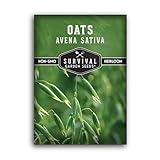
- MEDICINAL HERB – Avena sativa, also called Milky Oats, valued for soothing, restorative qualities; used for tea, tincture, or oatstraw infusions to support calm and relaxation
- DUAL-PURPOSE PLANT – Grows beautifully as both herbal crop and soil builder; harvest green oat tops for herbal use or sow thickly as a quick cover crop to enrich soil and suppress weeds
- EASY TO GROW – Cool-weather annual thrives in a range of soils; direct sow early spring or late summer, keeping soil moist for steady germination and strong growth
- VERSATILE AND SUSTAINABLE – Tall, graceful plants produce straw for crafts, mulch, or chicken gardens; improves soil structure while yielding herbal material for home apothecaries and cat grass uses
- FAMILY OWNED USA SMALL BUSINESS – Heirloom non-GMO seeds from Survival Garden Seeds, a trusted American brand; always open-pollinated, untreated, and quality tested for garden success
How farmers are testing oats in a corn-and-soy rotation
Oats are being considered as a third crop rather than a wholesale replacement for corn or soybeans. Minnesota farmer Martin Larsen told Investigate Midwest that he began testing oats in 2018, asking whether his combine could harvest them and whether he could meet the 38-pounds-per-bushel food-grade minimum described in the article. He later expanded to a three-crop rotation across 1,400 acres and bought a specialized header that strips grain from the top of the plant.
Larsen said soybeans “can see an up to 10% yield bump” after breaking up the rotation. That is his reported farm experience, not a guaranteed or independently verified yield response for other farms. The Nature Conservancy (TNC) describes oats as a possible way to diversify rotations and deliver soil, water, weed-management or workload benefits, while also noting that farm-level economics and practical support remain under study.
Windows Errors? Fix Them Before They Spread
Repair common Windows errors and clear accumulated junk for a smoother, more stable PC - no reinstall needed.Free scan · no reinstallCrashes, No Sound, or Screen Glitches?
Random freezes, missing sound and display glitches usually trace back to one bad driver. Find and replace yours safely.Free scan · under a minuteIowa farmer Landon Plagge argued that growers could select varieties and practices to offer a product with stronger protein or environmental characteristics than Canadian oats. That is Plagge’s view, not comparative test evidence established in the cited reporting. Buyers would need relevant, consistent quality data to pay for such differences.
Rank #4

- WEED AND WILD Oat Seed Free - State Certified Seed!
- EXCELLENT FOR Growing Nutritious Grass Greens for Human or Animal Usage
- GREAT Pasture, Forage, Straw or Hay grass for Domestic and Wild Animals
- GOOD FOR Reclamation Projects and Erosion Control with Fast Growth
- WHOLE, PREMIUM Oat Seeds - Willamette Valley, Oregon Grown.
What the Oat Mafia and regional milling are building
The Oat Mafia is a farmer network that pools marketing and shares production knowledge. TNC’s account, accessed October 8, 2026, describes more than 60 farmers growing over 6,000 acres; The Western Producer’s March 2026 article describes hundreds of members and 6,000 acres. The different membership counts may reflect reporting dates or definitions, so they should not be combined into one precise tally.
The network’s purpose is practical: more growers can help build a dependable volume, share lessons and make it easier to approach buyers. Larsen told TNC, “The more that farmers see oats out on the lands, the more comfortable they will be with trying it.” A larger network, however, does not by itself guarantee contracts, suitable storage or a profitable outlet.
Green Acres Milling, planned for Albert Lea, Minnesota, is the most significant regional processing effort described in the coverage. The sources disagree on its specifications:
Do these 3 things before closing this tab:
1Repair Windows errors before they cause bigger problems2Fix the driver behind crashes, sound loss and screen glitches3Clear out junk files and repair common Windows errorsBest Value

- Organic whole grains
- Certified organic & kosher
- Source of fiber, protein & iron
- Suggested preparation: Soak 1 cup of grains in water overnight to reduce cooking time
- Drain
| Source | Reported project cost | Reported annual capacity | Reported timing or funding |
|---|---|---|---|
| The Nature Conservancy, accessed October 8, 2026 | $55 million | 3 million bushels | Planned to open in fall 2026 |
| The Western Producer, March 2026 | $68 million total investment; $20 million contributed by farmers | 4 million bushels | Opening timed for the 2026 harvest |
These are reported plans, not a confirmed final specification or proof that the mill opened on schedule. The sources also do not establish its current grower eligibility, quality standards or contracting terms. TNC says its work includes agronomic support, modeling farm-level profit and loss, studying storage feasibility and exploring crop-insurance approaches—signals that the surrounding business system is still being worked out.
Independent reader supportYour contribution helps us test, update, and keep practical guides available for everyone.What a grower should weigh before planting food-grade oats
There is no single best route for every farm. A producer considering oats can use these questions to judge whether a local opportunity is concrete enough to support a planting decision:
- Buyer and contract: Is there a named buyer, a written commitment or a clear route to market? What happens if the buyer rejects or cannot take the grain?
- Quality: Has the buyer supplied written test-weight, variety, moisture and other quality requirements before seed and production decisions are made?
- Harvest and handling: Can existing equipment harvest the crop to specification, or would specialized equipment, drying or segregation add cost?
- Storage and freight: Is identity-preserved or other suitable storage available, and what will moving grain to the mill cost?
- Risk and rotation: What crop-insurance coverage is available for the farm’s location and intended use, and how does oats fit the full rotation rather than one season’s budget?
- Net return: After seed, equipment, storage, transport and any quality-related costs, does the expected return compare favorably with the farm’s alternatives?
Food-grade production and feed or forage production are not interchangeable market plans. Food-grade oats need to meet the buyer’s standards and handling requirements; a feed or forage outlet may have different specifications and economics. A grower should establish the intended use and buyer pathway before treating acreage as a saleable food-grade crop.
Can Midwest oats scale without Big Ag?
Farmer networks, conservation organizations, regional mills and food brands can help create a market without waiting for a major processor to redesign its supply chain. Yet a renaissance at meaningful scale requires more than farmer enthusiasm: it needs repeat buyers, transparent specifications, aggregation, storage, processing, suitable risk tools and returns that compete with established crops.
Free tools Windows power users keep installed
One-click scans. No signup required.
That is why the “without Big Ag” framing needs care. Growers have described limited buyer engagement and a lack of clear specifications; the industry perspective reported in 2026 is that established logistics and economics—not an organized effort to keep Midwest oats out—make switching suppliers difficult. Regional initiatives may close parts of that gap, but the available reporting does not yet establish that they have resolved it.
Quick Recap
Product prices and availability are accurate as of the date/time indicated and are subject to change. Any price and availability information displayed on Amazon at the time of purchase will apply.




