The Tool Desk
Outbyte Driver Updater FREEFix the driver behind crashes, sound loss and screen glitchesFind Drivers →Outbyte PC Repair FREEClear out junk files and repair common Windows errorsFree Scan →Protecting a company starts with identifying what could be lost, damaged, interrupted, or claimed against—not with buying every policy on the market. For a U.S. small business, a business owners policy (BOP) can bundle useful core protection, but it does not cover every asset or risk. Map your exposures, check state and contract requirements, and compare policy terms before choosing coverage.
Start with an inventory of your business risks
List the property and activities your company depends on, then consider what a loss would cost. The U.S. Small Business Administration recommends assessing risks, working with a reputable licensed agent, and comparing rates, terms, and benefits. Its general rule is to insure against losses you could not pay for on your own.
- Property and locations: buildings you own, leased premises, equipment, computers, furnishings, inventory, and raw materials.
- Operations: the possibility that a covered loss could force a temporary shutdown, relocation, or additional expense.
- People and customers: employee-related exposures, customer or other third-party injuries, and damage to someone else’s property.
- Work and products: claims related to products, completed work, professional advice, or services.
- Other exposures: company vehicles, sensitive data, cyber incidents, and risks specific to your industry.
The SBA’s business insurance guidance recommends comparing offers rather than assuming one policy or quote is right for every company. Agents may receive commissions; ask how an agent is compensated and, where practical, compare more than one proposal.
Match each exposure to a type of coverage
Property, liability, and business-income coverage solve different problems. A policy’s name alone does not establish what it will pay: covered causes, definitions, limits, exclusions, deductibles, and endorsements all matter.
What’s actually slowing this PC down?
Pick the symptom - the matching free tool is one click away.
#1 Best Overall

- FIREPROOF RESISTANT INSULATION: KYODOLED fireproof storage safe box is made of sturdy double cold rolled steel construction on all sides and is equipped with fire resistant insulation. Please note that the lid will have a slight gap with the box due to the convenience of opening and closing, but please rest assured that he will not affect the function of fire resistant! It will keep your valuables safe, organized.
- LARGE CAPACITY: KYODOLED Fireproof Document Box Exterior size is 12.6'' x 8.3'' x 3.58''. 𝐈𝐧𝐭𝐞𝐫𝐧𝐚𝐥 𝐝𝐢𝐦𝐞𝐧𝐬𝐢𝐨𝐧𝐬 𝐢𝐬 11.6" x 7.3" x 3.1". 𝐓𝐡𝐞 𝐥𝐞𝐭𝐭𝐞𝐫 𝐬𝐢𝐳𝐞 𝐝𝐨𝐜𝐮𝐦𝐞𝐧𝐭𝐬 𝐧𝐞𝐞𝐝 𝐭𝐨 𝐛𝐞 𝐟𝐨𝐥𝐝𝐞𝐝. Fire Resistance Security Chest can protect your most valuable items including passports, licenses, certificates,cash, precious photos, jewelry and so on.
- PRIVACY KEY LOCK:The personal metal lock box is equipped with key lock with 2 keys, keeping your items away from children and prying eyes.Align the key with the lock hole, turn the key clockwise and the case will be opened. Very easy to operate.
- LIGHT WEIGHT ANF PORTABLE HANDLE: The fire proof document box is designed with high quality plastic handle. The metal lock box is a good choice that not too thin or too heavy for safe home use or long or short travel.
- HIGH-QUALITY & DURABLE: KYODOLED Fireproof Box with Key Lock is durably crafted of solid steel with a powder-coated, scratch-resistant. Simply insert your valuables into bag and lock up,it provide you double security and maximum protection.
| Exposure | Coverage to ask about | What to verify |
| Building, equipment, furnishings, computers, inventory, or raw materials | Commercial property coverage, including the property component of a BOP | Covered causes of loss, excluded perils, limits, deductibles, and how property is valued. The Insurance Information Institute explains the general scope of small-business property insurance. |
| Someone claims your business caused bodily injury or property damage | General liability, often included in a BOP | Policy definitions, limits, exclusions, and how defense costs are handled. Coverage depends on the contract. |
| A covered property loss interrupts operations | Business interruption or business-income coverage | The covered-loss trigger, any waiting period, the period of indemnity, and terms for extra expense or a temporary site. These details vary by policy. |
| Advice or professional services | Professional liability, also called errors and omissions (E&O) | Whether the policy fits the services you provide; this is generally not part of a BOP. |
| Business use of vehicles | Commercial auto | How the policy treats owned, hired, and employee vehicles; this is generally not part of a BOP. |
| Employees | Workers’ compensation and any other employee coverage required for your business | Applicable state rules and your circumstances. Requirements are not uniform nationwide. |
| Data breach or cyberattack | Cyber liability or data-breach coverage | Covered incident types, response costs, exclusions, and whether the scope matches your data and operations. This is generally separate from standard commercial general liability. |
| Potential claims that could exceed underlying limits | Commercial umbrella or excess liability | Whether your actual exposures and underlying policies justify additional limits. |
The Insurance Information Institute’s overviews of small-business insurance basics and business owners policies describe common coverage categories. Its commercial general liability guide discusses liability coverage and exclusions. These are general explanations, not a substitute for the wording of your policy.
What a BOP covers—and what it leaves out
A BOP is a package designed for eligible smaller businesses. It commonly combines commercial property, liability, and business-interruption or business-income coverage. Eligibility and terms depend on the insurer and the business; a BOP is a starting point, not a guarantee that every asset or loss is covered.
Commercial property coverage may apply to a building and business personal property such as equipment, furnishings, inventory, raw materials, machinery, and computers. Protection depends on the causes of loss the policy covers, its exclusions, limits, valuation terms, and deductible. General liability addresses the business’s legal responsibility for bodily injury or property damage to others, subject to the contract’s terms and limits.
Rank #2
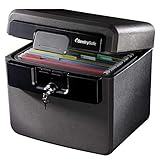
- FIRE AND FLOOD PROTECTION FOR ESSENTIAL PAPERS: UL Classified to withstand high temperatures for up to thirty minutes and ETL Verified to protect contents during water exposure, helping safeguard critical paperwork during common home emergencies
- DESIGNED FOR IMPORTANT DOCUMENT STORAGE: Spacious interior fits hanging file folders and is ideal for organizing passports, birth certificates, insurance records, and legal paperwork
- KEY LOCK SECURITY YOU CONTROL: Durable key lock helps prevent unauthorized access and keeps the lid securely closed during fire events. Two keys are included for backup access
- HOME FRIENDLY SIZE WITH PORTABLE DESIGN: Compact footprint fits easily in closets, offices, or under desks while remaining portable enough to relocate when needed
- BUILT FOR EVERYDAY PEACE OF MIND: Black exterior offers a clean, neutral look that blends into home or office spaces while providing dependable document protection year round
Business-income coverage may replace income when a covered catastrophe disrupts operations and may help with extra expense, such as operating from a temporary site. It is not a promise to pay for any shutdown. Check the policy’s trigger and conditions, including any waiting period, duration limit, and applicable extra-expense terms.
Quick wins for a faster PC:
Clear out junk files and repair common Windows errorsFree Scan →Fix the driver behind crashes, sound loss and screen glitchesFind Drivers →Repair Windows errors before they cause bigger problemsFix Now →Professional liability, commercial auto, and workers’ compensation generally require separate policies. Cyber, employment-practices, pollution, liquor, and other specialized liability exposures may also call for separate coverage or endorsements, depending on what your business does. Triple-I explains the typical package and common exclusions in its BOP overview; its general-liability guide discusses additional liability lines and exclusions.
Check legal, lease, and customer-contract requirements
Insurance requirements vary by state and by business circumstances. Do not rely on a single nationwide employee threshold to determine what your company must carry. Verify requirements with the relevant state authorities or a licensed commercial insurance professional. The SBA also notes that landlords, lenders, and customer contracts can affect what coverage a business needs.
Rank #3

- Durable Construction: This depository safe is constructed of heavy-duty carbon steel structure with a thickened front door and body, which can resist the impact of hands and mechanical tools. Sturdy bolts and hinges improve its theft-proof performance.
- Electronic Lock System: With a reliable electronic lock system, the deposit slot safe effectively keeps children and unauthorized users from gaining access. It can be programmed with two sets of codes and provides two override keys for emergency use.
- Deposit Slot Design: The safe deposit box cash deposit is designed with a deposit slot, making cash and documents storage a breeze. The front deposit drawer is fitted with a saw-tooth edge tilting baffle to ensure intruders cannot fish out contents.
- Additional Security: In addition to the advanced electronic lock system, the small drop safe is equipped with the pry-proof locking bolts to provide double protection for valuables.
- Extensive Using: Featuring stable construction and a secure lock system, this depository box is extensively applied in home, office, and other business places. With two mounting holes on the back, it can be easily installed on the wall, floor, or cabinet.
Separate a legal requirement from a contractual one and from a decision to protect the business voluntarily. A policy that satisfies a contract may still leave other risks uninsured, while a required policy may not protect property, income, or professional work. The SBA’s overview of business insurance is a starting point for assessing coverage and checking rules; confirm current requirements for your state and situation.
Independent reader supportYour contribution helps us test, update, and keep practical guides available for everyone.Compare proposals by their terms, not just the premium
When comparing offers, review the policy details side by side. A lower premium can reflect narrower protection, different limits, a higher deductible, or exclusions that matter to your operations.
- Coverage trigger and covered causes: Identify what event must happen for coverage to apply and which causes of loss are included.
- Limits and sublimits: Compare the maximum payment for the overall policy and for specific property or types of loss.
- Deductible or retention: Confirm what the business must pay before the insurer contributes.
- Exclusions and endorsements: Look for excluded risks and any additions that change the standard terms.
- Property valuation: Ask whether damaged property is settled on a replacement-cost basis or another valuation method.
- Business-income terms: Check the trigger, waiting period, duration, and treatment of extra expense.
- Insurer and payment terms: Consider insurer suitability, eligibility conditions, premium, and payment schedule.
- Requirements: Confirm the proposal meets applicable state rules and the terms of leases, loans, or customer contracts.
Ask the agent or broker to explain unfamiliar wording and show where key terms appear in the policy. The SBA recommends comparing rates, terms, and benefits across offers; its guidance also discusses using a licensed agent.
Rank #4

- DEPOSITORY SAFE - The money drop box can conveniently be utilized in your home or business and is designed with a front slot to easily deposit money or coins. This safe deposit lock box can be mounted on your wall or floor for added security.
- LED KEYPAD - This cash drop box is protected with a LED keypad that can be programmed with master and guest codes 3-8 digits long. Equipped with 2 manual override keys, you never have to worry about being locked out of your safe if you forget the code.
- SECURE CASH STORAGE - The slot safe is constructed of 11-gauge solid powder-coated steel with concealed inside hinges for extra security. Enjoy the peace of mind in knowing that your valuable assets are locked up safely.
- AUTOMATIC LOCK - After 3 incorrect entries, the built-in alarm on the money lock box with slot will sound for 20 seconds, and after 3 more incorrect entries, the drop safe for business will sound for 5 minutes, alerting you to attempted access.
- PRODUCT DETAILS - Materials: Powder-Coated Steel. Dimensions: (L) 13.75" x (W) 9.75" x (H) 9.75"; Interior: (L) 13.5" x (W) 9" x (H) 9.5"; Slot: (W) 6" x (H) 0.5". Weight: 29lbs. 4AA Batteries and Anchor Bolts Included. Color: Dark Gray.
Review coverage when the business changes
Revisit your policies when you buy significant equipment, add a location or vehicle, hire employees, launch a product, or change the services you provide. A change in operations can alter both the value of property at risk and the liability exposures a policy needs to address.
At renewal, check whether coverage limits still fit, whether deductibles and exclusions remain acceptable, and whether the business faces exposures such as flooding or data breaches. The SBA’s renewal guidance, published in 2017, highlights changing coverage needs and these review questions; confirm current policy particulars with your insurer or agent.
Quick Recap
Product prices and availability are accurate as of the date/time indicated and are subject to change. Any price and availability information displayed on Amazon at the time of purchase will apply.




