Do these 3 things before closing this tab:
1Repair Windows errors before they cause bigger problems2Fix the driver behind crashes, sound loss and screen glitches3Clear out junk files and repair common Windows errorsA lender-ready business plan makes it easy to understand what your business does, why customers will pay for it, how much financing you need, and how the business expects to repay it. No plan can guarantee approval: lenders apply their own underwriting standards and any relevant program rules. The goal is to give them a clear, complete basis for evaluation.
For a financing request, start with a traditional plan. The U.S. Small Business Administration (SBA) says lenders and investors commonly request this more comprehensive format, while allowing businesses to adapt its outline. The nine steps below cover the plan and the preparation lenders may expect alongside it.



1. Choose a plan format suited to financing
A traditional business plan is generally the stronger starting point when you are seeking a loan or other outside financing. It covers the business, its market, management, operations, funding needs, and financial outlook in enough detail for a lender to assess the proposal. The SBA notes that a lean plan can explain a simple business quickly, but a lender may ask for more detail.
Use the traditional outline as a working structure, not a rigid form. The SBA’s common sections are an executive summary; company description; market analysis; organization and management; product or service line; marketing and sales strategy; funding request; financial projections; and an appendix. You can arrange the material in the order that best explains your business, as long as each function is covered.
#1 Best Overall
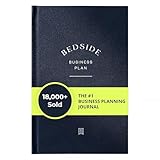
- TURN IDEAS INTO REALITY – Feeling stuck with your idea and not sure where to start? This guided journal helps you write a complete business plan so you can gain clarity and move forward with confidence as an entrepreneur.
- SIMPLE DAILY PRACTICE – 13 guided journaling sections with over 100+ business planning prompts. Make this business planner part of your routine to build momentum and work toward your business goals in just 5 minutes a day.
- BUSINESS PLANNER FOR ENTREPRENEURS – Use this guided journal to define your vision, understand your customers, evaluate competitors, plan expenses, and create a clear roadmap for launching your business.
- PERSONAL GROWTH – Designed as a personal growth workbook to help you reconnect with your purpose, prioritize well-being, and build a business plan centered around meaningful impact.
- PREMIUM ECO-FRIENDLY JOURNAL – Crafted with 100% FSC-certified recycled paper, a recycled cardboard cover, and wrapped in luxurious linen. This entrepreneur planner blends sustainability with thoughtful design.
2. Assemble the evidence, then write the executive summary
Draft the summary after you have developed the rest of the plan. That way, its claims about the business, funding request, and outlook can match the details and projections that follow.
Briefly state what the business does, its mission, the products or services it offers, its location, who leads it, and the financial and growth story behind the request. A lender should be able to see the basic case for the business without relying on unsupported promises. Keep the summary concise, but make sure every important number agrees with the financial section.
3. Describe the company and the customer problem
Explain what the business sells, who it serves, and what need it addresses. Describe how the business is organized and where it operates, and point to advantages it can credibly defend—for example, relevant expertise, a distinctive offering, or an established customer base when those claims are supported by evidence.
Rank #2
Make the business model understandable to someone who does not know your industry. Replace broad claims such as “there is no competition” with a specific explanation of what customers do now and why they might choose your business instead.
Free tools Windows power users keep installed
One-click scans. No signup required.
4. Show the market and competitive context
Define the customers you intend to reach and the competitors or alternatives they can choose. Explain the evidence behind your view of demand, such as customer research, sales history, or other relevant information, and distinguish those facts from assumptions in your forecast. Do not add market-size figures unless you can substantiate them.
Describe how customers find and choose your business. Connect that explanation to a practical marketing and sales approach: which channels you will use, how a prospect becomes a customer, and what supports your expected sales volume. This gives the lender a way to assess whether your projections have a plausible route to revenue.
5. Explain the offering and how it earns revenue
Describe the products or services, how they are delivered, and how customers are charged. Explain the logic behind your pricing and, where relevant, the costs or capacity constraints that affect each sale. Make the link explicit: a customer need leads to an offer, the offer leads to a sale, and the sale produces the revenue shown in your projections.
6. Explain who will execute the plan and how operations work
Name the people responsible for key work and summarize experience relevant to the business. Explain the operational requirements that matter to delivery—such as equipment, suppliers, staffing, premises, licenses, or permits where applicable—and how you will meet them.
Set out how marketing and sales will be carried out in practice, including who is responsible and what resources are needed. If a critical role, supplier, or operating requirement is not yet in place, identify the gap and explain how it will be addressed rather than presenting it as settled.
7. Make a specific funding request
State the amount you are seeking, whether the request is for debt or equity, what period the funds are meant to cover, and exactly how the money will be used. A line-item breakdown might include equipment, materials, payroll, or bills during a ramp-up, if those costs apply to your business. Explain why each use is necessary and how it supports operations or revenue.
Connect the requested amount to the financial forecast: show when the funds are needed and how the funded activity affects costs, sales, and cash flow. If you expect to seek additional financing later, describe that plan where it affects the current request. The SBA’s 7(a) program page lists a $5 million maximum loan amount; that limit applies to that program, not to every type of business financing, and program terms can change.
Independent reader supportYour contribution helps us test, update, and keep practical guides available for everyone.8. Build projections that reconcile with the request
For an established business, the SBA recommends including historical income statements, balance sheets, and cash-flow statements for the last three to five years. It also recommends a prospective outlook for the next five years, with monthly or quarterly detail for the first year. These are SBA recommendations, not a promise that every lender will use the same period or format; ask the lender what it requires.
Include forecast income statements, balance sheets, cash-flow statements, and capital-expenditure budgets. Explain the assumptions behind the forecast—such as sales volume, pricing, costs, hiring, and timing—so a lender can understand what would need to happen for the figures to hold. Show the effect of the requested financing in the relevant periods and make sure the uses of funds, operating plan, and cash-flow forecast agree.
Pay particular attention to cash flow and repayment capacity. A profitable forecast alone does not show when cash arrives or whether it is available when payments fall due. The SBA says lenders may consider cash flow, credit information, equity, or collateral, and that loans must have reasonable assurance of repayment ability. The plan supports that assessment; it does not replace it.
9. Attach supporting documents and check lender requirements
Use the appendix for materials that substantiate the plan or help a lender evaluate the request. Depending on the business and the lender, these may include credit histories, resumes, product pictures, references, licenses, permits, patents, legal documents, and contracts. SBA Lender Match also identifies the business plan, amount and use of funds, credit history, financial projections, collateral, and industry experience as preparation topics.
Ask each prospective lender what it requires rather than assuming one checklist applies everywhere. SBA guidance says new-business loan eligibility is typically based on the owner’s personal credit score and identifies poor credit history as a common reason applications are declined. That is general guidance, not a universal credit cutoff or a prediction about an individual application.
Quick wins for a faster PC:
Fix the driver behind crashes, sound loss and screen glitchesFind Drivers →Clear out junk files and repair common Windows errorsFree Scan →Scan for outdated or missing drivers - takes under a minuteDriver Scan →Compare lenders on the terms and criteria that affect your ability to qualify and repay:
- Interest rates and fees.
- Minimum credit score and cash-flow requirements.
- Collateral expectations.
- Prepayment penalties and grace periods.
- Repayment terms and circumstances in which the lender can demand full repayment.
- Whether the lender’s amount and use-of-funds requirements fit your request.
The SBA recommends asking about several of these terms; the answers depend on the lender. Its Lender Match service can help businesses connect with participating lenders, but it does not guarantee a match or a loan offer.
Quick Recap
Product prices and availability are accurate as of the date/time indicated and are subject to change. Any price and availability information displayed on Amazon at the time of purchase will apply.




