Do these 3 things before closing this tab:
1Clear out junk files and repair common Windows errors2Fix the driver behind crashes, sound loss and screen glitches3Repair Windows errors before they cause bigger problemsA useful interview guide makes every candidate’s interview comparable: it ties questions to job-related competencies, gives interviewers a shared scoring rubric, and records evidence rather than impressions. You can build one in a document or spreadsheet using the template and steps below. Although the assignment title says 2025, the guidance here reflects sources available through October 8, 2026.
What an effective interview guide does
A structured interview measures competencies that matter to the job through behavioral questions about past work or situational questions about realistic hypothetical challenges. Candidates receive a consistent process, and interviewers evaluate answers against common standards. The U.S. Office of Personnel Management (OPM) summarizes the approach this way: “All candidates are asked the same predetermined questions in the same order.” OPM’s structured interview overview explains the method.
A guide is more than a list of prompts. It connects role requirements to questions, rating anchors, evidence notes, and a decision record. A template supports consistency, but by itself it does not guarantee a fair, valid, or legally compliant selection process.
Build the guide from the work
- Identify job tasks and competencies. Ask people who understand the role to identify the tasks and capabilities needed to perform them. Define each competency in observable terms rather than using broad labels such as “culture fit.”
- Choose interview questions that measure those competencies. For each question, state what it is intended to assess. Have subject-matter experts check that the question clearly maps to that competency; remove prompts that do not map clearly or appear to measure several things at once.
- Select behavioral or situational wording. Behavioral questions ask candidates to describe a relevant past example. Situational questions describe a realistic job dilemma and ask how they would respond. Choose based on the role and competency, not a blanket preference for one format. OPM notes behavioral-description interviews have shown higher validity for highly complex work, including professional and managerial roles.
- Set consistent administration rules. Use the same core questions and order for candidates being compared. Specify any permitted follow-up probes so interviewers do not give one candidate materially different opportunities to demonstrate a competency.
- Define ratings before interviews begin. Use a shared scale with behavior-based anchors for each competency. OPM’s 2008 guide recommends at least three proficiency levels and suggests aiming for five to seven; its example uses five. These are design recommendations, not a universal required scale.
- Plan the panel review. Have interviewers record ratings and supporting evidence individually before discussion. Discuss significant scoring differences and document the final rationale.
OPM’s structured interview guide describes involving subject-matter experts, linking competencies to job tasks, and checking whether questions measure what they are intended to measure.
#1 Best Overall

- WHAT'S IN THE BOX: Meet the ultimate job interview prep system: a premium communication card deck featuring 54 interview flashcards, each pairing a key question or scenario with a high-impact answer, 100+ fill-in-the-blanks for authentic responses, and bonus access to 4.5 hours of video tutorials.
- EXPERT CRAFTED CARDS: Developed by Gorick Ng—Harvard career advisor, Wall Street Journal bestselling author, and career strategist—these 54 scenario-based interview flash cards teach you the proven response and storytelling frameworks for high-stakes interviews.
- BONUS VIDEO COACHING: Have Gorick Ng personally walk you through every card scenario and script. Simply use the included secret password to create an account and get instant access.
- MASTER LANDMINE QUESTIONS: Learn what to say—and what not to say—when facing the toughest questions that trip up 99% of candidates and turn high-stakes pressure into a job offer.
- COMPREHENSIVE INTERVIEW PREP: Covers both formal job interviews and informational coffee chats. Like a job hunter’s workbook meets flashcards, just draw a card, practice the framework, and walk in fully prepared.
Copyable interview guide template
Copy the fields below into a document or spreadsheet. Use one question-and-rating row for each competency you plan to assess.
Role and interview details
- Position title:
- Interview stage:
- Date:
- Candidate name or identifier:
- Interviewer name(s):
- Interview format:
Competency and question plan
| Competency | Job-task connection and observable definition | Question format | Exact core question | Permitted follow-up probes |
|---|---|---|---|---|
| [Competency] | [Relevant task; what effective behavior looks like] | [Behavioral or situational] | [Ask the same core wording of each candidate] | [Approved clarifying prompts, if any] |
| [Next competency] | [Relevant task; observable definition] | [Behavioral or situational] | [Core question] | [Approved probes] |
Rating rubric and evidence record
Choose a scale and write anchors that describe response evidence for each level. The following five-level layout is a practical starting point, not an official OPM or EEOC template. Replace the bracketed text with competency-specific descriptions.
Rank #2
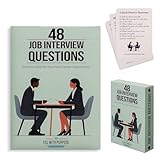
- Essential Phrases: Carefully selected flashcards feature common questions and advice to enhance your preparation and answers.
- Targeted Content: Curated by a career pathways and ESL instructor to help advanced language learners, as well as recent graduates and job seekers.
- Strategic Practice: Organized into 4 categories of relationship, knowledge, character, and leadership, allowing you to delve deep into each question and refine your responses.
- Insightful Guidance: The 8 tip cards such as the STAR method, along with what to ask the interviewer and more thoughtful ideas.
- Hiring Managers: Compact and portable, it provides a convenient resource to identify and draw out meaningful and honest responses.
| Rating | Anchor for this competency | Evidence from the answer |
|---|---|---|
| 1 — Limited evidence | [Little or no relevant evidence; explain what that means for this competency] | [Specific actions, reasoning, or outcome described] |
| 2 — Partial evidence | [Some relevant evidence, with important gaps] | [Specific evidence] |
| 3 — Adequate evidence | [Meets the defined baseline for the role] | [Specific evidence] |
| 4 — Strong evidence | [Clear, effective evidence beyond the baseline] | [Specific evidence] |
| 5 — Extensive evidence | [Consistently strong, relevant evidence; define the distinction from level 4] | [Specific evidence] |
Scoring and panel decision
- Interviewer rating for each competency:
- Interviewer evidence notes:
- Panel discussion notes, including significant rating differences:
- Final decision rationale tied to job-related evidence:
OPM says competencies should generally receive equal weights unless there is a clear, documented reason to weight them differently. If you use different weights, record the rationale before applying the scores. See OPM’s guide to structured interviews for its scoring discussion.
Independent reader supportYour contribution helps us test, update, and keep practical guides available for everyone.Check consistency and jurisdiction before use
Before scheduling candidates, confirm that the question set, rubric, and interview administration are ready and consistent. The EEOC’s barrier-analysis tool asks federal agencies to examine whether interview questions are prepared in advance, reviewed by personnel or EEO staff, paired with point-based scoring sheets, asked consistently, and objectively graded. It also raises panel composition and use. This is a federal-sector process-review resource, not a general legal checklist for every employer. Read the EEOC’s federal-sector barrier-analysis guidance.
Rank #3
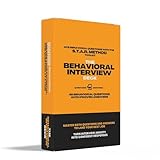
- 48 Essential Behavioral Questions: Curated by recruiters and hiring experts, each flashcard provides real-world behavioral questions covering Leadership, Teamwork, Communication, Problem-Solving, Initiative, and more—exactly what top employers ask.
- STAR Framework Only (No Confusion!): Every example answer is crafted exclusively using the proven Situation-Task-Action-Result framework, the #1 structure hiring managers recommend for clear, persuasive storytelling.
- Front Card Structure (Question-Focused): Each card’s front includes: a behavioral interview question you’ll likely encounter, core competencies clearly listed (e.g., "Leadership, Adaptability"), 2-3 alternate versions of the main question to help you confidently adapt on the spot.
- Back Card Structure (STAR Example): Each card’s back is carefully designed to guide you: Full STAR-formatted example answer, expertly written to model top-tier responses, “Make it Yours” tips: Actionable, concise guidance to personalize each answer authentically, "Avoid" section: Highlights common pitfalls clearly so you’ll steer clear of interview-damaging mistakes.
- Comprehensive Preparation Guide Included: An insightful, compact Z-fold leaflet explains the STAR method, outlines how to use the cards effectively, and provides quick-reference success tips—perfect for last-minute prep or deeper practice sessions.
Legal requirements depend on where the employer operates. The Office for Equality and Opportunity’s UK guidance, published March 4, 2026, states that structured interviews support fair, objective hiring and describes standardized questions and scoring as ways to reduce bias and promote equal opportunity. Its stated scope is England, Scotland, and Wales; it should not be treated as a summary of law everywhere. Read the UK guidance on fair and inclusive recruitment. OPM materials concern U.S. federal guidance, and the EEOC resource cited above is specifically for federal agencies. Employers should check the rules applicable to their own jurisdiction and organization.
Quick Recap
Best Value

- Comprehensive Preparation Made EASY: a smart system to get you mentally prepared for every interview question possible. Cards are categorized by evaluation criteria, topic, and difficulty levels by age group (teens, young adults, graduate students).
- Get INSIDE the Interviewer's Head: clever cards guide you through the secrets of answering questions confidently. Know the types of questions asked by interviewers from elite private high schools, universities, and graduate schools.
- Coaching Videos to Help You Brand Yourself to STAND OUT: includes expert advice providing examples of poor, okay, good, great, and memorable candidate responses.
- Build CONFIDENCE and COMMUNICATION SKILLS. It's not just about getting into your dream school or job. The card deck is designed to help you build the essential human skills to succeed in an AI-powered world.
- Perfect for conducting and practicing mock interviews anytime and anywhere while playing a card game. For students, parents, counselors, coaches, career services office, and recruitment professionals
Rank #4

- Sample Questions: Would you rather age forward or backward from this point? What would you try if you had no fear? If you could push a button and eliminate all social media, would you push it?
- What You Get: 135 sturdy cards with printed questions held in a stylish, clear cube container.
- When to Use: Dinner parties, cocktail parties, everyday conversations, business events, team meetings, one-on-one or in large groups
- Ideal For: Adults, friends, new acquaintances, parents, in-laws, hosts, and coworkers will all enjoy playing TableTopics Original.
- Gifting: A thoughtful gift for hosts, birthdays, holidays, housewarmings, and corporate gifts.
Keep the process usable for interviewers
- Keep the core question set focused on the competencies genuinely needed for the role.
- Make the scale anchors specific enough to guide scoring, but short enough to use during an interview.
- Leave room for concise evidence notes, not just a number or an overall impression.
- Use the same guide version for the candidates being compared, and document any necessary change to the process.
- Collect individual ratings before panel discussion so the discussion can address evidence and explain material differences.
Product prices and availability are accurate as of the date/time indicated and are subject to change. Any price and availability information displayed on Amazon at the time of purchase will apply.




