The Tool Desk
Outbyte PC Repair FREEClear out junk files and repair common Windows errorsFree Scan →Outbyte Driver Updater FREEFix the driver behind crashes, sound loss and screen glitchesFind Drivers →Jeff Bezos made long-term value, customer focus and market leadership explicit priorities in Amazon’s 1997 shareholder letter. He said the company would make investments that might reduce near-term profits, while accepting that some bets would fail. Amazon’s later businesses offer examples of the room that approach created—but Bezos’s letters describe a strategy and report company milestones; they do not prove that long-term thinking alone caused Amazon’s success.
What Bezos meant by long-term thinking
In Amazon’s 1997 shareholder letter, Bezos said the company would judge success by the value it created over time, rather than by near-term results alone. “We believe that a fundamental measure of our success will be the shareholder value we create over the long term,” he wrote.


He linked that horizon to a willingness to make bold investments aimed at market leadership, even when they could weigh on short-term profitability. Customer experience was central to the logic: investments should help Amazon serve customers better and build durable advantages. Bezos also said the company would explain its decisions where possible so shareholders could judge whether the investments made sense. Amazon’s reproduced 1997 letter is a first-person account of those stated priorities.
How the strategy was supposed to work
Use customer needs to guide investment
Bezos presented customer focus as a basis for choosing where to invest. In his 2017 shareholder letter, he argued that customers can remain dissatisfied even when they say they are happy, and that the effort to serve them better can drive invention. In this account, customer focus was not simply a service standard; it was a prompt to keep looking for unmet needs.
PC Slower Than It Used to Be?
A free scan shows the junk files, broken settings and background clutter dragging Windows down - then fixes them in one click.Free scan · Windows 10 & 11Crashes, No Sound, or Screen Glitches?
Random freezes, missing sound and display glitches usually trace back to one bad driver. Find and replace yours safely.Free scan · under a minute#1 Best Overall
Experiment, learn and extend promising efforts
Bezos described experimentation as a way to discover what customers value. His 2017 letter advocates patient experiments, tolerating failures, protecting promising early efforts and investing more when customers show signs of delight. That is his account of Amazon’s operating philosophy, not a claim that every experiment worked.
Accept that some bets will fail
The 1997 letter makes the risk explicit: “Some of these bold investments will pay off, others will not, but we will have learned a valuable lesson in either case.” The point was not that a long time horizon guaranteed success. It was that learning could be worthwhile even when an individual investment did not pay off.
Rank #2
- Easy to read text
- It comes in a secure Package
- It is made up of premium quality material.
What Amazon reported in 1997
Amazon’s 1997 letter reported more than 1.5 million customers, $147.8 million in revenue and 838% revenue growth. It also reported $125 million in cash and investment balances at year-end, connecting that financial flexibility to the initial public offering and a $75 million loan. These are company-reported figures from that year—not independent measurements of the effect of Bezos’s strategy.
How later Amazon businesses illustrate the long horizon
In his 2020 shareholder letter, Bezos looked back on what Amazon built after 1997, noting that the company had not yet invented Prime, Marketplace, Alexa or AWS. These businesses illustrate how a company pursuing a long horizon might leave room for new services and business lines to emerge.
Recommended Free Tools
They do not isolate the contribution of patience or customer focus from execution, market conditions or other factors. The letters show how Bezos described Amazon’s approach and its later development; they are not an independent causal study of why the company succeeded or how much any one principle contributed.
Independent reader supportYour contribution helps us test, update, and keep practical guides available for everyone.What the letters establish—and what they do not
| Question | What Bezos’s letters say | What that evidence can establish |
|---|---|---|
| What did Amazon prioritize? | Long-term shareholder value, customer focus and investments intended to support market leadership. | Bezos explicitly stated these priorities in 1997; the letter does not show that every decision followed them. |
| How was the approach meant to operate? | Make investments despite possible near-term profit pressure; experiment, learn from failures and invest further in efforts that delight customers. | The letters document Bezos’s description of the strategy, not the success rate or financial return of every investment. |
| Did Amazon grow? | The 1997 letter reported customer, revenue and growth milestones; later letters referred to businesses created after 1997. | These are company-reported outcomes and examples. They do not prove that long-term thinking alone caused growth or later success. |
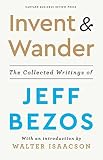
For the original letters, Amazon’s shareholder-letter archive provides the collection. Readers who want the letters alongside Bezos’s speeches and interviews can also consult Invent and Wander: The Collected Writings of Jeff Bezos; the publisher describes it as a collection of those materials, not independent validation of the strategy.
Quick Recap
Best Value
Product prices and availability are accurate as of the date/time indicated and are subject to change. Any price and availability information displayed on Amazon at the time of purchase will apply.




