Electric trucks and automated trucks change different parts of freight risk. Electrification shifts risk toward vehicle energy, charging access and infrastructure planning; automation shifts it toward system performance, operating limits, human oversight, maintenance and liability. Neither technology is categorically safer or more dangerous on the evidence available, and one does not imply the other.
What changes when a truck is electric or automated?
An electric powertrain changes how a truck is propelled and supplied with energy. Automated driving systems (ADS) change which driving tasks a system performs and the conditions in which it is expected to perform them. A truck can be electric without being automated, or automated without being electric; the federal sources discussed here address these changes in their respective domains rather than comparing trucks that combine both technologies. The federal zero-emission freight strategy addresses infrastructure deployment, while FMCSA’s automated-vehicle notice addresses ADS-equipped commercial motor vehicles.
For a fleet, “risk profile” is broader than collision probability. It includes whether a vehicle can complete its assigned work, whether safety systems work as specified, what happens when they do not, and who is responsible for oversight. Those are operational questions with potential financial consequences, but the available sources do not establish particular insurance premiums, repair costs or savings.
How do the risk areas differ?
| Risk area | Electric trucks | Automated driving systems |
|---|---|---|
| Primary change | Propulsion and energy supply; operations depend on suitable charging access and deployment planning. | Some driving tasks shift from the driver to a system whose capabilities and operating conditions matter. |
| Key operational question | Can the fleet’s routes and depots be supported by the required energy infrastructure? | Can the system sense and respond reliably within its intended conditions, including when a component or control function fails? |
| Human role | The cited sources do not assess how electrification changes driver attention or control. | Attention, secondary tasks, training and transfer of control remain relevant; automation does not by itself remove human-factors risk. |
| Evidence boundary | The cited sources do not establish comparative electric-versus-diesel truck fire rates or repair costs. | A lane-departure-warning result is evidence about that driver-assistance feature, not full autonomy; the cited sources do not establish an autonomous-truck crash rate. |
What does electrification change for fleet operations?
Energy supply becomes part of route and site planning
Electric freight depends on access to charging that suits the operation. The U.S. Department of Energy’s National Zero-Emission Freight Corridor Strategy was designed to guide charging and hydrogen-fueling deployment for medium- and heavy-duty vehicles from 2024 through 2040. It is a planning strategy, not proof that a particular route or depot has adequate infrastructure today. A fleet evaluating a deployment needs to check the actual sites and routes it expects to use rather than infer coverage from a national plan.
#1 Best Overall
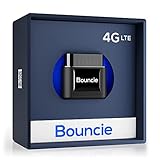
- Real-Time GPS Tracker Device for Vehicles — Ideal for personal use or fleet management, this car GPS tracker provides up-to-the-minute location updates. Our car tracking device also provides unlimited trip history, including a detailed route history
- Driving Insights — Our OBD tracker for cars monitors speed, acceleration, hard braking, idle time, and more. This versatile family and fleet GPS tracker for cars also helps improve road safety by sending alerts in response to unsafe driving practices
- Vehicle Health — Unlike other vehicle tracking devices, our car tracker device continuously monitors diagnostic engine data, alerting you to potential maintenance issues, so you can avoid downtime and keep fleet and family vehicles in peak condition
- Geo-Fencing & Accident Detection — Set up geo-fences to receive notifications when your vehicle enters or exits designated areas; Equipped with advanced sensors and software, this vehicle tracker device instantly detects impacts and sends SMS alerts
- Easy To Install & Low Monthly Subscription — Our OBD GPS tracker for vehicles plugs directly into OBD2 ports and works on most vehicles 1996 and newer; $9.65 monthly subscription required - no hidden activation or return fees - cancel anytime
Do not infer a general fire or crash rate from an incident
The National Transportation Safety Board’s investigation page documents a 2024 crash involving a battery-electric Tesla Semi truck-tractor on Interstate 80 in California. That is a specific investigation, not a comparative study of electric and diesel truck crashes or fires. The available sources do not establish comparative heavy-truck battery-fire rates, so a fleet should not treat one incident—or passenger-car statistics—as a rate estimate for electric freight trucks. NTSB investigation HWY24FH015.
How does driving automation redistribute safety responsibility?
Separate driver assistance from higher-level automation
Driver-assistance features and systems that perform more of the driving task are not interchangeable evidence categories. A 2024 U.S. DOT ITS Deployment Evaluation summary reported a 21 percent lower crash rate for trucks equipped with lane-departure warning than for trucks without it. The analysis covered three years of data from 54,250 trucks across 117 fleets and 5.72 billion miles. This result is specific to lane-departure warning and that study context; it does not establish the crash performance of autonomous trucks or all safety systems. U.S. DOT ITS Deployment Evaluation, 2024.
Rank #2

- Premium GPS Tracker — The LandAirSea 54 GPS tracker provides accurate global location, real-time alerts, and geofencing. Easily attaches to vehicles, ATVs, golf carts, or other critical assets.
- Track Movements in Real-Time — Track and map (with Google Maps) in real-time on web-based software or our SilverCloud App. Location updates as fast as every 3 seconds with historical playback for up to 1 year.
- Powerful & Discreet — The motion-activated GPS tracker will sleep when not in motion for extended periods, preserving the battery life. The ultra-compact design and internal magnet create the ultimate discreet tracker.
- Lifetime Warranty — This GPS tracker is built to last. LandAirSea, a USA-based company and pioneer in GPS tracking offers a unconditional lifetime warranty that covers any manufacturing defects in the device encountered during normal use.
- Subscription Required — Affordable subscription plans are required for each device. Fees start as low as $9.95 a month for annual plans and $19.95 for monthly plans. No contracts, cancel anytime for a hassle-free experience.
NHTSA says automated systems have the potential to prevent crashes, while also describing highly automated technology as still developing and noting that policy questions remain. That potential is not proof of a particular commercial truck’s safety performance. NHTSA puts the unresolved policy issue plainly: “questions about liability and insurance are among many important questions, in addition to technical considerations, that policymakers are working to address before automated driving systems reach their maturity and are available to the public.” NHTSA’s Automated Vehicle Safety overview.
Define operating conditions and failure responses
A safety assessment cannot stop at whether an automated truck avoids a collision in a successful run. FMCSA’s research on automated vehicle system performance and risk assessment identifies sensing performance, diverse test conditions, inspection and maintenance, and consistent responses to critical system failures as assessment areas. For fleet planning, the questions are practical: what conditions is the system intended to handle, how are limitations identified, and what is the expected fallback if sensing, actuation or control is impaired? FMCSA’s CMVRTC research description.
Rank #3

- LONG-BATTERY VEHICLE TRACKING – Built for cars, trailers, fleets, equipment, boats, and motorcycles, Tracki’s trailer GPS tracker uses a 10,000mAh battery for 2 to 7 months active at 1–5 minute updates or up to 12 months in sleep mode.
- SUBSCRIPTION-POWERED SERVICE – The Tracki GPS tracker connects through 4G LTE Cat1 with built-in global SIM, giving app access, real-time location updates, alerts, and support after activation; Subscription Required, Cancel Anytime.
- FLEET-WIDE CONTROL – A practical fleet GPS tracker for work vehicles, with subscription-powered 15-second to 1-minute updates plus speed, geofence, movement, idle time, impact, and battery alerts through SMS, email, and app notifications.
- TRAILER & ASSET COVERAGE – A GPS tracker for trailer, car, truck, RV, boat, or equipment use, with 185+ country coverage, GPS accuracy of 5 to 10 meters outdoors, and Wi-Fi fallback indoors when GPS signals are harder to reach.
- SECURE TWO-WHEEL MONITORING – Use this motorcycle tracker for authorized bikes and powersport assets, with a built-in strong magnet, included screw mount, and weatherproof design for flexible vehicle placement.
Keep a human-factors plan
Automation changes the driver’s task; it does not make attention, training or transfer of control irrelevant. A U.S. DOT/Federal Motor Carrier Safety Administration privacy assessment updated March 11, 2024, describes a planned simulator study involving 100 commercial drivers under simulated Level 2 ADAS or Level 3 ADS conditions. It was designed to examine secondary tasks, control handoffs and training; it is a study description, not published outcome data. It therefore identifies questions for safety oversight rather than proving how drivers will behave in commercial service. U.S. DOT/FMCSA human-factors study description.
What should a fleet examine before relying on these systems?
Use the technology’s actual operating requirements—not the label “electric” or “autonomous”—to structure a review. For an automated vehicle, NHTSA identifies FMCSA as the lead federal agency for commercial motor vehicle operational safety oversight, including areas such as hours of service, driver qualifications, hazardous materials and vehicle inspections. FMCSA’s notice explains that existing commercial-vehicle rules apply to many aspects of ADS-equipped vehicles, while the federal rules discussed there did not include ADS-specific technical performance standards for fully autonomous operation. Regulatory requirements can change, so confirm current agency requirements for the vehicle and operation before deployment. NHTSA’s Automated Driving Systems overview and FMCSA’s notice on integrating ADS-equipped CMVs.
Rank #4

- GPS Tracker - Track Cars and Trucks - Hardwired Installation - Requires a 2 wire Easy direct on Car’s Battery installation (Positive and Negative).
- Flexible Subscription: Enjoy the benefits of an affordable monthly subscription at USD 12.95, with the freedom to cancel at any time. Transparent pricing ensures no undisclosed fees, providing a cost-effective solution for your GPS tracking needs. Cancel Anytime - No Contract - No Hidden Fees.
- Real-time Tracking Precision: Tracks every 30 seconds and on every turn. Upgrade to 10-second reporting. Responsive tracking on corners provides a comprehensive view of vehicle movements, enhancing overall tracking precision.
- Email and Text Message Alerts for Movement, Speeding, Leaving or Entering Areas, Energy Disconnected - Driving Reports – 1 Year Tracking Historical Data Saved During Service.
- Nationwide Coverage: Enjoy reliable GPS tracking coverage across the entire USA, providing a seamless and robust tracking experience wherever your vehicles operate.
- Map the operation. Identify routes, depots, operating conditions and the tasks a truck is expected to perform. For electric vehicles, verify charging access at the locations the operation actually uses; a national deployment strategy is not a site-level availability guarantee.
- Document system boundaries. For an ADS or ADAS, establish the intended operating conditions, limitations, driver duties and procedures for a failure or handoff. Do not treat a feature’s presence as evidence that the vehicle can perform every driving task.
- Review inspection and maintenance needs. Determine how required vehicle and sensing systems will be inspected, maintained and checked for the performance specified for the operation. FMCSA treats inspection and maintenance as part of system-performance risk assessment.
- Train for the human role. Address attention, permitted secondary tasks, control transfer and driver responsibilities in training and procedures. Do not assume that a system reduces risk if people are unclear about when they must intervene.
- Clarify accountability and coverage. Ask how the operator, driver, vehicle maker and system provider handle incident records, failure reporting and responsibility. The cited federal sources identify liability and insurance as unresolved policy questions; they do not establish commercial insurance terms or premiums.
What the evidence does—and does not—show
The evidence supports a comparison of risk mechanisms, not a blanket ranking. Electric freight makes energy infrastructure a core operating dependency, while automated driving makes system capability, fallback behavior, maintenance and human oversight central to safety management. The lane-departure-warning finding is a measured result for one assistance technology; it cannot be used as a proxy for full automation.
The available sources do not establish comparative crash rates for autonomous versus conventional heavy trucks, electric-versus-diesel heavy-truck battery-fire rates, repair-cost differences or commercial insurance-price effects. Nor should passenger-vehicle automation evidence be presented as proof about autonomous commercial trucks. For example, NTSB’s March 31, 2026 report on two fatal Ford BlueCruise crashes concerns passenger vehicles using partial automation; its narrow relevance here is that overreliance on automation can be a human-factors concern, not that it establishes commercial-truck risk. NTSB, March 31, 2026.
Best Value

- [NO MONTHLY FEE — 4G SIM & DATA INCLUDED] Pay once and track without a recurring subscription or activation fee. The built-in 4G SIM and data are included, with vehicle location, trip history, and alerts available through the TrackEase app and web dashboard. Coverage depends on local cellular availability.
- [DIRECT VEHICLE POWER — NO RECHARGING] The hardwired tracker draws power directly from the vehicle for continuous, long-term monitoring without occupying the OBD-II port or requiring routine battery charging. Designed for permanent installation in personal vehicles, work trucks, service vans, and small fleets.
- [2-WIRE POWER + OPTIONAL IGNITION DETECTION] Connect red to constant positive power and black to ground. Connect the orange ACC wire to a switched ignition source when vehicle-on and vehicle-off status is needed. Professional installation is recommended if you are not familiar with automotive wiring.
- [REAL-TIME LOCATION & 180-DAY TRIP HISTORY] Monitor vehicle location and review up to 180 days of routes, stops, mileage, and speed activity in the iOS, Android, or web app. Location performance may vary in garages, underground areas, or places with weak GPS or cellular signal.
- [CUSTOM ALERTS & MULTI-VEHICLE MANAGEMENT] Receive push notifications for speeding, geofence entry or exit, power disconnection or tampering, and ignition activity when the ACC wire is connected. Manage multiple VITALGLOW trackers from one account across 170+ supported countries and regions.
Bottom line for freight operators
Electric and automated trucks do not share one new risk; they shift exposure in different directions. Assess electric trucks through route-level energy access and infrastructure readiness. Assess automated systems through defined operating limits, system failure responses, inspection and maintenance, driver training and accountability. Available evidence does not justify calling either category categorically safer or more dangerous, or assigning it an unsupported insurance, fire or crash-rate premium.
Quick Recap
Product prices and availability are accurate as of the date/time indicated and are subject to change. Any price and availability information displayed on Amazon at the time of purchase will apply.




