Quick wins for a faster PC:
Clear out junk files and repair common Windows errorsFree Scan →Fix the driver behind crashes, sound loss and screen glitchesFind Drivers →No. The 2024 study behind the headline did not report a newly discovered deposit or value Hamersley iron ore at $5.7 trillion. Curtin University announced new dates for already-known deposits in Western Australia’s Hamersley Province: about 1.4–1.1 billion years old, rather than the earlier estimate of 2.2 billion years. The trillion-dollar figure comes from separate, secondary coverage that multiplies an asserted tonnage by an assumed iron-ore price.
What did geologists find?
The finding was a revised geological age for iron oxide minerals in giant iron deposits in the Hamersley Province, not a newly discovered orebody. Curtin University’s July 23, 2024 announcement describes a study titled “A Billion-Year Shift in the Formation of Earth’s Largest Ore Deposits,” published in the Proceedings of the National Academy of Sciences (DOI: 10.1073/pnas.2405741121). The researchers used uranium–lead isotope analysis within iron oxide mineral grains to date material from major deposits hosted in banded iron formations—ancient layers of iron-rich rock.

The dates put the deposits’ formation at roughly 1.4–1.1 billion years ago, compared with the previous estimate of 2.2 billion years. Curtin’s announcement says the study may help geologists make better predictions about where to explore; it does not say the researchers delineated a new deposit. Curtin University’s study announcement.
Where are the Hamersley deposits?
The Hamersley Province is in Western Australia. The headline’s wording can make the story sound like a discovery announcement, but the study concerns major deposits already known in this iron-rich region. Curtin described iron ore as Australia’s largest export earner, worth A$131 billion in the previous financial year; that figure is national industry context, not a valuation of the deposits dated in the study.
#1 Best Overall

- Hematite sample approximately 1" (3cm) in size
- Ideal for students learning about mineral streak tests - hematite's distinct red streak is unlike any other
- Perfect size for use in classroom identification labs and exercises, correlates well to Next Generation Science Standards Evidence Statements
- Good visual aid for other iron-bearing rocks and minerals
- Specimen comes in clear labeled and barcoded bag for ideal storage
Where does the $5.7 trillion figure come from?
Indian Defence Review’s 2025 article asserts a quantity of 55 billion metric tons and multiplies it by an assumed price of $105 per metric ton to reach $5.775 trillion. That is gross price-times-tonnage arithmetic reported by the secondary article—not a valuation produced by the age-dating study. Indian Defence Review’s article.
The calculation alone does not establish that all 55 billion metric tons are economically recoverable, that the material is classified as a mineral reserve, or that a mining project could sell it at that assumed price. The sources cited here do not establish a formal resource or reserve classification for that tonnage, a mine plan, recoverable quantities, costs, or a project-specific valuation. A commodity-price multiplication should therefore not be read as cash available to a company, government, or investor.
Rank #2
What does the age revision change?
The revised dates place the deposits’ formation in a different geological period than the earlier 2.2-billion-year estimate suggested. Curtin says the timing coincides with major geological activity as ancient supercontinents broke apart and new ones formed. The researchers present that connection as a way to improve understanding of the deposits and guide future exploration, not as proof that one tectonic event alone created them.
The study also addresses how iron content changed. Curtin co-author Associate Professor Martin Danišík said the formations changed from about 30 percent iron originally to more than 60 percent today, but that the exact timeline had been unclear. The new dates help refine the geological account; iron concentration by itself does not tell readers how much ore can be mined profitably.
Quick Recap
Best Value
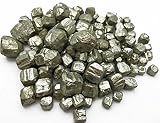
- 1.0
- Multiple pieces similar in size and quality to those pictured above
- Pieces measure approximately 1/4 to 1/2 inches
- Place of origin: China
Rank #4

- Stone Types: Pyrite
Rank #3

- HEMATITE | Hematite is made up of iron and oxygen, giving it a distinct red, earthy color. Although hematite can form in a variety of appearances, this mineral is instantly recognized by the reddish brown streak it leaves behind when powdered
- GREAT FOR GEOLOGY CLASSROOMS | Ideal for identification & classification exercises. Ideal for learning about mineral streak tests and provides a great visual aid for iron bearing rocks & minerals
- GEOLOGIST SELECTED | Each specimen is selected and hand processed by an actual geologist, ensuring each sample exhibits defining features
- LOCALLY PROCESSED | Our rock and mineral samples are sourced from a variety of locations around the world and are processed in Victor, NY
- INDIVIDUALLY PACKAGED & LABELED | Each specimen sample is packaged in a transparent bag, and is labeled & barcoded for easy identification
Headline claim versus study result
| Question | What the evidence says |
|---|---|
| Was a new deposit discovered? | No new discovery is reported in Curtin University’s 2024 announcement; it describes dating major, already-known Hamersley deposits. |
| What did the researchers measure? | They used uranium–lead isotope analysis of iron oxide minerals to estimate formation ages. |
| What age did they report? | About 1.4–1.1 billion years, compared with the earlier 2.2-billion-year estimate, according to Curtin University. |
| Did the study value the ore at $5.7 trillion? | No. Indian Defence Review’s 2025 article gives the $5.775 trillion arithmetic using 55 billion metric tons and an assumed $105 per metric ton; Curtin’s announcement does not report that valuation. |
| Does the arithmetic prove a reserve or mine value? | No. The cited sources do not establish the classification, recoverable tonnage, mine plan, or project valuation needed to support that conclusion. |
Product prices and availability are accurate as of the date/time indicated and are subject to change. Any price and availability information displayed on Amazon at the time of purchase will apply.




