Free tools Windows power users keep installed
One-click scans. No signup required.
There is no evidence-based single “smartest buy” among used Toyota V6s: the right choice depends on what you need the vehicle to do and the condition, records, configuration, and asking price of the specific one for sale. A Camry or Avalon may suit a sedan buyer; a Highlander, 4Runner, or Tacoma serves a different purpose. Compare those candidates as used vehicles—not as a blanket argument against EVs—and verify the engine and recall status by vehicle identification number (VIN).
Which used Toyota V6 models are worth comparing?
The candidates span four distinct kinds of vehicle, so they cannot be ranked fairly on one universal scale. A low-mileage sedan at a sensible price may be a better financial fit than an SUV or pickup, even if the latter has more capability. These are examples to investigate, not a reliability ranking or a claim that every model year is a good buy.
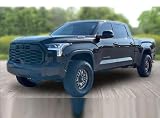


| Model | Type and possible fit | What the cited material establishes | What to verify on the vehicle |
|---|---|---|---|
| Camry V6 | Sedan; consider if a car rather than an SUV or pickup meets your needs. | A Summer 2017 Consumer Reports guide excerpt lists 3.5-liter V6 Camry configurations, including a 2012–2016 XLE entry. | Model year, trim, engine, drivetrain, condition, records, and asking price. The guide does not establish current prices or reliability rankings. |
| Avalon V6 | Sedan; another option for someone shopping for a V6 Toyota car. | The same dated guide lists 3.5-liter V6 Avalon configurations, including a 2013–2015 Limited entry. | Exact configuration and vehicle condition; the historical listing is not a current valuation or reliability assessment. |
| Highlander V6 | Family crossover; compare if its size and use suit your household. | A Toyota of Katy dealer article identifies Highlander applications with a 3.5-liter V6. That is model identification from a dealer-authored source, not independent proof of reliability. | Year, trim, engine, drivetrain, service history, condition, and whether the price reflects the specific vehicle. |
| 4Runner V6 | SUV; compare if you need the kind of utility associated with this model rather than a sedan. | The 2017 guide excerpt lists 4.0-liter V6 4Runner examples; the dealer article also names the 4Runner. | Exact year and configuration, condition, records, and suitability for your intended use. |
| Tacoma V6 | Pickup; compare if you need a truck rather than a passenger car or crossover. | The dealer article names a 3.5-liter V6 Tacoma example. | Confirm the specific truck’s model year, engine, trim, and drivetrain. The current Toyota lineup does not by itself establish V6 availability in a newer Tacoma. |
For historical context only, the Summer 2017 Consumer Reports guide excerpt lists 18 mpg for its 2010–2016 4Runner SR5 4.0-liter V6 entry, 26 mpg for its 2012–2016 Camry XLE 3.5-liter V6 entry, and 24 mpg for its 2013–2015 Avalon Limited 3.5-liter V6 entry. These are figures attached to specified entries in a dated guide, not current estimates for every year, trim, drivetrain, or driving pattern. Check the exact configuration and the source table before using them to compare vehicles.
How to decide whether a particular V6 Toyota is a smart buy
Judge the individual listing against your budget and intended use. A model name or engine alone cannot tell you whether the vehicle is fairly priced or in good condition. Compare these factors before making an offer:
Crashes, No Sound, or Screen Glitches?
Random freezes, missing sound and display glitches usually trace back to one bad driver. Find and replace yours safely.Free scan · under a minutePC Slower Than It Used to Be?
A free scan shows the junk files, broken settings and background clutter dragging Windows down - then fixes them in one click.Free scan · Windows 10 & 11#1 Best Overall
- Asking price and condition: Compare the price with the condition of that exact vehicle. Account for visible wear and any issues identified by an independent inspection.
- Mileage and documentation: Review mileage alongside available service and ownership records. Missing records leave less evidence of how the car was maintained.
- Engine, trim, and drivetrain: Confirm the details for the specific vehicle rather than assuming all examples of a model share the same configuration.
- Fuel use and intended driving: Consider whether the vehicle type and expected fuel costs fit your regular use. Historical guide figures are not substitutes for current, configuration-specific estimates.
- Recall status: Check the actual VIN or license plate for open recalls and service campaigns before purchase.
What certified-used status and history reports can—and cannot—tell you
Toyota’s Certified Used Vehicles pages describe program eligibility and benefits, and its inspection page describes a multi-point inspection and a free CARFAX vehicle-history report. Those are useful screening inputs, but certification and a history report do not establish that a vehicle is problem-free or guarantee future reliability. Read the program terms and review the actual vehicle’s documentation rather than treating a certification label as a substitute for your own checks.
Sources: Toyota Certified Used Vehicles certification and Toyota’s inspection information.
Rank #2
How to check recalls before buying
- Get the vehicle’s VIN from the seller or the vehicle itself. Toyota’s lookup also accepts a license plate.
- Open Toyota Owners’ recall and service-campaign lookup and enter the vehicle information.
- Review any results and ask the seller for documentation showing whether required work was completed. If anything remains unclear, contact a Toyota dealer before purchase.
Toyota says its lookup covers Toyota, Lexus, and Scion vehicles intended for sale or sold in the U.S., U.S. territories, and Mexico. Toyota’s recall page explains: “In accordance with the requirements of the National Traffic and Motor Vehicle Safety Act, when Toyota, Lexus, or Scion has determined that either a defect which relates to motor vehicle safety or a noncompliance with a Federal Motor Vehicle Safety Standard exists in your vehicle, a Safety Recall Campaign is launched.”
Independent reader supportYour contribution helps us test, update, and keep practical guides available for everyone.What the available evidence does not prove
The cited sources do not provide a current, comparable reliability statistic for these five models or establish a universally best year. The Consumer Reports material is a Summer 2017 guide excerpt and supports only historical configuration and fuel-economy context here; the dealer article’s engine references do not establish independent reliability findings. Toyota’s current vehicle lineup is useful for seeing current models, but a current listing alone does not verify V6 availability in a newer vehicle. Check the engine on the used vehicle you are actually considering.
Recommended Free Tools
Quick Recap
Best Value
Product prices and availability are accurate as of the date/time indicated and are subject to change. Any price and availability information displayed on Amazon at the time of purchase will apply.




