Yes, a 5.00% APY savings opportunity existed in April 2026—but it was not a broadly available 5% rate on any balance. The clearest example was Varo, which paid up to 5.00% APY on the first $5,000 when the customer met a qualifying direct-deposit requirement. AdelFi also reported a 5.00% Harvest Savings rate, but it was a specialized, privately insured credit-union product.
This is a retrospective April 2026 rate snapshot, not a claim about every rate available on August 9, 2026. Savings APYs are variable. Varo later reduced its qualifying rate to 3.75% APY, while AdelFi’s current rate page still shows a 5.00% tier subject to its own membership, balance and insurance terms.
For a saver with exactly $5,000 who can redirect payroll, Varo was the strongest April fit among the headline-rate offers. For balances above roughly $7,000 to $8,000, however, an account paying approximately 4.00% to 4.21% on the whole balance could produce more interest with fewer restrictions. The right comparison is therefore not 5.00% versus 4.20%; it is the interest earned after applying each account’s cap, tier, requirements, fees and availability.
Important date note: The rates and terms below were reported or captured during April 2026. They were variable then and may have changed during or after that month. Check the institution’s current disclosure before opening an account or moving money.
What’s actually slowing this PC down?
Pick the symptom - the matching free tool is one click away.
#1 Best Overall
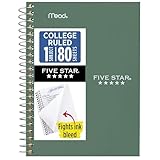
- This 4-3/8" x 7" small size, 1 subject notebook has 80 double-sided college ruled sheets that fight ink bleed and are perforated for easy tear out. Perfectly sized for when you're on the go.
- Tough pockets resist tears and hold loose sheets and notes. Durable plastic water-resistant front cover helps protect your notes and our Spiral Lock wire helps prevent snags on clothes and backpacks.
- All the benefits of our larger notebooks in a smaller, easy to carry size. Sheets measure 4-3/8" x 7 when torn out.
- Available in Seaglass Green
- LASTS ALL YEAR. GUARANTEED!*
April 2026 high-yield savings rate snapshot
The table compares the offers as they appeared in April. A rate labeled up to is not necessarily the rate every customer earned, and an account’s advertised APY may have applied only to a balance tier.
| Account | April APY | Where it applied | Requirements and limitations | Insurance and availability | Best fit |
|---|---|---|---|---|---|
| Varo Savings | Up to 5.00% | First $5,000 | Varo Bank account; at least $1,000 in qualifying direct deposits during the qualifying period; positive balances in relevant Varo accounts. The April standard rate was 2.50% on other balances. | FDIC-insured bank product, subject to applicable limits. Available to qualifying applicants during the April snapshot. | A saver with about $5,000 who can meet the payroll requirement. |
| AdelFi Harvest Savings | 5.00% reported or advertised | Reported on the first $5,000 tier | Membership eligibility; $100 opening deposit. Current terms include a $5 monthly fee when the balance is below $100. The complete April tier schedule requires archived verification. | Private ASI insurance, not FDIC or NCUA insurance. | An eligible member who accepts private share insurance and the account’s tier structure. |
| Axos ONE Savings | Up to 4.21% | Promotional rate within published balance tiers; treated as whole-balance for the examples when qualified | Linked Axos checking account plus qualifying monthly deposits and an average daily checking balance. The product page describes either $1,500 of qualifying deposits and a $1,500 average daily checking balance, or $5,000 of each. | FDIC-insured bank product, subject to applicable limits. Terms and qualification rules can change. | A larger-balance saver who can maintain the linked checking requirements. |
| Newtek Personal High Yield Savings | About 4.20% | Broad balance availability under product terms | New personal applications were paused because of demand; prospective customers were directed to a waitlist. Published terms permitted up to six withdrawals or transfers per statement cycle. | FDIC-insured bank product, subject to applicable limits. Not an immediate new-account option during the April pause. | Existing customers or someone willing to wait. |
| Vio Bank Online Savings | 4.03% as of April 10 | Whole balance under the account’s terms | $100 minimum to open. No monthly fee was reported in the cited April comparison coverage; verify the current fee schedule. | FDIC-insured bank product, subject to applicable limits. | A saver seeking a straightforward whole-balance rate without a payroll requirement. |
| CIT Platinum Savings | 4.10% in Bankrate’s April 2 rate history | Competitive rate at the qualifying balance tier | At least $5,000 was required to earn the higher APY; a lower tier applied below that amount. | FDIC-insured bank product, subject to applicable limits. | A saver with $5,000 or more who wants a conventional bank account. |
| EverBank Performance Savings | 3.90% as of April 3 | Whole balance | No minimum deposit or minimum balance was required to earn the reported APY. | FDIC-insured bank product, subject to applicable limits. | A saver prioritizing simple access over the very highest headline rate. |
| Other competitive accounts | About 4.00%–4.03% | Generally whole balance, subject to individual terms | Vio, LendingClub, Bread, Openbank and similar products had varying opening deposits, transfer rules and eligibility requirements. | Verify the legal deposit-taking institution and current insurance status. | An alternative to capped promotional accounts. |
Comparison sites did not all answer exactly the same question. Lists emphasizing easy-to-earn, whole-balance yields often showed accounts around 4.00% to 4.21%, while Varo appeared separately because its 5.00% rate required qualification and was capped. Those lists are not necessarily contradictory.
What the April 5.00% offers actually meant
Varo: the clearest capped 5.00% option
Under the April terms reported by major comparison coverage, Varo paid 5.00% APY on the first $5,000 when the customer had a Varo Bank account, received at least $1,000 in qualifying direct deposits during the qualifying period and maintained positive balances in the relevant Varo accounts. The rate above the cap was the account’s lower standard rate, reported as 2.50% for April.
That means a customer who left $10,000 in the account did not earn 5.00% on all $10,000. The first $5,000 earned the headline rate, while the remaining $5,000 earned approximately 2.50%, assuming the qualification conditions remained satisfied.
Varo’s main advantage was the fit between the cap and a $5,000 cash reserve: a qualified customer could earn approximately $250 per year before taxes if the rate stayed unchanged. The disadvantage was the continuing direct-deposit requirement and the possibility of dropping to the standard rate if a requirement was missed. Do not assume a grace period or retroactive correction unless the current account agreement expressly provides one.
April coverage also described access limitations, including electronic-transfer access rather than ordinary ATM access directly from the savings account and no wire transfers. Those details should be checked against the archived April disclosure or current Varo terms before using the account for an emergency fund. A high APY is less useful if the money cannot be moved when an emergency occurs.
AdelFi: a specialized 5.00% alternative
AdelFi’s April 8, 2026 FAQ referenced 5.00% APY for Harvest Savings. However, the public FAQ does not preserve a complete April rate sheet, so the exact April tiers should be attributed to a dated rate page or secondary source rather than treated as independently reconstructed facts.
AdelFi is not interchangeable with an FDIC-insured online bank. It is a credit union with membership eligibility requirements, including its Christian-oriented membership framework. AdelFi’s own site says it is not federally insured and uses American Share Insurance. ASI describes its coverage as private, generally up to $250,000 per account, and not insured or guaranteed by a government agency. That is a material difference for anyone who specifically requires federal deposit or share insurance.
Free tools Windows power users keep installed
One-click scans. No signup required.
Rank #2

- A classroom classic: this 6-pack of 1-subject spiral notebooks helps you identify your subjects at a glance with color-coding efficiency; color assortment may vary
- The right ruling: these 8" x 10-1/2", college-ruled notebooks fit more writing per page than wide-ruled sheets; each notebook provides 70 double-sided sheets with red margin lines
- Perect perforation: Dependable micro-perforated sheets retain your must-have notes but still detach cleanly when you’re ready to revise
- Glide from page to page: Your favorite gel or ballpoint pens will move effortlessly across these smooth pages for A+ notes with minimal ink bleeding or show-through
- 3-Hold punched: Every notebook comes 3-hole punched to fit a standard binder; take along one notebook or several to save extra trips to the locker
AdelFi’s current rate page—not automatically an April rate sheet—shows 5.00% through $5,000, 2.25% from $5,000.01 to $10,000 and 0.10% above $10,000. It also lists a $100 opening deposit and a $5 monthly fee below a $100 balance. These terms illustrate why the membership, insurance, fees and full tier schedule must be evaluated alongside the APY.
Whole-balance alternatives around 4.00%–4.21%
Axos ONE: higher whole-balance potential, heavier conditions
Axos ONE was reported at up to 4.21% APY in April and remains advertised at that level in the supplied current product information. To qualify, the customer must link an Axos checking account and satisfy one of the product’s deposit-and-balance combinations: $1,500 in qualifying monthly direct deposits plus a $1,500 average daily checking balance, or $5,000 in qualifying monthly deposits plus a $5,000 average daily checking balance.
This can outperform a capped 5.00% account for a larger savings balance, but only if the checking account conditions are natural for the customer. A rate that requires keeping $5,000 in a lower-yield checking account should be judged on the combined household result, not the savings APY alone.
Axos also distinguishes qualifying payroll or government-benefit ACH deposits from ordinary transfers, mobile deposits, real-time payments and person-to-person payments. A transfer from another bank may not count as direct deposit. Check the written account agreement before changing payroll instructions.
Newtek: attractive rate, but not readily available to new customers
Newtek Personal High Yield Savings appeared in April comparisons at approximately 4.20% APY. But the bank’s official site said that new personal applications had been paused because of overwhelming demand and that prospective customers should join a waitlist. It should therefore be labeled waitlist—not currently open to new applicants, rather than presented as an account a reader could immediately open.
Newtek’s published terms also allowed up to six withdrawals or transfers per statement cycle. That limit may not be a problem for a reserve that is rarely touched, but it matters if the account is used for frequent transfers or bill payments.
Vio, CIT and EverBank: fewer headline-rate complications
Vio Bank’s 4.03% APY as of April 10 was a useful benchmark because the rate generally applied to the whole balance and did not require payroll qualification in the cited coverage. It required $100 to open. EverBank’s reported 3.90% rate as of April 3 was lower but had no minimum deposit or minimum balance requirement to earn the APY.
CIT Platinum Savings offered 4.10% in Bankrate’s April 2 rate history, but only at a balance of at least $5,000. Calling it a no-minimum account would be misleading: a customer might be able to open the account with less, but the competitive APY required the higher balance tier.
Rank #3

- Perfectly sized for when you're on the go, this small 2 subject notebook has 80 double-sided college ruled sheets that fight ink bleed and are perforated for easy tear out
- Tough pockets help prevent tears and hold 6" x 9-1/2" loose sheets and notes. Durable plastic water-resistant front cover helps protect your notes and our Spiral Lock wire helps prevent snags on clothes and backpacks.
- All the benefits of our larger notebooks in a smaller, easy to carry size. Sheets measure 6" x 9-1/2" when torn out.
- Made with SFI certified paper. Notebook is recyclable – just remove the reinforcement tape on the pocket and recycle the rest! Available in Blue (Color May Vary)
- LASTS ALL YEAR. GUARANTEED!*
Balance-based comparison: what you might actually earn
The following are approximate annual earnings using the April rates and structures. They assume the rate remains unchanged for a full year, the customer satisfies all requirements, no withdrawals occur and fees do not reduce the result. Actual interest can differ because APYs compound and rates can change.
| Balance | Varo at 5.00% on first $5,000, then 2.50% | 4.03% on the whole balance | Axos at 4.21% on the whole balance | CIT at 4.10% when the $5,000 tier qualifies |
|---|---|---|---|---|
| $1,000 | About $50 | About $40.30 | About $42.10 if qualified | Higher tier not met |
| $5,000 | About $250 | About $201.50 | About $210.50 if qualified | About $205 if qualified |
| $10,000 | About $375 | About $403 | About $421 if qualified | About $410 if qualified |
| $25,000 | About $750 | About $1,007.50 | About $1,052.50 if qualified | About $1,025 if qualified |
At $5,000, Varo’s capped 5.00% rate produces the most of these examples if the customer qualifies. At $10,000, an account paying 4.21% on the full balance produces about $46 more than Varo’s April structure. At $25,000, the difference grows to roughly $302.50 per year before taxes.
The approximate break-even point is useful:
- Against a 4.21% whole-balance rate, Varo’s April structure becomes less profitable at roughly $7,300, assuming 2.50% above the $5,000 cap and no fees.
- Against a 4.03% whole-balance rate, the break-even point is roughly $8,200.
These are estimates, not universal rankings. The result changes if the customer misses direct deposit, a linked checking balance earns less, a monthly fee applies or the competing APY changes.
How to choose the account instead of chasing the headline
- Confirm eligibility and availability. Can you open the account now? Is there a waitlist? Is membership restricted? Is the product available in your state? Newtek’s April rate was not immediately available to new personal applicants, and AdelFi required membership eligibility.
- Calculate the effective yield on your full balance. Apply each rate only to the tier it covers. Include monthly maintenance fees, opening deposits and any fee on a linked checking account. Distinguish no minimum to open from no minimum to earn the advertised APY.
- Measure the requirement burden. Determine whether direct deposit must be payroll or a government benefit, whether a self-funded ACH transfer is excluded, whether a checking balance must be maintained, and whether debit-card use, recurring deposits or e-statements are required.
- Verify insurance. Identify the legal bank holding the deposit. Confirm FDIC coverage for a bank account, NCUA coverage for a federally insured credit-union share account, or private insurance for a product such as AdelFi’s Harvest Savings.
- Test liquidity and access. Review ACH timing, wire availability, ATM access, transfer limits, mobile-deposit capability and customer-service hours. Savings accounts are generally more liquid than CDs, but a transfer can still take several business days.
- Consider operational risk. Identity verification, account-opening delays, fraud holds, transfer blocks and account-closure procedures can matter more than a few extra basis points when the money is an emergency fund.
- Assess rate durability. Ask whether the APY is a standard rate or an explicitly promotional rate, whether it requires continuous monthly qualification and whether the institution has changed it frequently. A savings APY is not locked in.
Direct-deposit requirements: avoid an expensive technicality
Do not assume that any incoming transfer counts as direct deposit. Banks commonly define qualifying deposits more narrowly than customers expect. Payroll and government-benefit ACH payments may qualify, while transfers from your own account, mobile deposits, real-time payments and person-to-person payments may not.
Recommended Free Tools
Before switching payroll, use this checklist:
- Read the account agreement’s definition of qualifying direct deposit.
- Start the payroll change early enough for the first deposit to post before the qualification cutoff.
- Confirm that the deposit posted as an eligible transaction, not merely that money arrived.
- Maintain the required positive or minimum balance.
- Check the next month’s interest rate or qualification status rather than assuming the 5.00% APY began immediately.
If a requirement is missed, the likely result is the lower standard APY for the relevant period. Do not assume the bank will correct the rate retroactively or provide a grace period.
Liquidity and emergency-fund considerations
A high-yield savings account can be appropriate for an emergency fund, house reserve or tax reserve, but the account must work operationally. Keep a small portion of an emergency fund in a checking account or local bank if an external online savings account has slow ACH transfers, no wire access, limited ATM access or a history of blocking unfamiliar transfers.
Before opening, check:
- How long an ACH transfer takes to arrive and whether new external accounts are subject to a hold;
- whether the savings account supports wires or ATM withdrawals;
- monthly withdrawal or transfer limits;
- whether mobile deposits are available;
- how the bank handles fraud reviews and account freezes; and
- how to reach customer service outside ordinary business hours.
Newtek’s published terms, for example, permitted up to six withdrawals or transfers per statement cycle. Varo’s April product limitations described electronic-transfer access rather than ordinary ATM access from the savings account and no wire transfers; recheck those details against the applicable disclosure before relying on Varo for immediate cash.
FDIC, NCUA and private share insurance
Insurance is not a minor footnote in this comparison.
Rank #4

- LASTS ALL YEAR. GUARANTEED! Guarantee is valid for one year from purchase or delivery date, whichever is longer. Does not cover misuse.
- Scan, study and organize your notes with the Five Star Study App. Create instant flashcards and sync your notes to Google Drive to access them anywhere from any device.
- This 5 subject notebook has 200 double-sided, college ruled sheets that fight ink bleed and are perforated for easy tear out. Sheets measure 8-1/2" x 11" when torn out.
- Tough pockets help prevent tears and hold 8-1/2" x 11" loose sheets. Durable plastic front cover is water-resistant to help protect your notes and our Spiral Lock wire helps prevent snags on clothes and backpacks.
- Made with SFI certified paper. Notebook is recyclable – just remove the reinforcement tape on the pocket and recycle the rest! Available in Pacific Blue.
- FDIC: Federally insured bank deposits are generally covered up to $250,000 per depositor, per FDIC-insured bank, per ownership category, subject to the FDIC’s rules. Varo, Axos, Newtek, Vio, CIT and EverBank are bank products represented as FDIC-insured in the relevant disclosures.
- NCUA: Federally insured credit-union shares are generally covered up to $250,000 through the NCUA Share Insurance Fund, subject to ownership rules.
- ASI: AdelFi states that it is not federally insured and uses American Share Insurance. ASI says its protection is private and not insured or guaranteed by a government agency. AdelFi’s description of coverage is generally up to $250,000 per account, rather than the same federal coverage framework a reader may expect from a bank or federally insured credit union.
For balances above $250,000, opening several accounts at the same bank does not automatically create separate FDIC coverage. Deposits in the same ownership category at the same institution are generally aggregated. Review the FDIC ownership rules or consult a deposit-insurance professional before spreading a large cash balance.
Independent reader supportYour contribution helps us test, update, and keep practical guides available for everyone.Variable APYs, the Federal Reserve and ordinary savings rates
High-yield savings APYs are generally variable. A bank can lower the APY after the account is opened, and it is not required to move in lockstep with the Federal Reserve. The Federal Reserve maintained a federal-funds target range of 3.50% to 3.75% after its April 29, 2026 meeting, but that decision did not guarantee any particular bank’s savings rate.
For context, the FDIC’s national-rate table showed an average savings rate of 0.38% as of April 20, 2026. On $10,000, that would be approximately $38 per year, compared with about $400 at 4.00% and $421 at 4.21%. The national average includes many traditional branch accounts, so it is a market comparison rather than a forecast of what every saver can earn.
APY is not exactly the same as the stated interest rate. The interest rate is the periodic rate, while APY incorporates the effect of compounding over a year. APY is the more useful comparison when two accounts have the same balance treatment, fees and requirements. It becomes misleading when one account applies 5.00% only to $5,000 and another applies 4.21% to the entire balance.
The Tool Desk
Outbyte PC Repair FREEClear out junk files and repair common Windows errorsFree Scan →Outbyte Driver Updater FREEScan for outdated or missing drivers - takes under a minuteDriver Scan →What changed after April 2026?
As of August 9, 2026, the April Varo figure is historical. Varo’s July 1 disclosure listed 3.75% APY on the first $5,000 for qualifying customers and a 1.00% standard rate. That later reduction is why an April article should not use the word current for Varo’s 5.00% rate.
AdelFi’s current rates page still shows a 5.00% Harvest Savings tier through $5,000, but the $100 opening deposit, below-$100 monthly fee, tiered rates and private ASI insurance remain important. Axos continues to advertise up to 4.21% APY, subject to its linked-checking, deposit and average-balance requirements. All three figures can change again.
Tax treatment
Interest from a savings account is generally taxable income. The IRS treats interest from bank deposits and similar accounts as interest income, and the institution may provide Form 1099-INT after the tax year. Retain the form and account statements, and consult a tax professional about your individual situation.
When a CD, Treasury bill or money-market account may be better
A savings account is usually the better fit when you need flexible access and can accept a variable APY. Other cash vehicles may make more sense in specific situations:
Windows Errors? Fix Them Before They Spread
Repair common Windows errors and clear accumulated junk for a smoother, more stable PC - no reinstall needed.Free scan · no reinstallCrashes, No Sound, or Screen Glitches?
Random freezes, missing sound and display glitches usually trace back to one bad driver. Find and replace yours safely.Free scan · under a minuteBest Value

- BEST-SELLING HARDCOVER JOURNAL: This classic 5.6" x 8" vegan leather journal features a durable and water-resistant cover, 160 college ruled lined pages, inner expandable pocket, sticker labels, ribbon bookmark & elastic closure band.
- PREMIUM PAPER: Made with high-quality, 100 gsm acid-free paper in light ivory color, our journal paper is thicker than average notebooks & note pads, so you can confidently use most pens, pencils, and markers without ghosting and bleed-through.
- LAY FLAT DESIGN FOR WRITING EASE: Our thread-bound, college ruled notebook is designed to lay flat, making it easier to write for both right and left-handed users. It’s the perfect notebook for journaling, note taking and planning.
- INNER POCKET: Includes an expandable inner storage pocket to store appointment cards, notes, receipts, and more. Personalize your journal cover & spine with the sheet of sticker labels included.
- VERSATILE LINED NOTEBOOK: Ideal for journaling, note-taking, planning, or creative writing. Whether you're making a to-do list, capturing ideas, or writing notes, this journal makes a perfect notebook for school, work, or home office.
- CD: Consider a certificate of deposit when the money will not be needed before maturity and a fixed rate is more valuable than daily access. The trade-off is reduced liquidity and a possible early-withdrawal penalty. A CD can lock a rate; a savings account generally cannot.
- Treasury bill: A short-term Treasury bill may suit a tax reserve or planned purchase with a known time horizon. Match the maturity to the date you need the money. Selling before maturity introduces market-price and transaction considerations, so it is not identical to an instantly accessible savings balance.
- Money-market deposit account: A bank money-market deposit account may offer deposit insurance and different check or transfer features, but its APY and withdrawal rules vary. Do not confuse it with a money-market mutual fund, which is an investment product and is not an FDIC-insured deposit.
Account-opening problems and recovery steps
A bank or credit union can deny an application because of identity-verification issues, prior account history or information in a specialty consumer report. If an application is rejected:
- Request the institution’s adverse-action explanation.
- Ask which consumer-reporting agency supplied the information.
- Check ChexSystems where appropriate and dispute inaccurate information.
- Keep a backup account open so an emergency fund is not trapped during a new-account review.
Opening an account is not the same as successfully funding and using it. Test a small external transfer, confirm the destination account and learn the institution’s hold and fraud-review process before moving an entire reserve.
April 2026 verdict by saver profile
- Exactly $5,000 and willing to redirect qualifying payroll: Varo was the clearest April fit, provided the customer met the $1,000 direct-deposit and balance requirements throughout the qualifying period.
- More than $5,000: Compare the rate on the entire balance. An account around 4.20% can beat Varo’s capped April structure once the balance is roughly above $7,000 to $8,000, depending on qualification and fees.
- No payroll change: A whole-balance account such as Vio, EverBank or another competitive account may be more practical, subject to current APY and insurance verification.
- $5,000 or more and preference for a conventional bank: CIT Platinum Savings was a candidate at 4.10% in Bankrate’s April rate history, but the $5,000 higher-tier threshold mattered.
- Eligible for AdelFi and comfortable with private insurance: AdelFi deserves consideration as a specialized option, not as an equivalent substitute for an FDIC- or NCUA-insured account.
- Need a guaranteed rate: Consider a CD or a properly matched Treasury bill instead of treating a variable savings APY as locked.
Frequently Asked Questions
Was a 5.00% APY savings account available to everyone in April 2026?
No. Varo’s April offer required a Varo Bank account, at least $1,000 in qualifying direct deposits during the qualifying period and positive balances in relevant Varo accounts. The 5.00% APY applied only to the first $5,000. AdelFi also reported 5.00%, but required membership eligibility and used private ASI insurance rather than FDIC or NCUA insurance.
Can a transfer from another bank count as qualifying direct deposit?
Not necessarily. Banks may exclude transfers from your own accounts, mobile deposits, real-time payments and person-to-person payments. Axos, for example, distinguishes payroll or government-benefit ACH deposits from those transaction types. Check the account agreement before changing payroll instructions.
Do these 3 things before closing this tab:
1Fix the driver behind crashes, sound loss and screen glitches2Clear out junk files and repair common Windows errors3Scan for outdated or missing drivers - takes under a minuteIs Varo still paying 5.00% APY?
Not according to the July 1, 2026 Varo disclosure supplied for this article. It listed 3.75% APY on the first $5,000 for qualifying customers and a 1.00% standard rate. The 5.00% Varo figure is an April 2026 historical rate.
Is AdelFi federally insured?
No. AdelFi says it is not federally insured and uses American Share Insurance. ASI describes its coverage as private and not insured or guaranteed by a government agency. That is different from FDIC insurance or NCUA share insurance.
The Bottom Line
Bottom line: In April 2026, 5.00% APY was real but conditional. Varo was attractive for a qualified saver with roughly $5,000; it was not automatically the best choice for a $10,000 or $25,000 balance. For larger sums, calculate the yield on the entire balance, then weigh direct-deposit rules, linked-account balances, fees, insurance, transfer speed and availability. As of August 9, Varo’s 5.00% April rate had already fallen, so verify every APY and disclosure before moving cash.
Quick Recap
Product prices and availability are accurate as of the date/time indicated and are subject to change. Any price and availability information displayed on Amazon at the time of purchase will apply.
Quick wins for a faster PC:
Fix the driver behind crashes, sound loss and screen glitchesFind Drivers →Clear out junk files and repair common Windows errorsFree Scan →



