The Tool Desk
Outbyte PC Repair FREERepair Windows errors before they cause bigger problemsFix Now →Outbyte Driver Updater FREEScan for outdated or missing drivers - takes under a minuteDriver Scan →Short answer: Zoho Books Free is the best overall choice for an eligible U.S. microbusiness that wants cloud accounting, invoicing, reconciliation, reports, and accountant access without a monthly subscription. Wave Starter is better for simple invoicing, ZipBooks Starter is the standout if you need one free automatic bank connection, Manager Desktop is best for full offline accounting, and GnuCash is the strongest open-source option.
This comparison covers permanent $0 plans and genuinely free desktop software—not 14-day or 30-day trials. It is written primarily for U.S. freelancers, contractors, sole proprietors, and very small businesses. Prices, limits, tax features, currencies, and availability can vary by country and change over time; the plan details below were checked against the supplied sources on August 9, 2026.
Quick picks
| Product | Best for | What is genuinely free | Most important limitation |
|---|---|---|---|
| Zoho Books Free | Best overall free cloud accounting | Cloud accounting, invoices, expenses, journals, reports, recurring invoices, reconciliation, and one accountant | U.S. eligibility is limited to businesses under $50,000 in annual revenue, with 1,000 invoices and 1,000 bills or expenses per year; automatic bank feeds require a paid plan |
| Wave Starter | Simple invoicing and basic bookkeeping | Unlimited estimates, invoices, bills, and bookkeeping records | Automatic bank imports, receipt scanning, and additional automation are paid Pro features |
| ZipBooks Starter | One free automatic bank connection | Unlimited invoices, customers, vendors, basic reports, and one connected bank account | Only one bank connection; recurring billing, team access, advanced reports, and stronger reconciliation tools require an upgrade |
| Manager Desktop | Offline accounting and local data | Free-forever desktop accounting with no time, usage, or advertising limits | Primarily single-user and local; cloud collaboration, remote access, automatic backups, and browser access require the paid cloud edition |
| GnuCash | Open-source, local double-entry accounting | Open-source desktop accounting with reconciliation, reports, invoicing, bills, customers, and vendors | Steeper learning curve and no ordinary hosted collaboration or vendor-style live support |
Ranking note: These are editorial recommendations based on the balance of accounting depth, free-plan usefulness, banking workflow, invoicing, ease of use, data control, collaboration, and upgrade path. A product with more features is not automatically the better choice if those features are locked behind a paid plan or require more administration than the business can justify.
What counts as free accounting software?
Free accounting software falls into several different categories:
#1 Best Overall

- Profitability calculations; cash flow function Calculates NPV and IRR for uneven cash flows
- Time-value-of-money and Amortization keys solve problems including: pension calculations, loans, mortgages, etc.
- Ideal calculator for students, managers and statisticians
- Built-in functionality : List-based one- and two-variable statistics with four regression options: linear, logarithmic, exponential and power
- The BA II Plus calculator is approved for use on the following professional exams: Chartered Financial Analyst exam. GARP Financial Risk Manager (FRM) exam. Certified Management Accountants exam
- Permanent $0 cloud plans: Zoho Books, Wave, and ZipBooks let you use an online account without a recurring subscription, although each monetizes some features, payment processing, automation, or support.
- Free local desktop software: Manager Desktop and GnuCash run on your computer. You avoid a subscription, but you are responsible for backups, local access, updates, and sharing files with an accountant.
- Free self-hosted software: Akaunting On-Premise is free to download and run on your own server. Hosting, a database, maintenance, security, and backups are still your responsibility.
- Free trials: A temporary trial of QuickBooks Online, FreshBooks, or another paid product is not a free accounting plan. A trial can be useful for testing, but it should not be presented as free-forever software.
This distinction matters because a $0 subscription can still involve transaction fees, hosting costs, support charges, usage caps, or substantial setup work. The NerdWallet methodology similarly focuses on products with permanent $0 plans rather than expiring trials and temporary discounts.
1. Zoho Books Free: best overall
Best for: a freelancer, consultant, agency, or sole proprietor that wants formal cloud accounting and is below the U.S. free-plan revenue threshold.
Zoho Books Free has the broadest combination of useful accounting features in this group. It includes double-entry accounting, invoices and estimates, expenses, vendors, journals, sales receipts, recurring invoices, payment reminders, customer portals, bank reconciliation, reports, accountant access, and W-9 and 1099 contractor-related features. Its free plan is also a credible starting point if you expect to upgrade later because the paid tiers retain the same organization and add banking, purchasing, inventory, workflow, forecasting, and more advanced reporting.
What the U.S. free plan includes
- Price: $0 per organization per month.
- Eligibility: annual revenue must not exceed $50,000 under the U.S. plan.
- Users: one user plus one accountant.
- Invoices: up to 1,000 per year—roughly 83 per month if spread evenly, although the annual counter is what matters.
- Bills and expenses: up to 1,000 per year.
- Receipt autoscans: 50 per month for free and trial users.
- Scheduled reports: up to five.
- Support: email support is available to free-plan users.
See the current Zoho Books U.S. pricing table and the company’s bill and expense limit documentation before signing up. Plan counters and eligibility requirements can change.
Recommended Free Tools
The bank-feed catch
Zoho Books Free includes bank reconciliation, but that does not necessarily mean free automatic bank synchronization. The current U.S. comparison lists bank reconciliation in the free plan while connecting bank feeds appears in the paid Standard plan. In practical terms, a free user should expect to import statements or enter transactions manually, then reconcile the records—not assume that the bank will automatically push transactions into Zoho Books. NerdWallet’s comparison also identifies automatic bank imports as a paid-plan feature.
Advantages and trade-offs
- Advantages: unusually complete free cloud accounting, recurring invoices, payment reminders, formal financial statements, accountant access, and a useful upgrade path.
- Trade-offs: the revenue threshold, annual invoice and expense limits, one operating user, no free automatic bank feeds, and less room for inventory-heavy or complex businesses.
The U.S. Standard plan is listed at $20 per month or $15 per month when billed annually. Higher plans add features such as purchasing, inventory, multi-currency, forecasting, workflow, and advanced reports. Check the live pricing page for current terms.
Basic setup path
- Create a Zoho Books organization and complete the free-plan eligibility setup.
- Configure the chart of accounts and fiscal year.
- Add customers and vendors.
- Create invoices, recurring invoices, expenses, and journals.
- Import bank or card statements if automatic feeds are not available on the free plan.
- Reconcile accounts and review the profit-and-loss and balance-sheet reports.
- Monitor the annual invoice and bill or expense counters.
Verdict: Choose Zoho Books Free when accounting depth matters more than automatic bank feeds and your business can remain under the plan’s limits. It is the best all-round cloud option here, but not a universally unlimited free product.
2. Wave Starter: best for simple invoicing
Best for: a solo service business that primarily needs professional invoices, estimates, customers, and straightforward bookkeeping.
Windows Errors? Fix Them Before They Spread
Repair common Windows errors and clear accumulated junk for a smoother, more stable PC - no reinstall needed.Free scan · no reinstallOutdated Drivers Are Slowing You Down
One free scan finds every outdated or missing driver and matches the right update for your exact hardware.Free scan · exact hardware matchWave remains one of the easiest products for a freelancer or contractor who wants to issue invoices from a browser or mobile app without a monthly subscription. The Starter plan is listed at $0 and includes unlimited estimates, invoices, bills, and bookkeeping records, along with a basic cash-flow and customer dashboard.
What is free
- Unlimited estimates.
- Unlimited invoices.
- Unlimited bills.
- Unlimited bookkeeping records.
- Mobile invoicing.
- Basic customer and cash-flow views.
Online payments are optional and transaction-based. Wave lists credit-card payments on Starter at 2.9% plus $0.60 for each Visa, Mastercard, or Discover transaction, and 3.4% plus $0.60 for each American Express transaction. ACH bank payments are listed at 1% per transaction with a $1 minimum. Payroll is a separate paid service. Confirm current rates at Wave’s pricing page.
Automatic bank imports are not free
Older comparisons often say that Wave includes free bank feeds. That is no longer the current plan distinction. Wave’s Starter plan does not include automatic bank transaction imports, auto-merging, automatic categorization, or the paid receipt features. Those are associated with Wave Pro. Free users can enter transactions manually or upload bank statements instead. Wave also notes that support for financial institutions varies and a connection is not guaranteed.
That change makes Wave a better fit for invoice-focused users than for someone who wants hands-off bookkeeping. If you have only a modest number of monthly transactions, statement uploads may be manageable. If you want the software to continually pull and categorize transactions, include the Pro subscription in your budget.
Advantages and trade-offs
- Advantages: simple interface, unlimited invoices and estimates, mobile invoicing, and no recurring subscription for basic records.
- Trade-offs: free bank feeds and receipt automation are gone, advanced accounts-payable and inventory workflows are limited for this use case, and collaboration features depend on the plan and user role.
Wave Pro is listed at $19 per month or $190 per year in U.S. pricing. Wave also lists optional receipt capture and payroll at additional prices. Some offers may be promotional or limited to new subscriptions, so verify before relying on a quoted total.
Basic setup path
- Sign up and select Starter rather than Pro.
- Create the business profile and configure customers, products, income categories, and expenses.
- Create an invoice or estimate.
- Enter transactions manually or upload a bank statement.
- Categorize transactions and review the reports.
- Add payment processing only after comparing the transaction fees with the convenience.
- Upgrade to Pro only if automatic imports or receipt automation justify the cost.
Wave documents how to upload statements and work without an automatic connection. It also provides an account-data export process covering items such as accounting data, customers, vendors, invoices, products, receipts, and payroll information.
Rank #2

- PROFESSIONAL FINANCIAL CALCULATOR : Built-in TVM, IRR, NPV. Engineered for business analysts, real estate investors, accountants, and finance students.
- ADVANCED CASH FLOW & AMORTIZATION : Execute time value of money, break-even analysis, depreciation schedules, and bond pricing. Trusted for professional exam prep", MBA coursework, and banking certifications.
- CATIGA CF-300 : Flip-open hard case with a snap-close design for a secure fit. Compact and portable: designed for daily professional use in office, classroom, or on-site.
- ALL-IN-ONE FOR PROFESSIONALS : From NPV/IRR for real estate analysis to statistical calculations for business analysts. Handles probability, linear regression, and complex financial formulas.
- MORTGAGE, LOAN & INVESTMENT CALCULATOR : Covers bond pricing, loan amortization, investment analysis, and exam-level computations. Your go-to accounting calculator, business calculator, and real estate calculator in one device.
Verdict: Pick Wave Starter if getting paid by invoice is the center of your workflow. Do not pick it solely because an old article says bank feeds are free.
3. ZipBooks Starter: best if one free bank connection matters
Best for: a freelancer or small service business with one main operating account that wants a cloud product and one automatic bank connection at no subscription cost.
Quick wins for a faster PC:
Fix the driver behind crashes, sound loss and screen glitchesFind Drivers →Repair Windows errors before they cause bigger problemsFix Now →Scan for outdated or missing drivers - takes under a minuteDriver Scan →ZipBooks Starter differentiates itself from most free cloud plans by including one connected bank account. It also lists unlimited invoices, unlimited customers and vendors, basic reports, and digital payments through Square or PayPal.
Free-plan limits
- Price: $0.
- Unlimited invoices.
- Unlimited customers and vendors.
- Basic reports.
- One connected bank account.
- Digital payments through Square or PayPal, subject to the applicable payment providers’ fees and terms.
ZipBooks says users can import connected-bank transactions automatically and can also import transactions from statements or another accounting program if a connection fails. Its bank-reconciliation guidance explains those alternatives.
What you give up
Starter is intentionally narrow. The broader paid tiers add multiple bank connections, recurring invoices with automatic billing, automated reminders, time tracking, team members, advanced reports, stronger reconciliation and book-locking features, advanced tagging, and other automation. The current listed upgrade prices are $15 per month for Smarter and $35 per month for Sophisticated.
One bank connection can be enough for a contractor with one business checking account. It is a poor fit if you need to monitor a checking account, savings account, credit card, payment processor, and loan account together.
Do these 3 things before closing this tab:
1Clear out junk files and repair common Windows errors2Scan for outdated or missing drivers - takes under a minute3Repair Windows errors before they cause bigger problemsBasic setup path
- Create a Starter account and add the business profile.
- Add customers and vendors.
- Connect one supported bank account, if desired.
- Review imported transactions before accepting or categorizing them.
- Create invoices and review the basic reports.
- Use statement imports if the bank connection is unavailable.
- Upgrade only when a second connection, recurring billing, time tracking, team access, or advanced reporting is necessary.
Verdict: ZipBooks is the most compelling free cloud choice for a one-bank workflow. Its advantage disappears quickly once the business has multiple accounts or needs collaboration.
4. Manager Desktop: best free offline accounting software
Best for: a sole proprietor who wants a substantial accounting package on one computer, with local data and no subscription or internet requirement.
Manager Desktop is unusually generous for proprietary software. Manager describes it as fully featured, free forever, usable offline, and free from time limits, usage limits, and advertisements. It is a strong alternative to cloud software for someone who prefers local control or has unreliable internet access.
Current desktop requirements
Manager’s download page currently lists:
- Windows: Windows 10 version 1709, 64-bit, or newer.
- Mac: macOS 12 or newer on Apple Silicon, with an alternative download for Intel-based Macs.
- Linux: Ubuntu 20.04 64-bit, Fedora 38 64-bit, or newer.
Manager says the desktop edition supports unlimited data and duration, has no advertisements, and allows backups and transfers between operating systems. You still need to create and maintain those backups yourself.
Free tools Windows power users keep installed
One-click scans. No signup required.
The central limitation: local single-user workflow
Manager Desktop is designed primarily for one user working locally. Multi-user access, browser-based access, remote access, automatic backups, and automatic updates belong to the paid cloud edition. Manager’s current cloud page lists Cloud Edition at $59 per month with unlimited users and businesses.
That means Manager Desktop is not a free way to give a remote bookkeeper simultaneous access. You can transfer a backup or accounting file, but that is a different workflow from shared cloud access. NerdWallet also identifies the desktop edition’s principal drawbacks as multiple-user restrictions, a less modern interface, and no online payment acceptance.
Advantages and trade-offs
- Advantages: formal accounting workflows, offline operation, local data, no usage or time limit, and cross-platform backup and transfer.
- Trade-offs: local backup responsibility, limited collaboration, no ordinary mobile-first experience, and no native free online payment workflow.
Manager includes accounting modules for customers, suppliers, invoicing, reporting, and other business needs. If inventory is important, test the exact purchasing, valuation, adjustment, and reporting workflow before migrating; having an inventory module is not the same as matching a specialized inventory system.
Basic setup path
- Confirm that the operating system meets the current requirements.
- Download and install the Desktop Edition.
- Create a business and activate the modules required.
- Set up the chart of accounts.
- Enter opening balances and transactions.
- Configure customers, suppliers, invoices, inventory, and reports as needed.
- Create scheduled backups and test restoring one on another computer.
Verdict: Choose Manager Desktop when local, offline accounting is more valuable than cloud collaboration. It is one of the best $0 options for a single operator, but the free desktop edition should not be confused with Manager Cloud.
Rank #3
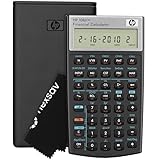
- HP 10BII+ FOR STUDENTS & PROFESSIONALS – This HP calculator is built for business, finance, accounting, and statistics courses. Perfect for learners and professionals who need to solve common financial problems quickly without memorizing formulas or relying on spreadsheets.
- 100+ FUNCTIONS FOR REAL WORLD MATH – Quickly solve time value of money, interest rates, loan payments, NPV, IRR, cash flows, and more. The 10bII+ also includes probability distributions for statistics courses—a feature not often found in financial calculators.
- ALGORITHMIC INPUT WITH DEDICATED KEYS – This high-school/college calculator uses algebraic and chain logic with minimal keystrokes. Layout appears the same as standard calculators for easy learning. Dedicated keys give quick access to commonly used financial and statistical functions
- APPROVED FOR MAJOR EXAMS – The HP 10bII+ algebra calculator is permitted for use on SAT, PSAT/NMSQT, and AP tests. An ideal statistics calculator and business calculator for school finance and accounting students preparing for class, coursework, or standardized exams.
- INCLUDES TRAVEL CASE, CLEANING CLOTH & BATTERIES– Slim, durable, and easy to keep on hand or store in a backpack or locker. Includes a protective case, cleaning cloth, and batteries so it’s ready out of the box. Large screen with clear contrast (non-backlit) is easy to read during exams or lectures.
5. GnuCash: best free open-source accounting software
Best for: a user who values open-source software, local data ownership, formal double-entry bookkeeping, and long-term access to an accounting file more than a guided cloud experience.
GnuCash is a genuine open-source desktop accounting system rather than a lightweight invoicing app. Its official documentation covers account reconciliation, financial reports, customers, vendors, jobs, invoices, bills, bill payment, tax and billing terms, aging reports, and business reporting.
Current version and platforms
The latest stable release listed by the official site is GnuCash 5.16, released June 28, 2026. The download page lists a Windows installer, macOS packages for Apple Silicon and Intel systems, and Linux installation through distribution packages or Flatpak. Current macOS support includes Apple Silicon on Big Sur 11 or newer and Intel Macs on High Sierra 10.13 or newer. See the release news and download page for current platform details.
Business features
GnuCash supports accounts receivable and payable, customers, vendors, invoices, bills, jobs, customer and vendor aging, sales-tax tables, billing terms, reconciliation, business reports, and CSV import for bills and invoices. The documented customer and vendor paths include Business → Customer → Customers Overview and Business → Vendor → Vendors Overview.
Its strength is accounting depth and control, not beginner-friendly automation. There is no ordinary hosted workspace for a business owner and accountant to use simultaneously, no conventional cloud bank-feed experience, and no built-in payroll-tax filing solution. Documentation and community resources replace the normal commercial support model.
Advantages and trade-offs
- Advantages: open-source code, local files, double-entry accounting, reconciliation, business reports, and no subscription.
- Trade-offs: a steeper learning curve, more manual setup, fewer cloud integrations, no mobile-first workflow, and responsibility for backups and support.
Basic setup path
- Download the current stable release.
- Create an accounting file and choose the account hierarchy.
- Set the base currency and fiscal settings.
- Create bank, income, expense, equity, accounts-receivable, and accounts-payable accounts as needed.
- Add customers and vendors from the Business menu.
- Create and post invoices or bills.
- Reconcile bank accounts and run financial or aging reports.
- Back up the local data file regularly.
Verdict: GnuCash is the right kind of free for a technically comfortable user who wants an actual local ledger. It is not the right recommendation for someone who expects a cloud app to guide every bookkeeping decision.
Honorable mention: Akaunting On-Premise
Best for: a technical user who specifically wants to self-host a web accounting application.
Akaunting Standard On-Premise is free to download and self-host. The listed Standard limits are one company, one user plus one accountant, and up to 1,000 invoices. Hosted Akaunting Cloud plans are paid, so Akaunting should not be described casually as free cloud accounting.
On-premise installation requires PHP 8.1 or higher, a supported database, a web server, URL rewriting, and the required PHP extensions. You also provide the hosting, security updates, maintenance, backups, troubleshooting, and recovery plan. Akaunting’s requirements and installation documentation describe the technical work.
The free self-hosted product can make sense if you already administer a server and want control over hosting and data location. It is usually a poor choice for a nontechnical business owner who is selecting it merely because the license price says free. Paid cloud tiers determine access to some features such as double-entry, bank feeds, expense claims, roles, and permissions.
Recommended label: best free self-hosted option for technical users—not best free cloud accounting software.
Side-by-side comparison
| Feature | Zoho Books Free | Wave Starter | ZipBooks Starter | Manager Desktop | GnuCash |
|---|---|---|---|---|---|
| Permanent $0 option | Yes, with eligibility and usage limits | Yes | Yes | Yes | Yes |
| Cloud access | Yes | Yes | Yes | No unless paid cloud edition | No ordinary hosted edition |
| Offline use | No | No | No | Yes | Yes |
| Double-entry accounting | Yes | Yes | Yes | Yes | Yes |
| Invoice limit | 1,000 per year | Unlimited | Unlimited | No usage limit stated for Desktop | No vendor-imposed limit shown in the cited official materials |
| Automatic bank feed included free | No; import and reconcile instead | No; part of Pro | One bank account | Not a conventional cloud-feed workflow | Not a conventional cloud-feed workflow |
| Manual statement import | Yes | Yes | Yes | Yes, depending on workflow | Yes |
| Reconciliation | Yes | Basic bookkeeping workflow | Basic Starter workflow | Yes | Yes |
| Free accountant access | One accountant plus one user | Check current roles and plan | Check current Starter collaboration limits | No hosted multi-user access | File sharing or export rather than hosted access |
| Online invoice payments | Yes, subject to payment terms and fees | Yes, transaction fees apply | Yes through Square or PayPal | No native free online payments | No native hosted payment workflow |
| Receipt capture | 50 autoscans per month | Not included in Starter | Check current plan details | Local or manual workflow | Local or manual workflow |
| Payroll | Not a complete free payroll solution | Paid add-on | Not a core free feature | Not a U.S. payroll solution | Not a complete U.S. payroll solution |
| Inventory | More advanced capabilities emphasize paid tiers | Not a free-plan strength | Not a free-plan strength | Inventory-related modules exist; test the workflow | Not a modern inventory platform |
| Multi-user free access | Limited to one user plus one accountant | Plan-dependent | Not a free-plan strength | No | No hosted collaboration |
| Primary differentiator | Broadest free cloud accounting | Simplest invoice-first workflow | One free bank connection | Full free offline package | Open-source double-entry accounting |
This is a workflow comparison, not a claim that similarly named features have identical depth. For example, bank connection can mean automatic synchronization in ZipBooks, while statement import and reconciliation are the practical free workflow in Zoho Books, Wave, Manager, or GnuCash.
What’s actually slowing this PC down?
Pick the symptom - the matching free tool is one click away.
Bookkeeping versus accounting: why the distinction matters
Bookkeeping is the process of recording and categorizing transactions: sales, expenses, transfers, owner contributions, and payments. Accounting uses those records to produce and interpret structured financial statements and other information.
Double-entry accounting records every transaction with balancing debit and credit entries. That structure is what allows the software to produce a coherent profit-and-loss statement, balance sheet, and account balances. Reconciliation is the separate process of comparing the software’s records with a bank or credit-card statement and correcting omissions, duplicates, or errors.
Rank #4

- Solves time-value-of-money calculations such as annuities, mortgages, leases, savings, and more
- Performs cash-flow analysis for up to 32 uneven cash flows with up to 4-digit frequencies
- Calculates various financial functions: Net Future Value Net present Value Modified Internal Rate of Return Internal Rate of Return Modified Duration Payback Discounted Payback
- The Texas Instruments BAII Plus Professional features an Automatic Power Down (APD) function for extended battery life
- Prompted display guides you through financial calculations showing current variable and label. Ten-digit display
A simple invoicing application may be perfectly adequate for creating bills and tracking who owes you. It is not automatically equivalent to Manager or GnuCash simply because it displays income and expenses. If you need dependable financial statements for tax preparation, lending, an investor, or an accountant, verify the chart of accounts, double-entry behavior, reconciliation, report detail, and export options before committing.
Is free accounting software adequate for a real business?
It can be adequate for a solo service business, contractor, side hustle, consultant, or freelancer with modest transaction volume and no employees. It is especially practical when the business issues invoices rather than processing a large number of daily retail sales.
Free tools Windows power users keep installed
One-click scans. No signup required.
Free software becomes less suitable when you need several of the following:
- Payroll and payroll-tax filings.
- Point-of-sale integration.
- Inventory valuation, purchasing, stock adjustments, or multiple warehouses.
- Multiple employees or bookkeepers logging in simultaneously.
- Automatic feeds across many checking, savings, credit-card, loan, and payment accounts.
- Automated sales-tax calculations and filings.
- Detailed audit controls, approvals, or locked accounting periods.
- Multi-entity consolidation.
- Advanced budgeting, forecasting, job costing, or project accounting.
That does not mean a free bookkeeping system is unusable for a growing company. It means you should identify the point at which it stops being the system of record and plan the transition before the business reaches that point.
Choose by business type
- Freelancer or consultant: Start with Wave for simple invoices, Zoho Books for formal reports, or ZipBooks if one bank feed is important.
- Sole proprietor who wants structured books: Compare Zoho Books and Manager. Zoho is easier to share with an accountant; Manager gives you local offline control.
- Contractor with one business bank account: ZipBooks is worth a close look because its Starter plan includes one connection.
- Offline or privacy-focused user: Choose Manager Desktop for a more guided package or GnuCash for open-source control and accounting depth.
- Linux user: Compare GnuCash and Manager based on interface, modules, and whether you prefer a traditional accounting file or a more packaged desktop application.
- Technical user who wants self-hosting: Consider Akaunting On-Premise only after pricing the server, maintenance, backups, and security work.
- Business with employees, physical inventory, or a POS: Test a paid accounting or specialized system early. Free software may still handle a portion of the books, but it may not cover the operational workflow.
What happens when you outgrow the free plan?
Before entering a year of transactions, answer these questions:
- Can you export the chart of accounts, customers, vendors, invoices, transactions, and attachments?
- Will the same company file continue if you upgrade?
- What happens to records if you exceed an invoice or revenue limit?
- Can an accountant use the exported data in another system?
- Does the product support common formats or only a proprietary backup?
- Can you preserve historical invoices and reconciliation evidence after migration?
Wave documents exports for a broad range of account data. Manager says its data can be backed up and moved between operating systems and that users can move between desktop and cloud editions. Those are useful portability advantages, but you should still perform a small test export before relying on any product.
For Zoho Books, pay attention to the distinction between a trial and the permanent Free plan. After a trial, confirm that the organization is actually on the Free plan rather than assuming the full trial feature set continues indefinitely. Zoho explains the distinction in its trial documentation.
Payroll, inventory, taxes, and LLCs
Payroll
Do not treat bookkeeping software as a complete payroll-tax solution. Wave offers payroll as a paid add-on. Zoho Books includes contractor and 1099-related features, but that does not make it a complete payroll platform. Manager and GnuCash are not substitutes for a U.S. payroll service.
Payroll involves withholding, employer taxes, federal and state filings, local requirements, employee records, and payment deadlines. The correct setup depends on the business and jurisdiction; consult a tax or payroll professional when employees are involved.
Inventory
An invoice item list is not the same as inventory accounting. Inventory can require quantities, purchase orders, cost of goods sold, valuation methods, returns, adjustments, sales-tax treatment, and multiple locations. Free tools are generally strongest for service businesses. A product-based business should test those workflows with realistic transactions before migrating.
Taxes and LLCs
Any of these products may help organize tax-relevant records, but a profit-and-loss report is not a tax return. Distinguish between tax-ready reports, tax calculations, 1099 preparation, payroll-tax filing, sales-tax filing, and federal or state income-tax filing.
An LLC can use free accounting software, but the appropriate chart of accounts and tax treatment depend on how the LLC is taxed and operated. Software does not determine whether an expense is deductible, whether an owner payment is a distribution or payroll, or which returns must be filed.
Free bank-feed fallback when a connection fails
Automatic connections are convenient but not essential. If a connection is unavailable—or the free plan does not include one—use this process:
- Download the bank or credit-card statement in CSV, OFX, QIF, or another supported format.
- Import it into the accounting product, or enter transactions manually.
- Check for duplicates, especially if some transactions were already entered from invoices or receipts.
- Categorize income, expenses, transfers, owner contributions, and distributions.
- Reconcile the ending balance to the statement.
- Save the statement and supporting documentation in a secure location.
Wave documents statement uploads and manual entry, and ZipBooks documents statement or other-program imports as alternatives to a bank connection.
PC Slower Than It Used to Be?
A free scan shows the junk files, broken settings and background clutter dragging Windows down - then fixes them in one click.Free scan · Windows 10 & 11Outdated Drivers Are Slowing You Down
One free scan finds every outdated or missing driver and matches the right update for your exact hardware.Free scan · exact hardware matchBest Value

- Sold as 1 Each.
- Ideal for students and professionals. Over 100 built-in functions including probability distributions.
- Intuitive keyboard layout with minimal keystrokes required for many common functions.
- Easy-to-read display with adjustable contrast and on-screen labels.
- Permitted for use on SAT, PSAT/NMSQT and College Board AP tests.
Support and data responsibility
| Product | Support or access reality |
|---|---|
| Zoho Books Free | Email support is available; one accountant can be added alongside the one user. |
| Wave Starter | Support and collaboration availability depend on the plan and optional services; check current pricing and roles. |
| ZipBooks Starter | Starter is designed for a narrow workflow; verify current collaboration and support limits before giving an accountant access. |
| Manager Desktop | Use guides and the available email or forum resources; you are responsible for local backups and file sharing. |
| GnuCash | Documentation and community resources are the normal support model rather than ordinary commercial live support. |
| Akaunting On-Premise | Standard self-hosting relies primarily on community support; paid options add ticket support, while hosting and maintenance remain your responsibility. |
Cloud software reduces the need to maintain application files, but it does not eliminate the need to export records, protect login credentials, review user permissions, and retain source documents. Desktop and self-hosted software require an even clearer backup plan: keep regular backups, store at least one copy separately from the computer or server, and test restoration before a failure occurs.
A practical setup checklist
- Decide on the workflow: cloud, offline desktop, or self-hosted.
- Confirm the free-plan limits: revenue, invoices, expenses, bank connections, users, and support.
- Choose cash or accrual treatment carefully: ask an accountant if you are uncertain or have inventory, receivables, payables, or an LLC tax election.
- Separate business and personal activity: use a dedicated business bank account where appropriate.
- Review the chart of accounts: do not create dozens of categories merely because the software allows it.
- Set the fiscal year and tax settings.
- Enter opening balances carefully: incorrect opening balances can make every later report misleading.
- Import or enter transactions: review duplicates and categorize transfers correctly.
- Reconcile monthly: reconcile both bank and credit-card accounts to their statements.
- Review reports: run the profit-and-loss and balance-sheet reports regularly, not just at tax time.
- Back up or export: retain an independent copy before filing taxes or changing systems.
- Test accountant access: confirm that your accountant can open, view, or export the records before a deadline.
Why some popular recommendations need caution
Outdated Wave coverage: Older articles frequently describe free bank feeds, receipt scanning, or fully free transaction categorization. Wave’s current official pricing and help pages place automatic bank imports and related automation in Pro.
Zoho’s reconciliation versus synchronization: Zoho Books Free is feature-rich, but free reconciliation should not be described as free automatic bank synchronization.
Akaunting’s hosting distinction: Free self-hosted software is not equivalent to free hosted software. The server, database, maintenance, backups, and security work have real costs even when the download is free.
Do these 3 things before closing this tab:
1Repair Windows errors before they cause bigger problems2Fix the driver behind crashes, sound loss and screen glitches3Clear out junk files and repair common Windows errorsProfitBooks: ProfitBooks’ marketing pages advertise a broad free plan, but NerdWallet’s 2026 update says it removed ProfitBooks because the free plan limits products to 10, which it considered too restrictive for most businesses. If you are considering it, verify the live signup flow and exact plan limits rather than relying on broad marketing claims.
Feature-count rankings: A long feature list can hide the limitations that matter most: no bank import, no accountant access, no export, difficult terminology, or a large hosting burden. Choose around the workflow you will actually use.
Frequently Asked Questions
Is free accounting software really free?
Sometimes. Zoho Books, Wave, and ZipBooks have permanent $0 cloud plans, but they limit features or charge for automation and payment processing. Manager Desktop and GnuCash are free local software, while Akaunting’s free edition is self-hosted. None should be confused with a temporary free trial, and self-hosted or desktop products still create hosting, backup, maintenance, or support responsibilities.
Which free accounting software has bank feeds?
ZipBooks Starter includes one connected bank account. Wave’s automatic imports are part of Pro, and Zoho Books Free includes reconciliation but not the paid automatic bank-feed connection. Manager and GnuCash are better evaluated by their statement-import and reconciliation workflows rather than by cloud-style feeds.
What is the best free accounting software for freelancers?
Wave is a strong choice when simple invoicing is the main need. Zoho Books is better when you want broader accounting reports and free accountant access and remain under its U.S. revenue and usage limits. ZipBooks is especially attractive if you have one primary bank account and want one free automatic connection.
Can free accounting software replace QuickBooks?
It can replace a paid platform for some solo service businesses, contractors, and side hustles, but not every business. Employees, payroll, POS systems, inventory, multiple users, sales-tax automation, and advanced reporting may require a paid platform or specialized services. Test exports and migration before relying on a free product for a growing business.
Does free accounting software include payroll?
Not as a complete U.S. payroll solution. Wave offers payroll as a paid add-on, while Zoho Books’ contractor and 1099 features do not constitute full payroll-tax filing. Manager and GnuCash are not substitutes for a payroll service. Payroll obligations vary by federal, state, and local rules.
Can an LLC use free accounting software?
Yes, an LLC can use these products to track transactions and produce reports. However, the software does not determine the LLC’s tax treatment, deductible expenses, owner compensation, or filing obligations. Configure the books with advice from a qualified accountant when the LLC has a tax election, employees, inventory, or multiple owners.
Which free accounting software works offline?
Manager Desktop and GnuCash are the main offline choices in this comparison. They provide local control but require your own backup plan and do not offer ordinary simultaneous cloud collaboration. Cloud products such as Zoho Books, Wave, and ZipBooks require online access.
What happens if I exceed a free-plan invoice limit?
The provider may require an upgrade or impose another plan restriction. Zoho Books Free allows 1,000 invoices per year, and Akaunting Standard On-Premise lists the same invoice limit. Wave, ZipBooks, Manager Desktop, and GnuCash do not show the same cited vendor-imposed invoice limit, but their other restrictions still apply. Check the current plan terms before approaching a limit.
Do I need an accountant to use free accounting software?
Not necessarily. A simple sole-proprietor service business may be able to maintain its own records. An accountant is useful for the chart of accounts, opening balances, owner transactions, payroll, inventory, tax elections, and year-end adjustments. Zoho Books explicitly allows one accountant on its free U.S. plan; desktop products generally require file sharing or export instead of hosted access.
Is free accounting software suitable for a nonprofit?
The products in this comparison are not ranked around nonprofit-specific fund accounting, restricted funds, grant reporting, or donor management. A nonprofit should verify those requirements before choosing a general small-business ledger, even if basic income and expense tracking appears sufficient.
The Bottom Line
Bottom line: Start with Zoho Books Free if you want the strongest general-purpose cloud accounting and your U.S. business remains under $50,000 in annual revenue. Choose Wave Starter for uncomplicated invoicing, ZipBooks Starter for one free automatic bank connection, Manager Desktop for full offline accounting, and GnuCash for open-source local double-entry bookkeeping. If you choose based on the actual trade-off—bank feeds, invoice limits, users, hosting, privacy, and future migration—you are less likely to outgrow the free plan at the worst possible time.
Quick Recap
Product prices and availability are accurate as of the date/time indicated and are subject to change. Any price and availability information displayed on Amazon at the time of purchase will apply.




