Outdated Drivers Are Slowing You Down
One free scan finds every outdated or missing driver and matches the right update for your exact hardware.Free scan · exact hardware matchPC Slower Than It Used to Be?
A free scan shows the junk files, broken settings and background clutter dragging Windows down - then fixes them in one click.Free scan · Windows 10 & 11“RAMageddon” is an informal media nickname for the 2025–26 memory supply crunch. In the U.S. consumer market, popular desktop and laptop RAM kits have become dramatically more expensive because AI data centers are absorbing huge quantities of HBM, server DRAM, and enterprise SSDs. Memory manufacturers are directing scarce capacity toward those higher-value products, while new factories and advanced-packaging lines take years to build and qualify.
The result is a real squeeze for PC builders, laptop buyers, gamers, phone manufacturers, and SSD buyers—but not a situation in which AI companies are literally buying every desktop DIMM. HBM and DDR5 are different products. The connection is that they rely on overlapping DRAM manufacturing resources, and HBM consumes disproportionately more capacity for each bit produced.
Price and market information in this article is framed for the U.S. consumer market and reflects the research snapshot available on August 9, 2026. Retail prices vary by retailer, country, capacity, speed, form factor, stock, and whether the product is new or used.
What does “RAMageddon” mean?
“RAMageddon” is a journalistic nickname, not a new RAM standard, product, protocol, or formal semiconductor-market classification. Technology coverage uses it to describe a period in which conventional memory prices and availability have deteriorated sharply. The term usually covers two related but separate markets:
#1 Best Overall

- Disclaimer: Maximum Speed requires overclocking/PC BIOS adjustments. Maximum speed and performance depend on system components, including motherboard and CPU
- Hand-sorted memory chips ensure high performance with generous overclocking headroom
- VENGEANCE LPX is optimized for wide compatibility with the latest Intel and AMD DDR4 motherboards
- A low-profile height of just 34mm ensures that VENGEANCE LPX even fits in most small-form-factor builds
- A solid aluminum heatspreader efficiently dissipates heat from each module so that they consistently run at high clock speeds
- DRAM, or working memory: the memory used in desktop DIMMs, laptop SO-DIMMs, soldered laptop memory, phones, servers, and graphics products.
- NAND flash, or storage memory: the non-volatile memory used in SSDs, phones, USB drives, memory cards, and other storage devices.
A more precise description would be the AI-driven DRAM and NAND memory supply crunch. The distinction matters because RAM and SSD storage are not interchangeable, even though both markets are affected by data-center demand and decisions made by the same small group of major memory manufacturers. Tom’s Guide’s consumer explainer and Framework’s market update both usefully describe the broader terminology and imbalance.
RAM, DRAM, DDR5, HBM, and NAND: the terms that get mixed together
| Term | What it is | Where consumers encounter it |
|---|---|---|
| DRAM | The underlying dynamic memory technology used for temporary, working data. | PCs, phones, servers, and graphics products. |
| RAM | Consumer shorthand for system DRAM, whether installed as a module or soldered to a board. | Desktop DIMMs, laptop SO-DIMMs, and soldered laptop or phone memory. |
| DDR4 / DDR5 | Generations of conventional double-data-rate DRAM. | Desktop and laptop system memory. |
| LPDDR | Low-power DRAM designed to reduce energy use, often soldered rather than replaceable. | Phones, thin laptops, and some newer server designs. |
| HBM | Three-dimensional, stacked, ultra-wide DRAM designed for very high bandwidth. | AI accelerators, high-performance computing systems, and some graphics processors. |
| GDDR | Graphics-oriented DRAM used as video memory. | Discrete graphics cards and game consoles. |
| NAND flash | Non-volatile storage memory that retains data without power. | SSDs, phones, USB drives, and memory cards. |
Micron describes HBM as a specialized 3D-stacked SDRAM architecture. Multiple DRAM dies are stacked and connected using through-silicon vias and microbumps, producing a very wide connection to an accelerator.
That makes HBM fundamentally different from the DDR5 kit in a gaming PC. HBM is not a replacement DIMM. A desktop DDR5 module cannot be repurposed as HBM, and a consumer cannot install HBM in a standard memory slot. Nevertheless, both products ultimately depend on DRAM manufacturing capacity, process technology, testing, engineering, and—in different ways—advanced packaging.
Why AI needs so much memory
AI infrastructure requires several kinds of memory at once:
- HBM next to the accelerator: AI models repeatedly move enormous quantities of weights and intermediate data. HBM supplies the bandwidth needed by accelerators during model training and inference.
- Server DRAM: CPUs and servers still need conventional memory for operating systems, databases, model-serving infrastructure, orchestration, caches, and ordinary workloads.
- High-capacity server modules: AI servers increasingly combine accelerator memory with large amounts of conventional server memory. More memory per server means more DRAM bits consumed even when the accelerator itself uses HBM.
- LPDDR-based server memory: Some newer server designs use lower-power memory to improve performance per watt. This adds another source of demand for DRAM capacity.
- Enterprise SSDs: Data centers need fast storage for training datasets, model checkpoints, embeddings, logs, databases, and frequently accessed data. This is NAND demand, not DRAM demand, but it competes for investment and supply within the broader memory industry.
That broader demand wave is the important update. Early explanations often reduced the story to “Nvidia is buying HBM.” By 2026, the pressure extended across AI-specific and general-purpose server infrastructure. TrendForce reported strong demand across server-memory products, while Samsung said its second-half 2026 demand outlook was accelerating across server DRAM, enterprise SSDs, and HBM.
How HBM makes ordinary RAM scarcer
The central mechanism is not direct substitution. It is capacity allocation.
DRAM manufacturers operate a concentrated industry dominated by Samsung, SK hynix, and Micron. Their factories, process nodes, engineering teams, testing operations, and packaging resources are not infinitely flexible. When customers commit to large volumes of high-margin HBM and server memory, suppliers have a powerful financial incentive to allocate more capacity to those products and less to price-sensitive PC and mobile memory.
HBM also produces fewer bits for a given amount of manufacturing capacity than ordinary DRAM. In a comparison disclosed by Micron, an HBM3E die was approximately twice the size of an equivalent-capacity DDR5 die. HBM also requires a logic interface die, stacked dies, through-silicon vias, microbumps, more complex packaging, and yield management. Micron said those factors caused HBM to consume more than twice the wafer supply needed to produce the same number of bits as DDR5 in its disclosed comparison. Micron’s earnings presentation explains the comparison.
Recommended Free Tools
The exact ratio is not universal. It changes with the HBM generation, die density, number of stacked layers, yields, packaging process, and the DDR5 product used for comparison. It is therefore safer to say “more than twice in Micron’s comparison” than to repeat a universal claim that HBM always consumes three times as much capacity.
TrendForce’s estimates show why the effect is disproportionate. It estimated that HBM would account for approximately:
| Year | Estimated HBM share of DRAM wafer input | Estimated HBM share of total DRAM bit output |
|---|---|---|
| 2025 | 18% | 8% |
| 2026 | 22% | 9% |
| 2027 | 30% | 13% |
These are industry estimates, not audited measurements of every supplier. But the pattern is clear: a relatively large portion of wafer input can produce a relatively small portion of total memory bits when it is directed toward HBM. TrendForce’s HBM capacity analysis also described the resulting pressure on conventional DRAM.
Server customers intensify the effect because they generally buy in large volumes, can sign long-term supply agreements, and pay more for assured capacity. Suppliers consequently have reasons to prioritize server and AI products even when that leaves PC builders competing for a smaller and more expensive supply pool.
Quick wins for a faster PC:
Clear out junk files and repair common Windows errorsFree Scan →Scan for outdated or missing drivers - takes under a minuteDriver Scan →Repair Windows errors before they cause bigger problemsFix Now →Rank #2

- Boosts System Performance: 32GB DDR5 RAM laptop memory kit (2x16GB) that operates at 5600MHz, 5200MHz, or 4800MHz to improve multitasking and system responsiveness for smoother performance
- Accelerated gaming performance: Every millisecond gained in fast-paced gameplay counts—power through heavy workloads and benefit from versatile downclocking and higher frame rates
- Optimized DDR5 compatibility: Best for 12th Gen Intel Core and AMD Ryzen 7000 Series processors — Intel XMP 3.0 and AMD EXPO also supported on the same RAM module
- Trusted Micron Quality: Backed by 42 years of memory expertise, this DDR5 RAM is rigorously tested at both component and module levels, ensuring top performance and reliability
- ECC Type = Non-ECC, Form Factor = SODIMM, Pin Count = 262-Pin, PC Speed = PC5-44800, Voltage = 1.1V, Rank And Configuration = 1Rx8
Why DDR5 prices are rising even though HBM is a different product
A simplified supply chain looks like this:
AI accelerator → HBM
AI server → HBM plus server DRAM
AI data center → enterprise SSDs, networking, and storage memory
Memory supplier → prioritizes high-value products and contracts
Consumer buyer → faces less conventional memory availability and higher prices
Several forces reinforce one another:
- Shared DRAM resources: Product categories use related wafer-fabrication capacity, process nodes, engineering resources, testing, and packaging infrastructure.
- Disproportionate HBM consumption: Larger dies, stacking, packaging, and yields reduce the number of useful bits produced per wafer compared with ordinary DDR5.
- Higher-value buyers: Data-center operators can pay more and often reserve supply through longer-term arrangements.
- Process migration: Suppliers are moving production toward newer nodes and products rather than adding all of the capacity needed by every market at once.
- Limited expansion: The industry has been cautious about building too much capacity after the severe memory downturn in 2022–23.
- Inventory behavior: OEMs, distributors, and module makers may buy defensively when they fear shortages, amplifying short-term demand.
TrendForce said the three major suppliers were prioritizing higher-priced server applications and that process migration, rather than a rapid wave of new fabs, would provide much of the industry’s 2026 bit growth.
Why DDR4 and older RAM can also be expensive
DDR4 is not automatically a cheap escape route from DDR5 pricing. In fact, older memory can become unusually expensive when its supply base shrinks.
Manufacturers are directing capacity toward DDR5, HBM, and server products. Older DDR4 nodes and product lines may be phased out or deprioritized. Yet millions of existing PCs still require DDR4, and those owners cannot use DDR5 without changing the motherboard and often the CPU platform. Some buyers also turn to DDR4 specifically to avoid DDR5 prices, adding demand to a shrinking pool.
Do these 3 things before closing this tab:
1Clear out junk files and repair common Windows errors2Scan for outdated or missing drivers - takes under a minute3Repair Windows errors before they cause bigger problemsA U.S. retail-tracker snapshot from Tom’s Hardware found that 32GB DDR4 kits that commonly sold for roughly $60–$90 in October 2025 could cost about $150–$180 by January 2026. That is useful evidence of the direction of the market, but it is not an industry-wide index. Availability, brand, speed, retailer, and exact kit can produce very different results.
For an existing DDR4 computer, compare the price of a compatible upgrade with the full cost of a new CPU, motherboard, and DDR5 kit. A newer platform is not automatically cheaper just because its memory generation is newer.
What the current price evidence actually shows
There is no single “RAM price.” Analysts, manufacturers, distributors, module makers, and consumers see different prices at different points in the supply chain.
Contract-market evidence
Contract prices are negotiated between suppliers and large buyers, often for a category of memory rather than a particular retail kit. They are not the same as the price on a shopping site.
TrendForce estimated that conventional DRAM contract prices rose approximately 93%–98% quarter over quarter in Q1 2026 and expected another 58%–63% quarter-over-quarter increase in Q2 2026. An earlier February forecast had projected PC DRAM prices to rise by more than 100% quarter over quarter in Q1 2026.
Those figures describe contract-market estimates or forecasts for specified categories. They should not be rewritten as “your 32GB kit will cost 60% more,” because retail pricing also depends on inventory age, exchange rates, retailer margins, promotions, capacity, speed, and stock.
Retail evidence
Tom’s Hardware’s U.S. price tracker reported that a conventional 32GB DDR5 kit selling for approximately $100–$200 in October 2025 was starting around $350 in its 2026 snapshot. The tracker displayed one DDR5-6000 32GB kit at $399. These are retail examples, not a claim that every kit rose by the same percentage.
Extreme statements such as “RAM is up 400%, 500%, or 600%” may be accurate for a particular SKU, time window, retailer, marketplace listing, or capacity. They are not meaningful without the original price, date, exact model, condition, and availability. A listing at a high price is also not evidence that the product is actually selling at that price.
Rank #3
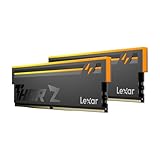
- Unleash Next-Gen Dominance: Experience Lexar DDR5 RAM performance with the Lexar THOR Z Series RGB DDR5 RAM 32GB Kit (2x16GB). Clocking at a blistering 6000MHz with low CL38 latency, this DDR5 desktop memory delivers up to 6000 MT/s for a full-throttle advantage. Whether you're building a high-end gaming rig or a professional workstation, this Lexar 32GB RAM kit ensures your system keeps pace with next-gen titles
- Sleek & Robust Thermal Design: Engineered for both aesthetics and endurance, this Lexar DDR5 RAM 6000MHz features an all-new streamlined design. The solid, sandblasted aluminum heatsink fuses a minimalist, razor-sharp aesthetic with uncompromising thermal control. This Lexar THOR Z Series armor ensures your DDR5 memory stays cool under pressure, delivering sustained peak performance during intense gaming sessions
- Game in Style with Brighter RGB Lighting: Elevate your build's aesthetics with the enhanced customizable RGB lighting on this Lexar RGB DDR5 RAM. Brighter and more vibrant than previous generations, the Lexar THOR Z Series RGB DDR5 RAM allows you to synchronize lighting effects with your components, creating a truly immersive gaming atmosphere that stands out from the crowd
- On-die ECC & PMIC for Rock-Solid Stability: Go beyond speed with reliability. This Lexar DDR5 RAM kit integrates On-die Error Correction Code (ECC) to automatically correct data errors, vastly improving stability and reliability for your critical tasks. The onboard Power Management Integrated Circuit (PMIC) ensures efficient power delivery, boosting the overall power efficiency of your DDR5 desktop memory for a longer-lasting, more stable system
- Seamless Compatibility with Intel & AMD: Worry-free upgrade guaranteed. The Lexar THOR Z Series DDR5 RAM is built for broad compatibility with the latest platforms. It fully supports Intel XMP 3.0 and AMD EXPO one-click overclocking, making it effortless to achieve the rated speeds. Trust Lexar DDR5 RAM to deliver seamless performance with mainstream DDR5 motherboards
Manufacturer evidence
Retail prices are also being affected by direct supplier-cost pass-through. Framework said it raised prices for DDR5 memory and later listed some DDR5 SO-DIMMs at approximately $13–$18 per gigabyte, depending on capacity, because lower-cost inventory was being replaced by more expensive supplier stock. It also reported increases for LPDDR5X and NAND. Framework’s explanation is a useful example of how wholesale volatility reaches a product manufacturer.
Micron’s decision to leave the consumer-branded Crucial business is another market signal. Micron announced that consumer-branded Crucial shipments would continue through the end of fiscal Q2, in February 2026, and then stop. The company said AI-driven data-center demand had led it to concentrate supply and support on larger strategic customers. This did not mean Micron stopped making enterprise DRAM or NAND. Micron’s announcement sets out the scope and timing.
Is the market still getting worse in August 2026?
Structurally, the outlook remains severe. Short-term retail pricing is not a perfectly straight line upward.
There is substantial evidence that the underlying supply squeeze remains:
Free tools Windows power users keep installed
One-click scans. No signup required.
- Samsung said its memory business expected the second half of 2026 to remain undersupplied, even with some moderation in PC and mobile demand.
- TrendForce said the 2027 supply gap could widen as HBM and newer server-memory formats such as SOCAMM consume more wafer capacity.
- Micron said supply-demand conditions for DRAM and NAND should remain tight beyond calendar 2027.
- SK hynix’s chief executive told Reuters that 2027 could be the industry’s worst memory-supply year, with demand potentially exceeding the company’s capacity well into the following decade. That is an executive forecast, not a guaranteed timetable.
At the same time, TrendForce’s August 5 bulletin said contract negotiations had been delayed and spot-market trading was flat on low volume. Buyers and sellers were disagreeing about price levels. That can produce temporary discounts, retailer promotions, bundle deals, or lower prices for older inventory even while contract prices and the longer-term supply outlook remain elevated.
The most accurate summary is therefore: the supply outlook is worsening or remaining severely tight, but any individual retail kit can pause, dip, disappear, or suddenly become more expensive.
Why manufacturers cannot simply build more fabs
“Build more factories” is part of the solution, but it is not an immediate consumer remedy. A meaningful capacity expansion requires a long sequence:
- Decide to expand and secure financing.
- Acquire land, permits, utilities, equipment, and construction capacity.
- Construct cleanrooms and supporting facilities.
- Install, calibrate, and qualify lithography and other process equipment.
- Ramp the process node and improve yields.
- Qualify individual products with server, accelerator, PC, and mobile customers.
- Build or expand advanced-packaging capacity, especially for HBM.
- Reach high-volume output at acceptable yields.
- Allocate that output to the product categories where demand is strongest.
A new factory does not necessarily produce the retail DDR5 that a consumer wants. Its initial output may be assigned to HBM, server DRAM, or another product with existing customer commitments. Packaging can be a bottleneck even after wafer capacity is available.
The Tool Desk
Outbyte Driver Updater FREEScan for outdated or missing drivers - takes under a minuteDriver Scan →Outbyte PC Repair FREEClear out junk files and repair common Windows errorsFree Scan →Micron’s June 2026 update said its Tongluo, Taiwan site was expected to support meaningful shipments in mid-2027, while a Singapore site was expected to contribute meaningfully to HBM packaging capacity beginning in the first half of 2027. Those milestones add supply over time; they do not mean low-cost retail DDR5 returns immediately.
How long could RAMageddon last?
No source can give a reliable end date. Memory markets are cyclical, and prices can change quickly if AI spending slows, yields improve, inventories are liquidated, new capacity ramps faster than expected, or an economic downturn weakens demand.
The available forecasts nevertheless suggest that consumers should not assume a return to 2025 pricing within a few months:
Rank #4
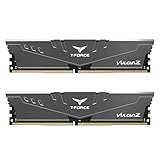
- Simple design to perfectly protect the cooling module
- High thermal conductive adhesive
- Supports Intel & AMD motherboards
- Selected high-quality IC, Supports XMP2.0
- Lifetime warranty
- Near term: TrendForce expected continued price increases in the third quarter of 2026, although gains could moderate because prices were already high and consumer demand was weakening. See its 3Q26 forecast.
- Through 2027: IDC expected memory-supply challenges to persist through 2026 and likely well into 2027, with prices remaining elevated rather than returning to 2025 levels within its forecast horizon. IDC’s analysis also described lower shipments and configuration compromises.
- Beyond 2027: Micron said tight DRAM and NAND supply-demand conditions could persist beyond calendar 2027.
- More severe scenario: SK hynix’s CEO said 2027 could be the worst shortage year and that demand could exceed capacity beyond 2030. That is a company executive’s outlook, not a certainty.
These forecasts are not interchangeable. A supplier’s outlook, an analyst’s contract-price forecast, and a retail buyer’s experience measure different things. The sensible planning assumption is that elevated prices may persist through 2027, while remaining alert to faster relief if demand or supply changes.
Who is likely to pay more?
The shortage reaches consumers through several channels:
- DIY PC builders: RAM kits and sometimes complete-build budgets become more expensive. High-capacity kits are especially exposed.
- Laptop buyers: Manufacturers may raise prices, reduce standard memory, or charge large upgrade premiums. Soldered LPDDR cannot be upgraded later.
- Phone buyers: Manufacturers may use higher prices, lower memory and storage configurations, or delayed product launches. Gartner forecast that combined DRAM and SSD prices could rise 130% by the end of 2026, with PC prices up 17% and smartphone prices up 13%; these are forecasts, not observed increases for every product. Gartner’s release explains its estimates.
- SSD buyers: NAND pressure can raise the cost of storage separately from system RAM.
- GPU buyers: GDDR and other graphics-memory supply may be affected by broader graphics and data-center demand, although this is not the same product as HBM.
- Small system builders: Large OEMs with supply agreements may have better access than small retailers or individual builders.
- Prebuilt-system buyers: A prebuilt may sometimes contain older-cost memory inventory and therefore offer better value than buying every component today. It may also conceal the increase with less RAM, a smaller SSD, lower memory speed, or a large configuration premium.
IDC expects the shortage to affect PC pricing, specifications, and shipments through 2027. Higher average selling prices do not necessarily mean manufacturers sell more units; buyers can delay upgrades or accept lower configurations.
Should you buy RAM now or wait?
The right decision depends more on need and platform constraints than on predicting the exact bottom of the market.
What’s actually slowing this PC down?
Pick the symptom - the matching free tool is one click away.
Buy now when the upgrade is necessary
Buying now is reasonable if:
- Your computer is running out of memory during work, school, gaming, editing, virtualization, or other important tasks.
- Swapping to an SSD, crashes, or application limits are disrupting a time-sensitive project.
- You are completing a PC build and have already purchased the other major components.
- Your platform uses a scarce or increasingly difficult-to-find compatible type of memory.
- You find a fairly priced, compatible kit from a reputable seller with a return policy.
This does not guarantee that the price will be higher six months from now. It reflects the current evidence that near-term supply conditions are unfavorable. If a system is unusable without the memory, waiting for a theoretical price correction can cost more in lost time than the premium.
Wait when the upgrade is discretionary
Waiting is sensible if:
- Your current capacity is adequate.
- You are waiting for a new CPU and motherboard platform anyway.
- You want an unusually large capacity and can postpone the purchase.
- A retailer is charging an obvious premium for a product that is not urgently needed.
- You are considering an entire PC refresh rather than a necessary repair.
Do not panic-buy based on a headline or one inflated marketplace listing. Track the exact capacity, speed, generation, and form factor you need across several retailers. A temporary deal may appear even during a structural shortage.
Independent reader supportYour contribution helps us test, update, and keep practical guides available for everyone.Advice by type of buyer
Desktop DIY builders
Use this priority order:
- Correct generation and form factor: DDR4 and DDR5 are not interchangeable, and desktop DIMMs are not laptop SO-DIMMs.
- Sufficient capacity: Avoid buying too little memory merely to obtain a premium speed rating.
- Motherboard and CPU compatibility: Check the board’s supported memory type, maximum capacity, slot population guidance, and supported speeds.
- Stable configuration: A matched kit running at a supported profile is generally preferable to mixing random modules.
- Price: Compare the complete specification, not only dollars per gigabyte.
- Latency and appearance: RGB, extreme overclocking profiles, and elaborate heatsinks are optional when prices are inflated.
Do not compare a cheap 16GB kit with an expensive 64GB kit solely by sticker price or dollars per gigabyte. Capacity, rank, speed, timings, warranty, and compatibility all affect value.
Laptop buyers
Check whether the memory is replaceable before buying. Soldered LPDDR cannot be upgraded later, so paying for a higher capacity at purchase can be rational even when the upgrade premium is unpleasant. A laptop with replaceable SO-DIMMs offers more flexibility, while soldered LPDDR may support thinner designs or better power efficiency.
Recommended Free Tools
Framework’s pricing update illustrates that the squeeze is reaching both DDR5 SO-DIMMs and LPDDR5X. Buyers should compare the cost of the desired memory configuration at purchase with the total cost and limitations of a later replacement.
Owners of existing DDR4 systems
Do not automatically replace a functioning DDR4 platform with a DDR5 platform. First ask:
- Is the problem insufficient capacity, or is an application, operating-system, or storage issue causing the slowdown?
- What does a compatible DDR4 upgrade cost today?
- Would a new motherboard and CPU provide a meaningful performance benefit?
- Would a used, tested DDR4 kit with return rights solve the problem?
DDR4 may be older, but its supply is also under pressure. “Buy DDR4 instead” is not a universal bargain strategy.
Local-AI, virtual-machine, editing, and professional users
For these workloads, capacity often matters more than small differences in speed or latency. Running out of RAM can cause swapping, crashes, or unacceptable performance; a slightly slower but sufficiently large configuration may be better than a premium low-capacity kit.
Best Value

- Boosts System Performance:64GB DDR4 laptop memory RAM kit (2x32GB) that operates at 3200MHz, 2933MHz, or 2666MHz to improve multitasking and system responsiveness for smoother performance
- Easy Installation: Upgrade your laptop RAM with ease—no computer skills required Follow step-by-step how-to guides available at Crucial for a smooth, worry-free installation
- Compatibility Guaranteed: Ensure seamless compatibility with your laptop by using the Crucial System Scanner or Crucial Upgrade Selector—get accurate recommendations for your specific device
- Trusted Micron Quality: Backed by 42 years of memory expertise, this DDR4 RAM is rigorously tested at both component and module levels, ensuring top performance and reliability
- ECC Type = Non-ECC, Form Factor = SODIMM, Pin Count = 260-pin, PC Speed = PC4-25600, Voltage = 1.2V, Rank and Configuration = 2Rx8
There are important limits:
- System RAM does not automatically substitute for GPU VRAM or HBM.
- Adding RAM does not turn a consumer GPU into an AI accelerator.
- SSD swap is not equivalent to having enough RAM.
- Check the actual RAM and VRAM requirements of the software instead of buying based on vague AI marketing.
Prebuilt versus DIY
Compare the total cost, not just the RAM line item. A prebuilt may have been assembled from earlier inventory, benefit from an OEM supply agreement, or spread memory costs across a complete system. On the other hand, it may use less RAM, slower memory, a smaller SSD, or a non-upgradeable design to make the headline price look attractive.
Used RAM
Used memory can be a reasonable alternative when new prices are excessive. Match the DDR generation, form factor, voltage, and capacity. Prefer a matched kit, confirm return rights, and test stability after installation. Two modules that look identical may use different chips or configurations, so mixing unrelated modules can produce compatibility or stability problems.
Ways to reduce the cost without making a bad purchase
- Buy the capacity you genuinely need rather than paying for cosmetic features or extreme overclocking.
- Consider a slightly lower speed if it is supported by the platform and substantially cheaper.
- Compare multiple retailers and set a price alert for the exact kit or an equivalent specification.
- Consider a prebuilt if its complete configuration is unusually favorable.
- Choose replaceable memory when long-term upgradeability matters.
- Buy only part of the eventual capacity now if the system has open slots and compatible future supply is reasonably likely—but do not assume future modules will be cheaper.
- For non-urgent, high-memory workloads, compare the cost of cloud services or remote machines with buying a large local system.
- Consider a refurbished complete device if upgrading an old machine costs nearly as much as replacement.
New Chinese conventional-DRAM suppliers may become a medium-term source of additional supply, but limited adoption in some notebooks is not evidence of broad, fully qualified retail availability. Qualification, yields, product quality, geopolitics, export controls, and available volume all matter.
What could finally ease the shortage?
Several developments could improve the market:
- New DRAM fabs reaching qualified, high-volume output.
- Expansion of HBM and advanced-packaging capacity.
- Better HBM yields and more efficient use of wafer input.
- Process-node migration that produces more bits per wafer.
- Additional conventional-DRAM supply from new or expanding suppliers.
- A slowdown in AI infrastructure spending or a broader economic downturn.
- More efficient AI models that require less hardware per workload.
- Inventory liquidation after buyers stop ordering defensively.
- A normal memory-cycle correction after suppliers collectively add too much capacity.
Some of these could also hurt manufacturers and consumers in different ways. A demand shock could lower RAM prices quickly, but it might also delay factory investment. Conversely, new capacity may first be committed to HBM or server products rather than consumer DDR5. The end of the shortage will depend not only on how many wafers are produced, but on what products those wafers become.
Myth versus fact
- Myth: AI companies are buying the exact RAM kits sold to gamers.
- Fact: AI systems mainly use HBM and server memory, not consumer desktop DIMMs. The effect on gamers is indirect, through shared DRAM capacity, packaging, supplier priorities, and the resulting smaller conventional-memory pool.
- Myth: DDR4 is automatically the cheap escape route.
- Fact: DDR4 supply is also being reduced as manufacturers prioritize newer and higher-value products. Older memory can become expensive when buyers are trapped in a shrinking compatibility pool.
- Myth: Every RAM kit has risen by the same percentage.
- Fact: Prices vary by SKU, capacity, speed, generation, inventory age, retailer, and availability. Contract-market figures cannot be applied directly to every retail kit.
- Myth: A newly announced fab will fix retail prices next month.
- Fact: Construction, equipment installation, process ramping, product qualification, packaging, and high-volume yields can take years. New output may also be allocated to HBM or server products.
- Myth: AI is the only cause.
- Fact: AI demand is the dominant current driver, but earlier production cuts, the 2022–23 memory downturn, cautious expansion, process transitions, legacy-product phaseouts, long-term contracts, and defensive inventory buying also matter.
What “getting worse” should mean
Headlines should define the time frame. “Getting worse” might mean:
- the long-term supply gap is widening;
- contract prices are rising;
- retail availability is becoming less reliable;
- a particular capacity or form factor is becoming scarce;
- or a specific kit costs more than it did last month.
Those are related but different claims. As of August 2026, the structural outlook was worsening or remaining severely tight, while the spot market had temporarily cooled and some retail prices could still move down. That is why a shopper may find a short-lived deal without contradicting the broader RAMageddon story.
Nor does documented supplier prioritization prove illegal price-fixing or price-gouging. The market is concentrated, and the major suppliers have publicly discussed allocation and capacity decisions, but allegations of unlawful coordination would require separate evidence and careful attribution.
Frequently Asked Questions
Will RAM prices fall soon?
A short-term discount or pause is possible, especially when retailers clear old inventory. However, TrendForce, Samsung, Micron, IDC, and other sources described tight supply through 2026 and into 2027 or beyond. A return to 2025 retail pricing within a few months should not be assumed.
Should I buy DDR4 or move to DDR5?
Base the decision on the total platform cost and your performance needs. DDR4 may be cheaper for an existing system, but it is also affected by shrinking supply. A new DDR5 motherboard, CPU, and memory kit may cost more than a simple DDR4 upgrade, while a new platform may provide enough performance benefit to justify the expense.
Can I use more system RAM instead of HBM for local AI?
Not as a direct replacement. System RAM can help with some workloads and larger models, but it does not provide the same bandwidth as GPU VRAM or HBM and cannot turn ordinary hardware into an AI accelerator. Check the specific application’s RAM, VRAM, and accelerator requirements.
Is a laptop with soldered memory a bad purchase during RAMageddon?
Not necessarily, but you must choose the capacity carefully because soldered LPDDR cannot be upgraded later. A replaceable-memory laptop provides more flexibility; a soldered design may offer power-efficiency or size advantages. Compare the purchase-time memory premium with the cost of replacing the device later.
The Bottom Line
RAMageddon is real as a market condition, but the name is deliberately dramatic. AI has not literally bought every desktop memory module. It has changed what memory manufacturers prioritize: HBM, server DRAM, low-power server memory, and enterprise SSDs now compete for limited capacity and packaging resources, while the supply response takes years.
Windows Errors? Fix Them Before They Spread
Repair common Windows errors and clear accumulated junk for a smoother, more stable PC - no reinstall needed.Free scan · no reinstallOutdated Drivers Are Slowing You Down
One free scan finds every outdated or missing driver and matches the right update for your exact hardware.Free scan · exact hardware matchFor consumers, the sensible strategy is neither panic-buying nor assuming a quick crash. Buy a compatible configuration when insufficient memory is costing you time or when a necessary build must be completed. If your current system is adequate, monitor the exact product you need and wait for a fair deal. The near-term outlook favors elevated prices, but individual retail prices will continue to move unevenly.
Quick Recap
Product prices and availability are accurate as of the date/time indicated and are subject to change. Any price and availability information displayed on Amazon at the time of purchase will apply.




