A career in heavy equipment engineering usually begins with a mechanical engineering or mechanical engineering technology degree, then branches into work such as machine design, hydraulics, testing, manufacturing or product support. “Heavy equipment engineer” is not one standardized job title, so the best path depends on the kind of work you want to do—and the requirements of the employers you target.
What does a heavy equipment engineer do?
Engineers help develop, test, improve and support large machines used in construction, mining and related industries. Their work may involve designing a component, fitting a system into a machine, checking performance through analysis or testing, coordinating with manufacturing and suppliers, or investigating problems reported in the field. The exact mix varies by employer and role.


For example, a Caterpillar design-engineer posting in Wuxi, China, described drivetrain component development, 3D modeling, finite element analysis (FEA), design verification, drawings, field follow-up and failure analysis. It also cited CAD/CAE, hydraulics and manufacturing knowledge. That is one location- and vacancy-specific example, not a universal checklist or proof of current openings: Caterpillar Careers.
A separate Caterpillar hydraulic-installation posting illustrated systems work: arranging pumps, motors, valves and cylinders, then designing their routing connections and mounts on construction and mining machines. The posting dates to June 2025, and its current vacancy status is unconfirmed. The example shows a possible specialty, not a required step in every engineering career.
Do these 3 things before closing this tab:
1Clear out junk files and repair common Windows errors2Scan for outdated or missing drivers - takes under a minute3Repair Windows errors before they cause bigger problemsWhich education path should you choose?
Bachelor’s degree in mechanical engineering
A bachelor’s degree in mechanical engineering is the conventional route into mechanical-engineer roles. Programs typically cover mathematics, physical and life sciences, engineering principles and design. The U.S. Bureau of Labor Statistics (BLS) says mechanical engineers typically need a bachelor’s degree in mechanical engineering or mechanical engineering technology: BLS Occupational Outlook Handbook: Mechanical Engineers.
Bachelor’s degree in mechanical engineering technology
Engineering technology programs generally emphasize applying engineering principles in practice. Some include internships or cooperative education (co-op) opportunities. Compare specific programs by coursework, lab experience, internship access and the qualifications required in job postings you may want to pursue; program names alone do not establish that every employer will treat credentials identically.
Community college and transfer
Community college can be a staged route if a program supports transfer into a four-year engineering degree. An American Society of Mechanical Engineers report from January 2026 describes an initiative intended to support associate-degree completion, transfer to four-year programs and access to engineering technology careers: ASME: Community College Pathways to Engineering. Before enrolling, confirm the transfer agreement, which credits count toward the intended bachelor’s degree, total cost and whether the program meets any applicable accreditation or employer requirements.
Compare programs before committing
- Credential and transfer: Identify the degree awarded and get written confirmation of transfer terms and accepted credits.
- Learning style: Compare engineering theory, practical application, labs and design projects.
- Work experience: Check whether internships, co-ops or employer projects are available and what students must do to qualify.
- Cost: Compare the full route to the credential you need, not only the first year or institution.
- Target roles: Review relevant job postings for stated degrees and technical skills; requirements can differ by employer, location and seniority.
How engineering roles differ
Equipment companies employ technical workers in distinct roles; not every technical career at a manufacturer is design engineering. Caterpillar describes engineering contributions spanning product design to software, while Komatsu lists engineering, field service, product support and smart technology as separate career areas. Those categories help illustrate the range, but they do not establish how common each role is across the industry: Caterpillar Engineering Careers and Komatsu Careers.
Rank #3

- Pro Heavy Equipment Keys: 58Pcs heavy equipment keys master set fit Cat Caterpillar John Deere Komatsu Volvo Bobcat Kubota JCB Case New Holland Hitachi Sany Hyundai Terex Hyster Yanmar Daewoo Takeuchi Ford Kobelco Doosan IHI. Construction ignition keys set for loaders, tractors, dump trucks, backhoes, excavators, bulldozers and more heavy equipment
- High Quality Material: We are committed to providing the highest quality equipment keys that are designed and manufactured to the highest quality standards to ensure reliability and durability. Manufactured from wear-resistant premium materials that are corrosion-resistant, easy to maintain and clean, and precision cut to specification, they are ideal for heavy equipment
- Easy Identification: Our heavy equipment key set includes both paper and electronic versions of the user manual. You can scan the QR code to access detailed information about each piece of equipment, saving you time during critical operations. The adjustable stainless steel key ring allows you to add or remove keys as needed, making it easy to carry. Whether you manage multiple pieces of equipment or work on construction sites, farms, or in any industrial environment, this versatile key set is an indispensable accessory
- Improve Efficiency: A master key set includes 58 keys, allowing you to access the appropriate key for heavy-duty equipment at any time. You no longer need to waste time searching for a single key. By using this indispensable set, you can eliminate downtime caused by lost or malfunctioning keys
- Note: Some keys do not have specific key markings; you can scan the QR code to obtain detailed information about each equipment key
- Design and component engineering: Develop parts or assemblies, create models and drawings, and evaluate whether designs meet requirements.
- Systems engineering: Integrate systems such as hydraulics or drivetrain components and account for how parts fit and function together.
- Analysis, testing and validation: Use simulation, measurements or design verification to assess performance and investigate failures.
- Manufacturing and supplier coordination: Work with production teams and suppliers to address design or build issues.
- Field and product support: Follow up on machine performance and help resolve issues encountered in service. Some roles may involve direct customer contact or travel; check the individual posting.
When comparing openings, look at the work itself: design versus field or manufacturing support, component specialty, testing responsibility, customer contact, travel and experience requirements. A title alone may not tell you how much time a role spends on each.
How engineering differs from mechanic and operator careers
Engineers, mechanics and equipment operators contribute to the same industry but typically follow different education routes and perform different work. BLS lists a bachelor’s degree as typical entry education for mechanical engineers, an associate’s degree for mechanical engineering technologists and technicians, and a high-school diploma or equivalent plus long-term on-the-job training for mobile heavy equipment mechanics. Construction equipment operators commonly learn on the job, through apprenticeship or at vocational school; BLS lists a high-school diploma or equivalent as typical entry education for that occupation.
Rank #4
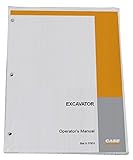
- Printed CASE CX55B Excavator Operation & Maintenance Manual
- Manufacturer Part Number: CASE S2PS00005ZE01
- Covers the Following Serial Numbers: from PIN PS02-00101 - and Higher
- Brand New Sealed in Shrinkwrap
These are U.S. occupational profiles, not guarantees for every employer. Mechanic or operator experience may build useful knowledge of machines, but it should not be presented as a substitute for the degree typically required for conventional mechanical-engineer positions. See the BLS profile for construction equipment operators for that occupation’s route.
Independent reader supportYour contribution helps us test, update, and keep practical guides available for everyone.What skills help you get started?
BLS identifies creativity, listening, mathematics, mechanical knowledge and problem-solving as useful skills for mechanical engineers. Employer examples show how those foundations can appear in equipment work: CAD modeling, CAE and FEA, design verification, engineering drawings, knowledge of hydraulics or drivetrain components, and coordination with manufacturing and suppliers.
The Tool Desk
Outbyte PC Repair FREEClear out junk files and repair common Windows errorsFree Scan →Outbyte Driver Updater FREEScan for outdated or missing drivers - takes under a minuteDriver Scan →Best Value
You can build evidence of relevant skills through coursework, labs, team projects, internships, co-ops or work experience. Keep a record of what you contributed to a design or analysis project, the tools you used, and how you checked the result. A concise project portfolio can help explain your experience, but specific portfolio expectations vary by employer.
A practical way to build your career path
- Build the fundamentals. Choose an engineering program that develops math, mechanical knowledge and design skills, and verify how its credential fits your intended roles.
- Get hands-on exposure. Use labs, projects, internships, co-ops or relevant work to learn how engineering decisions relate to real components and machines.
- Explore a technical focus. Consider areas such as hydraulics, drivetrain, structures, controls, manufacturing or validation based on the work that interests you and the skills employers request.
- Compare early-career roles by duties. Read postings for the actual tasks, required qualifications, location and experience level rather than assuming all “equipment engineer” jobs are alike.
- Check the next step before investing. For a transfer route or specialized program, confirm credit acceptance, cost and employer relevance directly with the institutions and employers involved.
This is a useful progression, not a mandatory sequence. The cited sources describe education options and examples of job duties; they do not establish one required route into every equipment-engineering specialty.
Pay and job outlook: what the figures do—and don’t—show
For the United States, BLS reported a median annual wage of $104,110 for mechanical engineers in May 2025. It projected 11% employment growth for mechanical engineers from 2025 to 2035 and about 17,800 openings per year on average over that period. These figures cover the broad mechanical-engineer occupation, not a dedicated heavy-equipment-engineer job category or salary forecast. Actual pay and opportunities vary by location, employer, specialty and experience. See the BLS mechanical-engineer profile for the occupation and its published figures.
Quick Recap
Product prices and availability are accurate as of the date/time indicated and are subject to change. Any price and availability information displayed on Amazon at the time of purchase will apply.




