Quick wins for a faster PC:
Repair Windows errors before they cause bigger problemsFix Now →Scan for outdated or missing drivers - takes under a minuteDriver Scan →Clear out junk files and repair common Windows errorsFree Scan →There is no single best NFT sniping tool. For Ethereum and other EVM marketplaces, Blur is a strong fit for fast, professional-style execution, while NFTNerds is better suited to research, rarity filters, and rapid manual buying. On Solana, Sniper.xyz is the most direct option for automated price, trait, and rarity purchases; Magic Eden and Tensor are better starting points when you want manual or semi-automated control.
The right choice depends on four things: your blockchain, the marketplaces you need to monitor, how much automation you want, and whether you are willing to place funds in an application-controlled trading wallet. A faster purchase is not necessarily a profitable one. Gas, royalties, marketplace fees, stale orders, fake collections, inaccurate rarity data, theft reports, and poor resale liquidity can erase an apparent bargain.
This guide focuses mainly on secondary-market and trait-based sniping. It also explains how reveal sniping, mint sniping, collection bids, alerts, automated execution, wallet security, and all-in cost calculations differ.
What NFT sniping actually means
NFT sniping is the process of detecting a potentially attractive NFT listing or offer, checking whether it is genuine and still available, and attempting to buy it before other traders do. Most marketplace sniping has four stages:
#1 Best Overall

- The next-generation optical HERO sensor delivers incredible performance and up to 10x the power efficiency over previous generations, with 400 IPS precision and up to 12,000 DPI sensitivity
- Ultra-fast LIGHTSPEED wireless technology gives you a lag-free gaming experience, delivering incredible responsiveness and reliability with 1 ms report rate for competition-level performance
- G305 wireless mouse boasts an incredible 250 hours of continuous gameplay on just 1 AA battery; switch to Endurance mode via Logitech G HUB software and extend battery life up to 9 months
- Wireless does not have to mean heavy, G305 lightweight mouse provides high maneuverability coming in at only 3.4 oz thanks to efficient lightweight mechanical design and ultra-efficient battery usage
- The durable, compact design with built-in nano receiver storage makes G305 not just a great portable desktop mouse, but also a great laptop travel companion, use with a gaming laptop and play anywhere
- Detection: finding a new listing, price change, metadata reveal, offer, or order update.
- Qualification: applying rules for collection, contract, price, token ID, trait, rarity, seller, marketplace, or quantity.
- Validation: confirming that the order is active, the seller still owns the NFT, the price and payment token are correct, and the purchase makes economic sense.
- Execution: submitting a purchase, sweep, collection bid, trait bid, or offer.
An alert service may complete only the first stage. A live marketplace interface may help with the first two or three. A true automated sniper also executes the transaction, which creates additional wallet, smart-contract, and financial risks.
Different types of NFT sniping
- Secondary-market listing sniping: buying an NFT already listed below your estimate of its value.
- Trait or rarity sniping: finding an NFT with a desirable or statistically scarce trait listed close to the collection floor.
- Reveal sniping: buying shortly after a collection’s metadata reveals and before prices fully adjust. This requires reliable metadata monitoring and fast verification.
- Mint sniping: trying to mint immediately when a new collection launches. This is different from buying an existing listing and usually requires the official mint page, accurate launch information, and careful gas management.
- Collection-bid sniping: placing an offer that can fill automatically when any NFT in a collection, or a qualifying trait, is listed.
- Sweep buying: purchasing several listings at once, usually from the lowest-priced NFTs or a selected trait range.
Do not assume that a secondary-market sniper can handle a mint or reveal. For a mint, use the collection’s official announcements and mint page. For a reveal, confirm that the metadata is genuinely updated and that the rarity data has refreshed before treating a token as underpriced.
Quick comparison of current NFT sniping tools
The table describes best fits rather than universal rankings. Product features, fees, supported marketplaces, and pricing can change, so confirm the current terms before depositing funds or signing a transaction.
| Tool | Chain and coverage | Automation | Best for | Wallet or fee consideration | Main limitation |
|---|---|---|---|---|---|
| Blur | Ethereum and EVM-focused marketplace trading; advertises cross-marketplace sweeps | Fast manual execution and sweeping | Professional-style EVM trading | Blur currently advertises 0% marketplace fees; gas, royalties, and trading losses still apply | Its speed claims are first-party marketing, not an independent latency or profitability benchmark |
| NFTNerds | Live coverage publicly emphasizes OpenSea, LooksRare, and X2Y2 | Manual buying, alerts, and auto-buy triggers | Ethereum research, rarity filtering, and live listing monitoring | Premium pricing is currently listed as 0.09 ETH for one month, 0.20 ETH for three months, or 0.45 ETH for six months; pricing can change | It is not a universal all-chain marketplace terminal |
| Sniper.xyz | Solana; aggregates listings and offers an automated bot | Fully automated purchases based on price, quantity, traits, or rarity | Advanced Solana automation | Requires SOL in a trading wallet that the marketplace can control | Automation introduces custody, hot-wallet, smart-contract, and accidental-fill risk |
| Magic Eden Aggregator | Solana cross-marketplace listings | Manual sweeps and semi-automated Auto Swap | Trait-filtered Solana buying with wallet approval | Each Auto Swap attempt requires approval and failed attempts may incur non-refundable gas | Approval prompts reduce speed, and failed replacement attempts can still cost gas |
| Tensor | Solana | Bulk buying, collection bids, trait bids, and market-making orders | Solana sweeps and collection-wide liquidity strategies | Documentation currently states a 2% taker fee and 0% maker fee; royalties may also apply | Shared escrow can leave older bids active and fillable |
| NFTSnipes | OpenSea monitoring | Alert only | Simple email alerts for collection or individual-NFT price thresholds | No automatic execution; the user still verifies and buys manually | Documented coverage is OpenSea rather than broad cross-chain monitoring |
| OpenSea Stream API | Developer tooling for OpenSea EVM events | Custom alerts and authorized application workflows | Developers building their own monitoring infrastructure | Requires Node.js 20 or newer, an API key, WebSocket support, and secure execution design | Stream delivery is best effort and listing detection alone does not safely execute a purchase |
| Reservoir WebSockets | Cross-marketplace EVM infrastructure | Custom monitoring and trading systems | Marketplace-agnostic developer infrastructure | Documentation lists 20 connections and 1,000 subscriptions per connection; mainnet data syncing requires a paid plan | It is a developer platform, not a ready-made consumer sniper |
| NFTGo | Multi-market analytics and aggregation | Primarily research and analytics | Rarity, collection data, whale tracking, and portfolio research | Use it as an analytics layer and verify current execution features and pricing | It should not automatically be treated as a turnkey sniper |
Choose a tool by chain and automation level
If you trade Solana NFTs
Use Magic Eden or Tensor if you want to inspect listings and approve purchases yourself. Magic Eden is useful for cross-marketplace discovery, trait filters, maximum-price controls, and sweeps. Tensor is particularly relevant for collection-wide bids, trait bids, bulk buying, shared escrow, and bonding-curve markets.
Choose Sniper.xyz only when you understand the implications of automated execution and an authority-controlled trading wallet. Begin with a small test balance and a one-item rule. Do not place long-term holdings or more capital than the strategy can afford to lose in an automated wallet.
If you trade Ethereum or other EVM marketplaces
Blur is a strong candidate for active, execution-oriented marketplace trading. NFTNerds is a stronger fit when the research problem comes first: monitoring live listings, comparing traits, reviewing pending transactions, and configuring triggers. OpenSea remains relevant for direct marketplace activity and developer tooling, while Reservoir is useful when you are building a cross-marketplace system.
Aggregators do not necessarily provide identical execution on every marketplace they display. Check whether the displayed order is still active, which contract will execute it, what fees and royalties apply, and whether the marketplace supports the payment token and NFT transfer.
If you want alerts rather than a bot
NFTSnipes is a simple option for OpenSea price alerts. It lets users set a collection or individual-NFT threshold and receive an email alert. This is materially safer than unattended buying because you retain the final decision, but it is slower and does not eliminate the need to verify the listing.
What’s actually slowing this PC down?
Pick the symptom - the matching free tool is one click away.
If you want to build your own system
Use an authorized event source rather than an improvised scraper. OpenSea’s Stream API provides real-time events for listings, offers, sales, cancellations, and other activity. Reservoir provides cross-marketplace WebSocket events such as ask.created, ask.updated, bid.created, bid.updated, and sale.created.
Your system still needs order validation, transaction simulation, secure key management, nonce handling, reconnect logic, missed-event backfills, spending limits, and an emergency stop. A WebSocket notification is not proof that the listing remains purchasable.
Understand the automation model before depositing money
| Level | What happens | Typical risk and trade-off |
|---|---|---|
| Alert only | You receive an email, browser, Discord, Telegram, or sound notification and buy manually. | Lowest automation exposure, but the slowest execution. |
| Fast manual | The interface supplies live feeds, filters, rarity, gas, and market data; you click Buy. | Good balance of control and speed. You can still make an impulsive or poorly researched purchase. |
| Semi-automated | You set rules or replacements, but approve each transaction. | More efficient than manual buying, but failed attempts can still consume gas. Magic Eden’s Auto Swap works this way. |
| Fully automated | The system executes qualifying purchases without a wallet prompt at the moment of purchase. | Fastest and most dangerous: funds may be deposited into or controlled by an application-specific trading wallet. |
“Real-time” and “automatic” are not interchangeable. Detection speed depends on event propagation, RPC performance, network congestion, wallet signing, gas settings, marketplace processing, and competing buyers. Do not rely on unverified claims such as guaranteed sub-50-millisecond execution or a particular success rate.
Set up a safer NFT trading wallet
Before testing any sniper, separate trading capital from long-term assets. A marketplace such as OpenSea says it does not custody or control users’ wallet assets, but an automated product may require a different arrangement. Sniper.xyz’s documentation, for example, says the SOL needed for automated purchases must be deposited into a trading wallet over which the marketplace has authority.
Free tools Windows power users keep installed
One-click scans. No signup required.
Rank #2
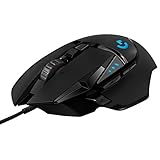
- HERO Gaming Sensor: Next generation HERO mouse sensor delivers precision tracking up to 25600 DPI with zero smoothing, filtering or acceleration
- 11 programmable buttons and dual mode hyper-fast scroll wheel: The Logitech wired gaming mouse gives you fully customizable control over your gameplay
- Adjustable weights: Match your playing style. Arrange up to five 3.6 g weights for a personalized weight and balance configuration
- LIGHTSYNC technology: Logitech G LIGHTSYNC technology provides fully customizable RGB lighting that can also synchronize with your gaming (requires Logitech Gaming Software)
- Mechanical Switch Button Tensioning: A metal spring tensioning system and metal pivot hinges are built into left and right computer gaming mouse buttons for a crisp, clean click feel with rapid click feedback
- Create a dedicated wallet. Do not use the wallet holding your valuable NFT collection, retirement savings, or long-term crypto holdings.
- Fund only the strategy. Deposit the maximum amount you are prepared to lose, plus a defined gas reserve. Do not leave excess SOL or ETH in the wallet after the strategy ends.
- Use a test balance first. Make one inexpensive purchase or run an alert-only workflow before increasing the amount or quantity limit.
- Never provide a seed phrase. A legitimate marketplace connection should not require your recovery phrase. Never enter it into a website, browser extension, bot, Discord message, or support form.
- Inspect approvals and authority. Understand whether a contract can move your tokens or NFTs and revoke unnecessary token or operator approvals after testing.
- Set hard limits. Use a maximum price, maximum all-in spend, maximum quantity, collection contract, and—where supported—seller or marketplace restrictions.
- Plan the shutdown. Know how to stop the bot, cancel collection and trait bids, withdraw funds, and review activity logs before starting.
- Keep an emergency path. If you suspect compromise, stop signing, disconnect the application, move remaining assets to a clean wallet where appropriate, and contact only official support channels.
Check the provider’s withdrawal process before funding it. A tool should clearly document where funds are held, who can move them, whether withdrawals are immediate, and what happens if the service is unavailable.
How to execute a manual NFT snipe
A manual snipe is usually the best starting point because it lets you learn the collection, fees, wallet prompts, and marketplace behavior without granting unattended purchase authority.
- Choose a known collection. Start with an established contract and an active market rather than an unknown collection merely because one listing is cheap.
- Verify the contract address. Use the collection’s official website and the marketplace’s verified collection page. Do not rely only on the displayed name or image.
- Review market depth. Check the floor, recent sales, listed supply, owners, trading volume, and the prices of comparable traits. A low floor with no recent buyers is not necessarily an opportunity.
- Define your maximum all-in cost. Include the NFT price, marketplace fee, creator earnings or royalty, purchase gas, tool subscription allocation, and a safety margin.
- Apply narrow filters. Use collection, token ID, trait, rarity, seller, marketplace, maximum price, maximum total spend, and quantity limits. Broad filters are a common cause of accidental fills.
- Verify the specific token. Check the token ID, metadata, trait values, reveal status, ownership history, transferability, and any suspicious-activity warning.
- Verify the order. Confirm that it has not been canceled, filled, expired, or replaced; that the seller still owns the NFT; and that the payment token and amount are what you expect.
- Review the wallet transaction. Inspect the contract, NFT, payment amount, approvals, gas, royalties, and total value before signing.
- Confirm settlement. Wait for the transaction receipt, then verify ownership on the marketplace and a blockchain explorer.
- Record the trade. Save the token ID, contract, purchase price, gas, fees, transaction hash, and your intended exit price or holding thesis.
Manual pre-purchase checklist
- Correct collection contract and token ID
- Metadata fully revealed or clearly understood as unrevealed
- Trait or rarity verified through a second source for an expensive purchase
- Seller still owns the NFT
- Order is active and has not expired or been canceled
- Payment token is correct
- Marketplace fee, creator earnings, and gas are included
- NFT is transferable and not flagged as suspicious
- Resale liquidity exists at or near the assumed exit price
- Transaction stays within the wallet’s spending and quantity limits
Tool-specific walkthroughs
Blur: fast EVM marketplace execution
Blur positions itself as a marketplace for professional traders and currently advertises fast sweeping, cross-marketplace sweeps, and 0% marketplace fees. Those are Blur’s own product claims, not an independently measured speed or profitability study. A zero marketplace fee does not remove gas, royalties, slippage, or the risk that the NFT is worth less than you paid.
- Open the official Blur site and connect a dedicated trading wallet.
- Search for the verified collection and inspect its activity, floor, owners, listed supply, and recent sales.
- Use collection or trait filters where available.
- Select individual listings or use the sweep function.
- Set a maximum total spend rather than relying only on the displayed floor.
- Review the payment token, royalties, gas, and the specific NFTs selected.
- Confirm the transaction in your wallet.
- Check the receipt and ownership after settlement.
Blur is best suited to an active EVM trader who understands order books and execution. It is not evidence that a novice will make money faster.
NFTNerds: research-led EVM monitoring
NFTNerds publicly describes live cross-marketplace listing and sales feeds, including OpenSea, LooksRare, and X2Y2 in Live View. It also lists metadata and attribute filters, pending-transaction information, gas presets, sound notifications, trending and mint sections, and auto-buy triggers.
- Create an account through the official site.
- Open Live View or Firehose.
- Select a target collection and filter by listing price, rarity, trait, marketplace, or event type.
- Compare the listing with recent sales and the collection’s trait floor.
- Confirm the contract, token, seller, order, and fees on the relevant marketplace and blockchain explorer.
- Use manual Buy, or configure an auto-buy trigger only with a dedicated wallet and strict limits.
- Review gas and transaction details before signing.
- Disable or cancel triggers when the trading session ends.
The public pricing page currently lists Premium at 0.09 ETH for one month, 0.20 ETH for three months, and 0.45 ETH for six months. ETH-denominated subscription prices are volatile, and the subscription can overwhelm a small strategy. Include the allocated subscription cost in your break-even calculation.
Sniper.xyz: automated Solana purchases
Sniper.xyz’s Sniper Bot is designed for Solana users who want rules based on collection, price, quantity, traits, rarity, and optional automatic relisting criteria. The documented setup is:
- Open the Sniper Bot page.
- Select the collection.
- Set the maximum price.
- Set the quantity.
- Add optional trait or rarity conditions.
- Set an automatic relisting price only if you fully understand the behavior.
- Fund the snipe.
- Deposit the required SOL into the trading wallet used for automation.
- Monitor active snipes and fills.
- Disable the strategy and withdraw remaining funds when finished.
The important trade-off is custody and authority. The documentation says automated purchases require SOL in a wallet that the marketplace can control. That may be operationally convenient, but it creates additional hot-wallet, smart-contract, service, and accidental-fill risk. Start with one low-value test, use a small balance, and leave automatic relisting disabled until you understand it. A relisting price is not a guaranteed exit strategy; market conditions may change and the NFT may not sell.
Magic Eden Aggregator: Solana manual and semi-automated buying
Magic Eden’s aggregator is useful when you want to see Solana listings from multiple marketplaces and buy or sweep them from one interface.
For a trait-based sweep, the documented workflow is:
- Open the collection page.
- Select Trait Filter.
- Choose one or more traits.
- Use the sweep slider to select the quantity.
- Open the gear or settings control.
- Set Max price per item.
- Decide whether to enable Auto Swap.
- Review the selected NFTs and total cost.
- Approve each wallet transaction.
- Verify which NFTs were successfully purchased.
Auto Swap can replace items that were sold or delisted, but Magic Eden states that each attempt requires wallet approval and that unsuccessful attempts can incur non-refundable gas. This makes Auto Swap semi-automated rather than an unattended bot. It gives you more control than an authority-controlled trading wallet, but it can still create repeated gas costs during a fast-moving sweep.
Tensor: Solana sweeps, bids, and shared escrow
Tensor supports Quick Buy, bulk or sweep buying, collection-wide bids, trait bids, bonding curves, shared escrow, and other market-making orders.
Crashes, No Sound, or Screen Glitches?
Random freezes, missing sound and display glitches usually trace back to one bad driver. Find and replace yours safely.Free scan · under a minutePC Slower Than It Used to Be?
A free scan shows the junk files, broken settings and background clutter dragging Windows down - then fixes them in one click.Free scan · Windows 10 & 11Rank #3

- Next-gen 12,000 DPI HERO optical sensor delivers unrivaled gaming performance, accuracy and power efficiency
- Advanced LIGHTSPEED wireless gaming mouse for super-fast 1 ms response time and faster than wired performance
- Ultra-long battery life gives you up to 250 hours of continuous gaming on a single AA battery
- Lightweight mechanical design and classic shape for maximum maneuverability, durability and comfort
- Compact, portable design with convenient built-in storage for included USB wireless receiver
- Open the target collection.
- Select BUY.
- Choose Quick Buy, Collection Bid, or bulk/sweep mode.
- Select NFTs or specify the collection-wide or trait criteria.
- Set quantity and price.
- Review fees, royalties, and the payment amount.
- Confirm the transaction or escrow deposit.
- Monitor active bids and cancel orders you no longer want.
Tensor’s documentation currently states a 2% taker fee and 0% maker fee, while royalties may also apply. Treat those figures as current documentation rather than permanent promises. A particularly important edge case is shared escrow: multiple bids can draw from one pool, and adding funds can reactivate older bids that had previously become underfunded. Before depositing more SOL, review every active collection and trait bid.
NFTSnipes: simple OpenSea alerts
NFTSnipes is an alert service rather than an automatic execution system. Use it when your strategy is simple: choose an OpenSea collection or individual NFT, set a price threshold, and receive an email alert. When the alert arrives, perform the full manual verification process. An alert does not prove that the item remains available or that the listing is legitimate.
OpenSea Stream API: custom EVM alerts
For developers, OpenSea’s Stream API provides WebSocket access to real-time events. The current documentation lists Node.js 20 or newer, an OpenSea API key, the @opensea/stream-js package, and WebSocket support as prerequisites.
npm install @opensea/stream-js
npm install ws node-localstorage
This minimal example detects listings priced at or below 1 ETH; it does not buy anything:
The Tool Desk
Outbyte Driver Updater FREEScan for outdated or missing drivers - takes under a minuteDriver Scan →Outbyte PC Repair FREERepair Windows errors before they cause bigger problemsFix Now →import { OpenSeaStreamClient } from '@opensea/stream-js';
import { WebSocket } from 'ws';
import { LocalStorage } from 'node-localstorage';
const client = new OpenSeaStreamClient({
token: process.env.OPENSEA_API_KEY!,
connectOptions: {
transport: WebSocket,
sessionStorage: LocalStorage,
},
});
client.onItemListed('collection-slug', (event) => {
const priceWei = BigInt(event.payload.base_price);
const priceEth = Number(priceWei) / 1e18;
if (priceEth <= 1) {
console.log({
name: event.payload.item.metadata?.name,
priceEth,
permalink: event.payload.item.permalink,
timestamp: event.payload.event_timestamp,
});
}
});OpenSea says streamed events do not count toward REST API rate limits, but delivery is best effort. Messages lost during a disconnect are not replayed, and events can arrive out of order, so use event_timestamp. Completeness-sensitive systems should backfill through REST endpoints such as the documented listing and event APIs after reconnecting.
To turn this into a production buyer, you would also need to validate order status, seller ownership, collection and token identity, payment token, fees and royalties, wallet balances, gas, transaction simulation, nonce state, receipts, retry limits, reorgs, and emergency shutdown. OpenSea’s Terms of Service restrict unauthorized bots, scraping, rate-limit circumvention, and automated access or manipulation. API availability is not blanket permission to automate every activity.
Reservoir WebSockets: cross-marketplace developer infrastructure
Reservoir WebSockets is better understood as infrastructure than as a consumer sniper. Its documented events include asks, bids, sales, transfers, metadata, and collection updates. The documentation currently lists a maximum of 20 connections and 1,000 subscriptions per connection, and says mainnet WebSockets require a paid data-syncing plan.
A sensible custom workflow is to create an account and API key, connect to the relevant chain endpoint, subscribe to ask.created, filter by contract or marketplace source, validate the order through the trading API, and then handle cancellations, updates, reorgs, disconnects, transaction hashes, and missed-event backfills. Do not execute solely because an ask.created event arrived.
Recommended Free Tools
NFTGo: analytics and rarity research
NFTGo offers collection analytics, individual-NFT information, rarity and trait data, whale tracking, market data, portfolio features, and trading infrastructure. It is valuable for research, but it is primarily an analytics and aggregation layer. Verify current execution features and pricing before treating it as a sniper.
How to verify rarity, traits, and metadata
A rarity rank is not a universal fact. Tools can use different scoring models, metadata snapshots, trait-frequency calculations, and methods for handling missing or unrevealed metadata. NFTGo presents rarity and traits as part of its individual NFT analytics, but the same token can receive different ranks from different services.
- Confirm the collection contract. A convincing image and collection name are not enough.
- Confirm reveal status. If metadata is not fully revealed, any rarity rank may be provisional or meaningless.
- Compare expensive purchases across sources. Use at least two rarity or metadata sources when the expected profit depends on a particular rank.
- Check the data snapshot. Determine whether the tool uses current supply and current metadata or an older index.
- Inspect the actual trait. A trait can be statistically rare but undesirable, visually unpopular, or difficult to resell.
- Compare trait-specific sales. Look at completed sales of similar tokens rather than assuming a rare trait commands a premium.
- Check liquidity. A rare NFT in an inactive collection may be harder to sell than a common NFT in a liquid market.
Rarity is one input into a valuation decision, not a valuation guarantee. Art, utility, provenance, community demand, creator reputation, holder concentration, wash trading, and resale depth can matter more than a numerical rank.
How to calculate whether a snipe is worthwhile
Use an all-in cost, not the headline listing price:
Do these 3 things before closing this tab:
1Fix the driver behind crashes, sound loss and screen glitches2Repair Windows errors before they cause bigger problems3Scan for outdated or missing drivers - takes under a minuteRank #4

- ICONIC ERGONOMIC DESIGN WITH THUMB REST — PC gaming mouse favored by millions worldwide with a form factor that perfectly supports the hand while its buttons are optimally positioned for quick and easy access
- 11 PROGRAMMABLE BUTTONS — Assign macros and secondary functions across 11 programmable buttons to execute essential actions like push-to-talk, ping, and more
- HYPERSCROLL TILT WHEEL — Speed through content with a scroll wheel that free-spins until its stopped or switch to tactile mode for more precision and satisfying feedback that’s ideal for cycling through weapons or skills
- 11 RAZER CHROMA RGB LIGHTING ZONES — Customize each zone from over 16.8 million colors and countless lighting effects, all while it reacts dynamically with over 150 Chroma integrated games
- OPTICAL MOUSE SWITCHES GEN 2 — With zero unintended misclicks these switches provide crisp, responsive execution at a blistering 0.2ms actuation speed for up to 70 million clicks
All-in purchase cost =
NFT price
+ marketplace fee
+ creator earnings or royalties
+ purchase blockchain gas
+ approval or wrapping costs, if any
+ tool or subscription cost allocated per trade
For a resale strategy, estimate the maximum NFT price by starting with a conservative resale price and subtracting every cost and your safety margin:
Maximum NFT price =
Conservative expected resale price
- resale marketplace fee
- resale creator earnings or royalties
- expected resale gas
- purchase marketplace fee
- purchase creator earnings or royalties
- purchase gas
- tool cost per trade
- desired safety margin
Hypothetical example
Suppose you believe an NFT could conservatively resell for 1.20 ETH. Assume, purely for illustration, a 1% resale marketplace fee of 0.012 ETH, 5% resale creator earnings of 0.060 ETH, 0.03 ETH of purchase gas, 0.03 ETH of resale gas, 0.02 ETH of allocated tool cost, and a 0.10 ETH safety margin. If there are no additional purchase-side fees or royalties, the highest NFT listing price would be:
1.20 - 0.012 - 0.060 - 0.030 - 0.030 - 0.020 - 0.100 = 0.948 ETHIf the purchase has a marketplace fee or royalty, subtract those too. If the resale estimate is based only on an optimistic floor listing rather than completed sales, use a lower estimate or increase the safety margin.
OpenSea’s current support documentation says it typically charges a 1% fee for selling NFTs; buyers also pay blockchain gas, and creator earnings may be enforced or optional depending on the collection and transaction. Tensor’s documentation currently states a 2% taker fee and 0% maker fee, with royalties depending on the collection and transaction. Confirm the checkout screen because fees and labels can change.
Do not confuse a low listing with positive expected value. A listing can be below the floor and still be overpriced if the collection is illiquid, the NFT is undesirable, the order uses an unexpected payment token, or the assumed resale price is not achievable.
Independent reader supportYour contribution helps us test, update, and keep practical guides available for everyone.Common failure modes and recovery steps
The NFT disappears before you buy it
Another buyer may have filled it, the seller may have canceled it, or the order may have expired. Do not repeatedly resubmit the same transaction. Check the marketplace order status, determine whether a transaction was actually submitted, inspect the blockchain explorer, confirm whether gas was charged, and recalculate the opportunity instead of chasing the next listing.
The transaction fails
Common causes include insufficient gas, a stale order, a seller who no longer owns the NFT, an already-filled order, an approval problem, an incorrect nonce, a payment mismatch, or a marketplace contract revert. OpenSea explains that buyers pay gas for purchases and that gas goes to blockchain validators rather than OpenSea.
Inspect the revert reason where available, check the transaction status and nonce, and avoid blindly increasing gas. A higher gas setting cannot make an invalid or already-filled order valid.
The bot buys too many NFTs
This can happen when quantity is too high, a collection bid remains active, a trait bid was forgotten, or shared escrow funds older offers. Immediately disable the sniper, cancel collection and trait bids, inspect the trading-wallet or escrow balance, withdraw unused funds, review the activity log, and restart with a one-item test quantity.
Tensor specifically warns that shared escrow can leave multiple bids active and that adding funds can reactivate bids that had become underfunded. Review old orders before depositing more money.
The supposedly rare NFT is not valuable
The rarity score may differ between tools, the metadata may have been incomplete, the trait may be technically scarce but unpopular, or the collection may lack liquidity. Verify the trait, compare recent sales of the same trait, and assess the number and quality of actual buyers before treating rarity as an exit plan.
The NFT is flagged as suspicious
OpenSea says it may disable items following reports that they were stolen or fraudulently obtained. A disabled item may remain in a wallet but cannot be bought, sold, or transferred through OpenSea while disabled. Before buying, check the collection contract, token history, seller history, official collection links, marketplace warnings, explorer transfers, and whether the NFT is currently transferable.
Best Value

- Pentakill, 5 DPI Levels - Geared with 5 redefinable DPI levels (default as: 500/1000/2000/3000/4000), easy to switch between different game needs. Dedicated demand of DPI options between 500-8000 is also available to be processed by software.
- Any Button is Reassignable - 11 programmable buttons are all editable with customizable tactical keybinds in whatever game or work you are engaging. 1 rapid fire + 2 side macro buttons offer you a better gaming and working experience.
- Comfort Grip with Details - The skin-friendly frosted coating is the main comfort grip of the mouse surface, which offers you the most enjoyable fingerprint-free tactility. The left side equipped with rubber texture strengthened the friction and made the mouse easier to control.
- 5 Decent Backlit Modes - Turn the backlit on and make some kills in your gaming battlefield. The hyped dynamic RGB backlit vibe will never let you down when decorating your gaming space, it would be better with other Redragon accessories with lights on.
- Fatigue Killer with Ergonomic Design - Solid frame with a streamlined and general claw-grip design offers a satisfying and comfortable gaming experience with less fatigue even though after hours of use.
Marketplace verification is useful but is not a guarantee of authenticity, legal title, future liquidity, or freedom from disputes.
The marketplace shows a different price at checkout
The displayed amount may exclude royalties, gas, or a marketplace fee; it may show a maker-side amount rather than the taker-side cost; or the payment token may differ from the one you expected. Tensor documents separate maker and taker perspectives and notes that buyers can pay royalties and marketplace fees in addition to the displayed listing price. Stop and reconcile the complete amount before signing.
The tool asks for a seed phrase
Stop immediately. Disconnect the application and do not sign further transactions. If you entered the phrase or suspect compromise, move remaining assets to a clean wallet where appropriate, review and revoke approvals, and use only official support channels. OpenSea’s terms place responsibility for wallet security and seed-phrase confidentiality on the user.
Gas becomes unexpectedly expensive
Pause the strategy, reduce quantity, and recalculate the all-in price. A profitable-looking spread can disappear when network congestion increases. For semi-automated tools, remember that failed replacement attempts may still consume gas.
Windows Errors? Fix Them Before They Spread
Repair common Windows errors and clear accumulated junk for a smoother, more stable PC - no reinstall needed.Free scan · no reinstallCrashes, No Sound, or Screen Glitches?
Random freezes, missing sound and display glitches usually trace back to one bad driver. Find and replace yours safely.Free scan · under a minuteSecurity, platform rules, and financial risks
Automation is not automatically authorized
A tool may technically connect to a marketplace without every automated behavior being permitted. OpenSea’s current terms restrict unauthorized bots, scraping, rate-limit circumvention, and automated access or manipulation. Read the current terms for the marketplace and tool before using a bot, especially one that places many orders, scrapes data, or interacts with rewards or bidding systems.
This guide does not recommend front-running, sandwiching, transaction-order manipulation, or attempts to bypass marketplace controls. Ordinary listing detection and order execution are different from transaction-ordering or MEV strategies, and the term “MEV bot” is often used loosely in promotional material.
Watch for stolen assets and wash trading
A low price may reflect theft, an enforcement action, a fake collection, wash-traded historical sales, or a token that has no genuine buyer demand. Check seller history, ownership transfers, completed sales, holder concentration, and suspicious-activity notices. Do not use inflated sale prices as proof of fair value.
Keep financial records
NFT trading can create taxable transactions depending on your country, asset type, and circumstances. Keep the contract address, token ID, date and time, purchase and sale values, gas, marketplace fees, creator payments, wallet addresses, and transaction hashes. Tax treatment varies, so consult a qualified professional in your jurisdiction rather than assuming that a marketplace report is complete.
Free tools Windows power users keep installed
One-click scans. No signup required.
Profit is not guaranteed
No reviewed source establishes a reliable profitability rate for any consumer NFT sniper. Speed can improve the chance of reaching a listing first, but it cannot determine whether the listing is genuinely underpriced, whether the rarity model is correct, or whether a buyer will exist when you want to sell.
Tools that should not be treated as current recommendations
- Icy.tools: Its own public page says the product was officially shut down and recommends moving NFT alerts to QuickNode QuickAlerts. It should be treated as discontinued, not as a current sniper.
- Trait Sniper: Its Chrome extension page shows version 1.3.23, last updated August 11, 2023, and its API documentation is several years old. It may still be usable, but current uptime, pricing, execution coverage, and data freshness are not sufficiently verified for an unconditional recommendation.
- Rarity Sniper: Current authoritative documentation and availability were not established reliably enough to rank it above NFTGo, NFTNerds, or chain-native tools.
- Generic MEV bot products: Names such as “MEV bot” or “NFT sniper pro” do not establish who operates the product, what code it runs, what custody model it uses, or whether its marketplace access is authorized. Do not deposit money until the operator, terms, withdrawal path, permissions, and actual product are verifiable.
Best tool by user type
| User | Practical starting point | Why |
|---|---|---|
| Beginner who wants notifications | NFTSnipes plus manual marketplace buying | Alerts preserve final approval and avoid unattended fills. |
| Active EVM trader | NFTNerds for research and Blur for execution | Combines live listing and rarity analysis with an execution-focused marketplace. |
| Solana trader who wants manual control | Magic Eden Aggregator or Tensor | Supports cross-market discovery, sweeps, bids, and wallet-approved transactions. |
| Advanced Solana automation user | Sniper.xyz with a dedicated, low-balance trading wallet | Supports automated price, trait, quantity, and rarity rules, but carries the highest custody and accidental-fill exposure. |
| Developer building an EVM monitor | OpenSea Stream API or Reservoir WebSockets | Provides event infrastructure, but requires production-grade validation and security engineering. |
| Rarity-focused researcher | NFTGo plus a second rarity or marketplace source | Helps compare analytics while reducing dependence on one methodology. |
A disciplined first-snipe plan
- Pick one chain and one liquid collection.
- Use an alert-only or fast-manual tool first.
- Fund a separate wallet with a small amount and a gas reserve.
- Write down the contract address and maximum all-in purchase price before browsing listings.
- Set quantity to one and disable automatic relisting.
- Verify the NFT, seller, order, metadata, fees, and transferability.
- Sign only after the wallet displays the expected transaction.
- Record the receipt, cost basis, and exit assumptions.
- Review the result before increasing size or automation.
- Cancel active bids and withdraw unused funds when the session ends.
This process is slower than blindly buying the first low-priced listing, but it protects against the errors that most often turn an apparent snipe into an expensive NFT purchase.
Frequently Asked Questions
Can an NFT sniping tool guarantee profit?
No. A tool can improve detection or execution speed, but it cannot guarantee that an NFT is underpriced, that its rarity data is correct, that fees will not erase the spread, or that you will find a buyer later. Treat NFT sniping as high-risk speculative trading.
Do NFT bots need my seed phrase?
No legitimate marketplace connection should require your wallet recovery phrase. Use a separate wallet, understand every approval or deposit, and stop immediately if a site or support account requests the phrase.
Is NFT sniping the same as mint sniping or MEV?
No. Secondary-market sniping buys an existing listing. Mint sniping attempts to mint during a launch, while MEV strategies concern transaction ordering or other blockchain execution behavior. They involve different tools, risks, and platform rules.
Is rarity enough to decide whether an NFT is a bargain?
No. Rarity scores vary by methodology and metadata snapshot. Verify the contract and reveal status, compare the trait with recent completed sales, and check collection liquidity and buyer demand.
The Bottom Line
Bottom line: Start with manual or alert-based buying. Use Blur and NFTNerds for different parts of an EVM workflow, and Magic Eden or Tensor for controlled Solana buying. Consider Sniper.xyz automation only with a dedicated, low-balance wallet and strict one-item limits. Whatever tool you choose, calculate the all-in cost, verify the collection and order, check rarity independently, respect marketplace terms, and never confuse faster execution with a profitable investment.
Quick Recap
Product prices and availability are accurate as of the date/time indicated and are subject to change. Any price and availability information displayed on Amazon at the time of purchase will apply.




