Not on the evidence available: the 1997 merger is relevant context for debates about Boeing’s corporate culture, but it has not been established as the direct or sole cause of the 737 MAX crisis. The U.S. House Committee on Transportation and Infrastructure documented serious failures in the MAX’s development and certification and in FAA oversight. Those closer, program-specific failures are better supported than a simple chain from merger to crashes.
What the merger does—and does not—explain
Boeing merged with McDonnell Douglas in 1997 and moved its headquarters from Seattle to Chicago in 2001, according to the House Committee’s 2020 final report. The report discusses these changes in its treatment of Boeing’s corporate culture. It also recounts a widely reported interpretation that Boeing’s emphasis shifted away from engineering problem-solving and toward financial performance.
That interpretation matters because organizational priorities can shape how a company allocates attention, handles concerns, and makes trade-offs. But the committee presents the merger-related cultural account as a view attributed to critics, observers, and employees—not as a proven causal finding that the merger produced the MAX failures. The report does not establish that the crisis would have been avoided without the merger, or that the merger alone was enough to cause it.
The most accurate framing is therefore possible cultural influence, not demonstrated cause. It would overstate the evidence to blame McDonnell Douglas executives, or the merger itself, as a complete explanation.
The Tool Desk
Outbyte PC Repair FREERepair Windows errors before they cause bigger problemsFix Now →Outbyte Driver Updater FREEScan for outdated or missing drivers - takes under a minuteDriver Scan →#1 Best Overall

- Purpose & Use – Perfect for collectors, aviation enthusiasts, or as a display piece, this snap-fit model assembles quickly without glue and includes a sturdy display stand
- Perfect Size – At 1/200 scale, the model measures approximately 13 inches long with a 12 ½-inch wingspan—large enough to impress while fitting neatly on shelves or desks
- Quality Materials – Made from durable solid injection-molded plastic for long-lasting quality, smooth finishes, and detailed realism
- Brand Excellence – From SkyMarks by Daron, a trusted leader in collectible aircraft models, delivering officially licensed replicas that celebrate modern aviation design and engineering
What the investigations say about the MAX crisis
Failures closer to the aircraft program
The House Committee examined the MAX’s design, development, marketing, and certification, alongside the two crashes and related investigations. Its final report describes serious problems across Boeing’s development and certification process and FAA oversight. Those are more direct explanations to examine than a corporate transaction that occurred years earlier, though the report does not reduce the failures to one isolated decision.
The MAX was developed as a derivative of the 737. The committee’s account identifies the larger CFM LEAP-1B engines and resulting aerodynamic changes as important technical context. Those facts help explain why design and certification decisions mattered; they do not, by themselves, establish that one feature caused the crisis. The case has to be understood through the program’s technical choices and the processes used to evaluate and approve them.
Rank #2

- Purpose & Use – Perfect for collectors, aviation enthusiasts, or as a display piece, this snap-fit model assembles quickly without glue and includes a sturdy display stand
- Perfect Size – At 1/200 scale, the model measures approximately 13 inches long with a 12 ½-inch wingspan—large enough to impress while fitting neatly on shelves or desks
- Quality Materials – Made from durable solid injection-molded plastic for long-lasting quality, smooth finishes, and detailed realism
- Brand Excellence – From SkyMarks by Daron, a trusted leader in collectible aircraft models, delivering officially licensed replicas that celebrate modern aviation design and engineering
Failures in regulatory scrutiny
The FAA and other aviation authorities also reviewed how the MAX’s automated flight-control system was certified. The FAA described a Joint Authorities Technical Review (JATR) involving ten authorities: the FAA and civil aviation authorities from Australia, Brazil, Canada, China, the European Union, Indonesia, Japan, Singapore, and the United Arab Emirates.
The FAA said its review of the MAX return-to-service work also considered recommendations from the NTSB, Indonesia’s KNKT, Ethiopian investigators, and a Department of Transportation Special Committee. This wider scrutiny reinforces why the crisis should not be explained as culture alone: the record includes both Boeing’s program decisions and shortcomings in the regulatory system intended to assess them.
Free tools Windows power users keep installed
One-click scans. No signup required.
Rank #3
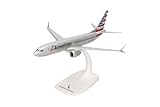
- 𝐄𝐀𝐒𝐘 𝐀𝐒𝐒𝐄𝐌𝐁𝐋𝐘: Herpa SnapFit airplane models click together in just a few steps — no glue or tools required. A simple way to start collecting detailed models.
- 𝐂𝐎𝐋𝐋𝐄𝐂𝐓𝐎𝐑'𝐒 𝐈𝐓𝐄𝐌: Herpa models are a perfect addition to any collection — discover model cars, trucks with trailers, fire engines, emergency vehicles and airplanes .
- 𝐑𝐄𝐀𝐋𝐈𝐒𝐓𝐈𝐂 𝐃𝐄𝐓𝐀𝐈𝐋: High-quality plastic planes with finely captured details — authentic airline liveries such as Lufthansa, Delta, KLM and American Airlines, on aircraft by Boeing, Airbus and Embraer.
- 𝐏𝐑𝐄𝐂𝐈𝐎𝐔𝐒 𝐆𝐈𝐅𝐓: The precise, true-to-scale design delights both collectors and businesses alike. With their realistic detailing, Herpa models make an excellent choice for birthday presents or corporate gifts. Suitable for ages 14 and up.
- 𝐈𝐍𝐅𝐎 & 𝐒𝐂𝐎𝐏𝐄 𝐎𝐅 𝐃𝐄𝐋𝐈𝐕𝐄𝐑𝐘: The model airplane has been scaled down to 1:200. It is suitable as a gift, decoration or refined detail for a miniature world, diorama or model train.
How the competing explanations compare
| Explanation | What the record supports | What it does not establish |
|---|---|---|
| Long-term corporate culture | The House report records the merger and later headquarters move, and describes the view that priorities shifted toward financial outcomes. | That the merger directly caused the MAX failures, or was necessary or sufficient for them. |
| MAX design and development | The report examines the derivative-aircraft design, larger engines, aerodynamic changes, and program development and certification decisions. | That any single design feature alone explains the crisis. |
| FAA certification and oversight | The committee identified oversight problems; the JATR and other reviews examined certification and related safety findings. | That regulatory shortcomings alone explain Boeing’s decisions or the full sequence of failures. |
What happened, and when
- 1997: Boeing and McDonnell Douglas merged.
- 2001: Boeing moved its headquarters from Seattle to Chicago.
- 2011 onward: The MAX program developed as a re-engined 737 derivative, with larger LEAP-1B engines and associated aerodynamic changes described in the committee report.
- 2018–2019: Two MAX crashes killed 346 people. The House Committee investigated the aircraft’s development and certification as well as related regulatory issues.
- 2019–2020: The FAA described the JATR review and its consideration of recommendations from other accident and technical investigations.
The House Committee said its work included five public hearings, more than 20 witnesses, and an estimated 600,000 pages of documents. Those figures describe the scale of that investigation, not a measure of certainty about the merger’s causal role.
Independent reader supportYour contribution helps us test, update, and keep practical guides available for everyone.Why the 2024 door-plug incident is a separate issue
In January 2024, a door-plug event involving an Alaska Airlines 737-9 MAX led the FAA to halt Boeing’s planned production expansion, require inspections and maintenance for grounded aircraft, and increase production oversight. The FAA’s announcement referred to 171 grounded 737-9 MAX aircraft subject to the approved inspection and maintenance process at that time; that is a dated figure, not a current fleet count.
Rank #4
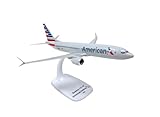
- Official American Airlines Livery: Showcases the current American (13-Cur) colors, complete with authentic logos and detailed design that mimics the real Boeing 737 MAX 8’s official look.
- 1:200 Scale Detailing: Scaled for accuracy, measuring approximately 7.75 inches in length and 7.25 inches in wingspan, displaying the precise proportions of the original aircraft.
- Molded Plastic Construction: Made from premium molded plastic for lasting durability and a smooth, glossy finish ideal for collectors and aviation displays.
- Snap-Together Assembly: Components snap easily into place for quick setup; includes a custom display stand with an engraved plaque for professional presentation.
- Perfect for Collectors and Gifts: Designed for airline enthusiasts, model collectors, and professionals, it’s suitable for home, office, or as a unique gift.
This later manufacturing-quality incident is relevant to continuing scrutiny of Boeing, but it is not evidence that the 1997 merger caused the two earlier MAX crashes. It concerns a different event and should not be folded into the earlier crash investigation as though it were the same failure.
So, did the merger cause the crisis?
The available official record supports a cautious answer: the merger may be part of the background to changes in Boeing’s culture, but a direct merger-to-crisis causal chain has not been demonstrated. The stronger documented explanation lies in interacting failures involving MAX development and certification and FAA oversight. Treating the merger as context preserves the cultural question without mistaking an attributed interpretation for a settled finding.
Quick Recap
Product prices and availability are accurate as of the date/time indicated and are subject to change. Any price and availability information displayed on Amazon at the time of purchase will apply.




