Free tools Windows power users keep installed
One-click scans. No signup required.
A vesting schedule says when you earn a nonforfeitable right to an employer benefit or equity award. Immediate, cliff, and graded schedules describe different timing patterns—but retirement-plan rules and stock-award terms are not interchangeable. Your plan document or award agreement determines what applies to you.
What does vesting mean?
Vesting is the point at which you earn ownership or a right that you generally do not lose just because your employment ends. Before an employer contribution or award vests, the governing terms may allow you to forfeit it when you leave.

The word has related but distinct uses. In a retirement plan, the Internal Revenue Service defines vesting as ownership. For stock options, vesting generally means the option becomes exercisable under its terms; it does not mean you already own the underlying shares. Exercising an option is a separate step.
What are the main types of vesting schedules?
| Schedule type | How it works | What to check |
|---|---|---|
| Immediate | The benefit or award is fully vested at once. | Confirm eligibility and whether separate restrictions still apply. |
| Cliff | No scheduled portion vests until a defined milestone; a portion or chunk vests when that milestone is reached. | Check the exact date or service milestone. Leaving shortly before it may mean none of the scheduled award vests. |
| Graded | Portions vest in steps over time or at successive service milestones. | Find out whether installments are monthly, quarterly, annual, or otherwise defined. |
| Time-based | Continued service for specified periods triggers vesting. | Check the service start date and whether leave or another absence affects service or pauses vesting. |
| Milestone-based | Vesting depends on specified performance or other events. | Read how milestones are measured, who certifies them, and what happens if an event is delayed. |
| Hybrid | The schedule combines time and milestone conditions. | Determine whether both conditions must be met; do not assume one condition is enough. |
How do cliff and graded vesting differ?
A cliff creates a waiting period followed by a vesting event. Under a graded schedule, vesting occurs in portions at successive milestones. That difference affects what you keep if you leave partway through the schedule: a cliff may leave you with no scheduled vested portion before the milestone, while a graded schedule may already have vested some of the award.
#1 Best Overall

- Made in USA - Proudly produced in Ohio by a Veteran-owned business
- 120 page Weekly Shifts Journal 8.5" x 11"
- Wire-O with Stunning Yellow Cover Design
- Pages include spaces for employee name, position, and daily schedule tracking
- Reorder SKU: LOG-120-7CW-PP-(WeeklyShifts)
Neither label tells you the full schedule. Read the dates, amounts, and service conditions in the governing document rather than inferring them from the terms “cliff” or “graded.”
How does vesting work in U.S. retirement plans?
Retirement-plan rules are a specific U.S. legal regime, not a general rule for every employer benefit or equity award. Employee contributions to a retirement plan are always fully vested. Employer contributions may vest over time, and the applicable rules depend on the plan and contribution type.
For applicable qualified defined contribution plan employer contributions, including matching contributions under the stated rules, IRS guidance says the minimum schedule generally must be either three-year cliff or six-year graded. The IRS examples show these percentages:
| Completed years of service | Three-year cliff example | Six-year graded example |
|---|---|---|
| 1 | 0% | 0% |
| 2 | 0% | 20% |
| 3 | 100% | 40% |
| 4 | 100% | 60% |
| 5 | 100% | 80% |
| 6 | 100% | 100% |
These are IRS examples in the specified qualified-plan context, not a schedule to assume for every account or contribution. A plan can provide faster vesting, and service-counting rules matter. Consult your Summary Plan Description (SPD) and benefit statement for your employer’s terms. See the IRS overview of retirement-plan vesting and its issue snapshot on vesting schedules.
The Tool Desk
Outbyte Driver Updater FREEFix the driver behind crashes, sound loss and screen glitchesFind Drivers →Outbyte PC Repair FREERepair Windows errors before they cause bigger problemsFix Now →Rank #3
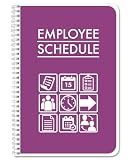
- Made in USA - Proudly produced in Ohio by a Veteran-owned business
- 120-page Employee Schedule Book 6" x 9"
- Wire-O with Stunning Purple Cover Design
- Vertically the page displays the days of the week and horizontally across the top of the page shows hour time blocks
- Reorder SKU: LOG-120-69CW-PP(Employee-Schedule)
How do vesting schedules work for startup equity?
Startup compensation may include stock options, restricted stock, or restricted stock units (RSUs). The SEC describes an option as the right, but not the obligation, to buy a specified number of shares at an agreed strike price after a vesting period. Vesting an option generally makes it exercisable under its terms; you must still decide whether to exercise it and meet the agreement’s requirements.
A four-year schedule with a one-year cliff is a commonly described startup example, not a universal standard or promise. In an illustrative version, a portion vests on the first anniversary and the rest vests periodically afterward. The agreement—not the example—sets the portion, cadence, and conditions. Carta describes time-based, milestone-based, hybrid, and immediate-vesting arrangements; its examples are descriptions of equity practice, not legal requirements or a universal market survey. See the SEC’s overview of common startup securities and Carta’s explanation of vesting schedules.
Rank #4

- The Jobsite Journal: this offering features a single light brown jobsite journal that ensures you have a streamlined tool for organized recording at the jobsite. It allows you to document ideas, create sketches, and monitor progress in one centralized place. Crafted as a durable construction notebook, this planner is a daily essential for scheduling, serving as a reliable partner for all your documentation needs
- Portable Design: measuring approximately 7 x 10 inches, the contractor notebook fits seamlessly into work bags or briefcases, making it a go-to accessory for architects, engineers, and field professionals. Its ample page space ensures notes in this daily log book remain comprehensive and legible, while its lightweight design supports mobility during site visits and meetings
- Productive Layout: featuring a clear, efficient layout, the project planner eliminates organizational challenges, enabling effortless documentation of critical details—including jobsite activities, task timelines, and milestone dates. It serves as a trustworthy log book for referencing, verifying, and reviewing site information, essential for project accountability and compliance
- Premium Materials: constructed with high-quality light brown PU leather and durable paper, this project management planner is built to endure daily use while offering a smooth writing experience. The cover combines style with durability, preserving its refined appearance even after frequent use. This leather journal features a spiral binding for easy, flat-page access, making note-taking effortless in any on-site scenario
- Versatile Utility: engineered to meet the demands of anyone requiring systematic and dependable note-taking, this project management notebook adapts to various roles—from architects to site supervisors. Its thoughtful design makes it suitable for individual use or teams, ensuring it caters to diverse needs in field observations, project planning, and maintaining a detailed activity log
How do you read your vesting schedule?
Start with the document that governs the specific benefit or award. For retirement benefits, that commonly means the SPD and benefit statement. For equity, inspect the grant notice and award agreement alongside the relevant plan. Compare schedules by the amount vesting at each date, the first vesting date or cliff, the total period, installment frequency, service or performance conditions, and what happens on termination, disability, death, or a change in control.
- Identify the award: Confirm whether it is an employer retirement contribution, option, restricted stock, or RSU, and note the number of shares or units or the contribution involved.
- Mark the dates: Find the vesting commencement date, any cliff date, and every later installment date.
- Check the conditions: Look for the agreement’s definition of continuous service, how performance milestones are measured, and how leave or other absences affect vesting.
- Read the departure terms: Check what is forfeited or retained if employment ends, and whether disability, death, or a change in control alters vesting.
- For options, check exercise terms: Find the strike price and the post-termination exercise window. Vesting does not itself exercise an option.
Do not rely on a verbal summary or a familiar-looking schedule label where the document gives a different result. The precise terms and service-counting rules control.
PC Slower Than It Used to Be?
A free scan shows the junk files, broken settings and background clutter dragging Windows down - then fixes them in one click.Free scan · Windows 10 & 11Outdated Drivers Are Slowing You Down
One free scan finds every outdated or missing driver and matches the right update for your exact hardware.Free scan · exact hardware matchBest Value
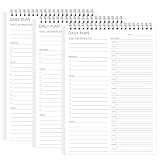
- DAILY FOCUS TO STAY ON TRACK : 24 Hours daily planner staying organized has never been easier - The daily to do notebook features space for today i am great for, priorities, to do, take notes and time schedule.
- START EASILY ANYTIME ANYWHERE : The daily to do planner is undated, so you can make each day count & start getting rid of that nasty procrastination today, no more wasting time!
- SIMPLE AND COMFORTABLE DESIGN : Undated notepad premium quality covers and twin-wire binding, metal lay-flat spiral binding, excellent texture, with modern and stylish combinations of appearance.
- USE PREMIUM PAPER : The paper of this Everyday planner is ink-proof and high-quality pages made from acid-free paper with 52 Sheets, resistant from damage by light and air. The back also has a hard board to avoid damage.
- BOOST YOUR PRODUCTIVITY FAST : Use daily to do list work & personal life smarter not harder for efficient daily task management, with the productivity planner you can plan out 24 hours and completely cultivate new planning habits.
What happens to unvested shares or benefits if you leave?
Unvested employer amounts or equity awards may be forfeited when employment ends, as specified by the governing terms. What happens to already vested value is different for each award: for example, an option may be vested but still subject to a limited post-termination period in which to exercise it. Check the termination provisions and any exceptions rather than assuming that vesting means unrestricted access or ownership of shares.
How does vesting affect taxes?
Tax treatment depends on the type of award and the timing of grant, vesting, exercise, settlement, and sale. As a high-level U.S. illustration, the IRS explains that RSUs generally are not taxable at grant and that stock value is generally included when the units are transferred or settled and vested. Stock-option treatment differs by option type and exercise. A vesting event does not therefore produce the same tax result for every award.
Those distinctions are not personal tax advice. Award terms, individual circumstances, and current law can change the outcome. For decisions about a particular grant or tax return, consult a qualified tax professional familiar with equity compensation. See the IRS transcript on equity compensation tax events for the high-level distinctions described here.
Quick Recap
Product prices and availability are accurate as of the date/time indicated and are subject to change. Any price and availability information displayed on Amazon at the time of purchase will apply.