Recommended Free Tools
Clean technology is already reducing fossil-fuel use and emissions, but it is not a single replacement for oil, gas, or coal. It is a connected system: cleaner electricity, more efficient buildings and industry, electrified transport and heating, storage, flexible demand, and modern grids. The International Energy Agency (IEA) estimates that clean technologies deployed since 2019 avoided more than 35 exajoules of annual fossil-fuel demand and about 3 billion tonnes of CO₂ emissions in 2025. Those global estimates show substantial progress—not a completed transition.
What clean technology means for sustainable energy
Clean technology is technology that reduces greenhouse-gas emissions, air pollution, resource waste, or dependence on fossil fuels compared with conventional alternatives while still delivering an energy or economic service. “Clean” is comparative: a solar panel, battery, heat pump, or nuclear plant can have lower operating emissions than a fossil-fuel alternative while still creating impacts through mining, manufacturing, construction, land use, or disposal.
Sustainable energy is broader than renewable energy. A sustainable system aims to provide reliable, affordable service over the long term while limiting climate and environmental harms, strengthening resilience, and ensuring fair access. Renewable energy—such as solar, wind, hydropower, and geothermal—is one part of clean technology. Other parts include efficiency, electrification, storage, grid equipment, demand response, low-emissions fuels, and, in some settings, nuclear power or carbon-management technologies.
The transition has two jobs: meet rising demand for electricity, cooling, mobility, and industrial output, while replacing existing fossil-fuel use. Clean tech can help with both by supplying lower-emissions energy and reducing the energy needed to provide the same service.
Free tools Windows power users keep installed
One-click scans. No signup required.
#1 Best Overall
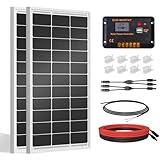
- [Wide Application]: Daily Output 800wh/day under 4 hours full sunshine condition. Perfect for RV, Caravan, Marine, Camper, Electric scooter, Golf Carts, Power wheels, Trolling motor, Tool trailer, Backup power supply for cabin shed home etc.
- [Excellent Performance]: ECO-WORTHY solar panels use high-performance monocrystalline solar cells, which can provide up to 21.5% higher efficiency sufficient light conditions.size:35.2*23.1.37in
- [Durable]: Corrosion-resistant aluminum alloy frame, so that the panel can be used for decades, and can withstand strong wind (2400Pa) and snow load (5400Pa), with a long service life. Ip65 rated junction box provides complete protection.:
- [Complete and Easy]: The back of the pre-drilled and plug-and-play cables allow quick installation, the kit can be connected in series (24V) or parallel (12V) if you need. What you will get: 2 pcs 100W mono solar panel + 2 set of Z mounting brackets + 30A solar controller + 1 pair of 16.4ft 10 awg solar cables + 1 pair of 2-in-1 connectors + 1 pair of 4.92ft tray cable.
- [Support]: 1 year with 24/7 tech support, if any problems or questions about the product,please do not hesitate to let us know through Amazon or call ECO-WORHTY hotline for solution.
How much progress is clean tech making?
In 2025, global renewable capacity additions reached about 800 gigawatts, and solar accounted for more than three-quarters of those additions, according to the IEA. Battery-storage additions were almost 110 GW—capacity additions, not a measure of how many hours the batteries can discharge—and rose by about 40% year over year. These are global estimates, including estimates where complete data were not yet available. IEA: Global Energy Review 2026—Solar PV and Wind; IEA: Global Energy Review 2026—Key Findings
The same IEA assessment estimates that clean technologies deployed since 2019 avoided more than 35 exajoules of annual fossil-fuel demand and approximately 3 billion tonnes of CO₂ emissions in 2025, equivalent to about 8% of global emissions in its estimate. Yet global energy demand and consumption of oil, natural gas, and coal also increased in 2025, more slowly than in 2024. Clean technology is therefore displacing some fossil-fuel use while also helping meet new demand; it has not eliminated fossil fuels. IEA: Global Energy Review 2026—Key Findings
Cleaner electricity: the supply foundation
Low-emissions electricity makes it possible to cut emissions in other sectors when homes, vehicles, and industrial processes switch from burning fuels to using electricity. Different sources contribute in different ways; no single technology is the best fit everywhere.
Solar power
Solar ranges from utility-scale plants to rooftop, community, and floating installations. Its modularity allows deployment at many scales, and it has no fuel cost while operating. Solar can sometimes be built near electricity users, although projects still need suitable sites, permits, and grid connections. Output varies with daylight and weather, so its value depends partly on the wider system’s ability to shift demand, store energy, or draw on other sources.
Quick wins for a faster PC:
Scan for outdated or missing drivers - takes under a minuteDriver Scan →Clear out junk files and repair common Windows errorsFree Scan →Land use, mineral supply chains, manufacturing impacts, distribution constraints, and end-of-life recycling all matter. Solar’s strong global growth is a capacity figure; it does not by itself show how much electricity was generated or delivered when needed.
Wind power
Onshore wind is established in strong-resource areas. Fixed-bottom offshore wind can serve coastal demand centers, while floating offshore wind is an emerging option for deeper waters. Wind can complement solar because the two sources may generate at different times, but both depend on weather and need transmission, forecasting, and flexibility. Siting decisions also need to account for wildlife, ecosystems, local acceptance, permitting, and supply-chain and financing pressures.
Hydropower, geothermal, and bioenergy
- Hydropower can provide dispatchable electricity and flexibility, and some projects can store energy. Large dams may also alter rivers, ecosystems, and communities.
- Geothermal can supply firm electricity or direct heat where the resource and geology are suitable; it is location-dependent.
- Bioenergy can be useful when feedstocks are genuinely sustainable. Land-use change, air pollution, competition with food production, and carbon accounting can undermine its benefits if not managed carefully.
Nuclear power
Nuclear is generally classified as low-carbon or clean power, not renewable energy. It can provide firm electricity with low operational carbon emissions, but projects face questions of cost, construction time, safety governance, radioactive-waste management, water use, and public acceptance. The IEA reports that global nuclear generation reached a record in 2025 and construction began on more than 12 GW of nuclear capacity that year. Those global figures do not establish that nuclear is the fastest or least-cost option in every market. IEA: Global Energy Review 2026—Key Findings
Efficiency: using less energy for the same service
Efficiency is an energy resource: lowering demand can reduce the generation, fuel, storage, and grid capacity a system needs. The cleanest unit of energy is often the one that does not need to be generated.
Rank #2

- 【Efficient Performance】This Starter Kit can generate an average of 500Wh of electricity per day (varies with sunlight). The solar panel boasts a 22.5% cell efficiency, 1.3% higher than other counterparts. Each panel dispatched from our facility undergoes 100% EL testing, ensuring that your panel is completely free from any hidden cracks.
- 【Market-Leading Service Plan】Enjoy worry-free usage with our market-leading service plan, providing 10 years of coverage for solar panel material and workmanship, along with a 2-year plan for the charge controller. Additionally, benefit from a 25-year service plan for the power output of the panel.
- 【Exceptional Safety】Certified by UL 61730, CSA C22.2#61730, IEC 61730/IEC 61215, our solar panel withstands 2400Pa wind and 5400Pa snow loads. Featuring IP65-rated J-box and IP67-rated solar connectors, rest assured, it can tackle any weather challenge.
- 【Remote Monitoring】The Wanderer PWM Charge Controller features an RS232 Bluetooth port. By adding a Renogy BT-1 Bluetooth Module, you can remotely monitor your solar system on the Renogy DC Home app. Keep track of voltage and current at any time, and receive timely warnings for over-voltage, under-voltage, and over-discharge.
- 【Excellent Compatibility】The solar kit with the Wanderer 30A PWM Charge Controller, supports expansion up to 400W with additional solar panels and is compatible with AGM, Gel, Flooded, and Lithium batteries.
- Buildings: insulation, air sealing, efficient windows and shading, efficient lighting and appliances, and better controls.
- Heating and cooling: heat pumps, heat-pump water heaters, smart thermostats, and building-management systems.
- Industry: efficient motors and pumps, process controls, and waste-heat recovery.
- Transport and computing: more efficient vehicles, shifts to rail or other efficient modes, and efficient data centers and power electronics.
Lower energy use can reduce bills, peak demand, grid congestion, and exposure to fuel-price volatility. It is not automatic: high upfront costs, split incentives between landlords and tenants, limited contractor capacity, poor installation, or rebound effects can reduce savings. Rebound occurs when lower operating costs encourage people to use more of an energy service.
Electrification: connecting clean power to everyday energy use
Electrification replaces equipment that burns fossil fuels with electric alternatives. Its emissions benefit depends on the electricity supply: switching to electricity can increase short-term emissions on a fossil-heavy grid, while a cleaner grid improves the benefit over time.
Transport
Battery-electric cars, buses, delivery vehicles, and rail can use electricity instead of gasoline or diesel. Electric drivetrains are generally more energy-efficient than internal-combustion systems, and vehicles have zero tailpipe emissions; their life-cycle emissions still depend on electricity, battery production, vehicle size, and use. Smart charging can shift some charging away from peak demand, and vehicle-to-grid systems may let vehicles provide limited flexibility where equipment, rules, and customer needs allow.
Access and infrastructure remain important: apartment residents may lack dedicated parking, rural and long-distance travel requires suitable charging coverage, and extreme temperatures can affect vehicle performance. Heavy trucking, aviation, and shipping present harder cases, while battery-material sourcing and recycling need attention. Fleet charging and distribution-grid upgrades also require coordinated planning.
Buildings
Heat pumps move heat rather than creating it through direct combustion, making them a central electrification option for space heating and cooling. Heat-pump water heaters, induction cooking, district heating, thermal storage, and building controls can also reduce direct fuel use. Performance and cost depend on climate, insulation and air sealing, electricity prices and emissions, equipment selection, and installation quality.
Industry
Electric boilers, furnaces, and process heat can replace combustion in some industrial applications. Hydrogen may suit selected uses such as direct-reduced ironmaking or chemical production where direct electrification is difficult. Carbon capture may address some process emissions that are not readily eliminated by electrification. These options are not equally mature or economical across all industries, and no single solution can decarbonize every process today.
Storage and flexibility: balancing supply with demand
Storage shifts energy across time; flexibility can also come from changing when electricity is used, sharing it across regions, or adjusting generation. The right combination depends on the duration and scale of the imbalance.
Batteries
Short-duration batteries can provide frequency regulation, respond to rapid changes in supply, shift midday solar output toward evening, shave peaks, and provide backup for short outages. Their limits include discharge duration, degradation, fire-safety requirements, mineral and manufacturing dependencies, and the need for viable revenues and suitable grid connections. A gigawatt of battery additions describes power capacity, not stored energy or duration.
Rank #3

- Max Battery Voltage: 32V
Pumped hydro and thermal storage
Pumped-storage hydropower moves water between reservoirs to store and release energy. It is an established option for flexibility over hours to days, and potentially longer, but suitable sites are limited and projects can involve major construction and environmental impacts.
Thermal storage holds heat or cooling rather than electricity. Hot-water tanks, molten salt, ice storage, building thermal mass, and industrial heat storage can shift heating or cooling demand and reduce the need to generate electricity at peak times.
Hydrogen and longer-duration needs
Hydrogen may be useful for fertilizer and chemicals, steelmaking, some shipping or aviation fuels, and selected long-duration or seasonal storage needs. Producing hydrogen from electricity and then converting it back to electricity involves energy losses, so direct electrification is generally preferable where it is practical. The IEA identifies pumped hydro as a mature option for flexibility over days to weeks, while hydrogen and thermal storage may be relevant to longer or seasonal needs. IEA: Electricity 2025—Supply
Demand response
Demand response shifts or reduces electricity use when the grid is constrained—for example, by scheduling charging, heating, cooling, or industrial processes at different times. It can reduce peaks and make better use of existing infrastructure, but participation depends on clear incentives, suitable equipment, consumer trust, and protections for people who cannot easily change when they use energy.
Grids: the connective tissue and a growing bottleneck
Generation, storage, and electrified loads need a grid capable of connecting them and moving electricity where it is needed. That means new transmission, modernized distribution networks, interregional connections, better forecasting and controls, and planning that coordinates generation, storage, and large new loads.
The IEA reports that more than 2,500 GW of renewable, storage, and large-load projects were waiting in grid-connection queues worldwide. It estimates that annual grid investment may need to rise by roughly 50% from about $400 billion to meet electricity demand through 2030. The IEA also estimates that grid projects can take five to 15 years to plan and complete, compared with one to five years for some renewable projects and one to two years for EV charging infrastructure; actual timelines vary by project and jurisdiction. IEA: Electricity 2026—Grids
A viable project can remain commercially unusable if it cannot obtain a connection. Delays reflect more than a shortage of wires: permitting, equipment and workforce constraints, cost-allocation disputes, local opposition, mismatched planning horizons, and outdated market rules can all slow development.
Alongside conventional grid expansion, options include advanced conductors, dynamic line ratings, grid-enhancing technologies, flexible connections, and improved permitting and planning. These measures can make better use of existing infrastructure, but they do not remove the need to build networks where capacity is insufficient.
The Tool Desk
Outbyte Driver Updater FREEFix the driver behind crashes, sound loss and screen glitchesFind Drivers →Outbyte PC Repair FREERepair Windows errors before they cause bigger problemsFix Now →Rank #4

- 【High Conversion Rate】This 20W solar panel with monocrystalline A+ solar cell has an excellent cell efficiency of 21%-30%. Designed to charge and maintain 12V rechargeable batteries like LiFePO₄, Lithium Ion, AGM, SLA, GEL, EFB, MF, etc. Keep batteries in charged for trailer, tractor, truck, boat, motorcycle, RV, car, lawn mower, water pump, gate opener, electric fence, etc
- 【Built to Last】 Low-iron tempered glass surface and corrosion-resistant aluminum frame, make this solar panel 100% waterproof and rustproof, and provide the prolonged lifespan up to 25 years. This 12V solar panel can withstand all weather conditions such as sandstorm, strong wind, thunderstorm, blizzard, hail, etc. It can withstand up to 2400Pa wind pressure and 5400Pa snow load
- 【Smart MPPT Controller】The charging efficiency of this upgraded 10A controller is 30% higher than other controllers on the market. Its intelligent three-stage charging design effectively prevents the battery from overcharging, over-voltage and short circuit. It takes no power from the battery. You will clearly know the charging status of the battery through the two indicator lights on the controller
- 【360° Adjustable Bracket & Plug-and-Play Installation】Comes with a fully 360° angle adjustable mounting bracket, which allows you to adjust the solar panel to the optimal sun-facing angle for maximum solar energy absorption and higher charging efficiency. Pre-drilled mounting holes and matched screws greatly simplify the installation process, no complicated tools or professional skills are required. All cable connections support plug-and-play, enabling quick and effortless installation and disassembly for both indoor and outdoor scenarios.
- 【Complete Accessories & Reliable After-Sales Service】Our SOLPERK Solar Panel kit includes 1*20W solar panel, 1*smart MPPT charge controller, 1*adjustable mounting bracket, 1*alligator clip, 1*O-ring and a full set of mounting accessories to meet your diverse installation and use needs. We offer 1-year professional after-sales service and lifetime technical support, with 7×24-hour online customer service to respond to your questions and solve problems within 24 hours, bringing you a worry-free shopping and using experience.
Digital technology can make the system more responsive
Smart meters, advanced distribution-management systems, renewable forecasting, predictive maintenance, automated demand response, dynamic pricing, and aggregators can coordinate homes, batteries, EVs, and other flexible loads. Digital twins and better fault detection may help operators use existing infrastructure more effectively and reduce curtailment—the practice of reducing generation when the grid cannot use all available supply.
Digitalization is not automatically sustainable. It requires cybersecurity, privacy protections, interoperable equipment, reliable communications, and pricing customers can understand. Some households lack the devices, flexible schedules, or ability to respond to time-varying tariffs. Data centers, sensors, communications networks, and computing also consume energy and materials.
Life-cycle impacts and sustainable materials
A fair comparison includes more than emissions during operation. It considers embodied emissions from manufacturing and construction, upstream extraction and refining, water and land use, local pollution, biodiversity, labor conditions, durability, and end-of-life recovery. A technology can have lower life-cycle emissions than a fossil-fuel alternative while still causing significant local environmental or social harm.
Clean-energy equipment depends on minerals and industrial supply chains. Concentrated refining, mining impacts, water use, labor and human-rights risks, and manufacturing emissions are relevant to its sustainability. Durable design, repairability, recycling, materials recovery, responsible sourcing, and diversified supply chains can reduce waste and exposure to disruption, but they do not erase all extraction or production impacts.
What’s actually slowing this PC down?
Pick the symptom - the matching free tool is one click away.
Reliability and resilience in a changing climate
A sustainable system must continue to provide dependable service during heatwaves, wildfires, floods, hurricanes, drought, freezing weather, low-wind or low-sun periods, and fuel-supply disruptions. Reliability is not the opposite of decarbonization: dependable service is essential to public trust and to the adoption of cleaner technologies.
Resilience measures can include a diverse generation mix, storage, demand response, interregional connections, hardened substations and lines, vegetation management, weather-aware planning, distributed energy resources, and microgrids with islanding capability. Rooftop solar by itself may shut off during a grid outage; backup requires the right inverter, controls, and often storage. Microgrids also need operating rules and, in some cases, backup generation.
IRENA highlights climate-proofing power infrastructure and integrating storage as increasingly important as renewable generation expands. IRENA: Enhancing Resilience—Climate-Proofing Power Infrastructure
Independent reader supportYour contribution helps us test, update, and keep practical guides available for everyone.How to judge cost and affordability
There is no single clean-energy cost. A levelized cost of electricity, the cost of delivered power, a household bill, and the cost of reliable or dispatchable electricity answer different questions. Comparisons depend on technology, location, financing, capacity factor, grid connection, land, permitting, storage, transmission, fuel, and whether the alternative is an existing plant or a new one.
PC Slower Than It Used to Be?
A free scan shows the junk files, broken settings and background clutter dragging Windows down - then fixes them in one click.Free scan · Windows 10 & 11Outdated Drivers Are Slowing You Down
One free scan finds every outdated or missing driver and matches the right update for your exact hardware.Free scan · exact hardware matchBest Value

- Portable Generator with 60W Solar Panel Included: with a big battery pack, ZeroKor 300W solar powered generator are powerful enough to charge smartphones,tablets,laptops,headphones or other outdoor small camping supplies(Tips:Using electrical appliances over 300W may damage the portable solar generator, especially some devices that are prone to heat or built-in air compressor such as coffee maker,Hair dryer, water pump etc )
- Multiple Charging outlets for camping gear with SOS Flashlight: with 2* 300W Max wall AC outlets, 1* DC port (9V-12.6V/10A max ), 3* 5V/3A Max USB ports, 1*quick charge USB port (5V/3A 9V/2A Max), Flashlight with reading mode and SOS mode for your outdoor Adventures, our portable solar power station offers a versatile charging solution,allowing you to charge your outdoor smart devices directly from a wall AC outlet
- Multiple Charging Optional, Solar Panel Charger 60W Included: ZeroKor portable power bank generator can be recharged by Home AC outlet, DC5521 13V-23V Solar Panel (Portable Power Station built-in MPPT), 12V Carport. Take the portable solar power bank generator with you on-the-go and never worry about power shortage,the portable AC outlet design makes it more suitable for Tent camping OFF-Grid
- Built in BMS(Battery Management System) : ZeroKor portable power station features short circuit protection, over-current protection, over-voltage protection, overload protection and overheating protection. The built-in cooling fan system will automatically start and stop according to the portable battery pack internal temperature during use. Acting as a portable solar power bank, it accommodates multiple devices simultaneously, making it perfect for indoor and outdoor use
- HIGH CONVERSION EFFICIENCY: ZeroKor solar panels 60W monocrystalline solar cell have a high conversion efficiency of 20.5%, and its performance is better than that of polycrystalline solar panels under the condition of insufficient light
Solar and wind can have low operating costs, but a system with more variable generation also needs appropriate networks, storage, balancing, and other sources of flexibility. Conversely, a fossil-fuel comparison may omit pollution, climate damages, public subsidies, health costs, and exposure to fuel-price swings. IRENA’s renewable-cost analysis discusses the growing importance of batteries and digital systems to renewable economics and integration. IRENA: Renewable Power Generation Costs in 2024
For a household or organization, the relevant question is not simply whether a technology is “cheap.” Compare upfront and financing costs, installation, maintenance, energy bills, grid upgrades, warranties, replacement, incentives available in the relevant jurisdiction, and the value of resilience or emissions reductions. Savings depend on actual use and local conditions, not just equipment specifications.
What policy, finance, and equity contribute
Technology does not deploy on its own. Clean-energy standards, renewable auctions, tax credits and grants, carbon pricing, building and appliance codes, vehicle standards, public procurement, transmission planning, permitting reform, industrial policy, and green banks can shape investment and deployment. Programs need clear rules and durable implementation so that projects can be financed and built.
Capital is often easier to secure for mature projects in wealthy markets than for projects in emerging and developing economies, where currency risk, higher financing costs, debt constraints, and perceived risk can raise costs. Public and private finance, including concessional finance where appropriate, can help address those barriers. The IEA’s Breakthrough Agenda reporting identifies grids, storage, and support for emerging and developing economies as central to scaling clean electricity. IEA: Breakthrough Agenda Report 2025—Power
A just transition also asks who benefits and who bears the costs. Energy poverty, utility-bill affordability, rural access, displacement, Indigenous and local community rights, worker retraining, and dependence on fossil-fuel industries all matter. Renters and low-income households may be unable to use incentives that favor people who can afford rooftop solar, EVs, or efficiency upgrades upfront. Bill assistance, targeted weatherization, community energy, on-bill financing, social tariffs, and public or cooperative ownership are among the approaches that can widen access.
A practical framework for comparing clean-tech options
Before choosing a technology or supporting a project, assess the service it will provide and the local system it must work within. This applies to household upgrades as well as commercial and public investments.
- Emissions: Compare operational and life-cycle emissions against a clear alternative. Ask whether the project displaces fossil energy or mainly adds capacity.
- Reliability: Check whether output is variable or dispatchable, how long it can deliver energy, and what happens during extreme weather or outages.
- Total system cost: Include equipment, installation, finance, grid connection, transmission, storage, maintenance, fuel, decommissioning, insurance, and resilience upgrades.
- Deployment: Check permitting and interconnection timelines, component availability, workforce capacity, and whether the solution can scale in the relevant location.
- Resource and environmental impacts: Evaluate land, water, minerals, biodiversity, local pollution, waste, recycling, and community impacts.
- Affordability and access: Identify who pays upfront, who receives the savings, and whether renters and lower-income users can participate.
- Flexibility and interoperability: Determine whether the system can respond to grid conditions and work with other equipment and platforms.
- Resilience: Consider performance during storms, heat, fires, outages, cyber incidents, fuel shortages, and supply-chain disruptions.
Why common clean-tech claims need context
- “Cheap renewables make the transition automatic.” Low-cost generation does not guarantee low-cost delivered power; grids, storage, balancing, financing, and permitting still matter.
- “Batteries solve intermittency.” Batteries can provide useful short-duration balancing, but multi-day and seasonal needs require other resources or combinations of solutions.
- “Hydrogen can decarbonize everything.” Conversion losses make it a poor substitute for direct electrification where that is practical; its strongest uses are more likely in selected hard-to-electrify sectors.
- “Electricity is clean by definition.” Electrification’s emissions benefit depends on how electricity is generated and whether networks and flexibility can support new loads.
- “Clean technology has no environmental footprint.” Mining, manufacturing, construction, land use, and disposal all have impacts, even when life-cycle emissions are lower than those of a fossil alternative.
- “A high renewable share proves a system is sustainable.” An annual generation share does not reveal congestion, curtailment, peak reliability, or whether transport, heat, and industry still depend on fossil fuels.
What clean technology cannot do alone
Equipment is only one part of the transition. Planning, permits, finance, skilled workers, grid connections, supply chains, safety standards, and community trust determine whether technologies can be built and used well. National averages and global deployment figures also cannot settle local choices: climate, grid strength, land, water, financing costs, and regulation change which combinations work best.
The IEA projects that variable renewables’ share of global electricity generation will rise from about 17% today to 27% by 2030; that is a forecast, not a historical measurement. It also estimates global power-sector emissions were flat in 2025. Neither figure proves that a fully sustainable energy system is assured. IEA: Electricity 2026—Executive Summary
Do these 3 things before closing this tab:
1Fix the driver behind crashes, sound loss and screen glitches2Repair Windows errors before they cause bigger problems3Scan for outdated or missing drivers - takes under a minuteQuick Recap
Product prices and availability are accurate as of the date/time indicated and are subject to change. Any price and availability information displayed on Amazon at the time of purchase will apply.




